
Close Menu
    Facebook X (Twitter) Instagram
    SciTechDaily
    • Biology
    • Chemistry
    • Earth
    • Health
    • Physics
    • Science
    • Space
    • Technology
    Facebook X (Twitter) Pinterest YouTube RSS
    SciTechDaily
    Home»Chemistry»Leaky Sewers Contaminating Streams With Substantial Amounts of Medications
    Chemistry

    Leaky Sewers Contaminating Streams With Substantial Amounts of Medications

    By American Chemical SocietyAugust 31, 2021No Comments3 Mins Read
    Facebook Twitter Pinterest Telegram LinkedIn WhatsApp Email Reddit
    Share
    Facebook Twitter LinkedIn Pinterest Telegram Email Reddit
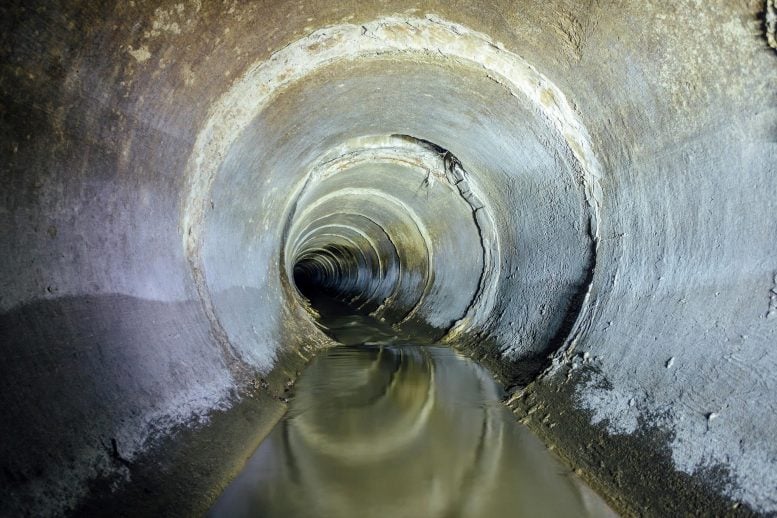
    Dirty Sewer Tunnel Pipe
    Thousands of medications approved for human use in the U.S. are harmful to microorganisms, algae, and insects when they enter lakes and streams through wastewater.

    rban stream pollution from leaky pipes delivered surprising drug loads to Baltimore’s Inner Harbor.

    Pharmaceutical compounds can harm the environment. However, in waterways that don’t receive treated wastewater, these pollutants aren’t expected to be present. Now, researchers reporting in ACS’ Environmental Science & Technology have found that amounts of some medications carried by a stream in Baltimore were substantial, despite generally low concentrations over the course of a year. Because wastewater plants don’t impact this stream, the high loads are likely coming from leaking sewer pipes, they say.

    Thousands of medications are approved for human use in the U.S., and many of them are harmful to microorganisms, algae and insects when they make their way into lakes and streams through wastewater. The concentrations of pharmaceutical compounds are usually used to determine their impact on organisms living in streams and rivers. However, contaminant concentrations may change quickly from one day to the next, and so singular snapshots do not correctly illustrate their cumulative effects on aquatic life. Instead, load — the mass of a pollutant that passes through a stream or river over time — better represents the risks to downstream environments, where the contaminants end up. While loads are used in regulations for traditional pollutants, such as nutrients, they have not been considered for pharmaceuticals. So, Megan Fork and colleagues wanted to get an idea of the yearly load of medicines transported by an urban stream in Baltimore.

    The researchers tested water from an urban stream draining into Baltimore’s Inner Harbor in Maryland on a weekly basis for a year. At the outflow point, they found 16 pharmaceutical compounds whose presence and amount varied considerably from week to week, ranging from concentrations of parts per trillion to parts per billion. Trimethoprim — an antibiotic — was found most regularly, but acetaminophen — a common pain reliever — was at the highest concentrations. The team used their weekly measurements to estimate annual loads of pharmaceuticals, calculating that the equivalent of 30,000 doses of antidepressants, 1,700 doses of antibiotics and 30,000 tablets of acetaminophen entered the Inner Harbor through the stream. Interestingly, this watershed did not receive wastewater treatment plant effluent, so it’s likely these compounds are coming from leaky sewer pipes. Improvements to aging infrastructure could reduce this source of harmful compounds to urban streams and other waterways, the researchers say.

    For more on this story, see Dosing the Coast: Leaky Sewer Pipes Are Medicating the Chesapeake Bay.

    Reference: “Dosing the coast: Leaking sewage infrastructure delivers large annual doses and dynamic 2 mixtures of pharmaceuticals to urban rivers” by Megan L. Fork, Jerker B. Fick, Alexander J. Reisinger and Emma J. Rosi, 18 August 2021, Environmental Science & Technology.
    DOI: 10.1021/acs.est.1c00379

    The authors acknowledge funding from the U.S. National Science Foundation.

    Never miss a breakthrough: Join the SciTechDaily newsletter.
    Follow us on Google and Google News.

    American Chemical Society Pharmaceuticals Pollution Wastewater
    Share. Facebook Twitter Pinterest LinkedIn Email Reddit

    Related Articles

    New Wood-Based Technology Can Easily Purify Contaminated Water

    Risks of Counterfeit Medications Are Rising: New Technology Could Spot Fakes With a Smartphone App

    Credit-Card-Sized Badge Detects an Unprecedented Range of Harmful Airborne Compounds

    Catalytic Converter Theft Is on the Rise – Here’s Why

    Soft X-ray Method Promises Nanocarrier Breakthroughs for Smart Medicine and Environmental Clean-Up

    Double-Duty: New Catalyst Generates Hydrogen Fuel While Cleaning Up Wastewater

    How Environmentally Friendly Are “Green” Fireworks?

    Using Red Blood Cells, Light, and a Honey Bee Peptide to Deliver Therapeutic Proteins to Specific Areas of the Body

    Pharma Aims to Make a Better CBD – Up to 50 Times More Potent

    Leave A Reply Cancel Reply

    • Facebook
    • Twitter
    • Pinterest
    • YouTube

    Don't Miss a Discovery

    Subscribe for the Latest in Science & Tech!

    Trending News

    Monster Storms on Jupiter Unleash Lightning Beyond Anything on Earth

    Scientists Create “Liquid Gears” That Spin Without Touching

    The Simple Habit That Could Help Prevent Cancer

    Millions Take These IBS Drugs, But a New Study Finds Serious Risks

    Scientists Unlock Hidden Secrets of 2,300-Year-Old Mummies Using Cutting-Edge CT Scanner

    Bread Might Be Making You Gain Weight Even Without Eating More Calories

    Scientists Discover Massive Magma Reservoir Beneath Tuscany

    Europe’s Most Active Volcano Just Got Stranger – Here’s Why Scientists Are Rethinking It

    Follow SciTechDaily
    • Facebook
    • Twitter
    • YouTube
    • Pinterest
    • Newsletter
    • RSS
    SciTech News
    • Biology News
    • Chemistry News
    • Earth News
    • Health News
    • Physics News
    • Science News
    • Space News
    • Technology News
    Recent Posts
    • Simple Blood Test May Predict Alzheimer’s Years Before Brain Scans Show Signs
    • Scientists Say Adding This Unusual Seafood to Your Diet Could Reverse Signs of Aging
    • U.S. Waste Holds $5.7 Billion Worth of Crop Nutrients
    • Scientists Say a Hidden Structure May Exist Inside Earth’s Core
    • Doctors Surprised by the Power of a Simple Drug Against Colon Cancer
    Copyright © 1998 - 2026 SciTechDaily. All Rights Reserved.
    • Science News
    • About
    • Contact
    • Editorial Board
    • Privacy Policy
    • Terms of Use

    Type above and press Enter to search. Press Esc to cancel.