
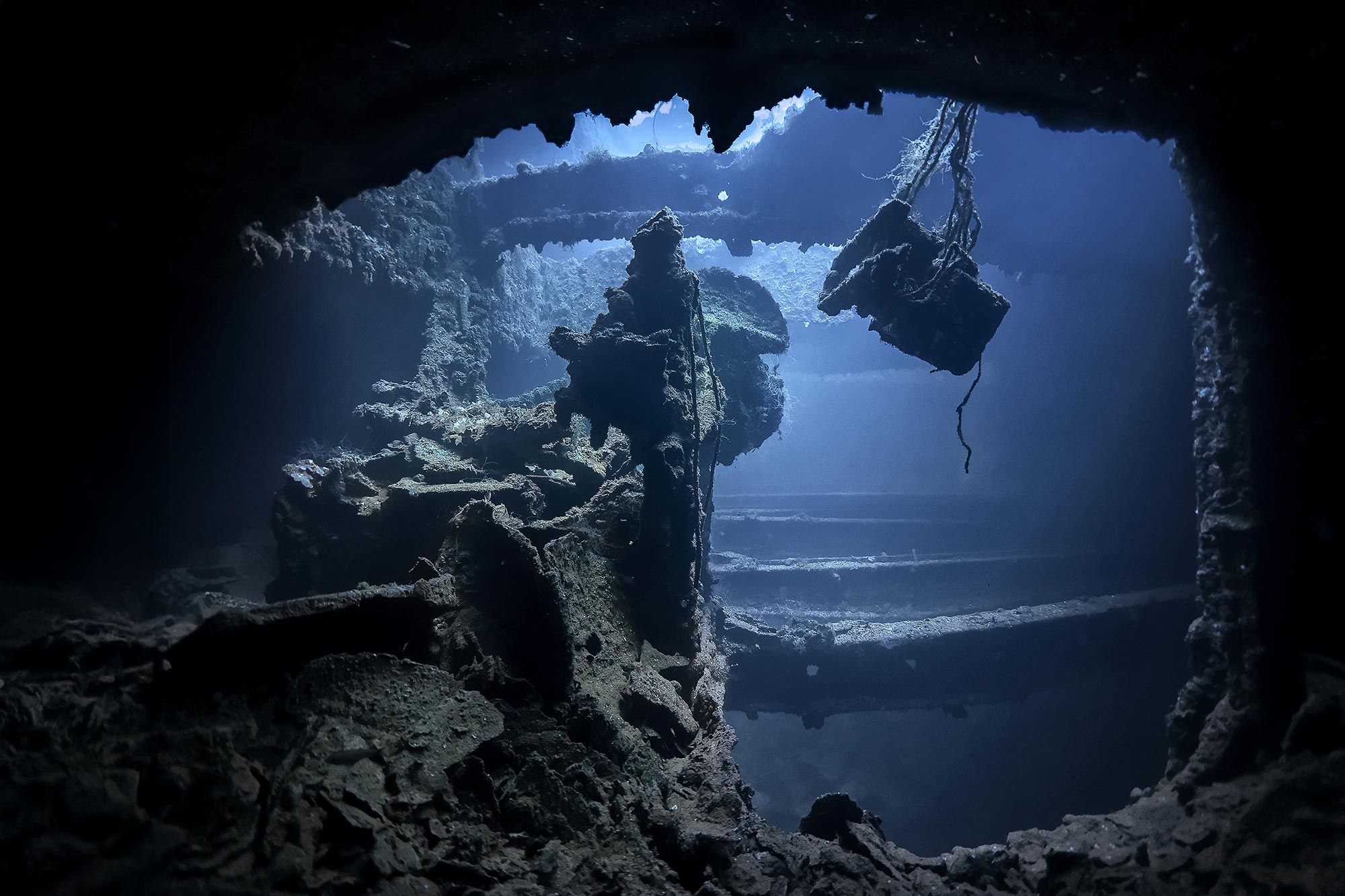
Marine life is unexpectedly flourishing on discarded World War II munitions in the Baltic Sea.
A new study has found that World War II munitions lying on the seabed of the Baltic Sea host far more marine life than the surrounding sediment.
The research, published in Communications Earth & Environment, reveals that certain marine organisms can survive in areas with high levels of toxic compounds as long as they have solid surfaces to attach to. The findings also highlight how remnants of human conflict can unintentionally create habitats for wildlife, a pattern also documented in a Scientific Data study that mapped World War I shipwrecks in Maryland, USA.
Before the 1972 London Convention on the Prevention of Marine Pollution was established, it was common practice to dispose of unused explosives by dumping them at sea. While these discarded weapons contain chemicals that are extremely harmful to marine life, their sturdy metal shells may simultaneously provide an appealing surface for organisms to grow on.
Investigating the Lübeck Bay Dump Site
Andrey Vedenin and colleagues used a remotely controlled submersible to investigate a newly-discovered munitions dumpsite in Lübeck Bay in the Baltic Sea in October 2024. They filmed the munitions and analyzed water samples collected from the site, and also investigated two areas of the surrounding sediment for comparison.
The authors identified the discarded munitions as warheads from V-1 flying bombs, a type of early cruise missile used by Nazi Germany in late World War II. They found that there was significantly more marine life present on the munitions than the sediment — an average of around 43,000 organisms per square meter compared to around 8,200 organisms per square meter. Similar magnitudes of marine life abundance have been recorded on natural hard surfaces in the bay in other studies. The concentrations of explosive compounds (mostly TNT and RDX) in the water varied widely, from as little as 30 nanograms per liter to as much as 2.7 milligrams per liter — a level estimated to be potentially fatally toxic to marine life.
The authors suggest that, compared to the surrounding sediment, the advantages of living on the hard surfaces of the munitions outweigh the disadvantages of the chemical exposure. They note that organisms were mainly observed on the casings rather than uncovered explosive material, and speculate that this may have reflected lifeforms trying to limit their chemical exposure. However, the authors conclude that although the munitions are currently an important habitat in the bay, replacing them with a safe artificial surface would further benefit the local ecosystem.
Ghost Fleet of Maryland: A Parallel Case
In a separate study, published in Scientific Data, David Johnston and colleagues present a high-resolution photographic map of all 147 wrecks currently in the so-called “Ghost Fleet” of Mallows Bay, on the Potomac River, Maryland, USA.
These ships were built during World War I but were deliberately burnt and sunk in the late 1920s, and their wrecks are now known as a habitat for a wide variety of wildlife, such as ospreys (Pandion haliaetus) and Atlantic sturgeon (Acipenser oxyrinchus). The authors created the map by combining high-resolution photographs (an average of 3.5 centimeters per pixel) of the entire fleet, taken using aerial drones in 2016. They suggest that the map may be useful for future archaeological, ecological, and cultural research into the fleet.
Reference: “Sea-dumped munitions in the Baltic Sea support high epifauna abundance and diversity” by A. Vedenin, I. Kröncke, T. Weiß, G. Nolte, M. Keller, A. J. Beck, M. Esposito and J. Greinert, 25 September 2025, Communications Earth & Environment.
DOI: 10.1038/s43247-025-02593-7
Never miss a breakthrough: Join the SciTechDaily newsletter.
Follow us on Google and Google News.
1 Comment
Now,
It’s prominent time to explore, analyze, investigate, encode, reserve,’The Nile Stream’ then ‘Red Sea’ by pros & cons without any scar be left.