
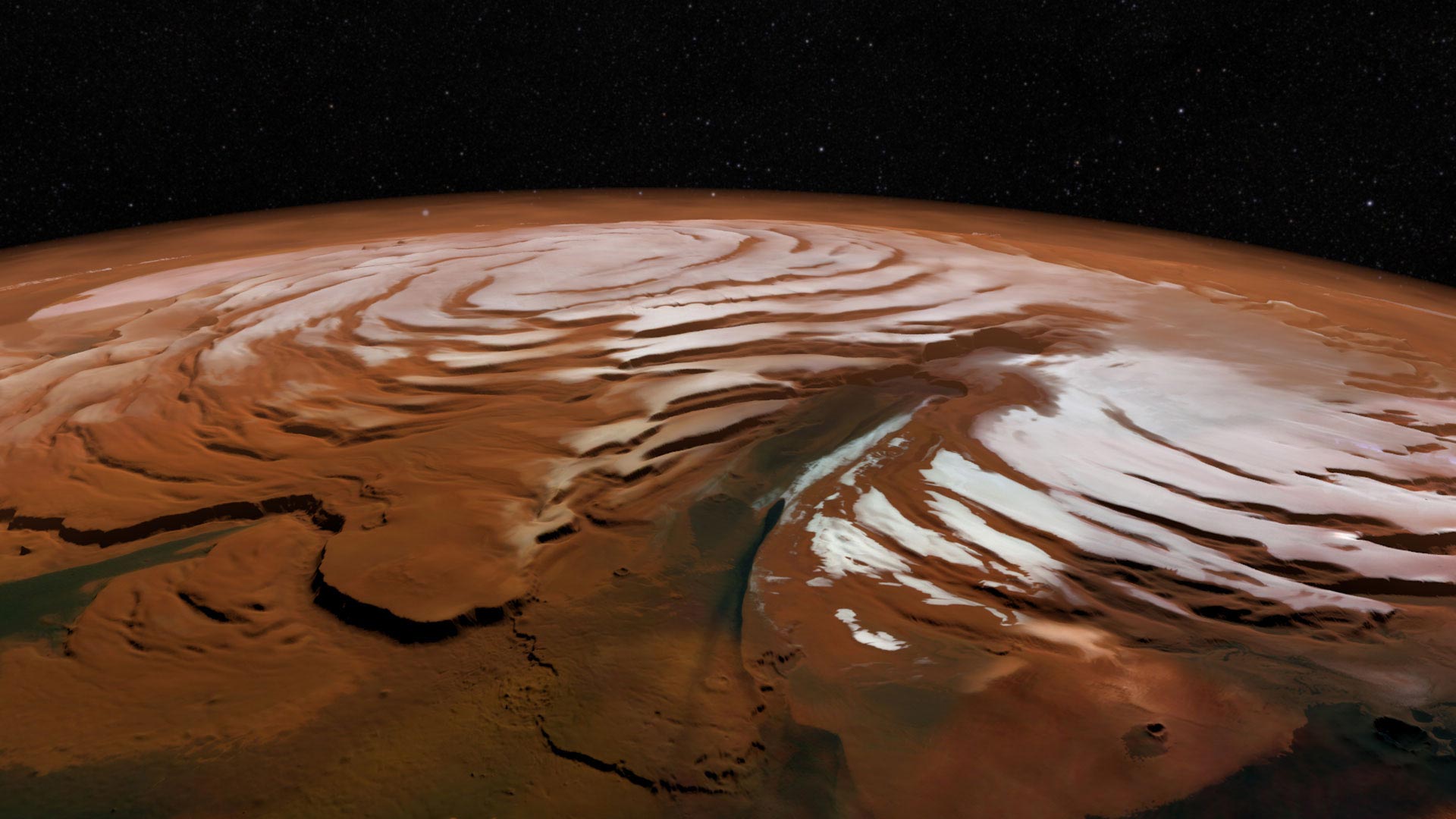
A study by scientists at Penn State and NASA shows that intact biomolecules from dormant microbes break down much more slowly in pure water ice than they do in mixed soil samples.
Ancient microbes, or traces of them, may still be preserved within Martian ice, waiting to be discovered by future missions to the Red Planet. By recreating Mars-like conditions in laboratory experiments, researchers from NASA Goddard Space Flight Center and Penn State showed that fragments of protein-forming molecules from E. coli bacteria could survive for more than 50 million years when trapped in Martian permafrost or ice caps, even under constant exposure to cosmic radiation.
The study, published in Astrobiology, suggests that missions searching for life on Mars should focus on regions dominated by pure ice or ice-rich permafrost rather than rocks, clay, or soil.
“Fifty million years is far greater than the expected age for some current surface ice deposits on Mars, which are often less than two million years old, meaning any organic life present within the ice would be preserved,” said co-author Christopher House, professor of geosciences, affiliate of the Huck Institutes of the Life Sciences and the Earth and Environment Systems Institute, and director of the Penn State Consortium for Planetary and Exoplanetary Science and Technology. “That means if there are bacteria near the surface of Mars, future missions can find it.”
Simulating Martian radiation exposure
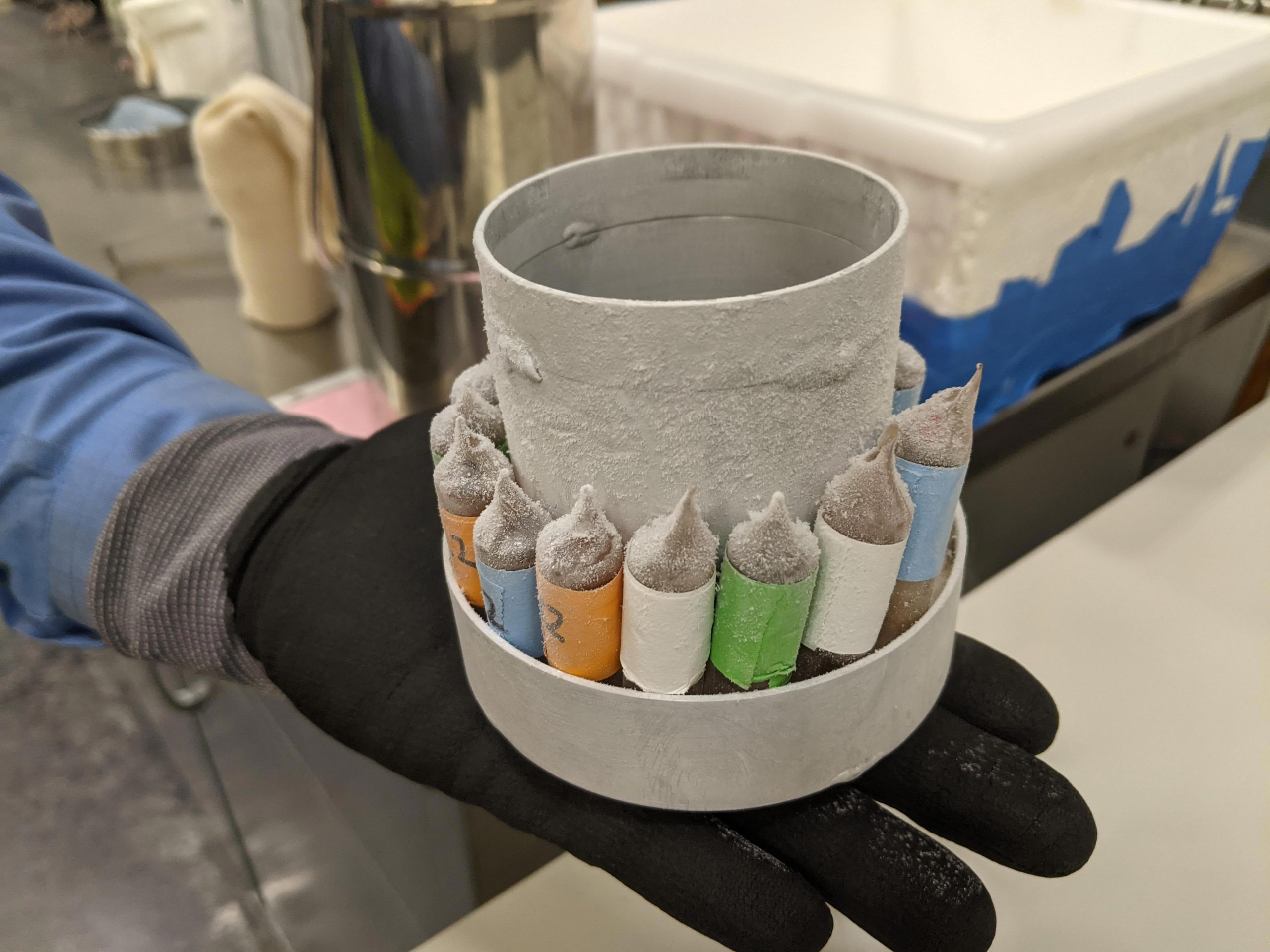
The research team, led by corresponding author Alexander Pavlov, a space scientist at NASA Goddard who completed a doctorate in geosciences at Penn State in 2001, placed E. coli bacteria into sealed test tubes filled with pure water ice. Additional samples of E. coli were combined with water and materials common in Martian sediment, including silicate-rich rocks and clay.
After freezing the samples, the researchers moved them into a gamma radiation chamber at Penn State’s Radiation Science and Engineering Center, cooled to minus 60 degrees Fahrenheit to match temperatures found in icy regions on Mars. The samples were then exposed to radiation equivalent to 20 million years of cosmic rays at the Martian surface, vacuum sealed, and returned to NASA Goddard under cold conditions for amino acid analysis. The team then modeled an additional 30 years of radiation exposure to reach a total simulated duration of 50 million years.
Pure ice slows molecular decay
In samples frozen in pure water ice, more than 10% of the amino acids from the E. coli bacteria survived the simulated 50-million-year period. In contrast, samples mixed with Mars-like sediment degraded ten times faster and did not persist. A 2022 study by the same NASA research group had already shown that amino acids preserved in a mixture of 10% water ice and 90% Martian soil were destroyed more quickly than those found in sediment alone, highlighting the protective role of pure ice.
“Based on the 2022 study findings, it was thought that organic material in ice or water alone would be destroyed even more rapidly than the 10% water mixture,” Pavlov said. “So, it was surprising to find that the organic materials placed in water ice alone are destroyed at a much slower rate than the samples containing water and soil.”
That degradation could be due to a slippery film that forms in areas where ice touches minerals, the researchers hypothesized, allowing radiation to reach and destroy amino acids.
“While in solid ice, harmful particles created by radiation get frozen in place and may not be able to reach organic compounds,” Pavlov said. “These results suggest that pure ice or ice-dominated regions are an ideal place to look for recent biological material on Mars.”
Implications beyond Mars
In addition to testing for conditions on Mars, researchers also tested organic material in temperatures similar to those on Europa, an icy moon of Jupiter, and Enceladus, an icy moon of Saturn. They found that these even colder temperatures further reduced the rate of deterioration.
Those results are encouraging to NASA’s Europa Clipper mission, Pavlov said, which will explore the ice shell and ocean of Europa, the fourth largest of Jupiter’s of 95 moons. Europa Clipper launched in 2024 and is traveling 1.8 billion miles to reach Jupiter in 2030. It will conduct 49 close flybys of Europa to assess whether there are places below the surface that could support life.
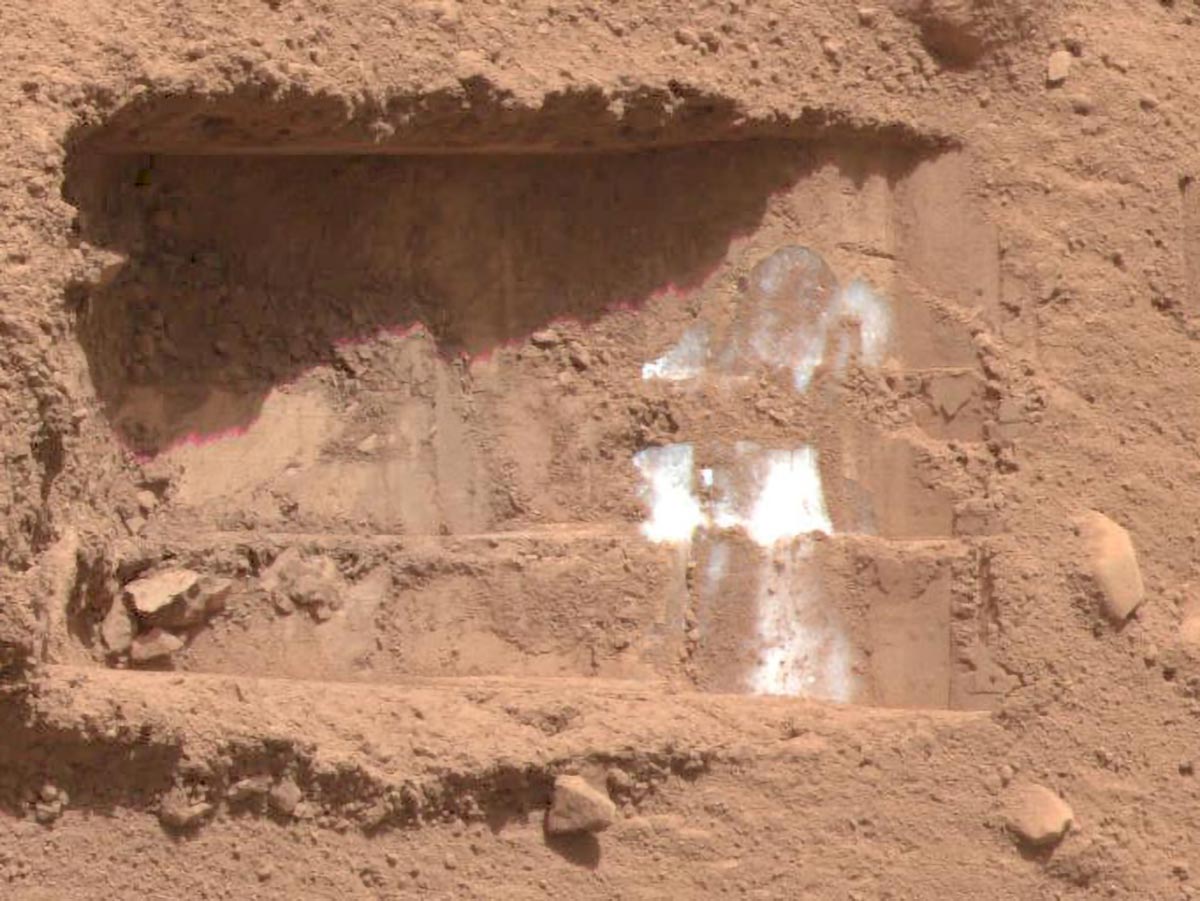
For exploring ice on Mars, the 2008 NASA Mars Phoenix mission was the first to excavate down and capture photos of ice in the Mars equivalent of the Arctic Circle.
“There is a lot of ice on Mars, but most of it is just below the surface,” House said. “Future missions need a large enough drill or a powerful scoop to access it, similar to the design and capabilities of Phoenix.”
Reference: “Slow Radiolysis of Amino Acids in Mars-Like Permafrost Conditions: Applications to the Search for Extant Life on Mars” by Alexander A. Pavlov, Hannah L. McLain, Kendra K. Farnsworth, Daniel P. Glavin, Jamie E. Elsila, Jason P. Dworkin, Zhidan Zhang and Christopher H. House, 12 September 2025, Astrobiology.
DOI: 10.1177/15311074251366249
NASA’s Planetary Science Division Internal Scientist Funding Program through the Fundamental Laboratory Research work package at Goddard Space Flight Center supported this research.
Never miss a breakthrough: Join the SciTechDaily newsletter.
Follow us on Google and Google News.