
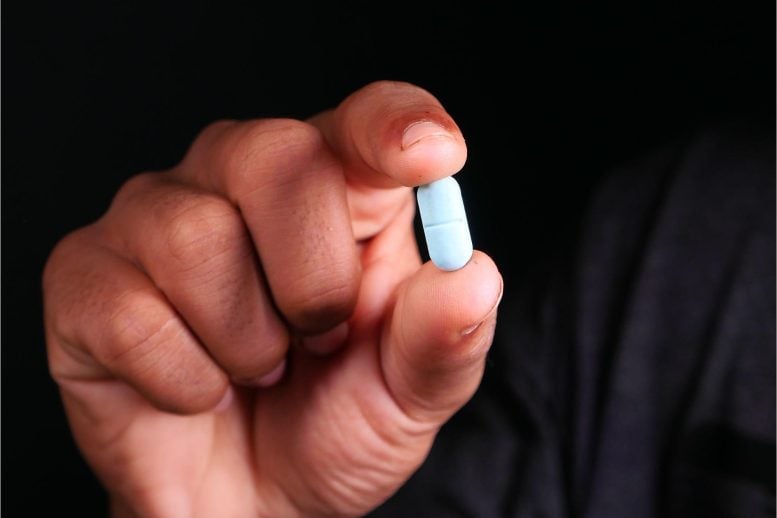
Intramuscular TXA quickly treats postpartum hemorrhage, offering a vital alternative where IV access is limited.
A study, involving the London School of Hygiene & Tropical Medicine (LSHTM) researchers, has shown that tranexamic acid (TXA), a drug aimed at tackling serious postpartum bleeding, can be safely administered intramuscularly to pregnant women, quickly achieving effective therapeutic levels.
These results, derived from the Woman-PharmacoTXA Phase 2 trial, underscore the potential of using intramuscular injection as an alternative to the prevalent intravenous methods. The latter often proves impractical in circumstances such as home births or in remote healthcare environments.
Oral TXA was also well-tolerated, however, on average, took around one hour to reach therapeutic blood concentrations, meaning it could be unsuitable for emergency treatment.
The results were published in the British Journal of Obstetrics and Gynaecology.
Severe bleeding after childbirth, or postpartum hemorrhage (PPH), is one of the leading causes of maternal death worldwide, with most of the 70,000 yearly deaths occurring in low-and middle-income countries (LMICs).
Tranexamic Acid and Its Life-Saving Potential
Results from the earlier WOMAN trial, led by researchers from LSHTM with collaboration from 21 countries, provided crucial evidence for the life-saving potential of repurposing TXA for treating PPH.
Originally used in surgery and later in trauma, TXA works by inhibiting the breakdown of blood clots.
Although intravenous administration of TXA is the first port-of-call for treatment, many births in LMICs take place at home, with access to healthcare settings often limited. Subsequently, the focus has shifted towards finding alternative administration routes.
In this trial, an international research team, including from LSHTM, recruited over 120 women aged 18 or older who were due to give birth by cesarean section at two hospitals in Pakistan and one in Zambia between December 2020 and June 2021. All women had one or more risk factors for postpartum hemorrhage.
The study is the first trial testing several different routes of administration in women giving birth and notably the first to test the intramuscular route, specifically in pregnant women.
Rapid and Effective Absorption of Intramuscular TXA
Overall, intramuscular and oral TXA were well tolerated, with no serious side effects for mothers or newborns. Target concentrations of TXA in maternal blood were achieved for both routes, although for oral TXA this took an hour – a characteristic that could prevent its use in emergency treatment. Intramuscular TXA, however, reached therapeutic concentrations within ten minutes of injection, which was maintained for over four hours.
The authors conclude that these findings provide enough evidence to conduct comparative Phase 3 clinical trials (I’M WOMAN) beginning in August this year. These will aim to determine if intramuscular administration is as effective as intravenous routes in reducing postpartum bleeding.
Professor Haleema Shakur-Still, co-author and Professor of Global Health Clinical Trials at LSHTM said: “In many LMICs, women do not give births in healthcare facilities, so if TXA can be given just as successfully intramuscularly as via intravenous injection, this could be of huge significance to the thousands of women who die every year from PPH.”
Professor Rizwana Chaudhri, co-author based at Shifa Tameer-e-Millat University, Islamabad, Pakistan said: “The intramuscular route will be very helpful in Pakistan. With some patients who are experiencing a PPH, it is difficult to get an intravenous line established, so anything that can reduce PPH will be useful. In some cases, it will be the first and last choice.”
Dr Mwansa Ketty Lubeya, co-author based at The University of Zambia-School of Medicine, Women and Newborn Hospital-UTH said: “In Zambia, we are still struggling with access to TXA. Even when it is available, there should be options in terms of administration. There is no point in having TXA when canulation is not an option. We are excited to have the intramuscular option and be able to use it far and wide.”
Dr Ian Roberts, co-author and Professor of Epidemiology at LSHTM said: “We have good reason to believe the intramuscular route will be as effective as the intravenous route to reduce postpartum bleeding. In August, we are starting a large global trial to prove this in the hope that this will change WHO guidelines. We want to make this lifesaving treatment available to all women wherever they give birth.”
Reference: “Alternative routes for tranexamic acid treatment in obstetric bleeding (WOMAN-PharmacoTXA trial): a randomised trial and pharmacological study in caesarean section births” by Haleema Shakur-Still, Ian Roberts, Stanislas Grassin-Delyle, Rizwana Chaudhri, Amber Geer, Monica Arribas, Elodie Lamy, Raoul Mansukhani, Mwansa Ketty Lubeya, Kiran Javaid, Aasia Kayani, Naila Israr, Syeda Batool Mazhar, Saïk Urien, Naïm Bouazza, Frantz Foissac, Danielle Prowse, Laura Carrington, Collette Barrow, Julio Gil Onandia and Eni Balogun, 5 April 2023, British Journal of Obstetrics and Gynaecology.
DOI: 10.1111/1471-0528.17455
The study was funded by the Bill and Melinda Gates Foundation and the Wellcome Trust.
Never miss a breakthrough: Join the SciTechDaily newsletter.
Follow us on Google and Google News.
1 Comment
“drug aimed at tackling serious postpartum bleeding, can be safely administered intramuscularly to pregnant women, quickly achieving effective therapeutic levels.”…
Will this be available to mulvaney,Thomas & Levine?