

Is Ranch Dressing a Liquid or a Solid?
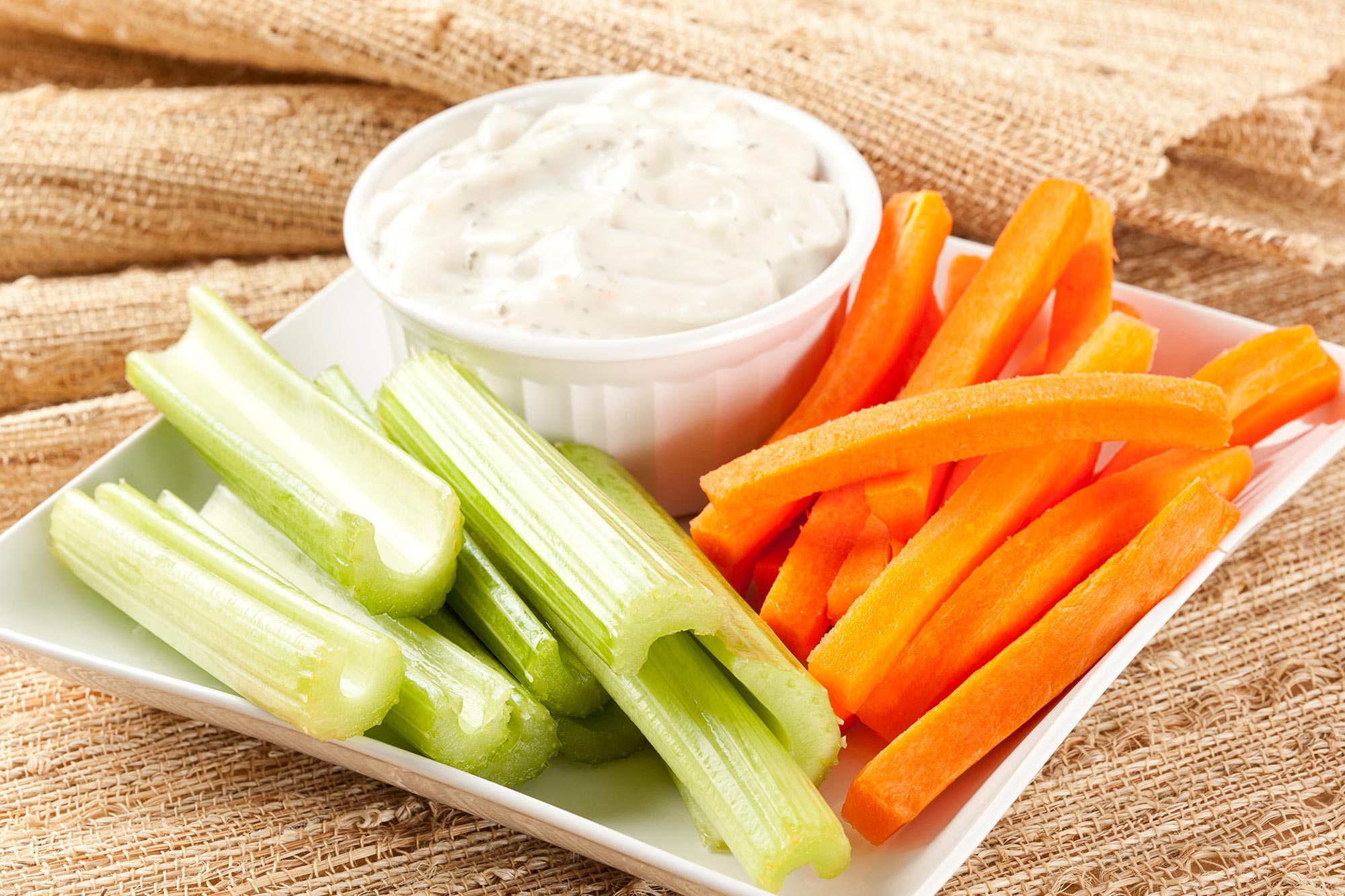
Imagine you’re sitting down for dinner. You pick up a bottle of ranch dressing, flip it upside down, and expect it to pour onto your plate. But nothing happens. It just sits there, stuck inside the bottle, almost like a solid.
So, you shake the bottle, and suddenly, a blob of dressing plops onto your plate. Now it seems more like a liquid.
But unlike water or milk, the ranch doesn’t spread out across the plate. Instead, it keeps its shape, almost like a pile of mashed potatoes. That makes it seem more solid again.
Then, when you dip a carrot or celery stick into the blob, it changes shape. You can smear it around, but it doesn’t resist like a true solid would. Instead, it moves and spreads, much like a thick liquid.
So, what is ranch dressing? Is it a liquid, a solid, or something in between?
The Physics of Ranch Dressing
I’m a professor of physics and biophysics, and I study materials that don’t behave like traditional solids or liquids. Scientists call these materials soft matter: things that can be both rigid and flexible at the same time. In my lab, we explore squishy materials like skin and mucus to understand their unique properties and even design new materials inspired by them. I also run a social media channel, Physics Mama, where my two kids and I explore the physics behind everyday life.
The Basic States of Matter
To figure out what’s going on with ranch dressing, you need to understand what the different states of matter are and what makes each one unique. “Matter” is just the scientific word for “stuff,” and it is anything that is made up of the microscopic building blocks called atoms and that has mass.
You probably learned in school that there are three states of matter: solid, liquid and gas. Think ice cube, a puddle of water, and steam. Maybe you also learned about a fourth state, known as plasma.
These different states are defined by how the extremely tiny molecules making up the matter interact with each other. These molecules are so small that you can’t see them with your naked eye. But their invisible interactions determine the properties of the materials that you can see.
Molecules and Movements
Molecules in a solid are physically attached to each other in a way that keeps them from moving around relative to each other. This is what makes solids rigid and able to keep a fixed shape.
The molecules in a liquid, on the other hand, are not connected to each other. They can move around, slide past each other, and mix themselves up. This freedom of movement is what allows a liquid to take the shape of whatever container it is in.
The molecules in a gas are completely free to move around without really bumping into the other molecules in the gas too much. Like a liquid, a gas will take the shape of any container it is in and has no fixed shape. But unlike liquids and solids, gases can also change their size or volume.
A plasma is similar to a gas but has much more energy. This energy causes the electrically charged parts of the molecules, called protons and electrons, to break apart. The Sun and stars are examples of plasma, as is the material that makes neon signs glow.
Understanding Elasticity and Viscosity
While solids hold their shape, they are not completely rigid. The connections between the molecules behave like tiny springs, which makes solids elastic. If you push on a solid, it will deform – but it will bounce back to its original state when you stop pushing, kind of like your mattress when you bounce on your bed. Of course, this happens at the molecular level, so you can’t see it happening.
And even though liquids easily change shape, they do resist this change due to the friction between the liquid molecules as they try to move past each other. This friction is called viscosity. Liquids such as honey or syrup are much more viscous than liquids such as milk or water, making them harder to stir. Imagine trying to swim in a swimming pool of honey – delicious but difficult.
Introducing Soft Matter: A Fifth State
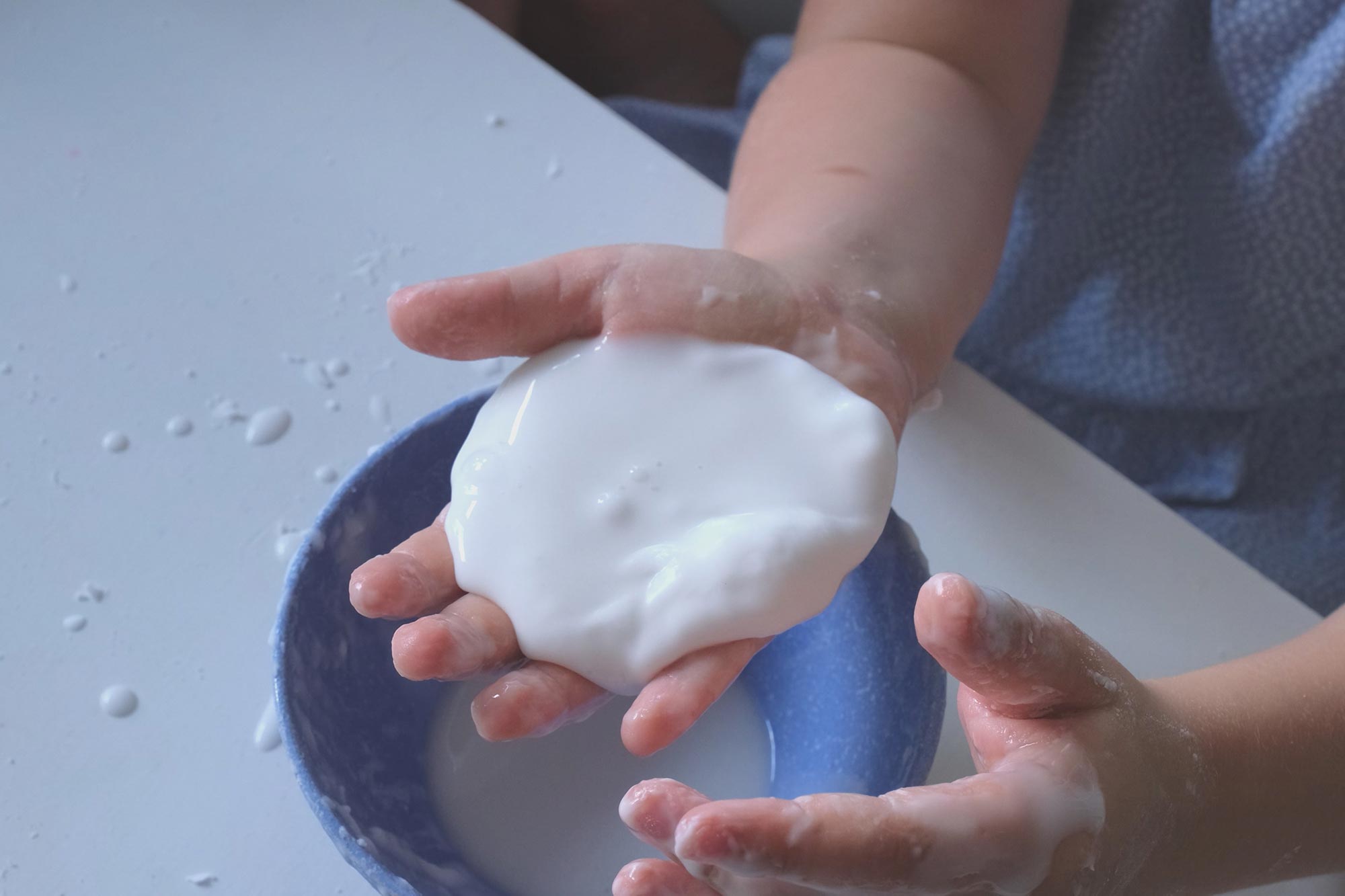
Ranch dressing is actually a fifth state of matter known as soft matter. Soft matter can have properties of both liquids and solids, so materials scientists say it is viscoelastic – a combination of viscous and elastic. Other common examples of soft matter include yogurt, cookie dough, shampoo, toothpaste, silly putty, snot, slime and frosting.
These substances aren’t quite solid and aren’t quite liquid – they’re a little of both. You can pour shampoo out of a bottle, but if you put a bit between your fingers and pull them apart, it will stretch between your fingers. Cookie dough can hold its own shape, but if you push on it, it deforms and doesn’t bounce back.
The Science Behind Shear Thinning and Thickening
Many viscoelastic materials exhibit shear thinning, which means that their viscosity decreases the more you agitate them. This is why shaking your bottle of ranch dressing or ketchup allows you to pour it out – even though before shaking it was too solid-like to leave the bottle. It’s also why yogurt that seems quite solid and able to maintain its shape becomes more liquid-like when you stir it quickly.
Squishy materials can also exhibit shear thickening – they become more rigid the harder you try to deform them. This is how Oobleck, a simple mixture of cornstarch and water, works. You can slowly pour it and submerge your hand in it, like any other liquid, but if you squeeze it or shake it up it solidifies.
The Role of Polymers in Soft Matter
The reason these squishy materials have both liquid and solid properties is that they’re made of polymers: long, chainlike molecules. These long chains get all tangled up, like a bowl of spaghetti, so they are sort of connected, like the molecules in a solid, but also sort of free to move past one other, like molecules in a liquid.
Most store-bought ranch dressing contains xantham gum, which is a natural polymer used to thicken and stabilize many foods.
So the next time you try to pour your ranch dressing out of the bottle, you can imagine the xantham gum polymers all tangled up with one another, making the dressing act like a solid. When you shake the bottle, you’re disentangling the polymers so they slide and flow past each other, allowing the dressing to flow easily out of the bottle and onto your plate.
Written by Rae Robertson-Anderson, Professor of Physics & Biophysics, University of San Diego.
Adapted from an article originally published in The Conversation.
Never miss a breakthrough: Join the SciTechDaily newsletter.
Follow us on Google and Google News.
1 Comment
1、Molecules in a solid are physically attached to each other in a way that keeps them from moving around relative to each other. This is what makes solids rigid and able to keep a fixed shape.
2、The molecules in a liquid, on the other hand, are not connected to each other. They can move around, slide past each other, and mix themselves up. This freedom of movement is what allows a liquid to take the shape of whatever container it is in.
3、The molecules in a gas are completely free to move around without really bumping into the other molecules in the gas too much. Like a liquid, a gas will take the shape of any container it is in and has no fixed shape. But unlike liquids and solids, gases can also change their size or volume.
VERY GOOD!
Ask the researchers:
How many descriptions should be given to the state of an elephant when a blind person touches it?