

Scientists use the LOFAR telescope to observe low-frequency radio waves from satellites in large constellations for the first time.
Scientists have used the Low Frequency Array (LOFAR) telescope to observe unintended electromagnetic radiation from SpaceX’s satellites. This radiation, different from regular communication signals, may disrupt astronomical research. The study calls for regulation to protect radio astronomy from such unintended radiation and commends SpaceX for collaborating on mitigation efforts.
Scientists from a number of leading research institutions including the Max Planck Institute for Radio Astronomy in Bonn, Germany, used the Low Frequency Array (LOFAR) telescope to observe 68 of SpaceX’s satellites. The authors conclude that they detected “unintended electromagnetic radiation” emanating from onboard electronics. This is different from communications transmissions, which had been the primary focus for radio astronomers so far. The unintended radiation could impact astronomical research. They encourage satellite operators and regulators to consider this impact on radio astronomy in spacecraft development and regulatory processes alike.
The results were published on July 5 in the journal Astronomy & Astrophysics.
A New Phenomenon in Low Earth Orbit
Astronomers listening for very faint signals from the universe have always had to manage human-made radio signals that can outshine astrophysical sources. Hence, most radio telescopes are built in locations with special radio-protections from terrestrial interference. Some are even located in radio quiet zones supported by the respective national regulators. The recent advance of technology enabled large satellite constellations that are being deployed for broadband internet access or Earth observation. They present an entirely new complexity.
With many thousands of satellites in low Earth orbit, any radio telescope will have many satellites radiating signals in its view at any given time. The expectation has been that the primary source of concern from satellite constellations will be from their planned communications transmissions to and from the Earth. The discovery of additional non-communication sources is novel and merits further inquiry.
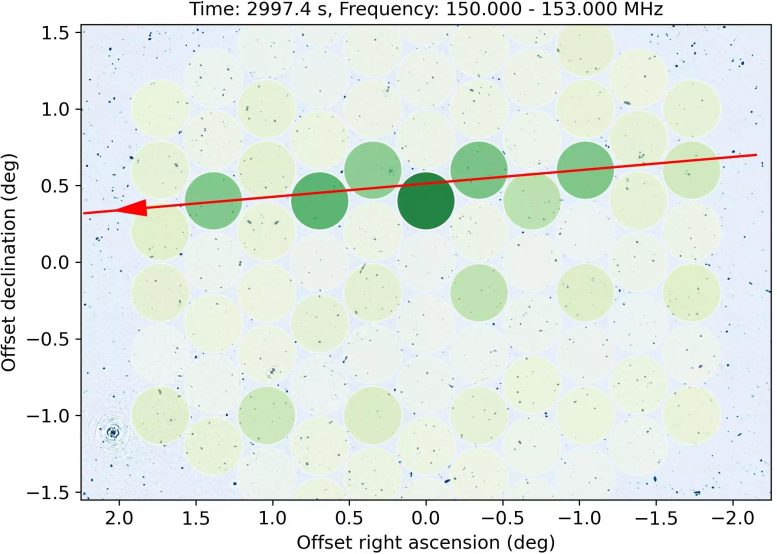
“This study represents the latest effort to better understand satellite constellations’ impact on radio astronomy,” said lead author Federico Di Vruno, “previous workshops on Dark and Quiet Skies theorized about this radiation, our observations confirm it is measurable.” Di Vruno is the co-director of the International Astronomical Union’s Centre for the Protection of the Dark and Quiet Sky from Satellite Constellation Interference (IAU CPS) and also spectrum manager for the SKA Observatory (SKAO). The other authors are all active members of the CPS.
Existing and Planned Constellations
Di Vruno and his co-authors initially focused on SpaceX satellites because SpaceX had the largest number of satellites – more than 2,000 – in orbit at the time of the observations. However, they recognize that SpaceX is not the only operator of large satellite constellations. The authors expect to detect similar unintended emissions from other low-Earth-orbiting satellites, and further measurement work is planned already focusing on other satellite constellations.
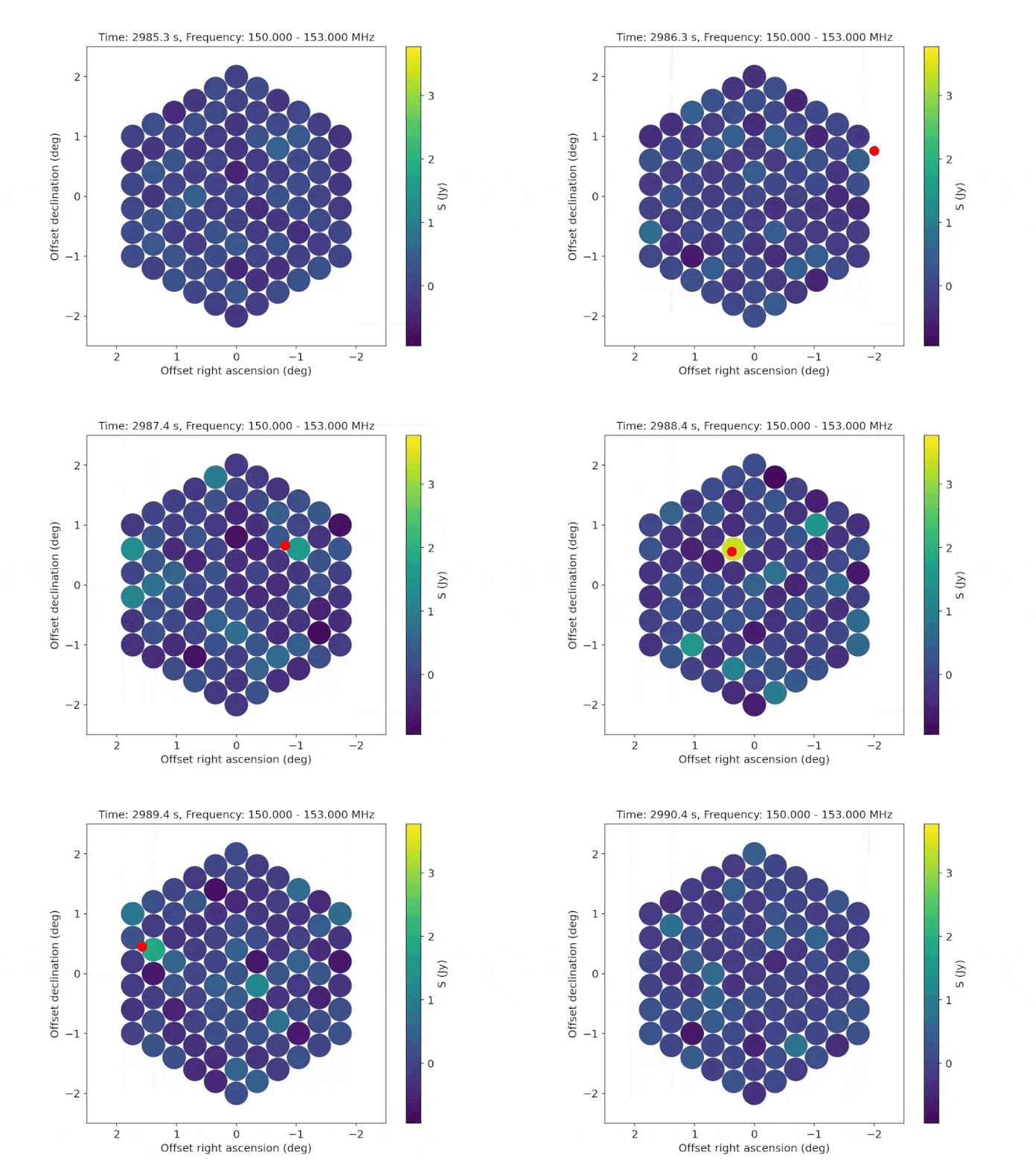
“With LOFAR, we detected radiation between 110 and 188 MHz from 47 out of the 68 satellites that were observed. This frequency range includes a protected band between 150.05 and 153 MHz specifically allocated to radio astronomy by the International Telecommunications Union (ITU),” says co-author Cees Bassa from ASTRON, the Netherlands Institute for Radio Astronomy. SpaceX is nevertheless not violating any rules, as for satellites, this kind of radiation is not covered by any international regulation. In contrast, terrestrial equipment is regulated by strict rules to ensure that one device does not interfere with another one nearby.
The authors also performed simulations of this effect from several satellite constellations. “Our simulations show that the larger the constellation, the more important this effect becomes as the radiation from all satellites adds up. This makes us not only worried about the existing constellations, but even more about the planned ones. And also about the absence of clear regulation that protects the radio astronomy bands from unintended radiation,” says co-author Benjamin Winkel from the Max Planck Institute for Radio Astronomy (MPIfR) in Germany.
Increased Collaboration With Satellite Operators Is Key
The authors are in close contact with SpaceX, and the company has offered to continue to discuss possible ways to mitigate any adverse effects to astronomy in good faith. As part of their design iteration, SpaceX has already introduced changes to its next generation of satellites which could mitigate the impact of these unintended emissions on important astronomical projects.
Co-author Gyula Józsa (also MPIfR and Rhodes University in South Africa) highlights: “We believe that the early recognition of this situation gives astronomy and large constellation operators an opportunity to work together on technical mitigations pro-actively, in parallel to the necessary discussions to develop suitable regulations.”
“The present study highlights an example of the various channels of how technology development may have unforeseen side effects on astronomy,” concludes Prof. Michael Kramer, Director at the MPIfR and President of the Astronomische Gesellschaft in Germany. He distinctly welcomes SpaceX’s collaborative approach. “With SpaceX setting an example, we are now hoping for the broad support from the whole satellite industry and regulators.”
Reference: “Unintended electromagnetic radiation from Starlink satellites detected with LOFAR between 110 and 188 MHz” by F. Di Vruno, B. Winkel, C. G. Bassa, G. I. G. Józsa, M. A. Brentjens, A. Jessner and S. Garrington, 10 August 2023, Astronomy & Astrophysics.
DOI: 10.1051/0004-6361/202346374
About the CPS
The International Astronomical Union’s Centre for the Protection of the Dark and Quiet Sky from Satellite Constellation Interference (IAU CPS) is a global organization co-hosted by the US-based NSF’s NOIRLab and the SKA Observatory (SKAO), under the auspices of the IAU.
The CPS facilitates global coordination of efforts by the astronomical community in concert with observatories, space agencies, industry, regulators and other sectors to help mitigate the negative consequences of satellite constellations on astronomy.
The participating research institutions include the SKA Observatory, European Science Foundation, Max Planck Institute for Radio Astronomy in Germany, Netherlands Institute for Radio Astronomy (ASTRON), Rhodes University in South Africa, and the Jodrell Bank Centre for Astrophysics in the UK. Benjamin Winkel, Gyula I. G. Józsa, and Axel Jessner are co-authors from the MPIfR and active in the Committee for Radioastronomy Frequencies (CRAF), which works to protect radio astronomical observations from man-made radio signals. All authors are members of the Opticon RadioNet Pilot, which organizes the ORP Sky Protection Group.
Never miss a breakthrough: Join the SciTechDaily newsletter.
Follow us on Google and Google News.
1 Comment
What about an international sue? Why will they spoil skies (after have spoiled Earth) with no consequences? Are n´t better technologies for Internet connection? Haven´t citizens of the world anything to say? How obsolete seems the statement “equal rights”! Same observation for Chinese companies counterpart.