
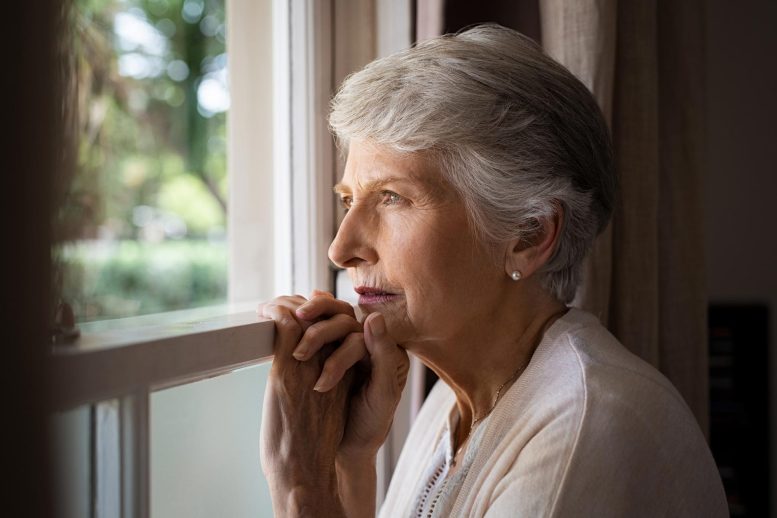
New research links social isolation and loneliness to a 27% increase in heart disease risk among postmenopausal women, suggesting that these factors should be integrated into routine health assessments.
During the current pandemic, social distancing has been one tool used to reduce the spread of COVID-19. But data from a new study point to as much as a 27% increase in heart disease risk in postmenopausal women who experience both high levels of social isolation and loneliness.
Social Isolation and Loneliness on Heart Health
The findings of the prospective study, published in the February 2, 2022, online issue of JAMA Network Open, reveal that social isolation and loneliness independently increased cardiovascular disease risk by 8% and 5% respectively. If women experienced high levels of both, their risk rose 13% to 27% compared to women who reported low levels of social isolation and low levels of loneliness.
“We are social beings. In this time of COVID-19, many people are experiencing social isolation and loneliness, which may spiral into chronic states,” said first author Natalie Golaszewski, Ph.D., a postdoctoral scholar at the Herbert Wertheim School of Public Health and Human Longevity Science at University of California San Diego. “It is important to further understand the acute and long-term effects these experiences have on cardiovascular health and overall well-being.”
Importantly, social isolation and loneliness are mildly correlated and can occur at the same time, but they are not mutually exclusive. A socially isolated person is not always lonely and conversely a person experiencing loneliness is not necessarily socially isolated.
“Social isolation is about physically being away from people, like not touching or seeing or talking to other people. Loneliness is a feeling, one that can be experienced even by people who are regularly in contact with others,” said senior author John Bellettiere, Ph.D., M.P.H., assistant professor of epidemiology at the Herbert Wertheim School of Public Health.

Links Between Social Factors and Cardiovascular Disease
Social isolation and loneliness are a growing public health concern as they are associated with health conditions that increase the risk of cardiovascular disease including obesity, smoking, physical inactivity, poor diet, high blood pressure, and high cholesterol.
When researchers included all of these health behaviors and conditions in their study and adjusted for diabetes and depression, high social isolation and loneliness remained strongly linked with increased risk for heart disease, supporting the importance of studying these social conditions.
According to the Centers for Disease Control and Prevention, heart disease is the leading cause of death for women in the United States, responsible for 1 in every 5 deaths.
Demographic Vulnerability and Research Gaps
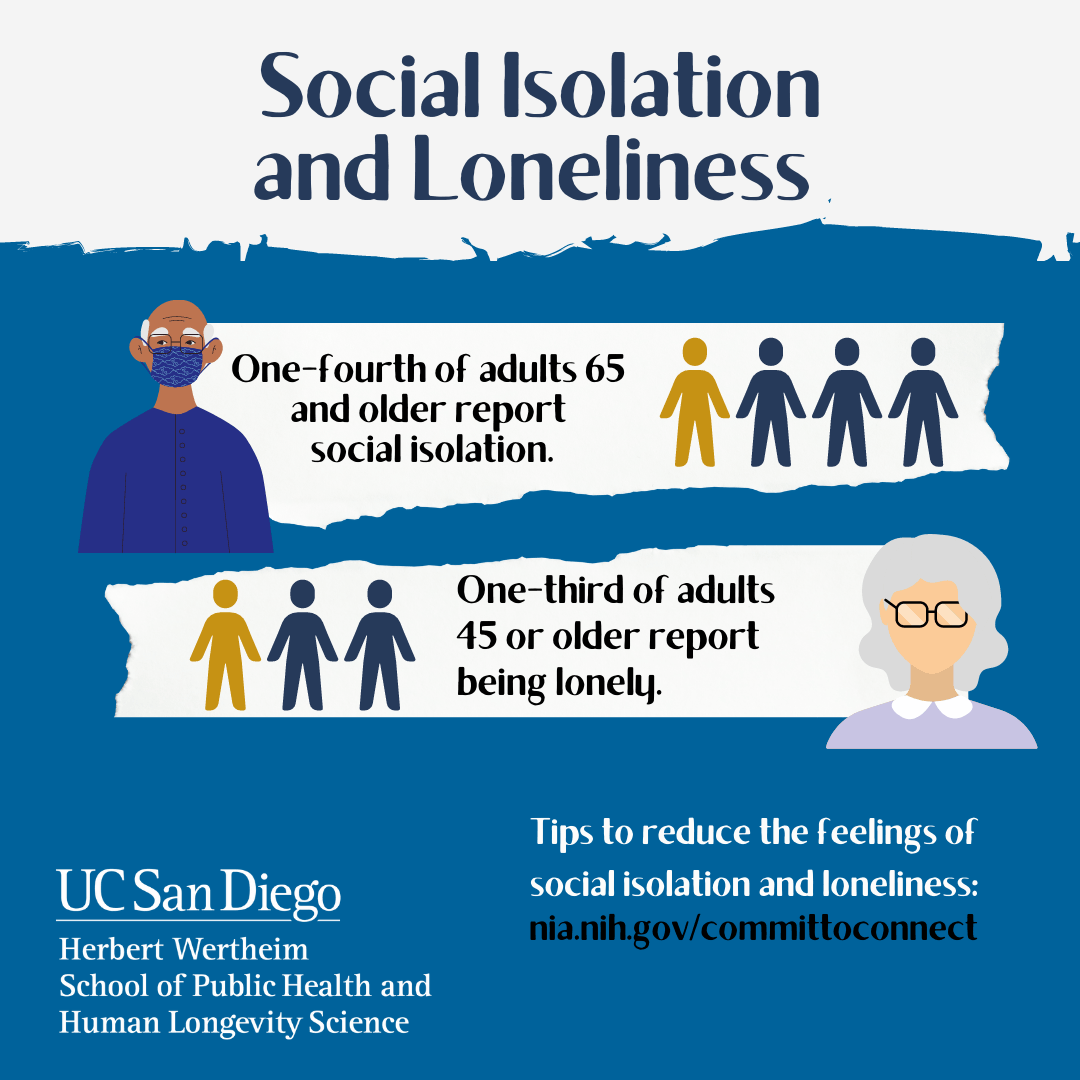
As social networks shrink, older adults are more at risk for social isolation and loneliness, wrote the authors. One-fourth of adults 65 and older report social isolation and one-third of adults 45 or older report being lonely.
“We do not yet know whether the increased risk of cardiovascular disease is due to acute exposure to social isolation and loneliness or whether prolonged exposure accumulated over a lifetime is the culprit. Further studies are needed to better understand that,” said Bellettiere.
Previous research indicates women experience more social isolation than men.

For this study, 57,825 postmenopausal women living in the United States who had previously participated in the Women’s Health Initiative study responded to questionnaires assessing social isolation from 2011 to 2012. They were sent a second questionnaire assessing loneliness and social support in 2014 to 2015.
Participants were followed from the time of the questionnaire completion through 2019 or when they were diagnosed with cardiovascular disease. A total of 1,599 women experienced cardiovascular disease.
Importance of Monitoring Social Factors in Healthcare
“Measures of social isolation and loneliness — even with brief questions as was done in our study — should be incorporated into standard care,” said Golaszewski. “We monitor our patients’ blood pressure, weight, and temperature, and it might also be beneficial to capture the social needs that individuals may be lacking to better understand cardiovascular risk and develop solutions.”
Individuals who feel lonely or socially isolated can find information about steps to help reduce these feelings from the National Institute on Aging.
Reference: “Evaluation of Social Isolation, Loneliness, and Cardiovascular Disease Among Older Women in the US” by Natalie M. Golaszewski, PhD; Andrea Z. LaCroix, PhD; Job G. Godino, PhD; Matthew A. Allison, MD, MPH; JoAnn E. Manson, MD, DrPH; Jennifer J. King, PhD; Julie C. Weitlauf, PhD; Jennifer W. Bea, PhD; Lorena Garcia, PhD; Candyce H. Kroenke, ScD; Nazmus Saquib, PhD; Brad Cannell, PhD, MPH; Steve Nguyen, PhD and John Bellettiere, PhD, 2 February 2022, JAMA Network Open.
DOI: 10.1001/jamanetworkopen.2021.46461
Co-authors include: Andrea Z. LaCroix, Steve Nguyen and Matthew A. Allison, UC San Diego; Job G. Godino, UC San Diego and Laura Rodriguez Research Institute, Family Health Centers of San Diego; JoAnn E. Manson, Brigham and Women’s Hospital, Harvard Medical School; Jennifer J. King and Jennifer W. Bea; University of Arizona Cancer Center; Julie C. Weitlauf, Veterans Affairs Palo Alto Health Care System and Stanford University School of Medicine; Lorena Garcia, University of California Davis School of Medicine; Candyce H. Kroenke, Kaiser Permanente Northern California; Nazmus Saquib, Sulaiman Al Rajhi University; and Brad Cannell, University of Texas Health Science Center at Houston School of Public Health-Dallas Campus.
This research was funded, in part, by the National Institute on Aging (T32AG058529, P01AG052352) the National Institute of Diabetes and Digestive and Kidney Diseases, (R01DK114945), and the Tobacco-Related Disease Research Program (T31KT1501). The Women’s Health Initiative was funded by the National Heart, Lung, and Blood Institute (HHSN268-201100046C, HHSN268201100001C, HHSN26820-1100002C, HHSN268201100003C, HHSN26820-1100004C, HHSN271201100004C).
Disclosures: LaCroix reported receiving grants from the National Heart, Lung, and Blood Institute, National Institutes of Health (NIH) and grants from the National Institute on Aging during the conduct of the study and has been a paid consultant on a NIH grant for the Fred Hutchinson Cancer Research Center. Manson reported receiving grants from the NIH during the conduct of the study and grants from the NIH and Mars Edge outside the submitted work. Bea reported serving on the Women’s Health Initiative Papers and Proposals Committee and being a consultant for the Western Region. Bellettiere reported receiving grants from the Tobacco-Related Disease Research Program during the conduct of the study and personal fees from Meta outside the submitted work.
Never miss a breakthrough: Join the SciTechDaily newsletter.
Follow us on Google and Google News.