
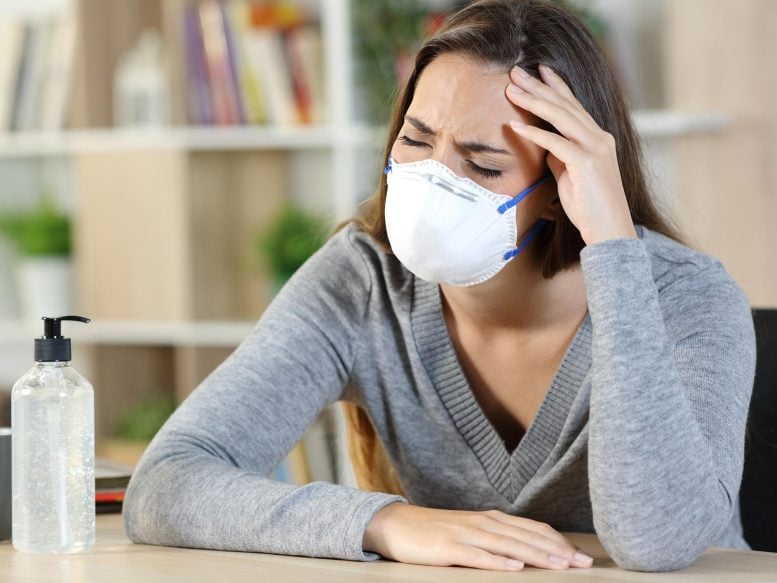
Long COVID affects about 10% of COVID-19 survivors, causing symptoms like breathing difficulties and brain fog. Diagnosis is challenging due to overlapping symptoms with other conditions. Researchers are exploring its unique immune response to develop therapies.
Even as the unpredictable rise and fall of COVID-19 infections continues at home and around the world, a new and ugly pandemic-related problem is emerging.
We know it generically as “long COVID,” though it’s hardly generic, and we still know very little about it, including what it is, who, when or how badly it will strike, how long it might take to recover or whether complete recovery is possible for all.
Long COVID, or post-COVID condition, features symptoms that can include trouble breathing, chest pain, brain “fog,” fatigue, loss of smell or taste, nausea, anxiety, and depression, among others.
It appears to affect about one in 10 people who have recovered from a COVID-19 infection. In Canada, a conservative estimate is that long COVID has affected 100,000 to 150,000 people so far, although the studies assessing prevalence have serious methodologic flaws.
Post-viral syndromes
The medical and research community first became aware of long COVID as a sometimes debilitating post-viral syndrome that first appeared to affect patients who’d had severe COVID-19, particularly those who had been treated in intensive care.
What’s challenging about identifying long COVID is that the symptoms are broad and can be associated with other conditions, and that some, such as anxiety, depression and fatigue, cannot be confirmed with lab tests.
Similar symptoms that follow viral infections other than COVID have been seen before. Post-viral syndrome after influenza continues to haunt some long after the infection has passed, for example. Even common and typically less harmful viral infections such as mononucleosis can sometimes have very serious and long-lasting after-effects.

But long COVID appears to be different: it is often more severe and is harder to track. Though we and others are heavily engaged in long-COVID research, it will likely be a year before we have a better picture of the condition. Once we do, it should be easier to develop therapies.
Among the questions that demand urgent answers is whether long COVID is a typical post-viral syndrome that follows a predictable pattern, or whether it has a unique immune fingerprint. Are there clinical, X-ray, or other markers of long COVID? Is there evidence of persistent low-level infection or unrelenting inflammation?
Part of the challenge is that researchers like us are trying to study COVID-19’s after-effects while the world is still struggling with the acute phase of the pandemic, including the new Omicron variant.
Cause and effect
We are working systematically to determine what the cause and effect might be. We need reliable evidence, but it is elusive.
Even finding the “control,” or comparator population, for research — those who have not been affected — is hard, because some people who have been infected with COVID-19 were never diagnosed, while others were diagnosed without testing.
As long as there remains a segment of the population that may or may not have had COVID-19, it is devilishly hard to assemble a control group that would allow us to draw definitive conclusions about what long COVID is — and what it isn’t.
A further obstacle is that we lack detailed pre-infection health information for COVID-19 patients, making it challenging to measure how post-COVID-19 condition has changed them.
If a patient is depressed now, for example, might there be another cause, or could the condition have been developing before the infection? Could persistent coughing be rooted in something that happened before or after a COVID-19 infection?
Viruses and hosts
The relationship between hosts and viruses can be complex and highly varied. It is shaped by the condition of a patient prior to being infected, and by the individual’s immune system. The interplay between those factors creates a wide range of potential outcomes, making it harder to study and treat this new condition.
One theory we and our colleagues are exploring through research is that COVID-19 triggers such a powerful immune response that it may not be the virus that is directly responsible for long COVID, but our bodies’ response to it.
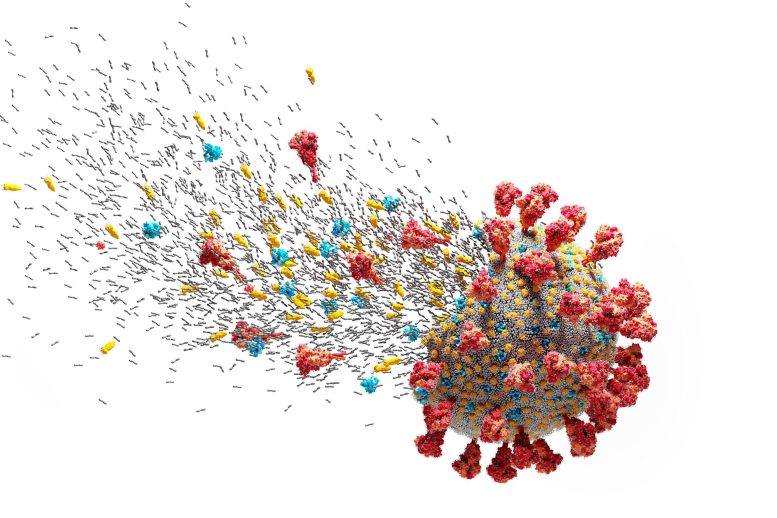
Some of long COVID’s effects appear to be caused by inflammation, which is part of the body’s typical reaction to any virus. This reaction is exaggerated in COVID-19, especially in terms of the immune system’s inability to return to normal function.
When a patient’s body is unable to eliminate a virus quickly, it escalates its immune response, and can end up making antibodies against itself. Some of what we are seeing with long COVID may be due to the collateral damage from that response, especially when the inflammation resulting from the acute infection was severe.
Despite the logistical, methodological, scientific and other barriers — including general pandemic overload — it’s vital to do the research to answer these and other questions.
The health-care system needs to plan for the resources to care for this significant group of patients, perhaps for years after the pandemic has subsided. Knowing more about this serious and growing problem is the only way we can take it on.
Written by:
- Manali Mukherjee – Assistant Professor of Medicine, McMaster University
- Zain Chagla – Associate Professor, Division of Infectious Diseases, Department of Medicine, McMaster University
This article was first published in The Conversation.
Never miss a breakthrough: Join the SciTechDaily newsletter.
Follow us on Google and Google News.
1 Comment
Medical clinics and hospitals in USA are denying life-saving Ivermectin medicine even with court orders. Big Pharma doing all that they can to push the vaxx and inoculate us while effective and cheap COVID cures exist. There turns out to be censorship that we have never seen before for those who are looking for these treatments. We say over and over again that indepenedent researchers found Ivermectin safe and very effective for these Flu-Corona symptoms. Getting Ivermectin is easy https://truthpharmacy.com