
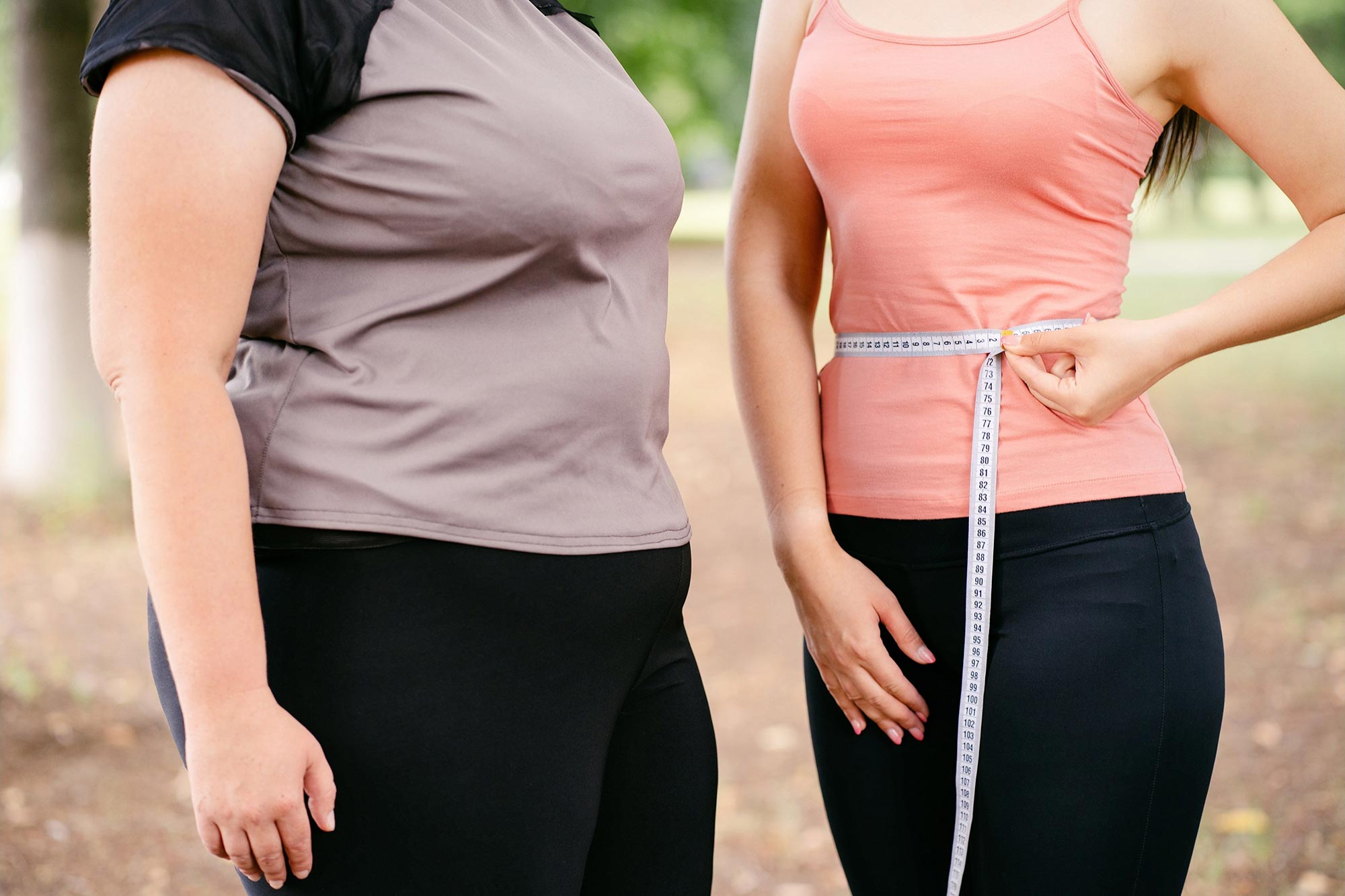
Participants in a self-directed diet program lost significantly more weight by consuming higher amounts of protein and fiber, along with adhering to a personalized and flexible diet plan.
Over a 25-month study, the most successful participants, who made up 41% of the total, lost an average of 12.9% of their body weight by following individualized plans that prioritized nutritional education and sustainable changes.
Successful Dietary Strategies
Participants in a self-directed dietary education program who had the greatest success at losing weight across a 25-month period consumed greater amounts of protein and fiber, a study found. Personalization and flexibility also were key in creating plans that dieters could adhere to over time.
At the one-year mark, successful dieters (41% of participants) had lost 12.9% of their body weight, compared with the remainder of the study sample, who lost slightly more than 2% of their starting weight, according to a paper on the study published in Obesity Science and Practice.
The Individualized Diet Improvement Program
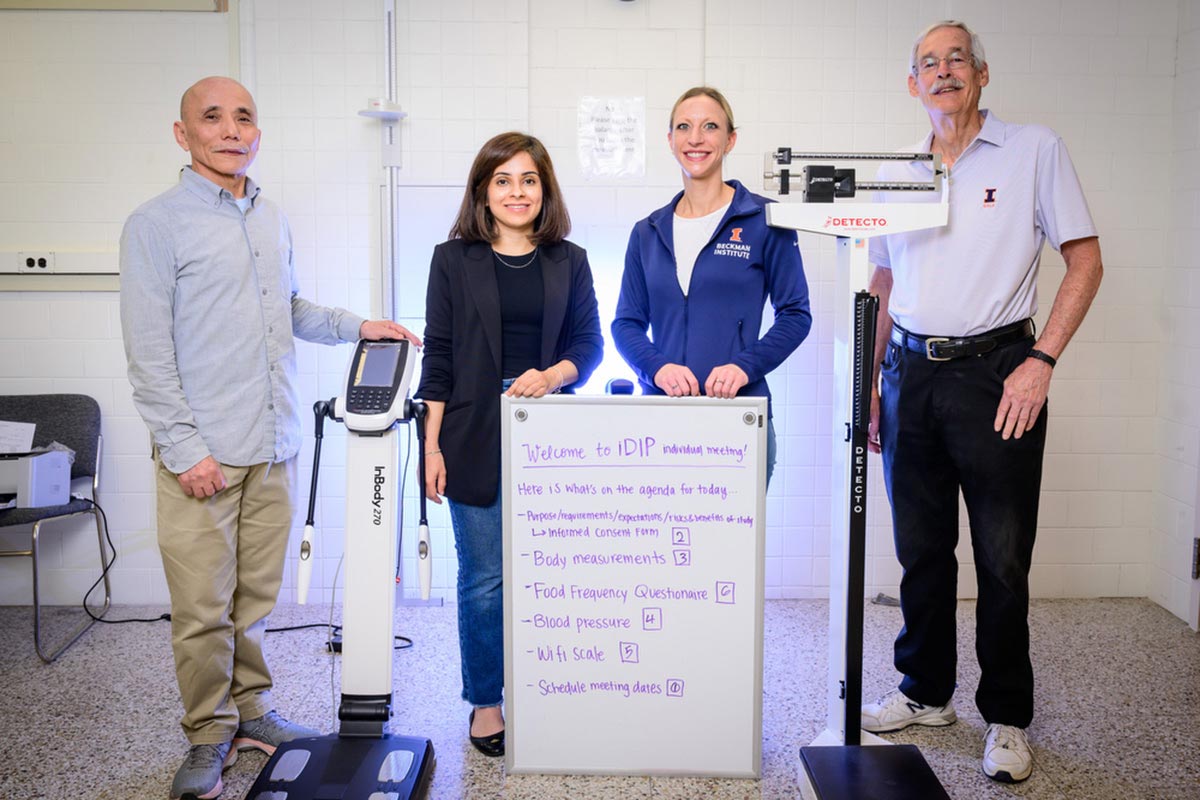
The dieters were participants in the Individualized Diet Improvement Program (iDip), which uses data visualization tools and intensive dietary education sessions to increase dieters’ knowledge of key nutrients, enabling them to create a personalized, safe, and effective weight-loss plan, said Manabu T. Nakamura, a professor of nutrition at the University of Illinois Urbana-Champaign and the leader of the research.
“Flexibility and personalization are key in creating programs that optimize dieters’ success at losing weight and keeping it off,” Nakamura said. “Sustainable dietary change, which varies from person to person, must be achieved to maintain a healthy weight. The iDip approach allows participants to experiment with various dietary iterations, and the knowledge and skills they develop while losing weight serve as the foundation for sustainable maintenance.”
The pillars of iDip are increasing protein and fiber consumption along with consuming 1,500 calories or less daily.
Data Visualization Tools and Dietary Guidelines
Based on the dietary guidelines issued by the Institutes of Medicine, the iDip team created a one-of-a-kind, two-dimensional quantitative data visualization tool that plots foods’ protein and fiber densities per calorie and provides a target range for each meal. Starting with foods they habitually ate, the dieters created an individualized plan, increasing their protein intake to about 80 grams and their fiber intake to about 20 grams daily.
Correlations Between Protein, Fiber Intake, and Weight Loss
In tracking the participants’ eating habits and their weights with Wi-Fi enabled scales, the team found strong inverse correlations between the percentages of fiber and protein eaten and dieters’ weight loss.
“The research strongly suggests that increasing protein and fiber intake while simultaneously reducing calories is required to optimize the safety and efficacy of weight loss diets,” said first author and U. of I. alumna Mindy H. Lee, a then-graduate student and registered dietitian-nutritionist for the iDip program.
The Role of Protein in Preserving Lean Mass
Nakamura said the preservation of lean mass is very important while losing weight, especially when using weight-loss drugs.
“Recently, the popularity of injectable weight loss medications has been increasing,” Nakamura said. “However, using these medications when food intake is strongly limited will cause serious side effects of muscle and bone loss unless protein intake is increased during weight loss.”
A total of 22 people who enrolled in the program completed it, including nine men and 13 women. Most of the dieters were between the ages of 30-64. Participants reported they had made two or more prior attempts to lose weight. They also had a variety of comorbidities — 54% had high cholesterol, 50% had skeletal problems and 36% had hypertension and/or sleep apnea. Additionally, the dieters reported diagnoses of diabetes, nonalcoholic fatty liver disease, cancer, and depression, according to the study.
Impact of Depression on Weight Loss
The seven dieters who reported they had been diagnosed with depression lost significantly less weight — about 2.4% of their starting weight compared with those without depression, who lost 8.39% of their initial weight. The team found that weight loss did not differ significantly among participants with other comorbidities, or between younger and older participants or between men and women.
Body composition analysis indicated that dieters maintained their lean body mass, losing an average of 7.1 kilograms of fat mass and minimal muscle mass at the six-month interval. Among those who lost greater than 5% of their starting weight, 78% of the weight they lost was fat, according to the study.
Long-Term Fat and Weight Loss Results
Overall, the participants reduced their fat mass from an average of 42.6 kilograms at the beginning of the program to 35.7 kilograms at the 15-month mark. Likewise, the dieters reduced their waists by about 7 centimeters at six months and by a total of 9 centimeters at 15 months, the team found.
In tracking dieters’ protein and fiber intake, the team found a strong correlation between protein and fiber consumption and weight loss at three months and 12 months.
“The strong correlation suggests that participants who were able to develop sustainable dietary changes within the first three months kept losing weight in the subsequent months, whereas those who had difficulty implementing sustainable dietary patterns early on rarely succeeded in changing their diet in the later months,” Nakamura said.
The team hypothesized that this correlation could also have been associated with some dieters’ early weight loss success, which may have bolstered their motivation and adherence to their program.
Reference: “Successful dietary changes correlate with weight-loss outcomes in a new dietary weight-loss program” by Mindy H. Lee, Annabelle Shaffer, Nouf W. Alfouzan, Catherine C. Applegate, Jennie C. Hsu, John W. Erdman and Manabu T. Nakamura, 27 May 2024, Obesity Science & Practice.
DOI: 10.1002/osp4.764
The study’s co-authors, all at the U. of I., were: Dr. Jennie Hsu, a clinical professor of nutritional sciences and internist with the Carle Illinois College of Medicine; professor emeritus of nutrition and food science John W. Erdman Jr.; medical student Annabelle Shaffer; Catherine C. Applegate, a postdoctoral research associate at the Beckman Institute for Advanced Science and Technology; and graduate student Nouf W. Alfouzan.
The project was funded by the U. S. Department of Agriculture’s National Institute of Food and Agriculture, and the National Institute of Health’s National Institute of Biomedical Imaging and Bioengineering.
Never miss a breakthrough: Join the SciTechDaily newsletter.
Follow us on Google and Google News.
13 Comments
Not really a major breakthrough. You had me curious and on-board until I saw people’s diets were limited to 1500 calories a day. Most people should lose weight over 25 months on that restriction. If people still lost weight on the normal daily recommended calorie intake with increased protein and fiber intake then I’d be impressed with the study.
After years of struggling with weight loss, I’ve finally found a path that works for me. As someone in their 60s with hypothyroidism and type 2 diabetes, diet alone wasn’t enough—I tried Keto and a Mediterranean-based diet, but neither worked. Then, I discovered an app that allowed me to track my daily intake of protein, carbs, and fats. I realized my protein intake was lacking, so I increased it but soon found that I don’t really enjoy meat—it grosses me out. This led me to explore plant-based proteins, which was a game-changer.
Previously, I wasn’t eating any grains—except for occasional oatmeal and plenty of whole wheat bread, which wasn’t the best choice. I’ve now shifted my diet to include more fiber: beans, whole grains, vegetables, nuts, seeds, and even fruit (which I used to avoid because of my diabetes). Although I’m not a fan of chicken, I eat it for its protein value, along with more seafood, fish, and eggs (every day).
I’m now averaging a pound of weight loss per week and walking 6,000-8,000 steps daily with some weight training, which will be my next big focus. Five months later, I’m down over 30 pounds. I’m no longer hungry, my cravings for sweets have disappeared, and while I still love salt, I’ve cut out chips and other salty junk food. It feels great to finally lose weight and shed the inflammation and other issues that came with it. I believe the information in this article is very accurate.
Thanks so much for your comment. I have been really sick for over a year. I also have hypothyroidism and just diagnosed with type 2 diabetes. Please update me on the app you used, it would be appreciated.
Thanks
Would really like to know the 2 nutrients that help you lose weight or get this miracle app.
Hi, my name is Len.
I have hypothyroid as well.
I went through a brain surgery as well.
Loosing weight is quite difficult for me.
Id you find out more about this program, please let me know.
Thanks agàin len
Please tell which app you used. Was it Noom?
Excellent
Can you share the app
I too have to make changes
Cutting way down on sugar
Increasing protein
Weight Training
Rebounding
It’s a struggle
I practice this died. I’m 80 years old and I can carry sand bags weighting 25 kg.
I would also like the name of the app as I am about to start a high protein and fiber diet per my doctor’s recommendation.
Lose weight faster with these 2 nutrients – Yes tell us what they are!!! ????
The article said 80g protein and 20g fiber. Plus restricting calories to 1500 per day.
B.S. article .. the only way to lose weight is fasting… the less you eat the more weight you lose. You don’t need to be a scientist to know this.