
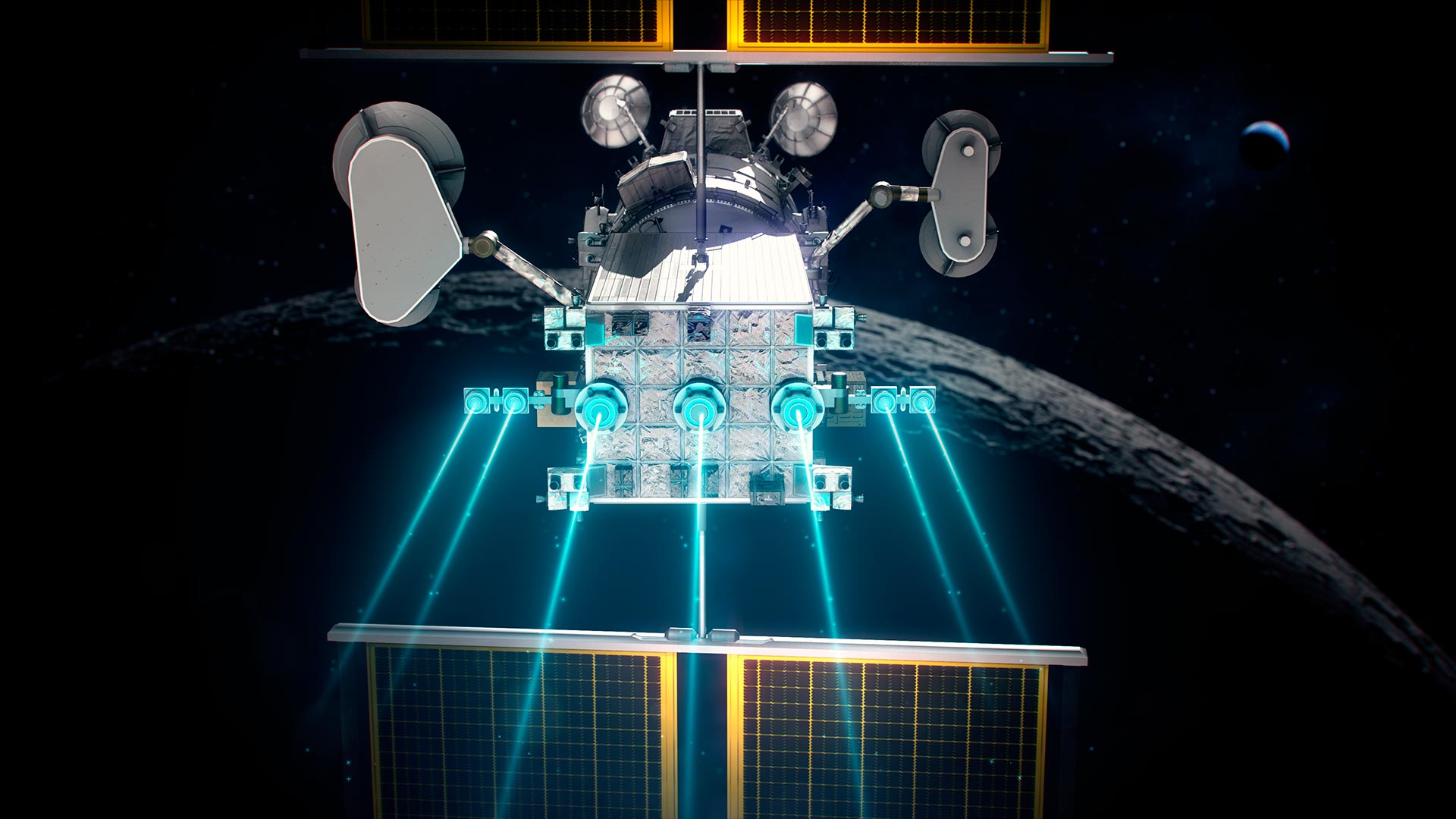
NASA’s upcoming Gateway space station, set to orbit the Moon, will rely heavily on its Power and Propulsion Element (PPE) for energy and maintaining its orbit. Currently under development with Maxar Technologies, the PPE uses solar electric propulsion to efficiently power the station. This system, designed to significantly reduce the need for propellant, will be integrated with Gateway’s habitation module and launched to support deep space exploration and future Artemis missions to Mars.
As astronauts live and work on Gateway to enable sustained exploration and research in deep space, their efforts will be made possible by Gateway’s Power and Propulsion Element (PPE). A foundational component of the lunar outpost and the most powerful solar electric spacecraft ever flown, PPE will provide Gateway with power and allow it to maintain its unique orbit around the Moon.
Gateway will be humanity’s first space station in lunar orbit and serve as an essential element of NASA’s Artemis missions. As astronauts live and work on Gateway to enable sustained exploration and research in deep space, their efforts will be made possible by the Power and Propulsion Element (PPE). A foundational component of the lunar outpost and the most powerful solar electric spacecraft ever flown, PPE will provide Gateway with power and allow it to maintain its unique orbit around the Moon.
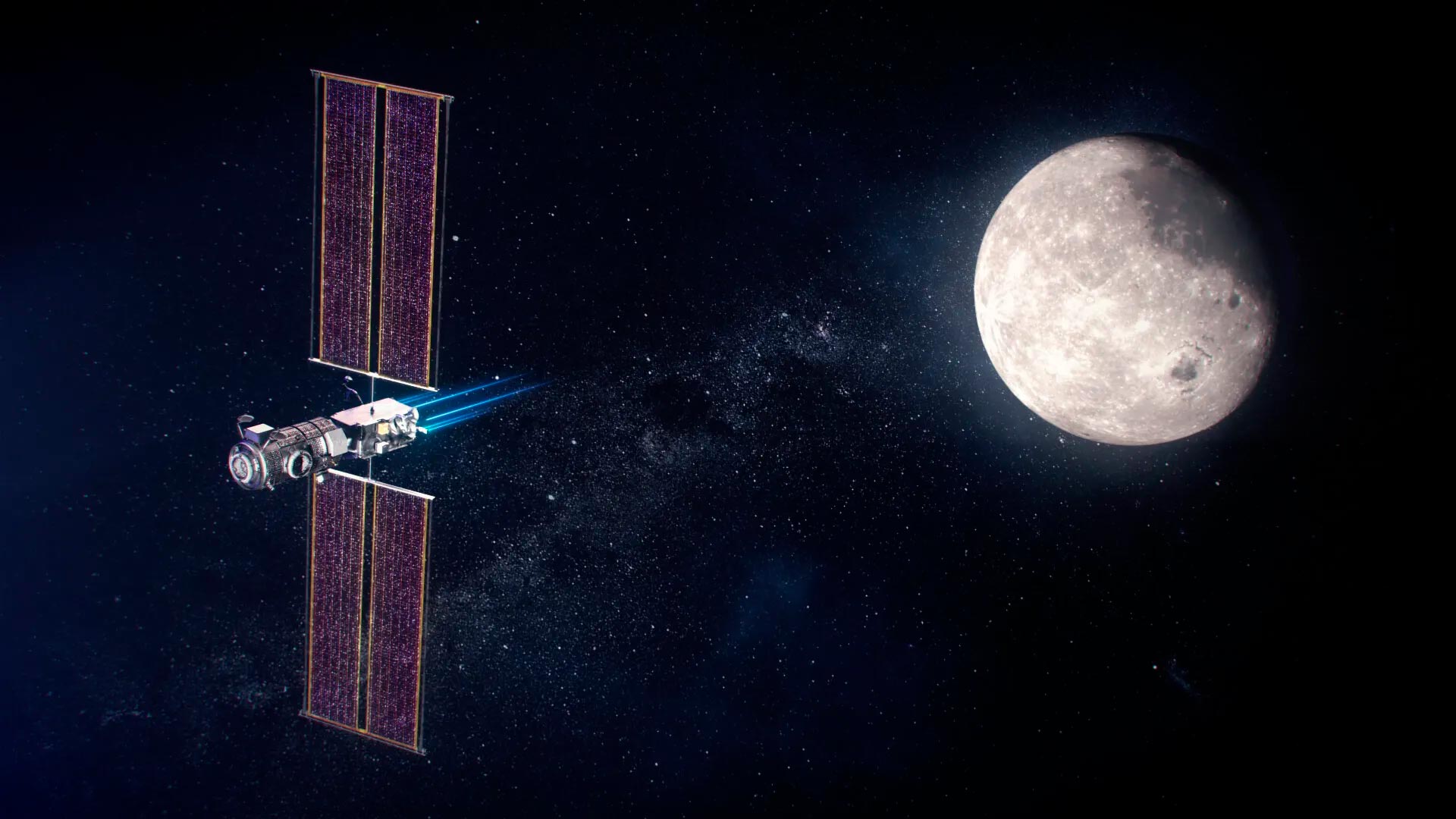
NASA’s Glenn Research Center in Cleveland leads the agency’s partnership with Maxar Technologies to design and build PPE, developing next-generation technology and capabilities to enable Artemis missions and prepare for human missions to Mars.
How does PPE work?
- PPE will generate 60kW of electrical power, which will power Gateway’s subsystems and its solar electric propulsion (SEP) system to keep the station in orbit around the Moon. PPE leverages technology advancements from past successful electric propulsion missions – such as the recent DART mission – to help NASA push the boundaries of what’s possible in deep space.
- PPE’s SEP system provides greater fuel economy, enabling lower-cost missions that can carry more cargo. This is because the spacecraft’s propellent mass can be reduced up to 90% by being augmented with energy from the Sun.
- Once deployed, PPE’s two large, yoga-mat-like roll-out solar arrays – which are approximately the size of a football field’s endzone – will generate power to ionize and accelerate Xenon gas, using a tenth of the propellant required by conventional chemical propulsion systems.
- As the powerhouse of Gateway, the PPE will provide capabilities for high-rate communications between the station, the lunar surface, and Earth.
PPE is just one element of Gateway, but it is foundational. To form the initial Gateway space station, PPE will be integrated with Gateway’s Habitation and Logistics Outpost (HALO) module, where astronauts will live, work, and prepare for lunar surface missions. PPE and HALO will be joined together at NASA’s Kennedy Space Center in Florida, launched on a SpaceX Falcon Heavy rocket, and will spend about a year transiting through deep space before entering a unique near-rectilinear halo orbit around the Moon.
Gateway’s capabilities to support longer-duration missions around the Moon will be expanded with the addition of elements and modules provided by the Canadian Space Agency, European Space Agency, and Japan Aerospace Exploration Agency, all of which will draw power from PPE. As Gateway enables access to the Moon and provides opportunities to develop new capabilities, PPE will energize Artemis missions and help pave the way for human exploration of Mars.
Never miss a breakthrough: Join the SciTechDaily newsletter.
Follow us on Google and Google News.