
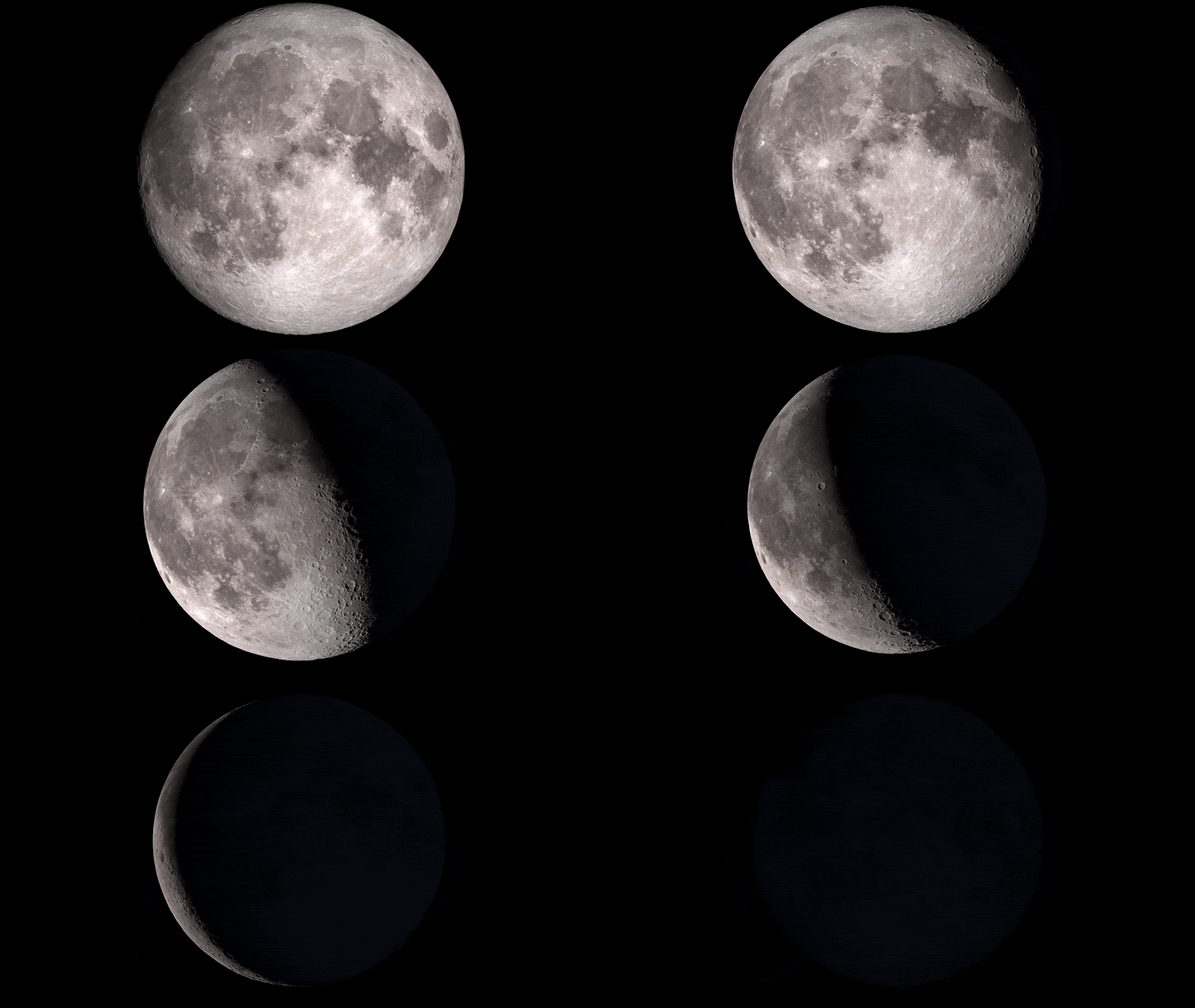
Reanalysis of Chang’e 3 radar data revealed a buried lunar paleoregolith layer up to 30 feet thick, preserved between lava flows 2.3–3.6 billion years old. This discovery suggests heavier asteroid bombardment in the past.
The dusty surface of the moon — immortalized in images of Apollo astronauts’ lunar footprints — formed as the result of asteroid impacts and the harsh environment of space breaking down rock over millions of years. An ancient layer of this material, covered by periodic lava flows and now buried under the lunar surface, could provide new insight into the Moon’s deep past, according to a team of scientists.
“Using careful data processing, we found interesting new evidence that this buried layer, called paleoregolith, may be much thicker than previously expected,” said Tieyuan Zhu, assistant professor of geophysics at Penn State. “These layers have been undisturbed since their formation and could be important records for determining early asteroid impact and volcanic history of the moon.”
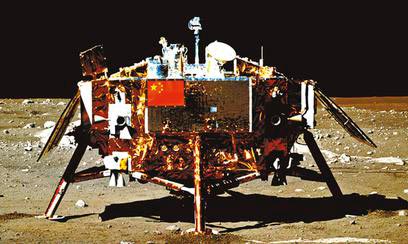
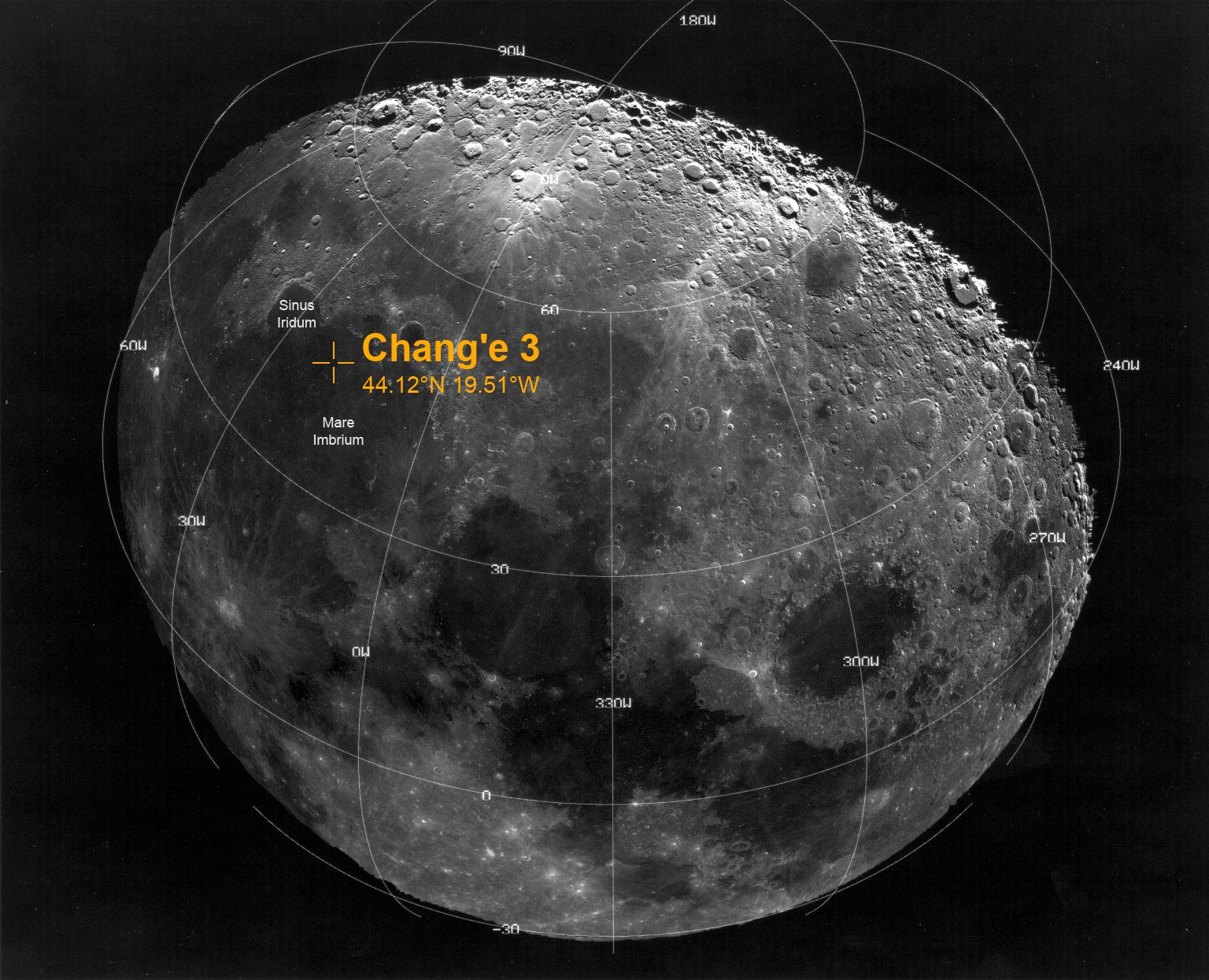
The team, led by Zhu, conducted new analysis of radar data collected by China’s Chang’e 3 mission in 2013, which performed the first direct ground radar measurements on the moon.
Thicker Layers, Faster Formation
The researchers identified a thick layer of paleoregolith, roughly 16 to 30 feet, sandwiched between two layers of lava rock believed to be 2.3 and 3.6 billion years old. The findings suggest the paleoregolith formed much faster than previous estimates of 6.5 feet per billion years, the scientists said.
The moon has experienced volcanic activity throughout its history, depositing lava rock on the surface. Over time, the rock breaks down into dust and soil, called regolith, with repeated asteroid impacts and space weathering, only to be buried by subsequent lava flows, the scientists said.
“Lunar scientists count craters on the moon and use computer models to determine the rate that regolith is produced,” Zhu said. “Our findings provide a constraint on what happened between two and three billion years ago. This is the very unique contribution of this work.”
Previous studies have examined the dataset, created when the Yutu rover sent electromagnetic pulses into the lunar underground and listened as they echoed back. Zhu said his team developed a four-step data processing flow to enhance the signal and suppress noise in the data.
The scientists observed changes in polarity as the electromagnetic pulses traveled down through the dense lava rock and the paleoregolith, allowing the team to distinguish between the different layers.
“Our paper is really providing the first geophysical evidence to see this electromagnetic permittivity changed from a small value for the paleoregolith to a large value for the lava flows,” Zhu said. “We discovered this polarity change in the data and created a detailed geophysical image of the subsurface up to a few hundred meters depth.”
Clues to a More Violent Solar System
The results may indicate higher meteoric activity in the solar system during this period billions of years ago, according to the team, who recently reported their findings in the journal Geophysical Research Letters.
Zhu said the data processing tools may have use for interpreting similar data collected during future missions to the moon, Mars or elsewhere in the solar system. His team is now working with machine learning technology to further improve the findings.
“I would say we used traditional data processing techniques, but we looked at the data with more care and designed its suitable workflow for such lunar data because this is a very different environment than Earth,” Zhu said. “Here at Penn State, we already made this workflow as an open-source code for colleagues.”
Reference: “Ultra-Thick Paleoregolith Layer Detected by Lunar Penetrating Radar: Implication for Fast Regolith Formation Between 3.6 and 2.35 Ga” by Tieyuan Zhu, Jinhai Zhang and Yangting Lin, 7 October 2021, Geophysical Research Letters.
DOI: 10.1029/2021GL095282
Jinhai Zhang and Yangting Lin, professors at the Chinese Academy of Sciences, contributed to this research.
Never miss a breakthrough: Join the SciTechDaily newsletter.
Follow us on Google and Google News.
2 Comments
“The researchers identified a thick layer of paleoregolith, roughly 16 to 30 feet, sandwiched between two layers of lava rock believed to be 2.3 and 3.6 billion years old. The findings suggest the paleoregolith formed much faster than previous estimates of 6.5 feet per billion years, the scientists said.”
🤔
Do the MATHS (Bottom to the top):3.6+4.6+2.3=10.5 Billion ÷ 3.6=3x variance. Conclusion: MOON is older than we assumed.
🤨
DATA “MODULATION” AKA: “FITTING THE FOOT TO THE SHOE.”
Sorry there, Mister PANGLOSS, but NOBODY’S foot is 450 cm long! We’ll just trim-off the toes and voila! Standard-to-form. You’ll have trouble getting a grip on the branch 🐒 but: What cost, Orthodoxy!? It is THUS that one lives in the Best of All Possible Worlds!
🙈🙉🙊
HO-HO-HO
It’s Christmas time, Charlie Brown! And YES, Virginia, there is a Santa Klause.
😁
ur mom is hot