
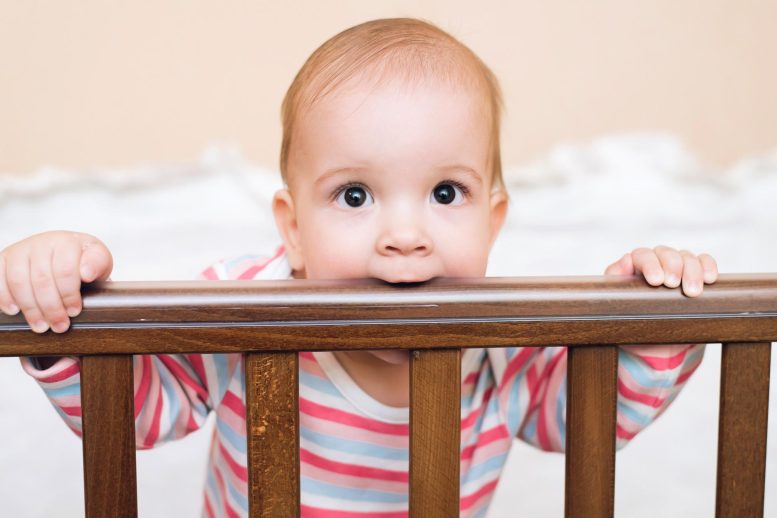
Clothing, bedding, and furniture labeled as water- or stain-resistant are most likely to contain PFAS.
With more consumers demanding products free of toxic ingredients, determining which ones might be harmful and which ones are safe is difficult. A new research study shows many children’s products, including those with green certifications, contain harmful PFAS chemicals that were not listed on the label. The findings highlight the pervasiveness of PFAS in products and the difficulties consumers face when trying to avoid toxic chemicals in their everyday lives.
Studies have linked PFAS with a range of health effects including cancers, thyroid disease, high cholesterol, low birth weight, and asthma. There is also evidence that PFAS can suppress the immune system, potentially weakening the effectiveness of childhood vaccines and the body’s ability to fight infections.
A Per- and polyfluoroalkyl substance (PFAS) is a synthetic organofluorine chemical compound that has multiple fluorine atoms attached to an alkyl chain. PFASs are known to persist in the environment and are commonly described as persistent organic pollutants, also known as “forever chemicals.” Residues have been detected in humans and wildlife resulting in serious health concerns.
“Children’s bodies are still developing and are especially sensitive to chemical exposures,” says co-author Dr. Laurel Schaider, senior scientist at Silent Spring Institute. “It makes sense that parents would want to steer clear of products that contain ingredients that could impact their children’s health now and in the future.”
For instance, consumers often look for products labeled as “green” or “nontoxic” when trying to avoid toxic chemicals. Schaider and her colleagues wanted to learn whether that’s an effective strategy for avoiding products with PFAS or whether there are other ways of determining if a product contains PFAS.
Reporting in the journal Environmental Science & Technology, the Silent Spring team tested 93 different products often used by children and adolescents, including bedding, furnishings, and clothing. The researchers specifically chose products that were labeled as stain-resistant, water-resistant, “green” or “nontoxic.”
They first used a rapid screening method to test the products for fluorine—a marker of PFAS. Fifty-four of the products contained detectable levels of fluorine. The highest concentration was found in a school uniform shirt. Products advertised as water- or stain-resistant, even those labeled as “green” or “non-toxic,” were more likely to contain fluorine and also have higher concentrations of fluorine compared with other products.
Prevalence of PFAS in “Green” and Water-Resistant Products
The researchers then tested a subset of products for 36 different PFAS chemicals. PFAS were found only in products labeled as water- or stain-resistant, regardless of whether they were marketed as “green” or “nontoxic.” Other key findings:
- PFAS were detected most frequently in upholstered furniture, clothing, and pillow protectors.
- Pillow protectors and clothing in general had higher levels of PFAS than other products.
- PFOA, a legacy PFAS that has been phased out in the U.S., was detected in a variety of products, including those labeled as “green.” Most of those products came from China.
“These are products that children come into close contact with every day and over a long period of time. Given the toxicity of PFAS and the fact that the chemicals don’t serve a critical function, they should not be allowed in products,” says co-author Kathryn Rodgers, a doctoral student at Boston University School of Public Health.
PFAS are a class of more than 9000 chemicals that companies add to a wide variety of consumer products to make them non-stick, waterproof, and stain-resistant. In addition to items such as carpets, upholstery, and apparel, PFAS are also used in everyday items such as non-stick cookware, food packaging, cosmetics, and even dental floss.
The new study’s findings highlight the need for green certifiers to include PFAS in their criteria and to conduct a more thorough review of the products they certify, says Rodgers. Green certifications are created by third party organizations and offer assurances that a product does not contain certain harmful chemicals. However, certifications vary in their safety standards and they don’t all cover the same list of chemicals.
“Retailers also must play a role in ending this toxic trail of pollution,” says Mike Schade, director of Toxic-Free Future’s Mind the Store program. “Market power is built on trust. Customers should be able to trust that the retailers where they shop sell products—especially those marketed for children—that are not laden with PFAS forever chemicals.”
Toxic-Free Future released a report in January, which found PFAS widespread in water- and stain-resistant apparel and other textiles sold at top retailers.
Legislative Efforts to Ban PFAS
A number of states already have introduced or passed legislation to prevent manufacturers from putting PFAS in products. California passed legislation banning the use of PFAS in certain infant and children’s products and is now considering a bill to ban PFAS in textiles; Washington State passed a bill aimed at phasing out PFAS in a range of products including apparel, cosmetics, and firefighter gear by 2025; a new law in Maine prohibits the sale of all products with intentionally added PFAS, except products where the use of PFAS is unavoidable, starting in 2030; and Massachusetts introduced a bill that would prohibit the use of PFAS in common household products, including carpeting, cookware, and cosmetics.
For more tips on how to limit everyday exposures to PFAS and other chemicals of concern, download Silent Spring’s Detox Me app.
Reference: “How well do product labels indicate the presence of PFAS in consumer items used by children and adolescents?” by Kathryn M. Rodgers, Christopher H. Swartz, James Occhialini, Philip Bassignani, Michelle McCurdy, and Laurel A. Schaider, 4 May 2022, Environmental Science & Technology.
DOI: 10.1021/acs.est.1c05175
Funding for this project was provided by the Commonwealth of Massachusetts, the National Institute of Environmental Health Sciences of the National Institutes of Health (Award Numbers P42ES027706, R01ES028311), and charitable donations to Silent Spring Institute.
Never miss a breakthrough: Join the SciTechDaily newsletter.
Follow us on Google and Google News.