
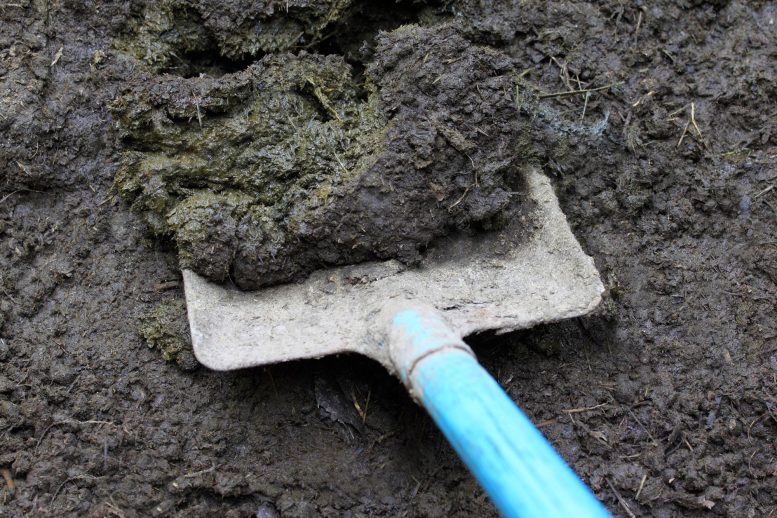
PFAS contamination in French agricultural wastes has shifted from phased-out compounds to emerging fluorotelomers, raising new concerns about long-term environmental risks.
Because of their useful surfactant properties, per- and polyfluoroalkyl substances (PFAS) have been massively produced for non-stick coatings, water-repellant fabrics and firefighting foams. However, scientists have detected these highly stable “forever chemicals” throughout the environment, prompting toxicity concerns. Now, researchers reporting in ACS’ Environmental Science & Technology have characterized PFAS in contemporary and historical organic waste products applied to agricultural fields in France, finding the highest amounts in urban samples, with compounds changing over time.
Although production of the most concerning PFAS has been banned or voluntarily phased out in many countries, the compounds linger in the environment. Also, they have been replaced with other PFAS that have uncertain environmental and health effects. Humans and livestock could ingest PFAS and excrete them in their waste, and the compounds could leach into wastewater. In addition, when wastes are applied to agriculture fields as fertilizer, PFAS could contaminate groundwater and bio-accumulate in food crops. Sébastien Sauvé with colleagues from France’s National Research Institute for Agriculture, Food and Environment wanted to comprehensively characterize multiple classes of PFAS in contemporary and historical organic waste products – including livestock manures, urban sewage sludges, and composts, and industrial wastes – applied to French agricultural lands.
The researchers selected 47 samples of organic waste products intended for field application, collected in France from 1976 to 2018. They analyzed the samples for known and previously uncharacterized PFAS by high-resolution mass spectrometry. Over 90% of the samples contained at least one PFAS, with up to 113 compounds detected in a single sample. The team detected fewer and lower levels of PFAS in livestock manures than in wastes of urban origin. In the urban wastes, they detected high levels of PFAS compounds that are not commonly monitored, suggesting that previous studies underestimated total PFAS levels. Historical urban samples contained higher levels of phased-out PFAS, whereas contemporary samples were dominated by compounds called fluorotelomers, which could degrade to more persistent PFAS in the environment, the researchers say.
Reference: “Target and Nontarget Screening of PFAS in Biosolids, Composts, and Other Organic Waste Products for Land Application in France” by Gabriel Munoz, Aurélia Marcelline Michaud, Min Liu, Sung Vo Duy, Denis Montenach, Camille Resseguier, Françoise Watteau, Valérie Sappin-Didier, Frédéric Feder, Thierry Morvan, Sabine Houot, Mélanie Desrosiers, Jinxia Liu and Sébastien Sauvé, 20 October 2021, Environmental Science & Technology.
DOI: 10.1021/acs.est.1c03697
The authors acknowledge funding from the Alliance Nationale de Recherche pour l’Environment; the Natural Sciences and Engineering Research Council of Canada; the Fonds de Recherche du Québec, Nature et Technologies; the Canada Foundation for Innovation; the Strategic Environmental Research and Development Program; and the McGill Engineering Doctoral Award scholarship.
The American Chemical Society (ACS) is a nonprofit organization chartered by the U.S. Congress. ACS’ mission is to advance the broader chemistry enterprise and its practitioners for the benefit of Earth and all its people. The Society is a global leader in promoting excellence in science education and providing access to chemistry-related information and research through its multiple research solutions, peer-reviewed journals, scientific conferences, eBooks and weekly news periodical Chemical & Engineering News. ACS journals are among the most cited, most trusted and most read within the scientific literature; however, ACS itself does not conduct chemical research. As a leader in scientific information solutions, its CAS division partners with global innovators to accelerate breakthroughs by curating, connecting and analyzing the world’s scientific knowledge. ACS’ main offices are in Washington, D.C., and Columbus, Ohio.
Never miss a breakthrough: Join the SciTechDaily newsletter.
Follow us on Google and Google News.