
Close Menu
    Facebook X (Twitter) Instagram
    SciTechDaily
    • Biology
    • Chemistry
    • Earth
    • Health
    • Physics
    • Science
    • Space
    • Technology
    Facebook X (Twitter) Pinterest YouTube RSS
    SciTechDaily
    Home»Space»Mars Curiosity Rover Celebrates Its Two-Thousandth Martian Day
    Space

    Mars Curiosity Rover Celebrates Its Two-Thousandth Martian Day

    By Andrew Good, Jet Propulsion LaboratoryMarch 23, 2018No Comments2 Mins Read
    Facebook Twitter Pinterest Telegram LinkedIn WhatsApp Email Reddit
    Share
    Facebook Twitter LinkedIn Pinterest Telegram Email Reddit
    Mars Curiosity Celebrates Its 2000th Day on Mars
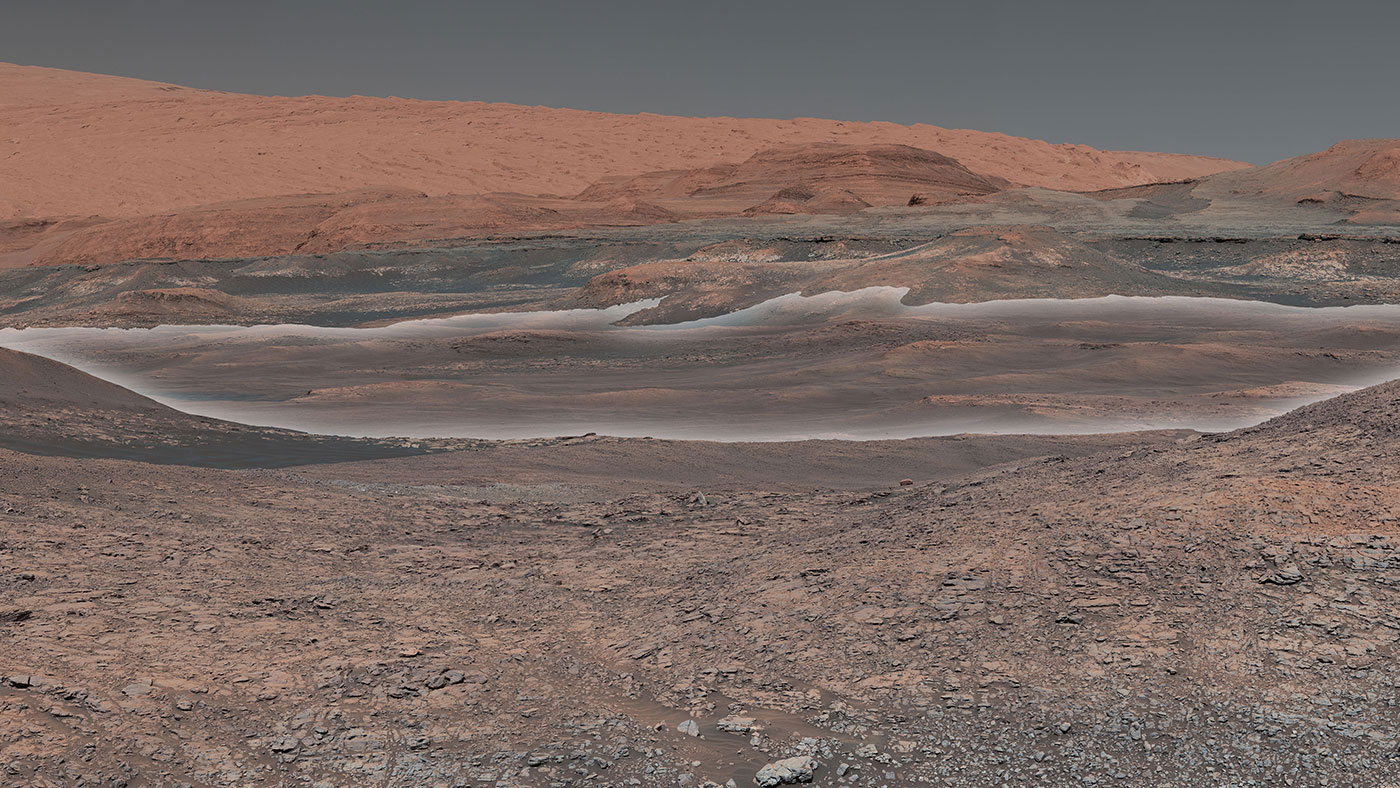
    This mosaic taken by NASA’s Mars Curiosity rover looks uphill at Mount Sharp, which Curiosity has been climbing since 2014. Highlighted in white is an area with clay-bearing rocks that scientists are eager to explore; it could shed additional light on the role of water in creating Mount Sharp. The mosaic was assembled from dozens of images taken by Curiosity’s Mast Camera (Mastcam). It was taken on Sol 1931 back in January. Credit: NASA/JPL-Caltech/MSSS

    NASA’s Mars Curiosity rover just hit a new milestone: its two-thousandth Martian day, or sol, on the Red Planet. An image mosaic taken by the rover in January offers a preview of what comes next.

    Looming over the image is Mount Sharp, the mound Curiosity has been climbing since September 2014. In the center of the image is the rover’s next big, scientific target: an area scientists have studied from orbit and have determined contains clay minerals.

    The formation of clay minerals requires water. Scientists have already determined that the lower layers of Mount Sharp formed within lakes that once spanned Gale Crater’s floor. The area ahead could offer additional insight into the presence of water, how long it may have persisted, and whether the ancient environment may have been suitable for life.

    Curiosity’s science team is eager to analyze rock samples pulled from the clay-bearing rocks seen in the center of the image. The rover recently started testing its drill again on Mars for the first time since December 2016. A new process for drilling rock samples and delivering them to the rover’s onboard laboratories is still being refined in preparation for scientific targets like the area with clay minerals.

    Curiosity landed in August 2012 and has traveled 11.6 miles (18.7 kilometers) in that time. In 2013, the mission found evidence of an ancient freshwater-lake environment that offered all the basic chemical ingredients for microbial life. Since reaching Mount Sharp in 2014, Curiosity has examined environments where both water and wind have left their marks. Having studied more than 600 vertical feet of rock with signs of lakes and groundwater, Curiosity’s international science team concluded that habitable conditions lasted for at least millions of years.

    Never miss a breakthrough: Join the SciTechDaily newsletter.
    Follow us on Google and Google News.

    Astronomy Curiosity Rover Mars Planetary Science
    Share. Facebook Twitter Pinterest LinkedIn Email Reddit

    Related Articles

    Curiosity Rover Photographs Diverse Rocks

    Curiosity Prepares to Take Its First Scoop of Soil for Analysis

    Curiosity Finds Ancient Streambed on Mars

    NASA’s Curiosity Prepares for Use of Its Arm and Tools

    Curiosity Sends Back Radioed Words and New Telephoto View of Mars

    Curiosity’s ChemCam Laser Yields Good Results

    NASA’s Curiosity Readies for First Drive on Mars

    Color HiRISE Image of Curiosity Rover on Mars

    First 360-Degree Color Panorama From NASA’s Curiosity Mars Rover

    Leave A Reply Cancel Reply

    • Facebook
    • Twitter
    • Pinterest
    • YouTube

    Don't Miss a Discovery

    Subscribe for the Latest in Science & Tech!

    Trending News

    Scientists Discover How Obesity May Trigger Alzheimer’s Disease

    Scientists Confirm Alcohol Causes Widespread Health Damage

    Researchers Discover Cannabis Compounds That May Fight Obesity Without the High

    Scientists Just Found Evidence That Asteroids May Have Helped Create Life on Earth

    Scientists Create “Trojan Horse” Weight Loss Drug That Supercharges Results

    Cats Have a Unique Kidney Chemistry That Could Be Harming Their Health

    Scientists Discover Major Errors in Al Gore-Founded Climate Pollution Database

    New Vitamin B12-Based Therapy Could Change How Brain Cancer Is Treated

    Follow SciTechDaily
    • Facebook
    • Twitter
    • YouTube
    • Pinterest
    • Newsletter
    • RSS
    SciTech News
    • Biology News
    • Chemistry News
    • Earth News
    • Health News
    • Physics News
    • Science News
    • Space News
    • Technology News
    Recent Posts
    • Plant-Based Diet Linked to Lower Alzheimer’s Risk, Study Finds
    • Why Taking Too Many Supplements Could Be Harming Your Health
    • New Treatment Could Reverse Osteoarthritis Within Weeks
    • Physicists Have Measured “Negative Time” in Bizarre Quantum Experiment
    • Researchers Compare MS Models to Human Tissue in Search for Better Therapies
    Copyright © 1998 - 2026 SciTechDaily. All Rights Reserved.
    • Science News
    • About
    • Contact
    • Editorial Board
    • Privacy Policy
    • Terms of Use

    Type above and press Enter to search. Press Esc to cancel.