
Close Menu
    Facebook X (Twitter) Instagram
    SciTechDaily
    • Biology
    • Chemistry
    • Earth
    • Health
    • Physics
    • Science
    • Space
    • Technology
    Facebook X (Twitter) Pinterest YouTube RSS
    SciTechDaily
    Home»Space»Mars Express Spacecraft Sets Data Relay Record
    Space

    Mars Express Spacecraft Sets Data Relay Record

    By European Space Agency (ESA)November 12, 2022No Comments7 Mins Read
    Facebook Twitter Pinterest Telegram LinkedIn WhatsApp Email Reddit
    Share
    Facebook Twitter LinkedIn Pinterest Telegram Email Reddit
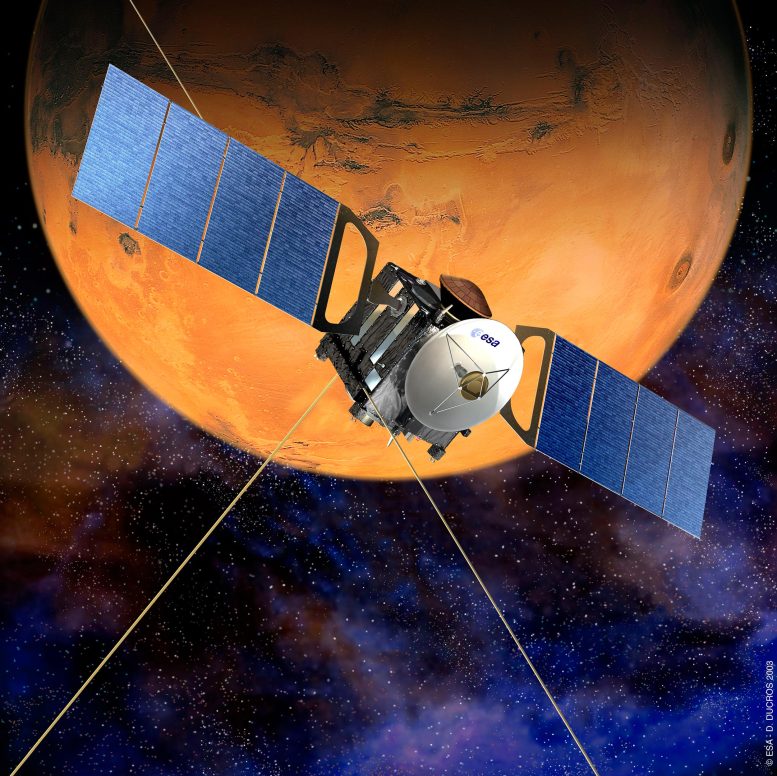
    Mars Express Artist's Impression
    An artist’s impression of Mars Express. The spacecraft left Earth for Mars on June 2, 2003. It reached its destination after a six-month journey, and has been investigating the Red Planet since early 2004. Credit: ESA – D. Ducros

    Mars Express, a spacecraft operated by the European Space Agency (ESA), recently conducted tests in which it relayed data gathered by NASA’s Perseverance rover back to Earth. This means the 19-year-old spacecraft has now relayed data for seven different Mars surface missions – a unique, new record!

    Landers and rovers on Mars gather data that help scientists answer fundamental questions about the atmosphere, geology, surface environment, history of water, and potential for life on the Red Planet.

    To get these insights to Earth, they first transmit the data up to spacecraft in orbit around Mars. These orbiters then use their much larger, more powerful transmitters to ‘relay’ the data across space to large deep-space antennas on Earth.
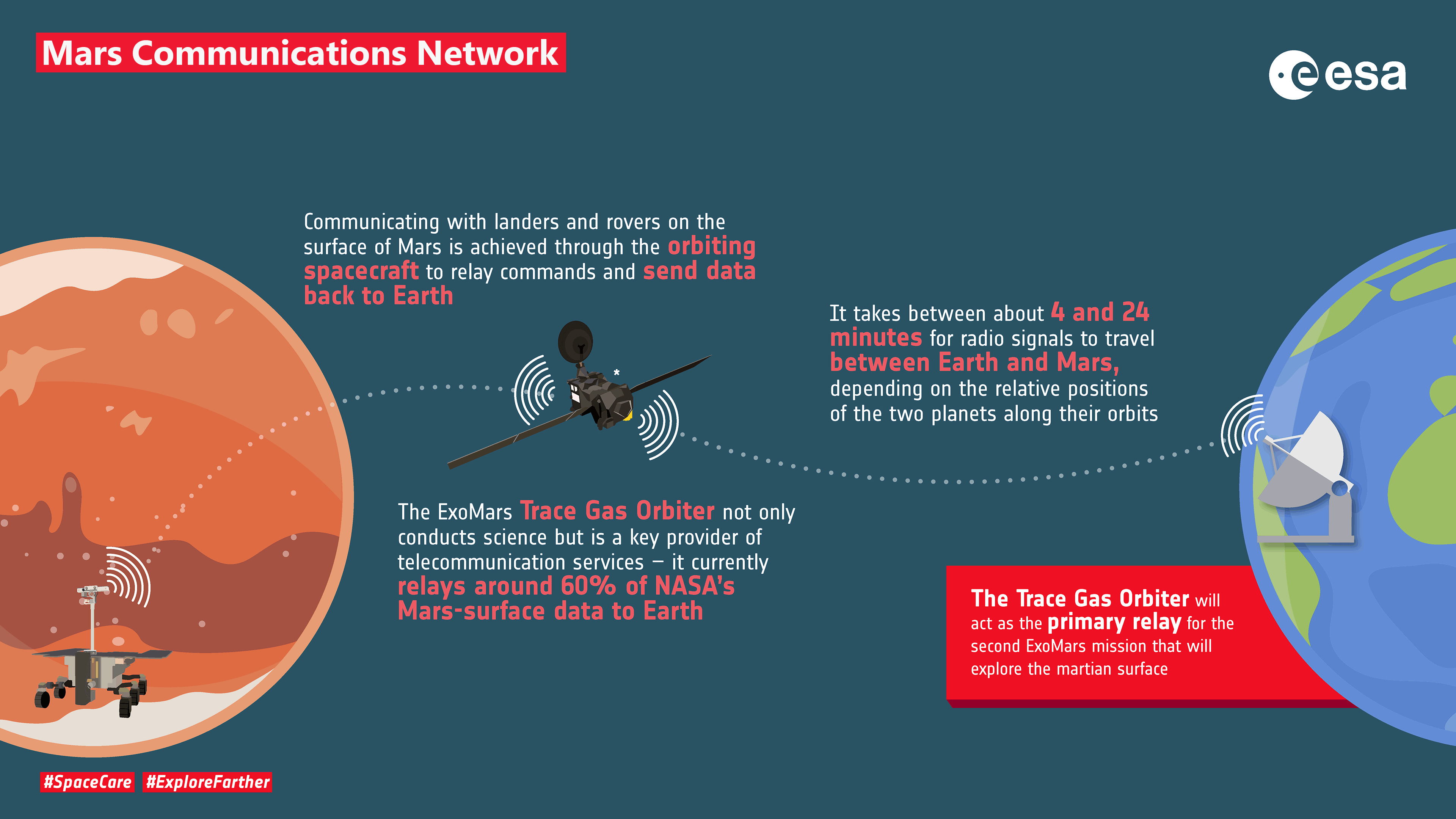
    Mars Communications Network
    Data relay is an essential part of Mars exploration, with commands sent to rovers and landers on the surface via orbiting spacecraft, and in turn, scientific data collected by the surface missions is sent back to Earth through the orbiter. All of ESA and NASA’s orbiters provide data relay services for surface missions. Credit: ESA – S. Poletti

    “Data relay is an essential part of Mars exploration,” says James Godfrey, Mars Express Spacecraft Operations Manager at ESA’s ESOC mission control center. “We are proud that Mars Express has played a role in the interagency Mars data relay network over many years and has supported so many surface assets. This network will be vital to support future missions to the Red Planet, such as those of the Mars Sample Return campaign.”

    The tests with Perseverance coincide with the orbiter’s 10th Martian anniversary. Mars Express arrived at Mars on December 25, 2003, almost 19 Earth years ago. As one Martian year is equal to approximately 687 Earth days, the spacecraft celebrated 10 Martian years in orbit on 16 October 2022.

    Take a trip through Martian history.
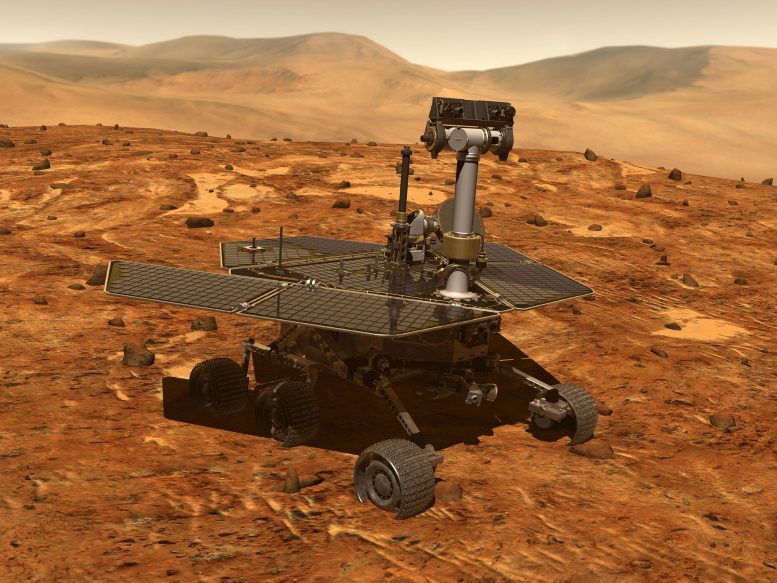
    NASA's Spirit Rover

    Artist’s impression of NASA’s MER Spirit rover on the surface of Mars. Credit: NASA

    Team Spirit

    In 2004, just two months after arriving at Mars, Mars Express flew over NASA’s Spirit rover.

    The ESA orbiter sent commands down to the rover, which then sent its data up to the orbiter in the first-ever demonstration of an interagency communications network around another planet.

    The commands for the rover first had to be transferred from the Spirit Operations Team at NASA’s Jet Propulsion Laboratory (JPL), USA, to ESOC in Germany. Here they were translated into commands for Mars Express, then uplinked to the orbiter and sent down to the rover.

    Endurance Crater Relayed by Mars Express
    This view of the interior slope and rim of ‘Endurance Crater’ comes from the navigation camera on NASA’s Mars Exploration Rover Opportunity with an assist from the ESA’s Mars Express. Opportunity took the three frames that make up this image on August 4, 2004, then transmitted them with other data to Mars Express, which in turn relayed them to Earth. Rover wheel tracks are visible in the foreground. Credit: NASA/JPL

    Opportunity Knocks

    Seven further communication tests were carried out between Mars Express and NASA’s Opportunity rover in early 2008. Building on the tests with Spirit, they helped optimize ESA-NASA communication at Mars.
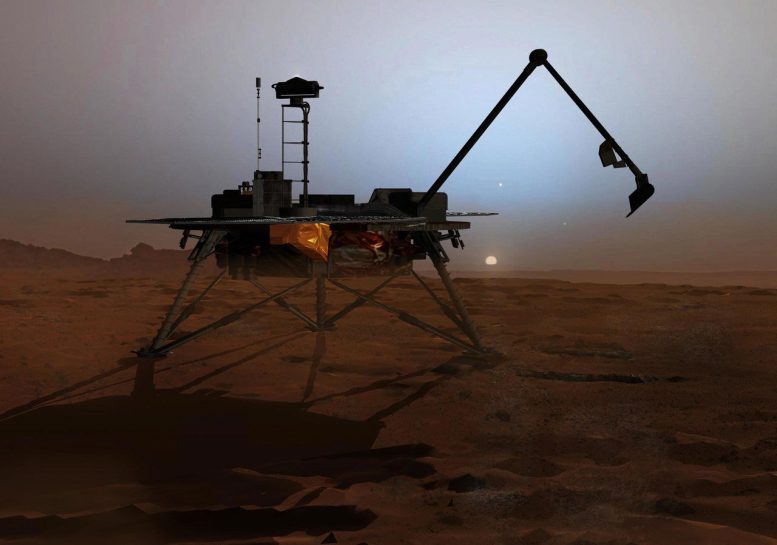
    Mars Phoenix Lander
    NASA’s Mars Phoenix lander detected perchlorate salts in the Martian Arctic in 2008. Credit: NASA

    The Landing of Phoenix

    On May 25, 2008, Mars Express tracked the descent of the Phoenix lander and relayed the data to NASA to help confirm the data from their own orbiters. In the weeks after landing, Mars Express once again demonstrated its ability to reliably relay data from the Martian surface to Earth.
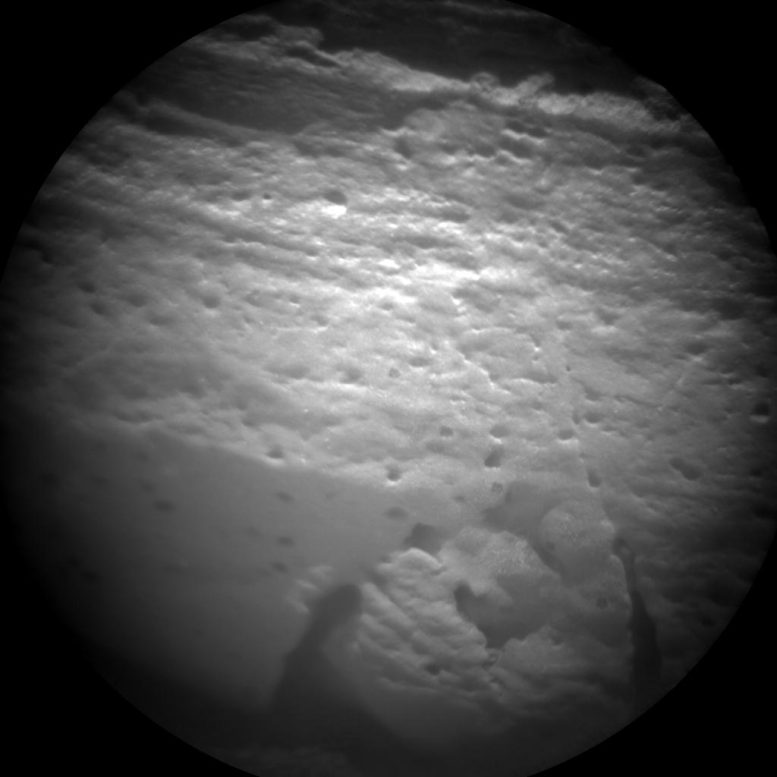
    Rocknest 3
    This was taken on Sol 57 (October 4, 2012) of target Rocknest3 using the ChemCam Remote Micro-Imager (RMI) on the NASA Curiosity rover at a distance of 3.7 meters. The image was downlinked to Earth by ESA’s Mars Express orbiter via the 35m deep space ESTRACK station in New Norcia, Australia. This image was taken after a series of five ChemCam Laser-Induced Breakdown Spectrometer (LIBS) observations. Rocknest is the name of the area where Curiosity stopped for a month to perform its first mobile laboratory analyses on soil scooped from a small sand dune. Rocknest3 was a convenient nearby target of which ChemCam made more than thirty observations overall consisting of 1,500 laser shots; it was also interrogated by the arm-mounted Alpha Particle X-ray Spectrometer (APXS) instrument. Credit: NASA/JPL-Caltech/LANL/CNES/IRAP

    Curiosity Rocks

    In 2012, Mars Express was trusted to relay crucial science data from NASA’s Curiosity rover back to Earth. It was a small but significant next step for interplanetary cooperation between space agencies.

    Early on the morning of October 6, the ESA orbiter lined up its lander communication antenna to point at Curiosity far below on the surface.

    For 15 minutes, the NASA rover transmitted scientific data up to the ESA satellite, before Mars Express turned to point its more powerful high-gain antenna toward Earth and began downlinking the precious information.

    The data included this image of a rock acquired by Curiosity during the first soil analyses made using its mobile laboratory. Mars Express downlinked the image to ESOC in Germany via ESA’s 35 m-diameter deep-space antenna in New Norcia, Australia. All the relayed data were then immediately made available to JPL in California for processing and analysis.
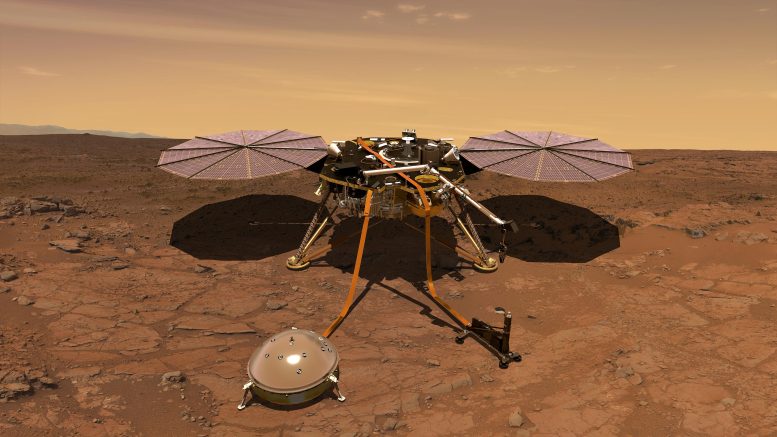
    InSight Lander on Mars Artist's Rendition
    An artist’s rendition of the InSight lander operating on the surface of Mars. InSight, short for Interior Exploration using Seismic Investigations, Geodesy and Heat Transport, is a lander designed to give Mars its first thorough checkup since it formed 4.5 billion years ago. Credit: NASA/JPL-Caltech

    Closer Cooperation InSight

    It was Mars Express’s younger sibling, ESA’s Trace Gas Orbiter, that took the next step and established the first-ever routine interplanetary data relay support between agencies when it began supporting NASA’s InSight lander. But Mars Express continued its important work acting as contingency support for yet another new lander.
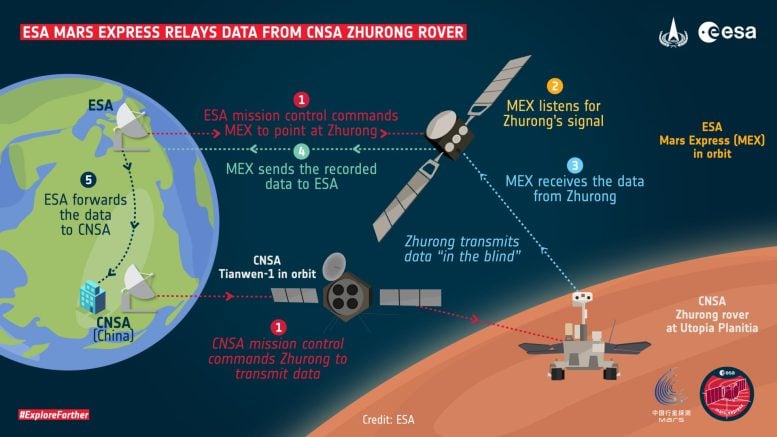
    Mars Express Relays Data From Zhurong Infographic
    ESA Mars Express relays data from CNSA Zhurong rover. Credit: ESA

    Zhurong Calling

    Over the last year, Mars Express has conducted tests with the China National Space Administration (CNSA) Zhurong rover to assess radio system compatibility and the possibility of supporting data relay with the rover.
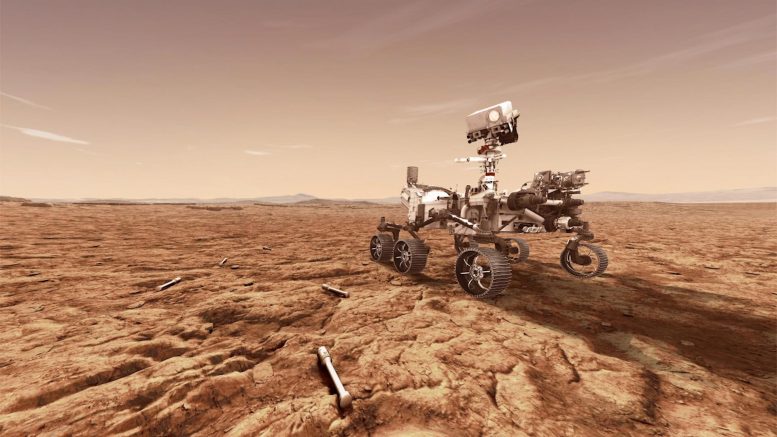
    Mars 2020 Rover Sample Return Tubes
    NASA’s Mars 2020 Perseverance rover will store rock and soil samples in sealed tubes on the planet’s surface for future missions to retrieve, as seen in this illustration. Credit: NASA/JPL-Caltech

    Perseverance Pays Off

    The recent successful data relay tests with NASA Perseverance bring the total Mars surface missions supported by Mars Express up to a record-breaking seven.

    Mars Express has been an important part of Europe’s key role in the Mars data relay network and continues to deliver important science and services while remaining one of ESA’s lowest-cost missions to fly.

    In the last couple of years, the veteran orbiter has helped monitor conditions at the Perseverance landing site, teamed up with ESA’s Trace Gas Orbiter to trial a new technique that could return up to 18 years’ worth of radio science in two months, and received a major software upgrade that is breathing new life into an instrument designed on Earth more than 20 years ago.

    Never miss a breakthrough: Join the SciTechDaily newsletter.
    Follow us on Google and Google News.

    European Space Agency Mars Mars Express
    Share. Facebook Twitter Pinterest LinkedIn Email Reddit

    Related Articles

    Nilosyrtis Mensae, Mars: Dramatically Different Regions of the Red Planet Come Together as One

    Mars Express Has Captured Beautiful Images of Rippling Ice and Storms at Mars’ North Pole

    Mars Express Provides a Window to a Watery Past on Mars

    ESA’s Mars Express View Remnants of Mega-Flood on Mars

    Mars Express Image of the Rim of the Schiaparelli Crater

    ESA’s Mars Express Sheds New Light on the Red Planet’s Rare Aurora

    Mars Express Captures a Radar View of the Southern Highlands of Mars

    ESA’s Mars Express Captures New Images of Sulci Gordii

    ESA’s Mars Express MARSIS Radar Explores Martian Oceans

    Leave A Reply Cancel Reply

    • Facebook
    • Twitter
    • Pinterest
    • YouTube

    Don't Miss a Discovery

    Subscribe for the Latest in Science & Tech!

    Trending News

    The Universe Is Expanding Too Fast and Scientists Can’t Explain Why

    “Like Liquid Metal”: Scientists Create Strange Shape-Shifting Material

    Early Warning Signals of Esophageal Cancer May Be Hiding in Plain Sight

    Common Blood Pressure Drug Shows Surprising Power Against Deadly Antibiotic-Resistant Superbug

    Scientists Uncover Dangerous Connection Between Serotonin and Heart Valve Disease

    Scientists Discover a “Protector” Protein That Could Help Reverse Hair Loss

    Bone-Strengthening Discovery Could Reverse Osteoporosis

    Scientists Uncover Hidden Trigger Behind Stem Cell Aging

    Follow SciTechDaily
    • Facebook
    • Twitter
    • YouTube
    • Pinterest
    • Newsletter
    • RSS
    SciTech News
    • Biology News
    • Chemistry News
    • Earth News
    • Health News
    • Physics News
    • Science News
    • Space News
    • Technology News
    Recent Posts
    • A Common Diabetes Drug May Hold the Key to Stopping HIV From Coming Back
    • Ancient “Syphilis-Like” Disease in Vietnam Challenges Key Scientific Assumptions
    • Drinking Alcohol To Cope in Your 20s Could Damage Your Brain for Life
    • Scientists Crack Alfalfa’s Chromosome Mystery After Decades of Debate
    • Ancient Ant-Plant Alliance Collapses As Predatory Wasps Move In
    Copyright © 1998 - 2026 SciTechDaily. All Rights Reserved.
    • Science News
    • About
    • Contact
    • Editorial Board
    • Privacy Policy
    • Terms of Use

    Type above and press Enter to search. Press Esc to cancel.