
Close Menu
    Facebook X (Twitter) Instagram
    SciTechDaily
    • Biology
    • Chemistry
    • Earth
    • Health
    • Physics
    • Science
    • Space
    • Technology
    Facebook X (Twitter) Pinterest YouTube RSS
    SciTechDaily
    Home»Space»Mars’ Olympus Mons – the Largest Volcano in the Solar System – May Have Once Been an Island
    Space

    Mars’ Olympus Mons – the Largest Volcano in the Solar System – May Have Once Been an Island

    By CNRSAugust 3, 20236 Comments3 Mins Read
    Facebook Twitter Pinterest Telegram LinkedIn WhatsApp Email Reddit
    Share
    Facebook Twitter LinkedIn Pinterest Telegram Email Reddit
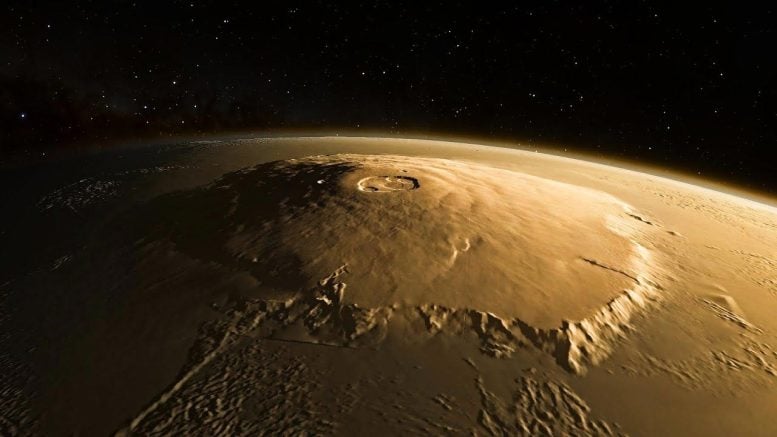
    View of Olympus Mons
    New research suggests that the colossal Olympus Mons volcano on Mars has morphological characteristics similar to many active volcanic islands on Earth, likely due to the interaction between lava and liquid water. (A computer-generated view of Olympus Mons.) Credit: Dreksler Astral / Lowell Observatory

    Research reveals that the Olympus Mons and Alba Mons volcanoes on Mars exhibit features similar to Earth’s active volcanic islands, likely indicating past interaction between lava and liquid water. This supports the hypothesis that a vast ocean may have once existed in Mars’ northern lowlands. Studying these volcanic rocks could provide insights into Mars’ climatic evolution.

    Imagine a volcanic island about the size of France and over 20,000 meters (65,000 feet) high. Such a landscape may once have existed on the planet Mars.

    Published in the journal Earth and Planetary Science Letters on July 24, recent work led by a CNRS researcher shows that the giant Olympus Mons volcano on Mars shares morphological similarities with many active volcanic islands on Earth. Scientists believe they are the result of contact between liquid water and lava from the volcano.

    Similar features on the northern flank of the Alba Mons volcano, located more than 1,500 km (900 miles) from Olympus Mons, also support the idea that a vast ocean of liquid water once occupied the Red Planet’s northern lowlands. Precise dating of these volcanic rocks could provide a considerable amount of information about the climatic evolution of Mars.
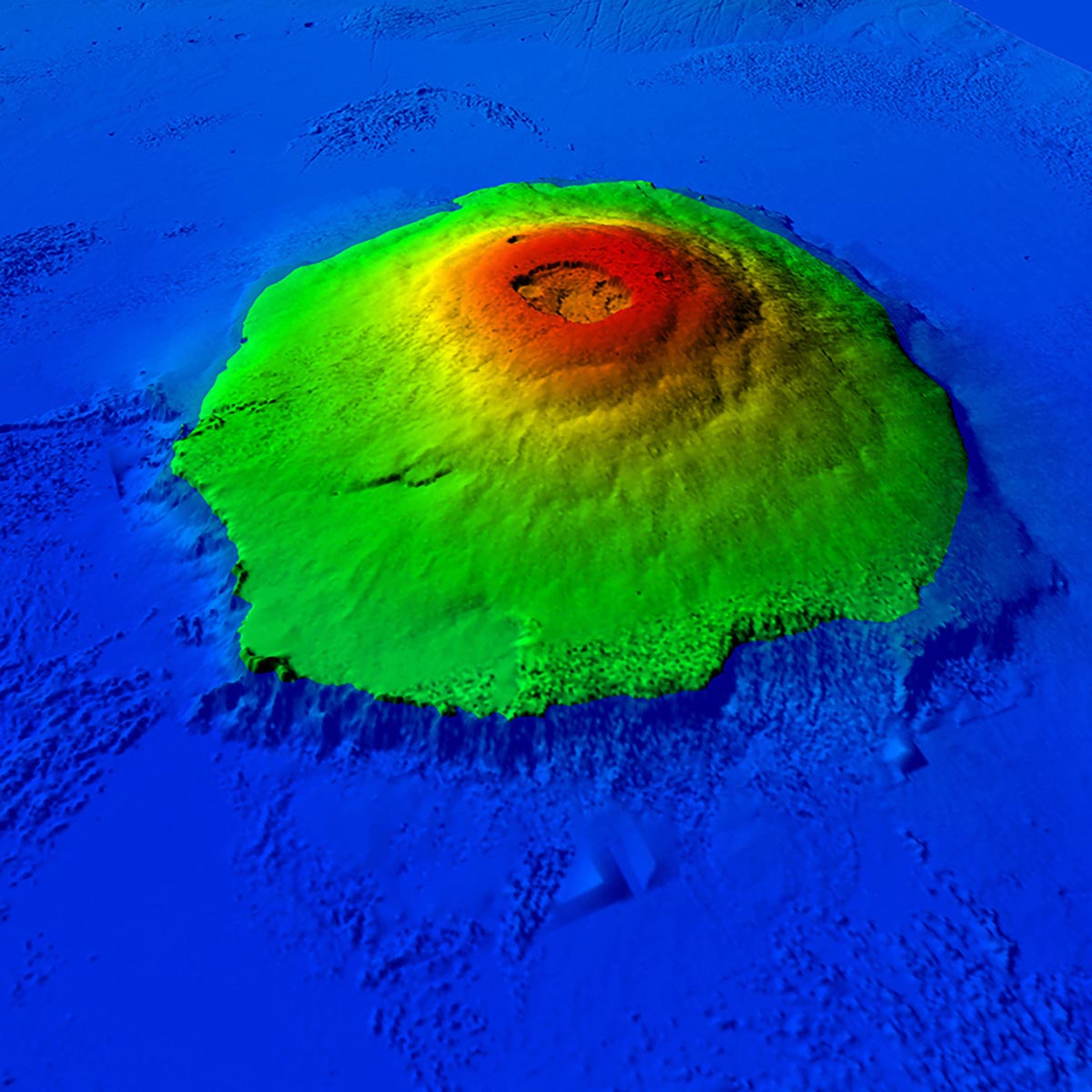
    Olympus Mons MOLA
    Olympus Mons: a volcanic island in the middle of a vanished Martian ocean. Credit: A.Hildenbrand/Geops/CNRS (Image produced from MOLA public data)

    Olympus Mons is a large shield volcano on the planet Mars. It is the tallest volcano and the largest shield volcano in the solar system. Standing at an impressive height of about 13.6 miles (22 kilometers), Olympus Mons is nearly three times the height of Mount Everest, which is the tallest mountain on Earth. Olympus Mons is about 370 miles (600 kilometers) in diameter, which is comparable to the size of the state of Arizona in the United States.

    The term “shield volcano” is used to describe a type of volcano that has shallow, broad slopes created by the eruption of low-viscosity lava that can flow a great distance before cooling and hardening. The volcano gets its name from its size and shape, which resembles a warrior’s shield.

    The caldera (summit crater of the volcano) of Olympus Mons is about 50 miles (80 kilometers) wide and is made up of six overlapping pits or craters created by different volcanic events. These events occurred when magma chambers below the surface emptied out and the ground above them collapsed.

    Olympus Mons is located in the Tharsis Montes region of Mars, which is home to several other large volcanoes. Its age is estimated to be about 200 million years, and evidence from various Mars missions suggests that lava flowed from the volcano in the relatively recent past, geologically speaking – about 2 million years ago.

    Reference: “A giant volcanic island in an early Martian Ocean?” by A. Hildenbrand, H. Zeyen, F. Schmidt, S. Bouley, F. Costard, P.Y. Gillot, F.O. Marques, X. Quidelleur, 24 July 202, Earth and Planetary Science Letters.
    DOI: 10.1016/j.epsl.2023.118302

    Never miss a breakthrough: Join the SciTechDaily newsletter.
    Follow us on Google and Google News.

    CNRS Mars Popular Volcano
    Share. Facebook Twitter Pinterest LinkedIn Email Reddit

    Related Articles

    New NASA Image Shows Giant Mars Volcano Surging Through Ice Cloud Belt

    NASA’s Perseverance Rover Reveals Mars’ Volcanic Past – And Hints of Ancient Life

    Chilling Revelation: Frost on the Solar System’s Tallest Volcanoes

    Decoding the Red Planet’s Structure: Insights From Martian Meteorites

    NASA Confirms Thousands of Massive, Violent Volcanic “Super Eruptions” on Mars

    NASA’s InSight Mission Reveals the Detailed Internal Structure of Mars

    Evidence of Active Volcanoes on Mars Raises Possibility of Recent Habitable Conditions – “Mars Isn’t Dead”

    Mars Didn’t Dry Up in One Go – Martian Climate Cycled Between Dry and Wet Periods

    Lava Tubes on Mars and the Moon May Be Suitable for Planetary Bases – Up to 1,000 Times Wider Than Those on Earth

    6 Comments

    1. Clint wade on August 3, 2023 1:49 pm

      I wish scientists would say it like – the largest volcano (so far) or (that we know of). It’s a large solar system.

      Reply
      • TheHeck on August 5, 2023 11:39 pm

        Yes, there could be bigger ones on Venus.

        Reply
    2. Brady Herring on August 6, 2023 4:07 pm

      Mt.Everest isn’t the tallest mountain on earth,the Hawaiian islands with it’s numerous volcanoes are the tallest mountains on earth.If using the distance between the base and the summit then the volcanoes on Hawaii are the tallest.Mt.Everest is the highest point above sea level on the surface of the planet but the distance between it’s base and summit is less than the volcano’s on Hawaii

      Reply
    3. RICKY L JOHNSON on August 16, 2023 12:53 pm

      It’s caldera is almost the size of Yellowstone. Interesting plus the use of nuclear weapons is told by summarians. Would have stripped it’s atmosphere. All interesting.

      Reply
    4. RobertThomasPryor on August 17, 2023 5:47 am

      How do you know it’s the largest in the solar system? That is a blatant overstatement. We have no frikin idea if it’s the largest in the solar system. Have we been out to explore all of the solar system? No, we haven’t! If your gonna try and be a writer, make sure you have your facts strait, and do t add, or give statements that are not true

      Reply
    5. Connor on December 12, 2023 9:21 am

      Brady herring is correct there but there is also the volcano by japan underwater

      Reply
    Leave A Reply Cancel Reply

    • Facebook
    • Twitter
    • Pinterest
    • YouTube

    Don't Miss a Discovery

    Subscribe for the Latest in Science & Tech!

    Trending News

    Scientists Say This Simple Supplement May Actually Reverse Heart Disease

    Warming Oceans Could Trigger a Dangerous Methane Surge

    This Simple Movement Could Be Secretly Cleaning Your Brain

    Male Birth Control Breakthrough: Scientists Find Way To Turn Sperm Production Off and Back On

    A Common Vitamin Could Hold the Key to Treating Fatty Liver Disease

    New Research Shows Vitamin B12 May Hold the Key to Healthy Aging

    These Simple Daily Habits Can Quickly Improve Blood Pressure and Heart Risk Factors

    A Common Nutrient May Play a Surprising Role in Anxiety

    Follow SciTechDaily
    • Facebook
    • Twitter
    • YouTube
    • Pinterest
    • Newsletter
    • RSS
    SciTech News
    • Biology News
    • Chemistry News
    • Earth News
    • Health News
    • Physics News
    • Science News
    • Space News
    • Technology News
    Recent Posts
    • Scientists Discover a New Way To Control Metals at the Atomic Scale
    • Scientists Create “Quantum Sound” Device That Works Near Absolute Zero
    • Scientists Discover 42 “Ghost Pages” From Ancient New Testament Manuscript
    • New Pill Lowers Stubborn Blood Pressure and Protects the Kidneys
    • New AI Blood Test Detects Silent Liver Disease Before Symptoms Appear
    Copyright © 1998 - 2026 SciTechDaily. All Rights Reserved.
    • Science News
    • About
    • Contact
    • Editorial Board
    • Privacy Policy
    • Terms of Use

    Type above and press Enter to search. Press Esc to cancel.