
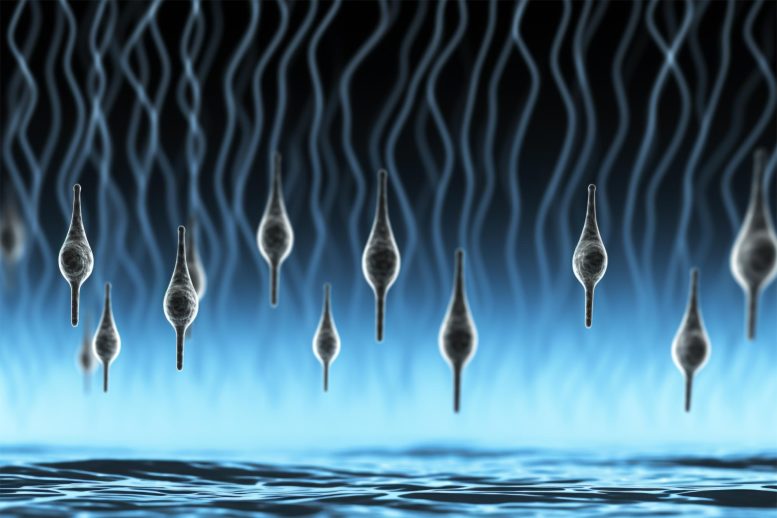
Researchers have linked Alan Turing’s pattern formation theory to the spontaneous movement of sperm tails, revealing potential applications in medicine and robotics.
Patterns of chemical interactions are thought to create patterns in nature such as stripes and spots. This new study shows that the mathematical basis of these patterns also governs how sperm tail moves.
The findings, published today (September 27) in Nature Communications, reveal that flagella movement of, for example, sperm tails and cilia, follow the same template for pattern formation that was discovered by the famous mathematician Alan Turing.
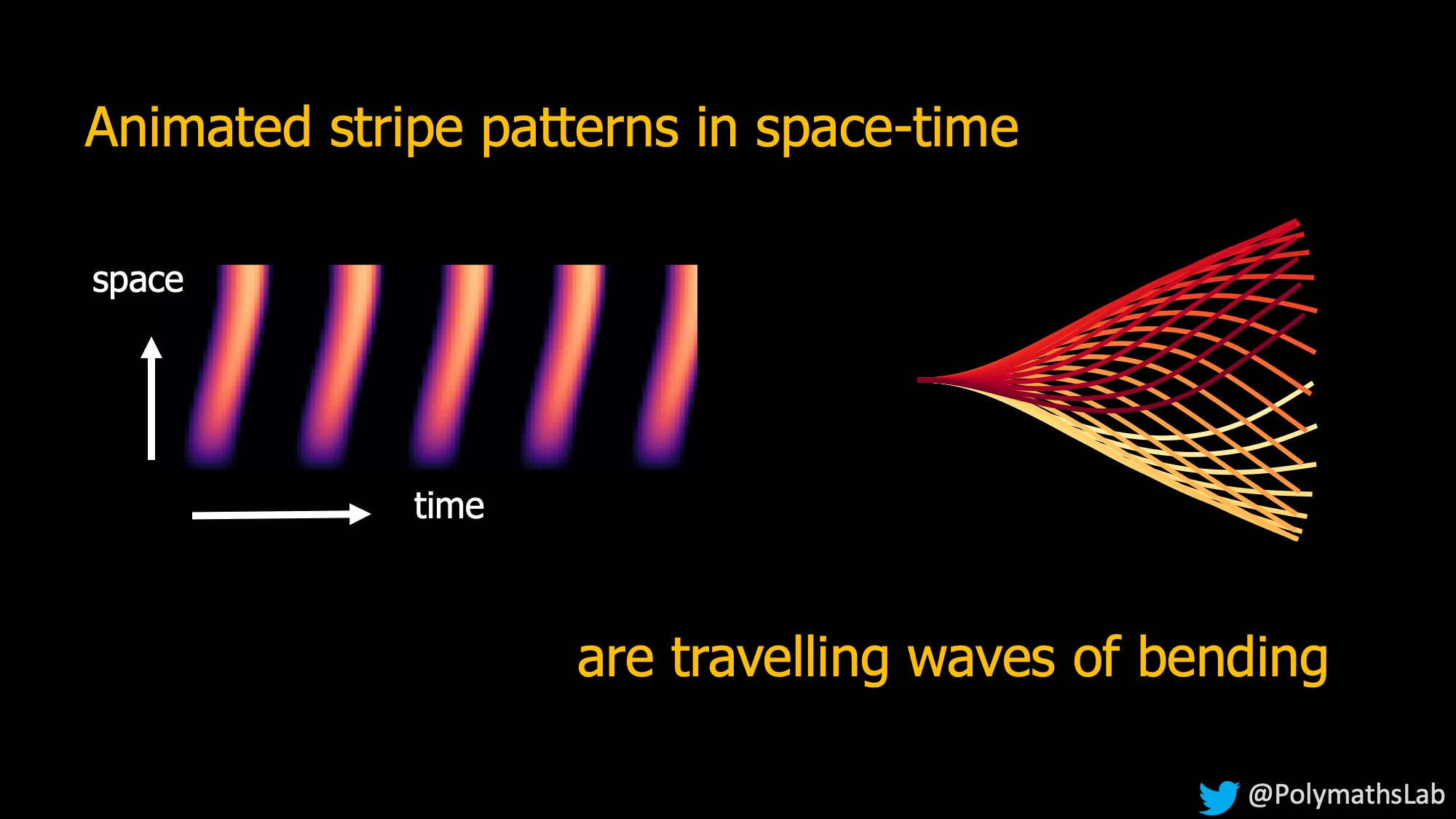
Flagellar undulations make stripe patterns in space-time, generating waves that travel along the tail to drive the sperm and microbes forward.
Alan Turing is most well-known for helping to break the enigma code during WWII. However, he also developed a theory of pattern formation that predicted that chemical patterns may appear spontaneously with only two ingredients: chemicals spreading out (diffusing) and reacting together. Turing first proposed the so-called reaction-diffusion theory for pattern formation.
Turing helped to pave the way for a whole new type of enquiry using reaction-diffusion mathematics to understand natural patterns. Today, these chemical patterns first envisioned by Turing are called Turing patterns. Although not yet proven by experimental evidence, these patterns are thought to govern many patterns across nature, such as leopard spots, the whorl of seeds in the head of a sunflower, and patterns of sand on the beach. Turing’s theory can be applied to various fields, from biology and robotics to astrophysics.
Mathematical Modeling of Flagellar Movement
Mathematician Dr. Hermes Gadêlha, head of the Polymaths Lab, and his PhD student James Cass conducted this research in the School of Engineering Mathematics and Technology at the University of Bristol. Gadêlha explained: “Live spontaneous motion of flagella and cilia is observed everywhere in nature, but little is known about how they are orchestrated.
“They are critical in health and disease, reproduction, evolution, and survivorship of almost every aquatic microorganism in earth.”
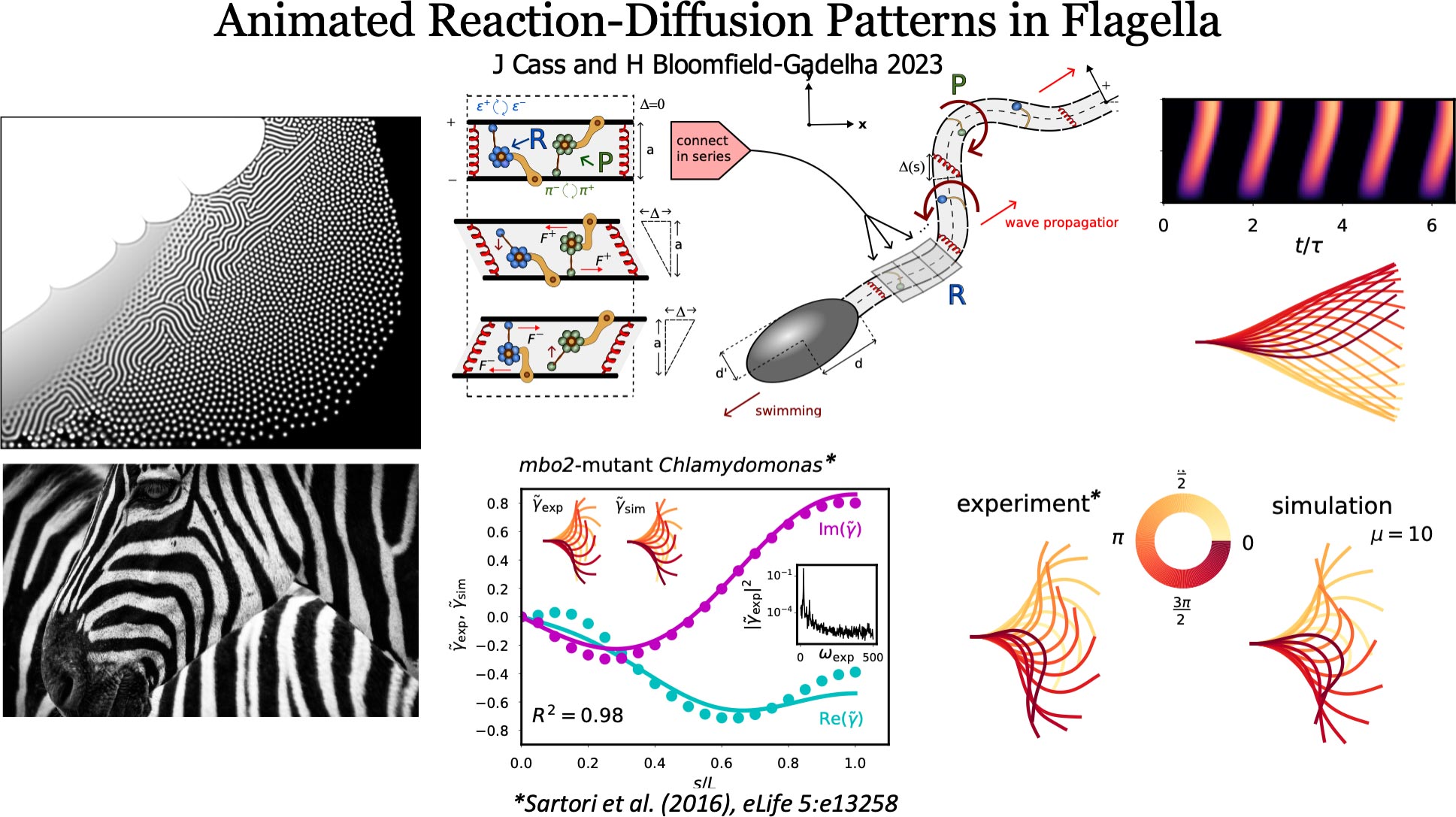
The team was inspired by recent observations in low viscosity fluids that the surrounding environment plays a minor role on the flagellum. They used mathematical modeling, simulations, and data fitting to show that flagellar undulations can arise spontaneously without the influence of their fluid environment.
Mathematically this is equivalent to Turing’s reaction-diffusion system that was first proposed for chemical patterns.
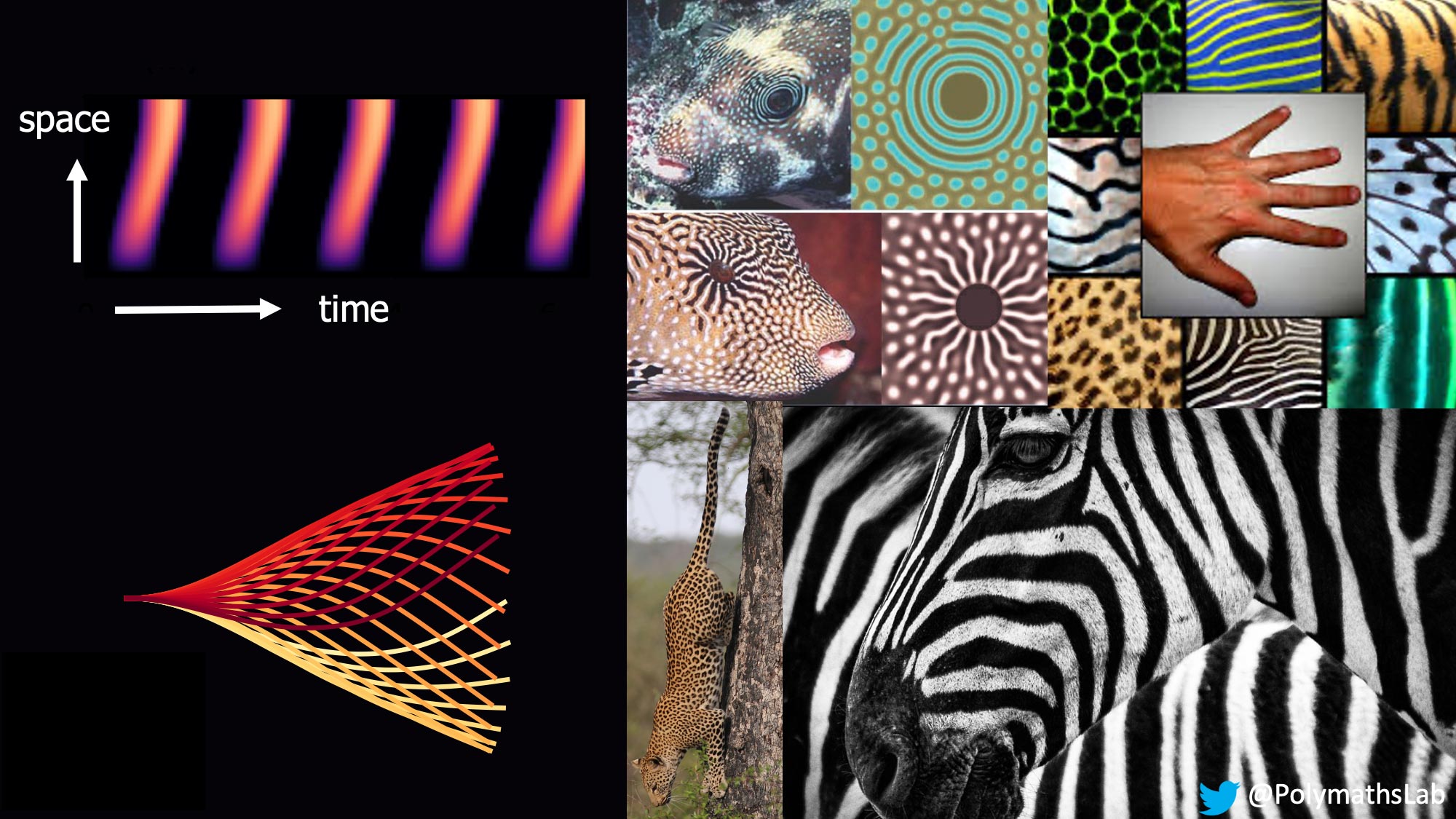
In the case of sperm swimming, chemical reactions of molecular motors power the flagellum, and bending movement diffuses along the tail in waves. The level of generality between visual patterns and patterns of movement is striking and unexpected, and shows that only two simple ingredients are needed to achieve highly complex motion.
Dr. Gadêlha added: “We show that this mathematical ‘recipe’ is followed by two very distant species – bull sperm and Chlamydomonas (a green algae that is used as a model organism across science), suggesting that nature replicates similar solutions.
“Traveling waves emerge spontaneously even when the flagellum is uninfluenced by the surrounding fluid. This means that the flagellum has a foolproof mechanism to enable swimming in low-viscosity environments, which would otherwise be impossible for aquatic species.
“It is the first time that model simulations compare well with experimental data.
“We are grateful to the researchers who made their data freely available, without which we would not have been able to proceed with this mathematical study.”
Implications for Biology, Fertility Research, and Robotics
These findings may be used in the future to better understand fertility issues associated with abnormal flagellar motion and other ciliopathies; diseases caused by ineffective cilia in human bodies.
This could also be further explored for robotic applications, artificial muscles, and animated materials, as the team discovered a simple ‘mathematical recipe’ for making patterns of movement.
Dr. Gadêlha is also a member of the SoftLab at Bristol Robotics Laboratory (BRL), where he uses pattern formation mathematics to innovate the next generation of soft robots.
“In 1952, Turing unlocked the reaction-diffusion basis of chemical patterns,” said Dr. Gadêlha. “We show that the ‘atom’ of motion in the cellular world, the flagellum, uses Turing’s template to shape, instead, patterns of movement driving tail motion that pushes sperm forwards.
“Although this is a step closer to mathematically decoding spontaneous animation in nature, our reaction-diffusion model is far too simple to fully capture all complexity. Other models may exist, in the space of models, with equal, or even better, fits with experiments, that we simply have no knowledge of their existence yet, and thus substantial more research is still needed!”
The study was completed using funding from the Engineering and Physical Sciences Research Council (EPSRC) and DTP studentship for James Cass PhD
The numerical work was carried out using the computational and data storage facilities of the Advanced Computing Research Centre, at the University of Bristol.
Reference: “The reaction-diffusion basis of animated patterns in eukaryotic flagella” by James Cass and Dr. Hermes Bloomfield-Gadêlha, 27 September 2023 Nature Communications.
DOI: 10.1038/s41467-023-41405-4
Never miss a breakthrough: Join the SciTechDaily newsletter.
Follow us on Google and Google News.
1 Comment
Excellent