
Close Menu
    Facebook X (Twitter) Instagram
    SciTechDaily
    • Biology
    • Chemistry
    • Earth
    • Health
    • Physics
    • Science
    • Space
    • Technology
    Facebook X (Twitter) Pinterest YouTube RSS
    SciTechDaily
    Home»Science»Mating Season Mishaps? Unprovoked Attacks by Venomous Olive Sea Snakes on Scuba Divers
    Science

    Mating Season Mishaps? Unprovoked Attacks by Venomous Olive Sea Snakes on Scuba Divers

    By Macquarie UniversityOctober 16, 2021No Comments3 Mins Read
    Facebook Twitter Pinterest Telegram LinkedIn WhatsApp Email Reddit
    Share
    Facebook Twitter LinkedIn Pinterest Telegram Email Reddit
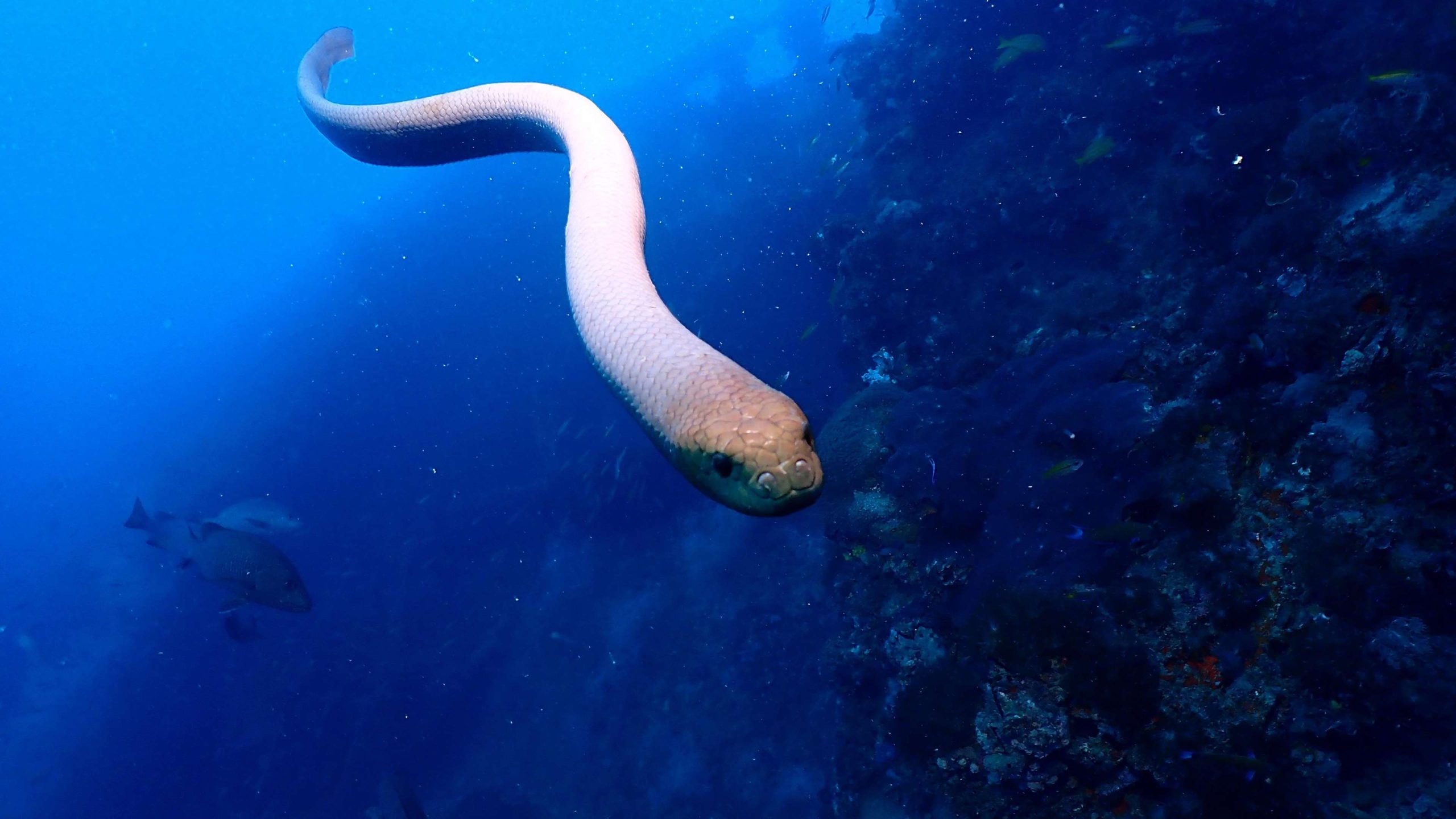
    Olive Sea Snakes
    Olive sea snakes are among the largest marine snake species, and are abundant on some coral-reef areas. Credit: Jack Breedon

    Attacks by venomous Olive sea snakes on scuba divers may be misdirected courtship behaviors, according to a study published in Scientific Reports.

    Scuba divers frequently report unprovoked attacks by sea snakes, which can involve chasing and biting. The reasons for these attacks have been unclear, but the new research suggests the sea snakes may be mistaking divers for potential mates.

    Professor Rick Shine from Macquarie University’s Department of Biological Sciences and colleagues analyzed data collected between 1994 and 1995 describing Olive sea snake behavior during encounters with one of the authors, Tim Lynch, when he was a diver in the Great Barrier Reef, Australia.

    The researchers found that sea snakes approached the diver during 74 out of 158 encounters and that this occurred more frequently during mating season – between May and August. Males were more likely than females to approach the diver, especially during mating season, and to flick their tongues near the diver’s body. 13 encounters involved sea snakes rapidly charging at the diver.

    The authors observed that all charges occurred during mating season and that those involving males occurred immediately after an unsuccessful chase of a female, or an interaction with a male rival. Three males were also observed coiling around the diver’s fin, a behavior usually observed during courtship. Charges by females occurred after they were chased by males or lost sight of, and then re-approached, the diver.

    Previous research has suggested that sea snakes find it difficult to identify shapes in water. The authors suggest that sea snake attacks may be caused by male sea snakes mistaking a diver for a rival snake or potential mate and female sea snakes perceiving a diver as a potential hiding place. By staying still and allowing a sea snake to investigate them with its tongue, a diver is unlikely to escalate the encounter and be bitten, according to the authors.

    “The ocean is a dangerous place for human beings – if anything goes wrong, things can end badly. And seeing a giant sea snake hurtling towards you certainly qualifies as “something going wrong,” says Professor Shine.

    “Hopefully, understanding why that snake is heading towards you – that he has mistaken you for a female of his own species – can calm your nerves and lead to a better outcome all around.”

    Reference: “Mistaken identity may explain why male sea snakes (Aipysurus laevis, Elapidae, Hydrophiinae) “attack” scuba divers” by Tim P. Lynch, Ross A. Alford and Richard Shine, 19 August 2021, Scientific Reports.
    DOI: 10.1038/s41598-021-94728-x

    Never miss a breakthrough: Join the SciTechDaily newsletter.
    Follow us on Google and Google News.

    Macquarie University Snake
    Share. Facebook Twitter Pinterest LinkedIn Email Reddit

    Related Articles

    34-Million-Year-Old Snake Found in Wyoming Rewrites Our Understanding of Evolution

    Giant Anacondas Hit Maximum Size 12 Million Years Ago and Never Changed

    “Weird” Species of Ancient Snake Discovered in England

    Why Black Mamba Bites Can Suddenly Get Worse After Treatment

    This Tiny Mutation Makes Aussie Skinks Immune to Snake Bites

    Human “Super Immunity” – Man Bitten by Snakes Over 100 Times Helps Create Revolutionary Antivenom

    AI-Designed Proteins – Unlike Any Found in Nature – Revolutionize Snakebite Treatment

    AI Triumphs Over Venom: Revolutionary Snakebite Antidotes Unveiled

    49 Feet Long – Ancient Giant Snake Discovered in India

    Leave A Reply Cancel Reply

    • Facebook
    • Twitter
    • Pinterest
    • YouTube

    Don't Miss a Discovery

    Subscribe for the Latest in Science & Tech!

    Trending News

    Scientists Warn That This Common Pet Fish Can Wreck Entire Ecosystems

    Scientists Make Breakthrough in Turning Plastic Trash Into Clean Fuel Using Sunlight

    This Popular Supplement May Interfere With Cancer Treatment, Scientists Warn

    Scientists Finally Solved One of Water’s Biggest Mysteries

    Could This New Weight-Loss Pill Disrupt the Entire Market? Here’s What You Should Know About Orforglipron

    Earth’s Crust Is Tearing Open in Africa, and It Could Form a New Ocean

    Breakthrough Bowel Cancer Trial Leaves Patients Cancer-Free for Nearly 3 Years

    Natural Compound Shows Powerful Potential Against Rheumatoid Arthritis

    Follow SciTechDaily
    • Facebook
    • Twitter
    • YouTube
    • Pinterest
    • Newsletter
    • RSS
    SciTech News
    • Biology News
    • Chemistry News
    • Earth News
    • Health News
    • Physics News
    • Science News
    • Space News
    • Technology News
    Recent Posts
    • AI Detects “Invisible” Signs of Pancreatic Cancer Years Before Diagnosis
    • Kratom Use Explodes in the US, With Life-Changing Consequences
    • Scientists Uncover Fatal Weakness in “Zombie Cells” Linked to Cancer
    • World-First Study Reveals Human Hearts Can Regenerate After a Heart Attack
    • Why Your Dreams Feel So Real Sometimes and So Strange Other Times
    Copyright © 1998 - 2026 SciTechDaily. All Rights Reserved.
    • Science News
    • About
    • Contact
    • Editorial Board
    • Privacy Policy
    • Terms of Use

    Type above and press Enter to search. Press Esc to cancel.