
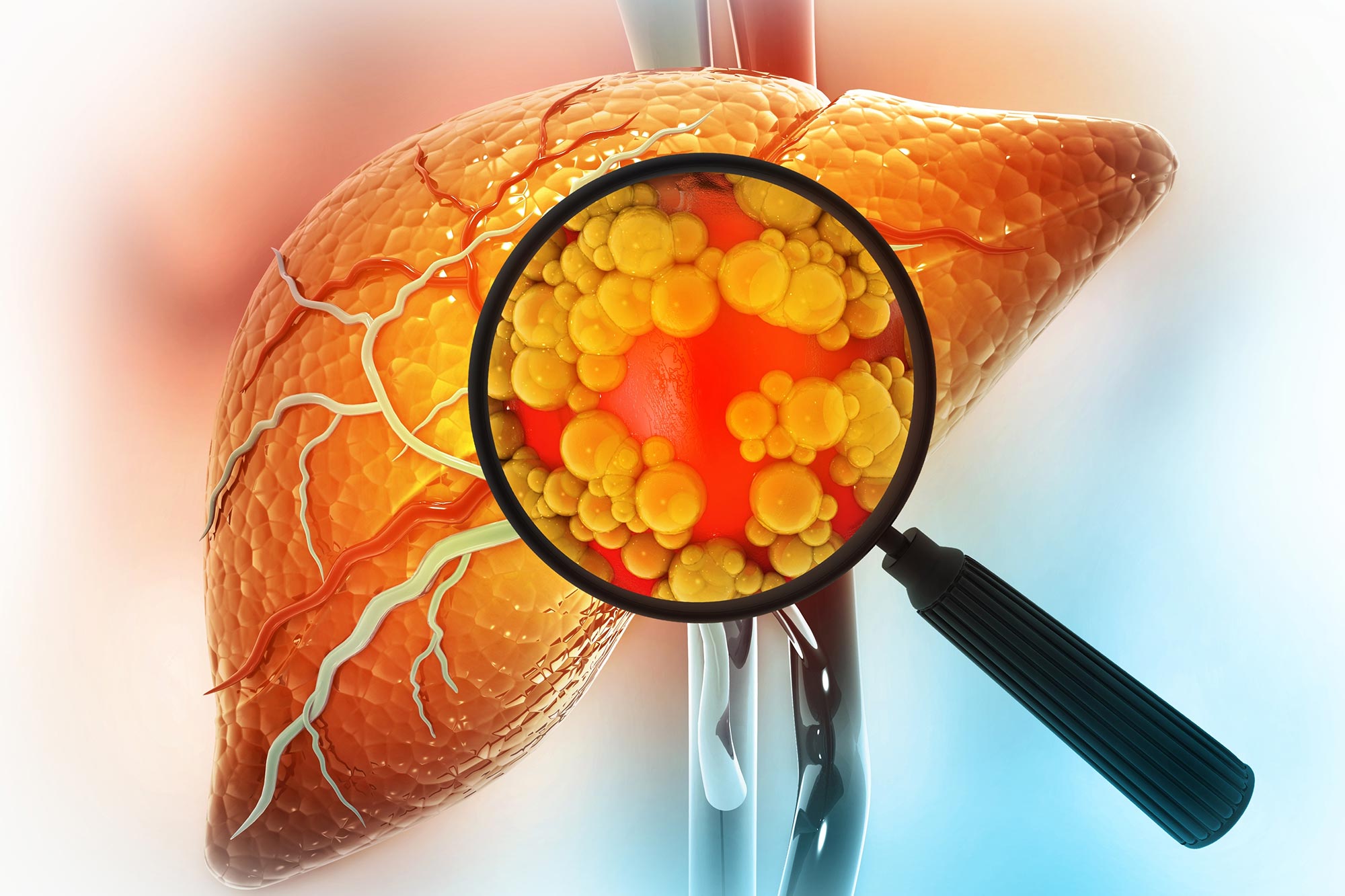
Scientists at Mayo Clinic discovered a rare MET gene mutation that can singlehandedly cause fatty liver disease.
Researchers at Mayo Clinic’s Center for Individualized Medicine have identified a rare genetic change that can directly cause metabolic dysfunction-associated steatotic liver disease (formerly known as nonalcoholic fatty liver disease).
Previously, scientists believed this condition arose from a mix of genetic and environmental influences. However, new findings published in Hepatology show that, in certain individuals, a single inherited genetic variant can be the main cause.
The team traced this variant to the MET gene, a key regulator of liver repair and fat metabolism. When the MET gene does not function properly, fat begins to build up in liver cells, triggering inflammation. Over time, this ongoing damage can lead to fibrosis and scarring that harden the liver. In severe stages, the disease can advance to cirrhosis, causing permanent liver injury or even liver cancer.
Metabolic dysfunction-associated steatotic liver disease affects roughly one-third of adults worldwide. Its more serious form, known as metabolic dysfunction-associated steatohepatitis, is projected to become a leading cause of cirrhosis and a primary reason for liver transplants in the near future.
“This discovery opens a window into how rare inherited genetic variants can drive common diseases,” says lead author Filippo Pinto e Vairo, M.D, Ph.D., medical director of the Program for Rare and Undiagnosed Diseases at Mayo Clinic’s Center for Individualized Medicine. “It provides new insights into this disease pathogenesis and potential therapeutic targets for future research.”
Discovery in a Family Case Study
The discovery emerged from the genomic data of a woman and her father with metabolic dysfunction-associated steatohepatitis. They had no history of diabetes or high cholesterol, two common risk factors for fat buildup in the liver.
With no clear explanation, researchers examined the DNA from more than 20,000 genes to find answers. They found a small but potentially significant error in the MET gene.
In collaboration with the Medical College of Wisconsin’s John & Linda Mellowes Center for Genomic Sciences and Precision Medicine, led by Raul Urrutia, M.D., the scientists determined that the mutation disrupted a critical biological process.
Genes are made up of chemical letters that provide instructions for the body’s functions. In this case, a single swapped letter — among thousands — scrambled the message, preventing the liver from properly processing fat. This rare variant, found in the family, has not been reported in existing literature or public databases.
“This study demonstrates that rare diseases are not rare but often hidden in the large pool of complex disorders, underscoring the immense power of individualized medicine in identifying them, and enabling the design of advanced diagnostics and targeted therapies,” Dr. Urrutia says.
Wider Implications Through the Tapestry Study
To explore the variant’s broader impact, researchers turned to Mayo Clinic’s Tapestry study, a large-scale exome sequencing effort aimed at uncovering genomic drivers of disease. The Tapestry study analyzed germline DNA from over 100,000 participants across the U.S., creating a comprehensive genomic data repository that supports research into both well-known and emerging health conditions.
Among nearly 4,000 adult Tapestry participants with metabolic dysfunction-associated steatotic liver disease, about 1% carried rare, potentially causative variants in the same MET gene. Of these, nearly 18% had variants in the same critical region as the initial woman and her father, further supporting its role in liver disease.
“This finding could potentially affect hundreds of thousands, if not millions, of people worldwide with or at risk for metabolic dysfunction-associated steatotic liver disease,” says Konstantinos Lazaridis, M.D., a lead author and the Carlson and Nelson Endowed Executive Director for the Center for Individualized Medicine.
Advancing Genomic Medicine
Dr. Lazaridis emphasized the significance of this discovery as it relates to the Tapestry study’s impactful contributions.
“Once a pathogenic variant is discovered, interrogating our Tapestry data repository is giving us a clearer lens into the hidden layers of disease, and this discovery is one of the first to demonstrate its scientific significance,” Dr. Lazaridis says. “This finding highlights the profound value of studying familial diseases and the merit of large-scale genomic datasets, which can reveal rare genetic variations with broader implications for population health.”
This discovery also reflects the importance of integrating genomics into clinical care at Mayo Clinic, where teams use advanced technologies to help solve complex medical mysteries. Since its launch in 2019, the Program for Rare and Undiagnosed Diseases has helped more than 3,200 patients with complex and serious conditions gain access to comprehensive genomic testing. It collaborates with nearly 300 clinicians from 14 divisions across the enterprise to bring precision diagnostics to patients with rare conditions, including rare liver diseases.
Future studies will explore how this genomic discovery in metabolic dysfunction-associated steatotic liver disease can inform targeted treatments and improve disease management.
Reference: “Discovery of a MET-driven monogenic cause of steatotic liver disease” by Filippo Pinto e Vairo, Michael T. Zimmermann, Jessica Wagenknecht, Salomão Doria Jorge, Shulan Tian, Robert A. Vierkant, Anthony C. Luehrs, Thiago Milech de Assunção, Angela Mathison, Paldeep S. Atwal, Yang Cao, Alina M. Allen, Eric W. Klee, Raul Urrutia and Konstantinos N. Lazaridis, 29 January 2025, Hepatology.
DOI: 10.1097/HEP.0000000000001249
Never miss a breakthrough: Join the SciTechDaily newsletter.
Follow us on Google and Google News.
1 Comment
taurine and properties of saline could be utilized in a medicine or injection depending on how progressed the problem is. taurine and peanut oil would work as well