
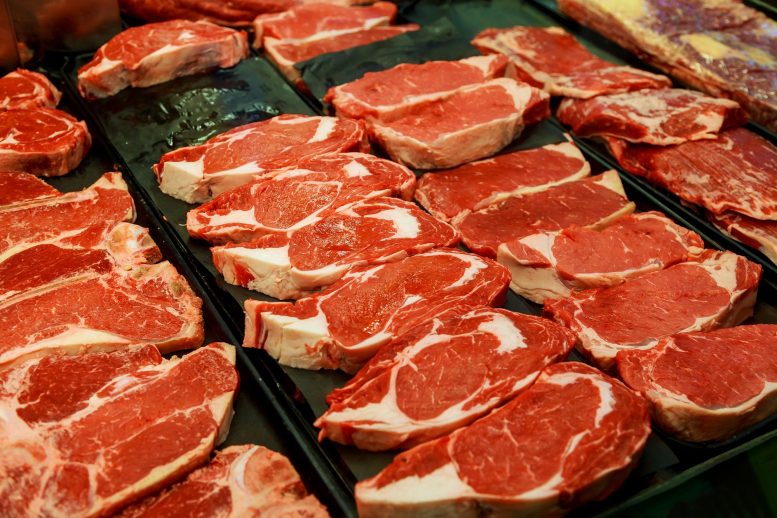
Red Meat Linked to DNA Damage in Colorectal Cancer
Red meat consumption may promote DNA damage-associated mutations in patients with colorectal cancer.
Genetic mutations indicative of DNA damage were associated with high red meat consumption and increased cancer-related mortality in patients with colorectal cancer, according to a study published in Cancer Discovery, a journal of the American Association for Cancer Research.
“We have known for some time that consumption of processed meat and red meat is a risk factor for colorectal cancer,” said Marios Giannakis, MD, PhD, an assistant professor of medicine at Harvard Medical School and a physician at Dana-Farber Cancer Institute. The International Agency for Research on Cancer declared that processed meat was carcinogenic and that red meat was probably carcinogenic to humans in 2015.
Experiments in preclinical models have suggested that red meat consumption may promote the formation of carcinogenic compounds in the colon, but a direct molecular link to colorectal cancer development in patients has not been shown, Giannakis explained. “What is missing is a demonstration that colorectal cancers from patients have a specific pattern of mutations that can be attributed to red meat,” he said. “Identifying these molecular changes in colon cells that can cause cancer would not only support the role of red meat in colorectal cancer development but would also provide novel avenues for cancer prevention and treatment.”
Reveals Unique Mutational Signature from Red Meat
To identify genetic changes associated with red meat intake, Giannakis and colleagues sequenced DNA from matched normal and colorectal tumor tissues from 900 patients with colorectal cancer who had participated in one of three nationwide prospective cohort studies, namely the Nurses’ Health Studies and the Health Professionals Follow-Up Study. All patients had previously provided information on their diets, lifestyles, and other factors over the course of several years prior to their colorectal cancer diagnoses.
Analysis of DNA sequencing data revealed the presence of several mutational signatures in normal and cancerous colon tissue, including a signature indicative of alkylation, a form of DNA damage. The alkylating signature was significantly associated with pre-diagnosis intake of processed or unprocessed red meat, but not with pre-diagnosis intake of poultry or fish or with other lifestyle factors. Red meat consumption was not associated with any of the other mutational signatures identified in this study. In line with prior studies linking red meat consumption with cancer incidence in the distal colon, Giannakis and colleagues found that normal and cancerous tissue from the distal colon had significantly higher alkylating damage than tissue from the proximal colon.
KRAS and PIK3CA Genes Implicated in Red Meat-Related Damage
Using a predictive model, the researchers identified the KRAS and PIK3CA genes as potential targets of alkylation-induced mutation. Consistent with this prediction, they found that colorectal tumors harboring KRAS G12D, KRAS G13D, or PIK3CA E545K driver mutations, which are commonly observed in colorectal cancer, had greater enrichment of the alkylating signature compared to tumors without these mutations. The alkylating signature was also associated with patient survival: Patients whose tumors had the highest levels of alkylating damage had a 47 percent greater risk of colorectal cancer-specific death compared to patients with lower levels of damage.
“Our study identified for the first time an alkylating mutational signature in colon cells and linked it to red meat consumption and cancer driver mutations,” said Giannakis. “These findings suggest that red meat consumption may cause alkylating damage that leads to cancer-causing mutations in KRAS and PIK3CA, thereby promoting colorectal cancer development. Our data further support red meat intake as a risk factor for colorectal cancer and also provide opportunities to prevent, detect, and treat this disease.”
Future of Precision Prevention and Early Detection
Giannakis explained that if physicians could identify individuals who are genetically predisposed to accumulating alkylating damage, these individuals could be counseled to limit red meat intake as a form of precision prevention. In addition, the alkylating mutational signature could be used as a biomarker to identify patients at greater risk of developing colorectal cancer or to detect cancer at an early stage. Because of its association with patient survival, the alkylating signature may also have potential as a prognostic biomarker. However, future studies are needed to explore these possibilities, Giannakis noted.
A limitation of the study is the potential selection bias of study participants, as tissue specimens could not be retrieved from all incident colorectal cancer cases in the cohort studies. Current studies from Giannakis and his colleagues are exploring the potential role of red meat intake and alkylating damage in diverse groups of patients.
Reference: “Discovery and features of an alkylating signature in colorectal cancer” by Carino Gurjao, Rong Zhong, Koichiro Haruki, Yvonne Y. Li, Liam F Spurr, Henry Lee-Six, Brendan Reardon, Tomotaka Ugai, Xuehong Zhang, Andrew D. Cherniack, Mingyang Song, Eliezer M. Van Allen, Jeffrey A. Meyerhardt, Jonathan A. Nowak, Edward L. Giovannucci, Charles S. Fuchs, Kana Wu, Shuji Ogino and Marios Giannakis, 17 June 2021, Cancer Discovery.
DOI: 10.1158/2159-8290.CD-20-1656
The study was supported by the National Institutes of Health, the Stand Up To Cancer Colorectal Cancer Dream Team Translational Research Grant (co-administered by the AACR), the Project P Fund, the Cancer Research UK Grand Challenge Award, the Nodal Award from the Dana-Farber Harvard Cancer Center, the Friends of the Dana-Farber Cancer Institute, the Bennett Family Fund, and the Entertainment Industry Foundation through the National Colorectal Cancer Research Alliance and Stand Up To Cancer.
Giannakis has received research funding from Bristol-Myers Squibb, Merck, Servier, and Janssen unrelated to this study.
Never miss a breakthrough: Join the SciTechDaily newsletter.
Follow us on Google and Google News.
22 Comments
“… red meat was probably carcinogenic to humans in 2015.”
I’m glad that it has been 6 years since red meat was probably carcinogenic.
Time to upgrade it to definitely?
It’s amazing that meat is suddenly carcinogenic after several million years of not being carcinogenic.
This abuse of epidemiology needs to stop. It’s leading ridiculous theories like this one.
It’s been carcinogenic the whole time. What is good for short term energy and growth can be bad for longevity. Humans can breed in their teenage years. The cancer is very unlikely to kill you before that. So it’s not an evolutionary deal breaker.
Theories is all they have. And for some reason folks buy them as real. Shakin my head
Junk science. A high fat, moderate protein, low carb diet is most fitting for humans from an evolutionary biological standpoint to maintain optimal health. Clean, local grassfed beef is one of the healthiest food you can consume and contains the most bioavailable source of B12 on the planet among other essential fatty acids and proteins.
So you are eating low protein grass fed beef, hmm.
Exactly…junk science…But you had to go and mention evolution. We all came from monkeys but they are still here. Lmbo
Don’t believe the lies. Carbs and fiber cause cancer
Carbohydrates and fiber are key to good health. If you load up with meat you are really going to shorten your lifespan.
I will always eat meat. They are liars and you buy it. Oh its science. I forgot…lmbo
You are wise Octavio
You WILL eat ze bugs!
When will people finally take on board that we should be eating a whole foods plant based diet for optimal health and longevity?
Another vegan. We are all going to die… And after that comes judgement. You need to worry about your soul. This life is going to end.
You brainwashed folks believe anything.
These articles are to lead you down a road that’s not good. Humans have been eating meat for millions of years and now all of a sudden it’s bad for you. These “researchers” are taking money from pharmaceutical companies to keep you on medications. All they care about is money not your health.
I eat 4 pounds of meat a day I lost 50 pounds and still gaining muscle and losing fat by eat nothing but meat. Carbs and ultra processed foods are causing most if not all of our diseases. Eat meat or become skeletor.
Sugar and carbs are unnatural in copious amount to humans. This is just another bs model that will be proved wrong in 3 years time. Globalists trying to make us eat bugs and hydrogenated bean paste. Red meat and vegetables are essential for humanity.
Yet another nothing burger. Maybe the good doctor should concentrate on all the chemicals ingested, then injected with after slaughter. Phosphates for one.
Leaner red meat a couple times a week is fine, just dont eat everyday.. Moderation.
Ridiculous…just another story to get rid of cows