
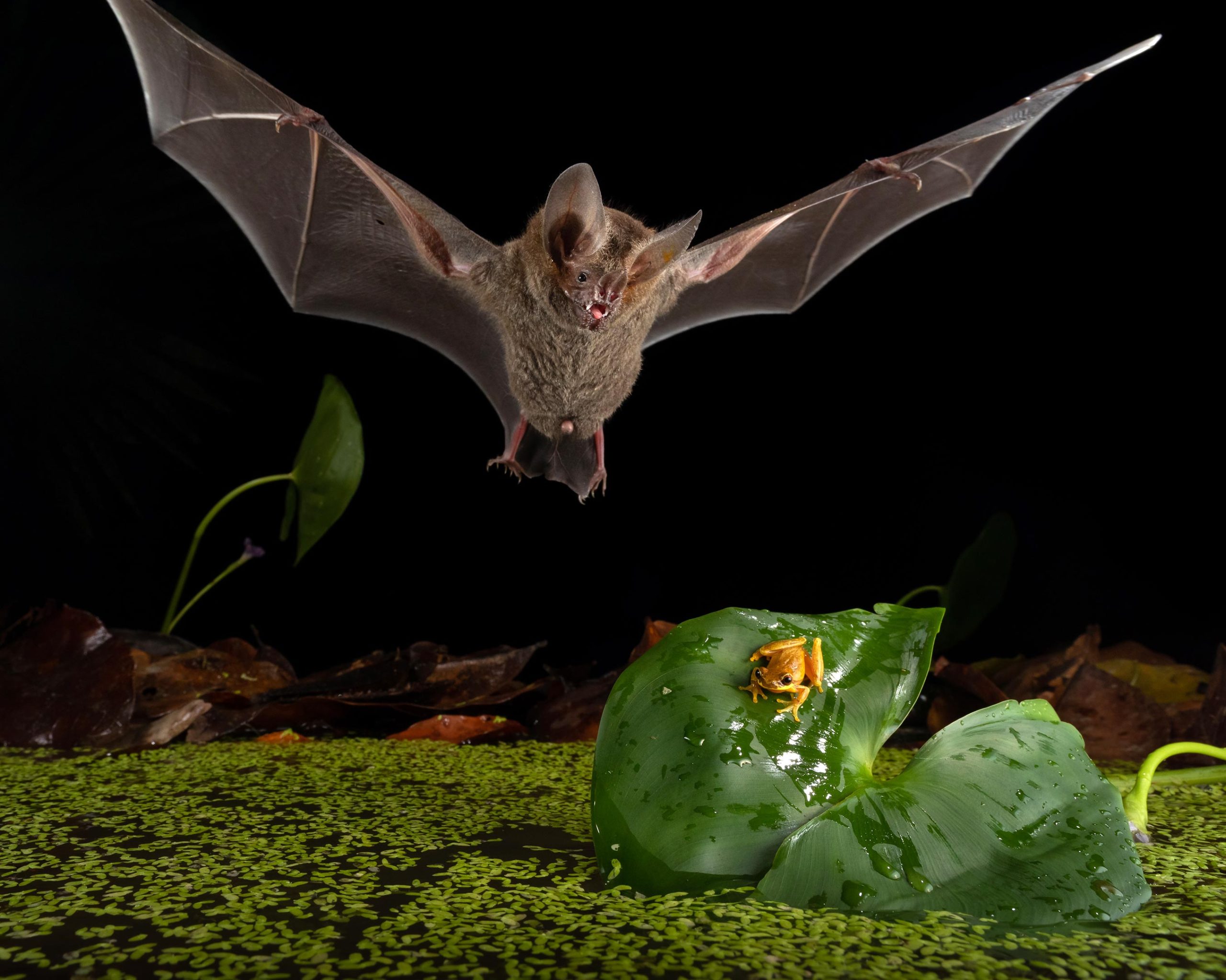
In Panama’s forests, researchers discovered that tiny fringe-lipped bats hunt with the patience and precision of big cats.
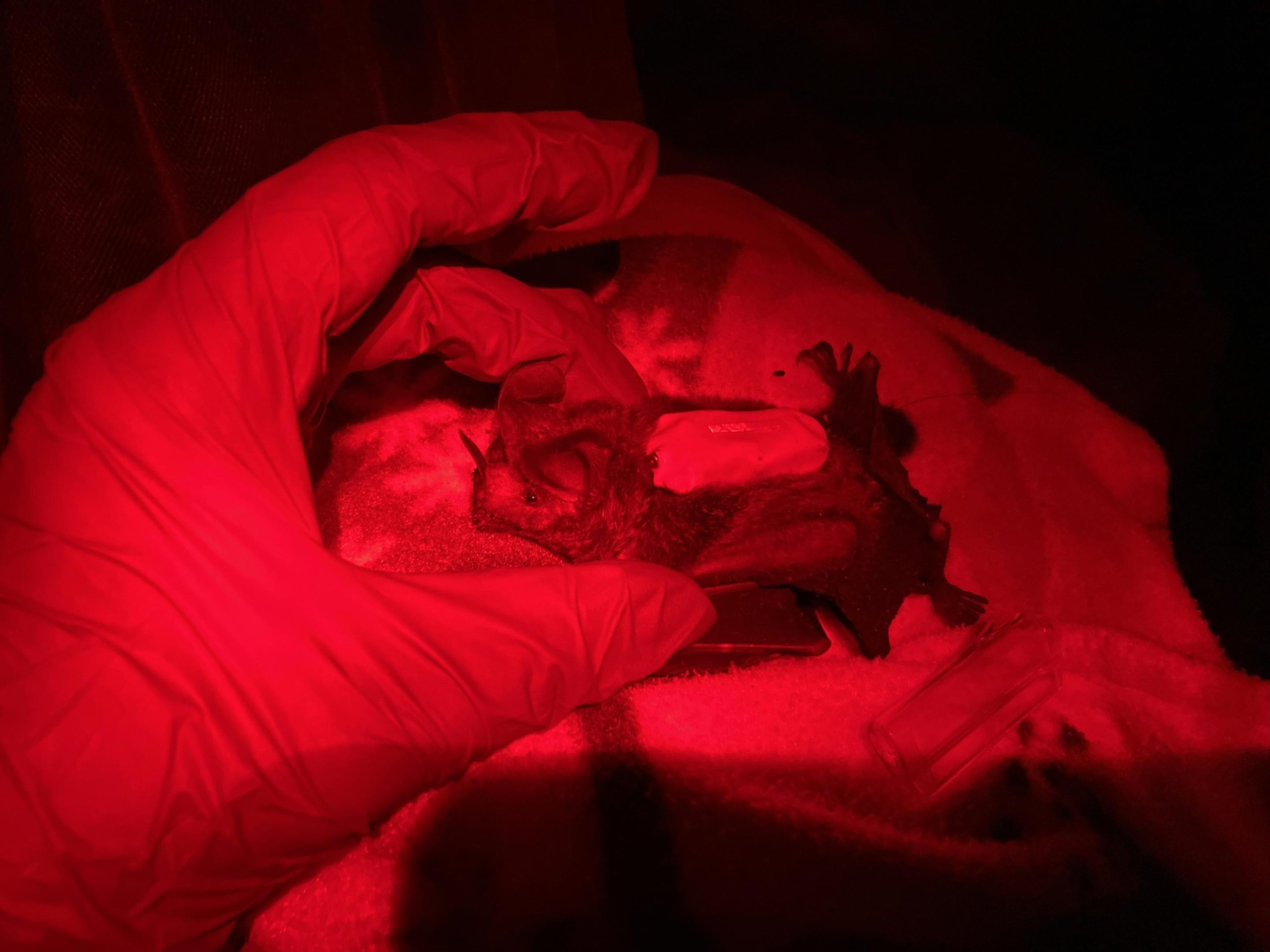
By fitting them with miniature tracking “backpacks,” scientists recorded how these small predators hang silently in the dark, listening for frogs, birds, or even small mammals before launching lightning-fast attacks.
Tiny Bats Match the Hunting Skills of Large Predators
A new international study led by scientists from Aarhus University and the Smithsonian Tropical Research Institute (STRI) shows that small bats can rival lions in hunting efficiency, and in many cases they outperform them.
To learn how fringe-lipped bats (Trachops cirrhosus), tiny carnivores native to Panama’s forests, catch their prey in natural conditions, researchers fitted 20 bats with miniature “backpacks.” These biologging tags tracked every movement and recorded surrounding sounds, giving the team a detailed look at their behavior at night.
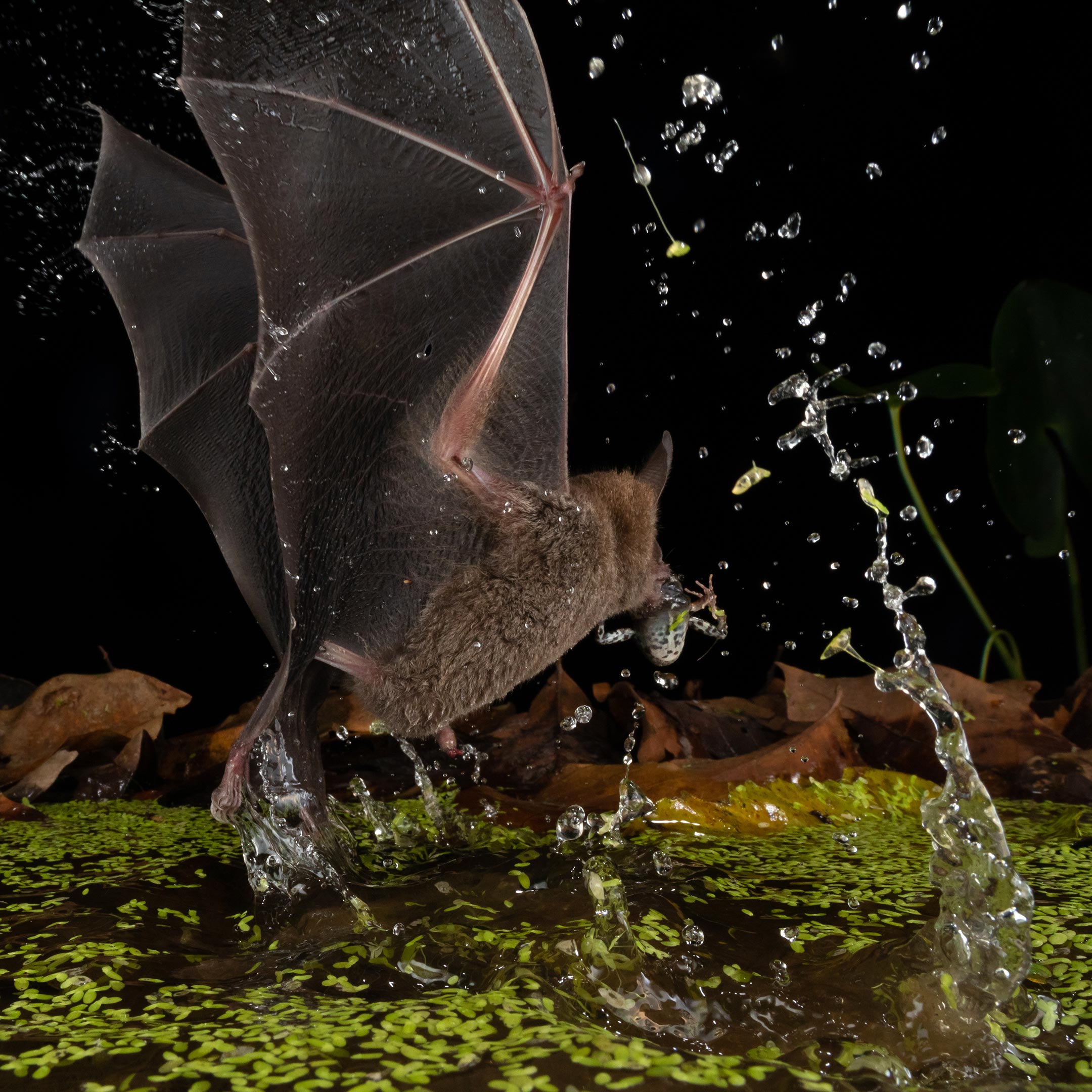
The recordings uncovered something surprising: the bats regularly pursued large prey such as frogs, birds, and small mammals. They rely on a patient “hang-and-wait” method and an extremely sharp sense of hearing to detect faint noises produced by their targets. This allows them to locate prey quickly and strike with very little wasted energy.
According to the study published in Current Biology, a single bat can consume nearly its full body weight (30 grams) in one feeding period, placing them among the most energy-efficient predators known.
Why These Tiny Hunters Defy Expectations
The researchers aimed to address a long-standing biological puzzle.
Across most of the animal world, body size determines hunting style. Large predators such as lions and polar bears can afford to chase big, energy-rich prey because their slower metabolism and larger energy reserves allow them to withstand repeated failed attempts. Small predators face the opposite situation. With limited energy storage and high metabolic demands, they must eat often and typically choose small, abundant prey that is easy to catch.
However, some bats challenge this pattern. Nine known bat species obtain more than half of their energy from vertebrates including frogs, birds, and small mammals. This raises a key question: how can such small animals, with tight energy budgets, survive by pursuing big and relatively uncommon prey, a strategy that normally requires a great deal of effort and involves many failed hunts?
To explore this contradiction, the team focused on the fringe-lipped bat.
These bats are known for eating small túngara frogs, so the researchers expected the biologging data to show frequent captures of these small amphibians.
Hunting Style More Like Lions Than Other Bats
Instead, the data pointed to an entirely different pattern. The bats behaved more like large felines than their fellow bat species.
They remained still for long stretches of the night, waiting to ambush their next meal. When the moment came, they attacked with accuracy, captured substantial prey, and then rested for extended periods, much like lions and leopards after a big kill.
Movement and audio recordings showed that the bats use a combination of hearing, vision, and echolocation. Their sensitivity to low-frequency sounds helps them detect frog mating calls. By blending these senses, they locate and dispatch large prey with impressive precision.
Small Bodies With Big-Predator Behavior
“It was incredible to discover that these bats hunt like big predators trapped in tiny bodies,” says lead author Leonie Baier, a Marie Skłodowska-Curie postdoctoral fellow at Aarhus University and research fellow at STRI. “Instead of spending the night constantly on the wing, they wait patiently, strike with high precision, and sometimes end up catching enormous, energy-rich prey. The discovery that an animal this small can do this really turned our assumptions upside down.”
The data showed that the bats spent 89 percent of their time motionless, conserving valuable energy. When they did make a move, it was quick: most hunting flights lasted under three minutes, and the median hunting flight was only eight seconds.
Their success rate was extraordinary. The bats succeeded in roughly half of their hunts, compared with only 14 percent for lions. Polar bears have an even lower success rate of about two percent.
Meals Nearly Their Own Size
The prey they caught was larger than expected, averaging about seven percent of the bat’s own body weight. That is similar to a 70-kilogram human eating a five-kilogram meal.
Some bats even captured prey nearly equal to their own size. One example is the Rosenberg’s gladiator tree frog, a species that can weigh up to 20 grams. Researchers could estimate prey size by listening to how long the chewing sounds continued in the audio data, with the longest recorded feeding session lasting 84 minutes.
The older, the better
Older bats demonstrated the ability to handle bigger prey, suggesting that they become more capable hunters over time. This species is already known to remember frog calls for years and to learn new hunting tactics by watching other bats.
“We wanted to understand what these bats are actually doing out there in the dark – so we listened in, much like the bats themselves listen to their prey,” says Laura Stidsholt, assistant professor at Aarhus University and senior author of the study. “With the data from our biologging tags, which combine high-resolution sound recordings with movement data, we were able to reconstruct entire hunting sequences in the wild. In this way, we experienced the forest through the bats’ ears – revealing a hidden world of patience, precision and survival in the dark.”
Reference: “Extreme hunting efficiency in a carnivorous bat” by A. Leonie Baier, Sebastian A. Mortensen, Gregg Cohen, Rachel A. Page, Peter T. Madsen and Laura Stidsholt, 31 October 2025, Current Biology.
DOI: 10.1016/j.cub.2025.10.023
Never miss a breakthrough: Join the SciTechDaily newsletter.
Follow us on Google and Google News.