
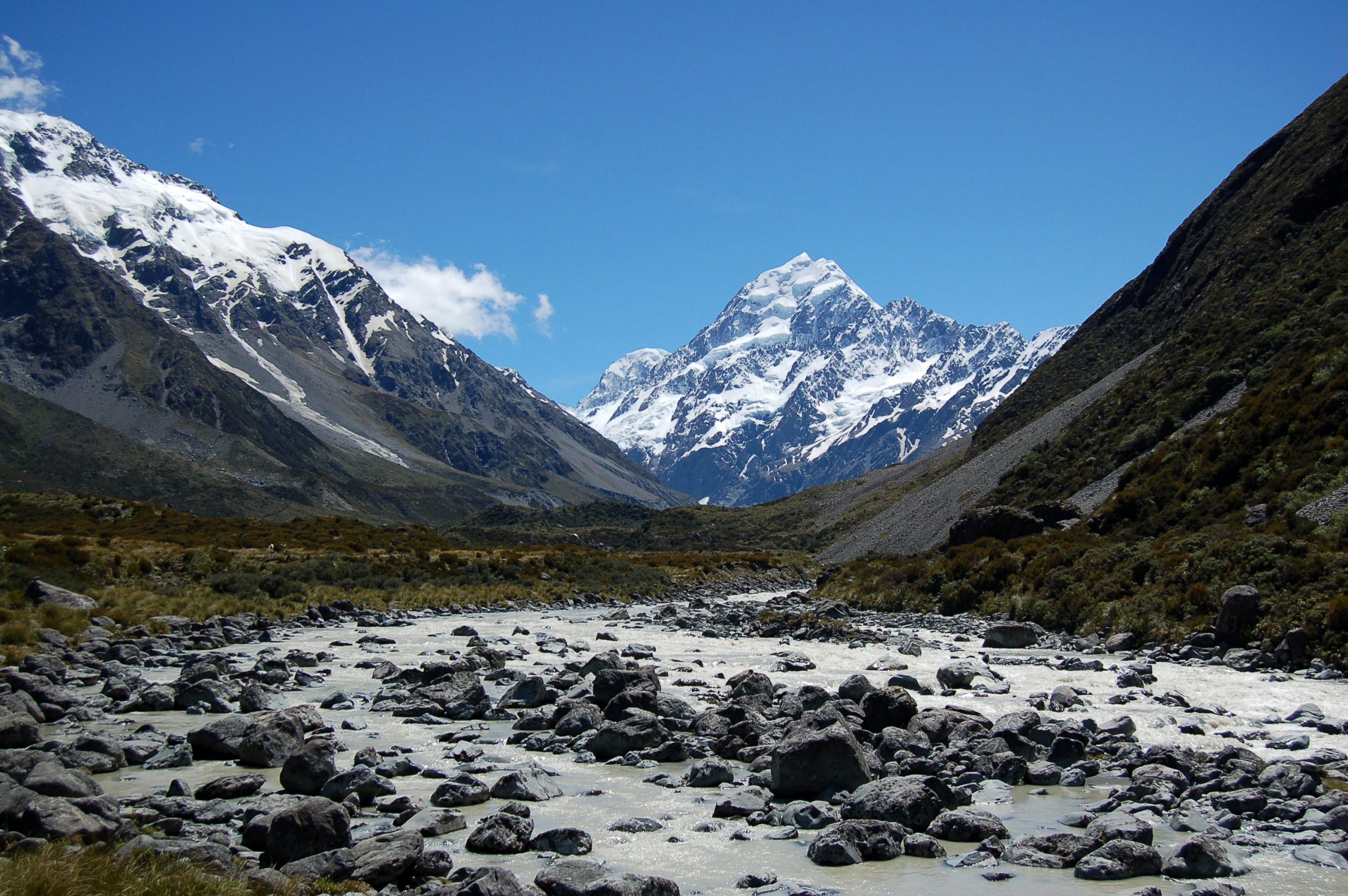
Melting Glaciers Accelerate River Carbon Decomposition
The loss of glaciers worldwide enhances the breakdown of complex carbon molecules in rivers, potentially contributing further to climate change.
An international research team led by the University of Leeds has for the first time linked glacier-fed mountain rivers with higher rates of plant material decomposition, a major process in the global carbon cycle.
As mountain glaciers melt, water is channeled into rivers downstream. But with global warming accelerating the loss of glaciers, rivers have warmer water temperatures and are less prone to variable water flow and sediment movement. These conditions are then much more favorable for fungi to establish and grow.
Fungal Decomposition Fuels Carbon Release
Fungi living in these rivers decompose organic matter such as plant leaves and wood, eventually leading to the release of carbon dioxide into the air. The process — a key part of global river carbon cycling — has now been measured in 57 rivers in six mountain ranges across the world, in Austria, Ecuador, France, New Zealand, Norway, and the United States.
The findings, funded mainly by the Natural Environment Research Council, are published on March 15, 2021, in the journal Nature Climate Change.
Lead author Sarah Fell, of Leeds’ School of Geography and water@leeds, said similar patterns and processes were discovered worldwide.
A New Climate Feedback Mechanism Identified
“We found increases in the rate of organic matter decomposition in mountain rivers, which can then be expected to lead to more carbon release to the atmosphere.
“This is an unexpected form of climate feedback, whereby warming drives glacier loss, which in turn rapidly recycles carbon in rivers before it is returned to the atmosphere.”
The retreat of mountain glaciers is accelerating at an unprecedented rate in many parts of the world, with climate change predicted to drive continued ice loss throughout the 21st century.
However, the response of river ecosystem processes (such as nutrient and carbon cycling) to decreasing glacier cover, and the role of fungal biodiversity in driving these, remains poorly understood.
The research team used artists’ canvas fabric to mimic plant materials such as leaves and grass that accumulate naturally in rivers. This was possible because the canvas is made from cotton, predominantly composed of a compound called cellulose — the world’s most abundant organic polymer which is found in plant leaves that accumulate in rivers naturally.
The canvas strips were left in the rivers for approximately one month, then retrieved and tested to determine how easily they could be ripped. The strips ripped more easily as aquatic fungi colonized them, showing that decomposition of the carbon molecules proceeded more quickly in rivers that were warmer because they had less water flowing from glaciers.
The study’s co-author, Professor Lee Brown, also of Leeds’ School of Geography and water@leeds, explained: “Our finding of similar patterns of cellulose breakdown at sites all around the world is really exciting because it suggests that there might be a universal rule for how these river ecosystems will develop as mountains continue to lose ice. If so, we will be in much improved position to make forecasts about how river ecosystems will change in future.
Co-author Professor Alex Dumbrell, whose team at the University of Essex analyzed the fungi from the river samples, added: “Our work showed that measuring a specific gene that underpins the activity of the cellulose-degrading enzyme (Cellobiohydrolase I) meant we could predict cotton strip decomposition better than using information about the abundance of fungal species themselves, which is the more commonly used approach. This opens up new routes for research to improve our predictions about changes in carbon cycling.”
Glacier-Fed Rivers and Forest Ecosystem Links
As algal and plant growth in glacier-fed rivers is minimized by low water temperature, unstable channels and high levels of fine sediment, plant matter breakdown can be an important fuel source to these aquatic ecosystems. In some parts of the world, such as Alaska and New Zealand, glacier-fed rivers also extend into forests that provide greater amounts of leaf litter to river food chains.
In addition, because glacier loss means less water flows through the rivers and they are less prone to changing course, it is expected that bankside plants and trees will grow more in these habitats in future, meaning even more leaf litter will accumulate in rivers. This is likely to accelerate the fungal processing of carbon in mountain rivers worldwide even more than at present.
Reference: “Fungal decomposition of river organic matter accelerated by decreasing glacier cover” by Sarah C. Fell, Jonathan L. Carrivick, Sophie Cauvy-Fraunié, Verónica Crespo-Pérez, Eran Hood, Kate C. Randall, Kirsty J. Matthews Nicholass, Scott D. Tiegs, Alex J. Dumbrell and Lee E. Brown, 15 March 2021, Nature Climate Change.
DOI: 10.1038/s41558-021-01004-x
Never miss a breakthrough: Join the SciTechDaily newsletter.
Follow us on Google and Google News.