
New study reveals seal mothers favor slow-moving icebergs, while seals opt for faster ice in prime foraging areas later in the year.
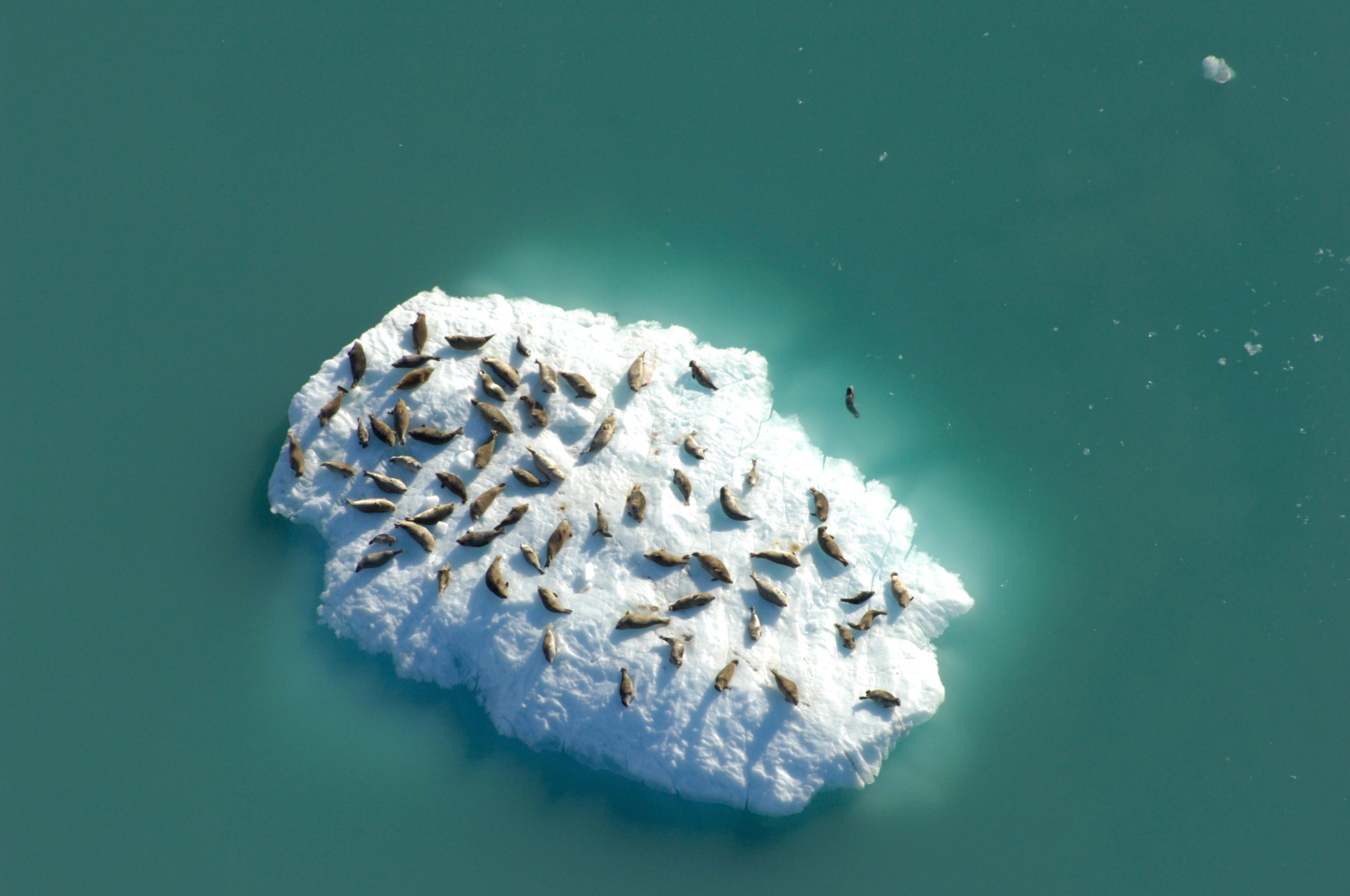
Harbor seals depend on icebergs as essential platforms for survival, using them to give birth, rear pups, and molt. A recent study highlights how climate-driven glacier changes are altering iceberg characteristics—such as size, speed, and availability—impacting the seals’ critical habitat.
Stable, slow-moving icebergs are preferred by mother seals for pupping and nurturing their young, while during the molting season, seals favor faster-moving icebergs closer to productive feeding areas. These shifts underscore the profound effects of glacier dynamics on the seals’ reliance on icy environments.
“Our work provides a direct link between a glacier’s advance and seals’ distribution and behavior,” said Lynn Kaluzienski, a postdoctoral fellow at the University of Alaska Southeast who led the study. “Interdisciplinary studies like this one coupled with long-term monitoring campaigns will be important to understand how climate change will influence tidewater glacier fjord ecosystems in the future.”
Kaluzienski recently presented the findings at AGU’s 2024 Annual Meeting in Washington, D.C., on Tuesday, 10 December.
Study Site: Johns Hopkins Glacier and Inlet
The study focused on harbor seals and icebergs in Johns Hopkins Inlet and Glacier, located in Glacier Bay National Park, Alaska. Johns Hopkins is one of the few glaciers on Earth that is advancing (growing thicker and flowing forward into the fjord) rather than retreating due to global warming, partly thanks to its terminal moraine, comprising crushed rock and other sediment, which effectively barricades the front of the glacier from warmer ocean water that would increase the glacier’s melt rate.
But that wall of sediment reduces the number of icebergs the glacier sheds into the fjord. Fewer icebergs means less habitat for seals, making it crucial that researchers understand how seals use the icebergs available to them.
Kaluzienski, university colleagues, and collaborators from the U.S. National Park Service spent the last few years documenting fine-scale variations in icebergs and in the distribution of seals in the fjord, using time-lapse cameras and aerial photographic surveys.
“Icebergs are found throughout the fjord in regions of fast flow, within eddies, and close to the glacier,” Kaluzienski said. “We wanted to understand which of these areas seals were using and how this habitat is changing in response to advances at the glacier front and reduction in iceberg numbers.”
Icebergs as Platforms and Foraging Aids
When an iceberg breaks away from a glacier, its speed and path are affected by wind, ocean currents, and freshwater runoff streaming from the base of the glacier. Called a plume, this jet of water is more buoyant than the salty ocean water in the fjord. The plume brings plankton and fish to the surface, creating a moving buffet that seals can snack on from icebergs.
The researchers used remote sensing data to find the plume and compared it to where icebergs and seals are during the pupping season in June and molting season in August. They found that during the pupping season, seals that were out of the water generally could be found on slower-moving icebergs, with speeds slower than 7-8 inches (0.2 meters) per second. Conversely, during the molting season, the seals were increasingly likely to be found on faster-moving icebergs in or near the plume.
It’s possible that icebergs in slower waters are more stable, giving adult seals a sturdier platform for caring for young pups. The stability of the ice may be less critical when the seals are molting, and bergs near the plume may offer more foraging opportunities.
Meeting: AGU Annual Meeting 2024
Never miss a breakthrough: Join the SciTechDaily newsletter.
Follow us on Google and Google News.