
Close Menu
    Facebook X (Twitter) Instagram
    SciTechDaily
    • Biology
    • Chemistry
    • Earth
    • Health
    • Physics
    • Science
    • Space
    • Technology
    Facebook X (Twitter) Pinterest YouTube RSS
    SciTechDaily
    Home»Biology»Bad News for Nemo: Species Can’t Adapt to Rapid Environmental Changes
    Biology

    Bad News for Nemo: Species Can’t Adapt to Rapid Environmental Changes

    By Woods Hole Oceanographic InstitutionNovember 26, 2019No Comments3 Mins Read
    Facebook Twitter Pinterest Telegram LinkedIn WhatsApp Email Reddit
    Share
    Facebook Twitter LinkedIn Pinterest Telegram Email Reddit
    Clownfish Anemones
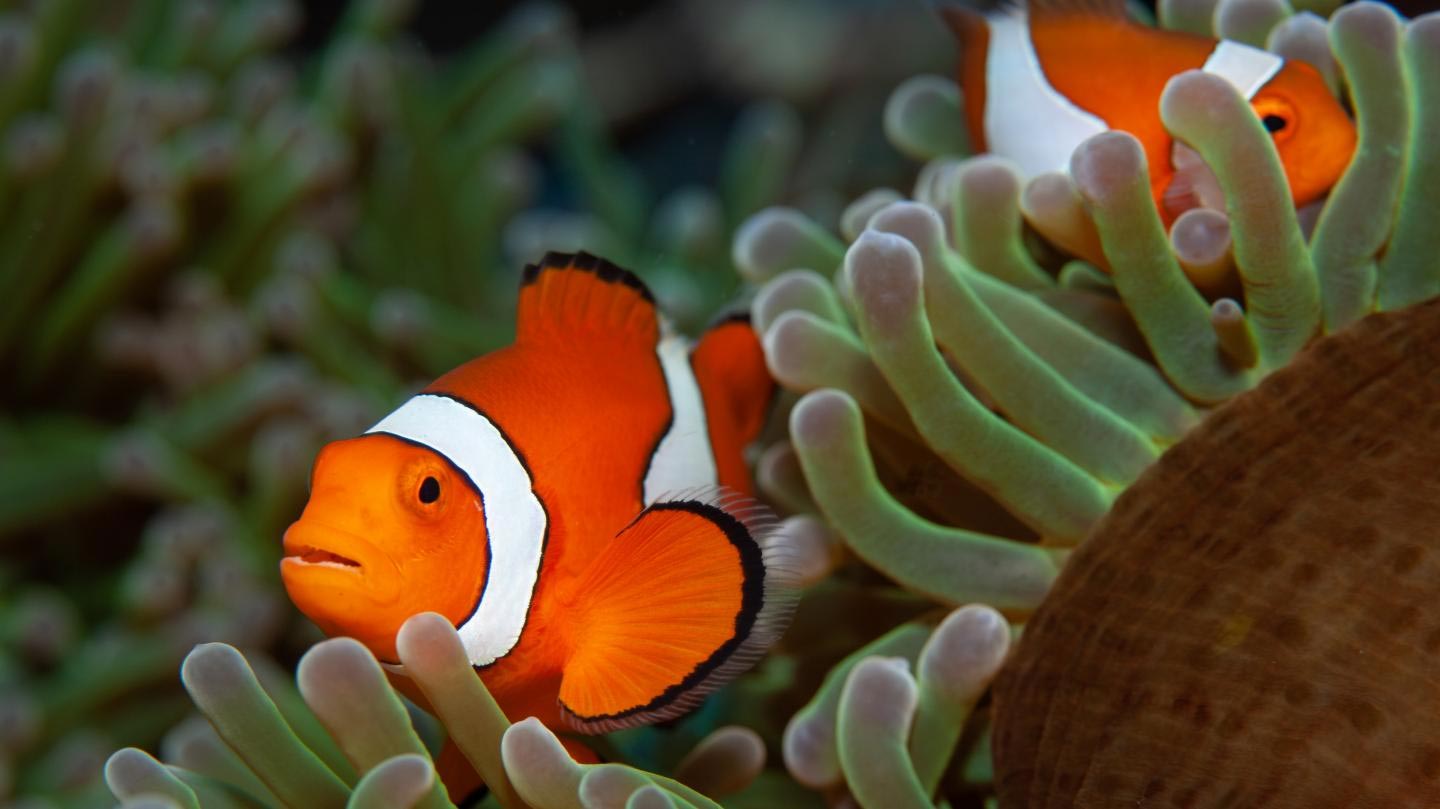
    If high-quality anemones remain healthy, the clownfish population will persist. However, if the anemones and coral reefs they call home are impacted by climate warming, clownfish are in trouble. Credit: Simon Thorrold, Woods Hole Oceanographic Institution

    The beloved anemone fish popularized by the movies “Finding Nemo” and “Finding Dory” don’t have the genetic capacity to adapt to rapid changes in their environment, according to a new study by France’s National Center for Scientific Research (CNRS), Woods Hole Oceanographic Institution (WHOI) and colleagues. Their findings were published on November 27, 2019, in the journal Ecology Letters.

    An international team of researchers monitored clownfish in the lagoons of Kimbe Bay–a biodiversity hot spot in Papua New Guinea–for more than a decade. Using genetic analysis of the population’s DNA, the researchers were able to calculate their potential to adapt to habitat changes and renew their population. They found that big families of clownfish that extended over many generations were linked to high-quality habitats, rather than to shared genes.

    Clownfish
    Clownfish (Amphiprion percula) on their anemone in the lagoon around Kimbe Island in Papua New Guinea. Credit: Simon Thorrold, Woods Hole Oceanographic Institution

    “The findings reported here were made possible by a huge sampling and DNA sequencing effort that had not been attempted for any marine species before,” says WHOI biologist Simon Thorrold, a coauthor of the paper. “The biggest surprise to us was also the most troubling: conservation efforts cannot rely on genetic adaptation to protect clownfish from the effects of climate change. It seems that Nemo won’t be able to save himself.”

    The quality of the anemone that provides a home to clownfish contributes significantly–on average 50 percent–to its ability to survive and renew its population. If high-quality anemones remain healthy, the clownfish population will persist. However, if the anemones and coral reefs they call home are impacted by climate warming, the clownfish are in trouble.

    “Nemo is thus at the mercy of a habitat that is degrading more and more every year,” says Benoit Pujol, an evolutionary geneticist at CNRS. To expect a clownfish to genetically adapt at pace which would allow it to persist in the lagoons would be unreasonable, and thus the ability of these fish to remain in the lagoons over time will depend on our ability to maintain the quality of its habitat.”

    Reference: “Strong habitat and weak genetic effects shape the lifetime reproductive success in a wild clownfish population” by Océane C. Salles, Glenn R. Almany, Michael L. Berumen, Geoffrey P. Jones, Pablo Saenz‐Agudelo, Maya Srinivasan, Simon R. Thorrold, Benoit Pujol and Serge Planes, 26 November 2019, Ecology Letters.
    DOI: 10.1111/ele.13428

    Additional coauthors of the paper include colleagues from: James Cook University / Australian Research Council Center of Excellence for Coral Reef Studies; King Abdullah University of Science and Technology; The Universidad Austral de Chile; and the Université de Perpignan.

    This research was supported by: Laboratoire d’Excellence CORAIL; Coral Reef Initiatives for the Pacific; the Global Environment Facility Coral Reef Targeted Research Connectivity Working Group; the U.S. National Science Foundation; the Australian Research Council Center of Excellence Coral Reef Studies; The Nature Conservancy; Total Foundation; James Cook University; King Abdullah University of Science and Technology; and Woods Hole Oceanographic Institution.

    Never miss a breakthrough: Join the SciTechDaily newsletter.
    Follow us on Google and Google News.

    Climate Change Fish Genetics Marine Biology Oceanography Woods Hole Oceanographic Institution
    Share. Facebook Twitter Pinterest LinkedIn Email Reddit

    Related Articles

    Sexual Parasitism: Anglerfish’s Strategy To Conquer the Deep Sea Amid Global Warming

    Climate Change Will Reshuffle Marine Ecosystems in Unexpected Ways – “Like Putting Marine Biodiversity in a Blender”

    Tropical Fish Shoals Disrupted by Ocean Acidification and Warming

    Complexity Yields Simplicity: The Shifting Dynamics and Loss of Biodiversity in Temperate Marine Ecosystems

    Which Animals Will Survive Climate Change? Genetic Changes Help Scientists Predict

    Overfishing of Atlantic Cod Likely Did Not Cause Genetic Changes – Hope for Recovery

    Abundance of Life on Coral Reefs Has Been Puzzling Since Charles Darwin’s Day – New Research Provides Answers

    As Oceans Warm, Large Fish Struggle to Extract the Oxygen They Need From Their Environment

    Scientists Were Wrong – Coral Reef Fish Not Affected by Ocean Acidification From Climate Change

    Leave A Reply Cancel Reply

    • Facebook
    • Twitter
    • Pinterest
    • YouTube

    Don't Miss a Discovery

    Subscribe for the Latest in Science & Tech!

    Trending News

    Millions Take These IBS Drugs, But a New Study Finds Serious Risks

    Scientists Unlock Hidden Secrets of 2,300-Year-Old Mummies Using Cutting-Edge CT Scanner

    Bread Might Be Making You Gain Weight Even Without Eating More Calories

    Scientists Discover Massive Magma Reservoir Beneath Tuscany

    Europe’s Most Active Volcano Just Got Stranger – Here’s Why Scientists Are Rethinking It

    Alzheimer’s Symptoms May Start Outside the Brain, Study Finds

    Millions Take This Popular Supplement – Scientists Discover a Concerning Link to Heart Failure

    The Universe Is Expanding Too Fast and Scientists Can’t Explain Why

    Follow SciTechDaily
    • Facebook
    • Twitter
    • YouTube
    • Pinterest
    • Newsletter
    • RSS
    SciTech News
    • Biology News
    • Chemistry News
    • Earth News
    • Health News
    • Physics News
    • Science News
    • Space News
    • Technology News
    Recent Posts
    • Simple Blood Test May Predict Alzheimer’s Years Before Brain Scans Show Signs
    • Scientists Say Adding This Unusual Seafood to Your Diet Could Reverse Signs of Aging
    • U.S. Waste Holds $5.7 Billion Worth of Crop Nutrients
    • Scientists Say a Hidden Structure May Exist Inside Earth’s Core
    • Doctors Surprised by the Power of a Simple Drug Against Colon Cancer
    Copyright © 1998 - 2026 SciTechDaily. All Rights Reserved.
    • Science News
    • About
    • Contact
    • Editorial Board
    • Privacy Policy
    • Terms of Use

    Type above and press Enter to search. Press Esc to cancel.