
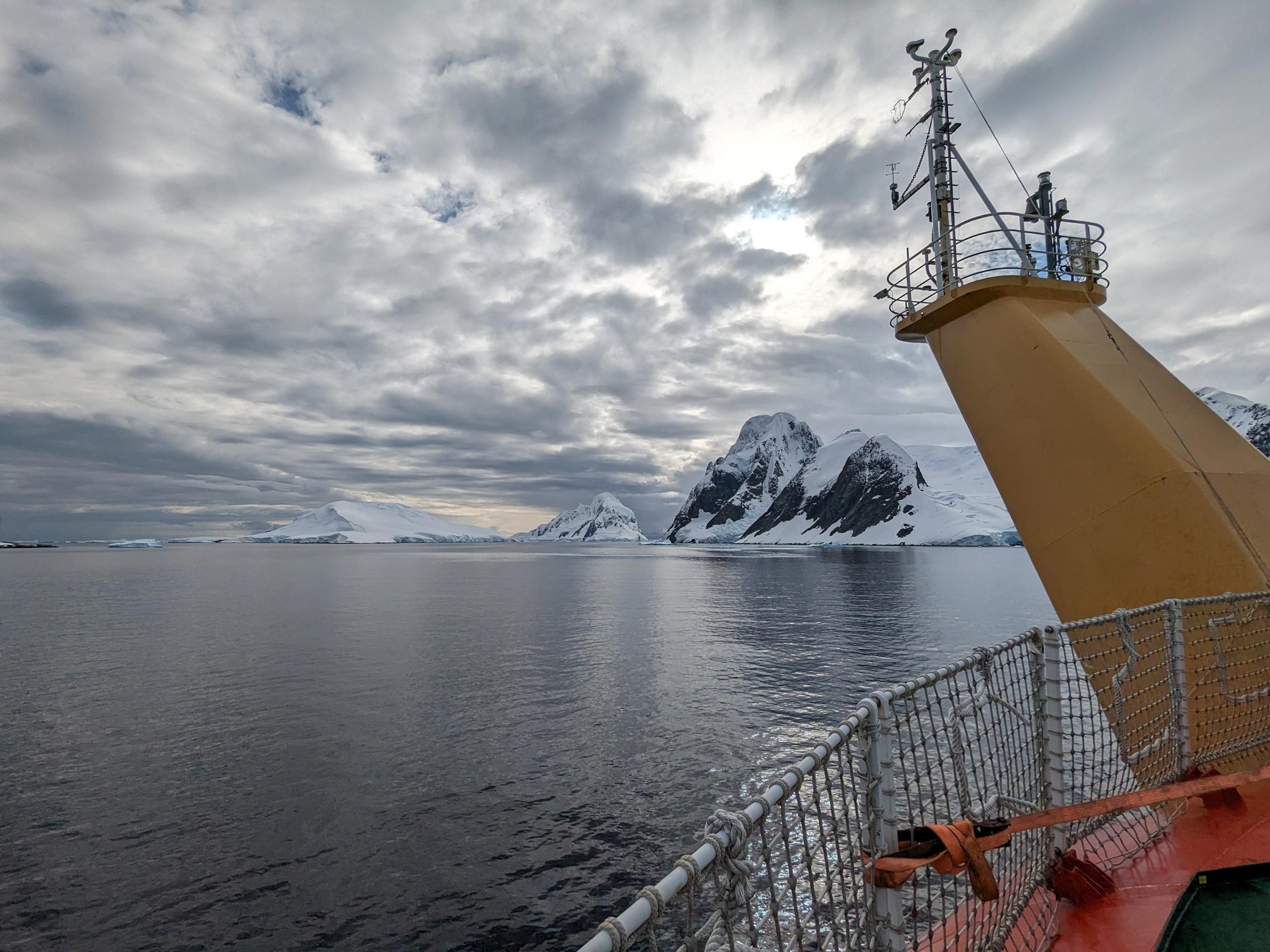
Researchers have discovered that the Southern Ocean’s capacity to absorb CO2 is 25% higher than past estimates suggested.
Direct air-sea measurements indicate that previous models underestimated CO2 uptake, highlighting the need for more accurate climate assessments.
Enhanced Measurement Techniques Reveal Greater CO2 Absorption
New research led by the University of East Anglia (UEA) and Plymouth Marine Laboratory (PML) has found that the Southern Ocean absorbs more carbon dioxide (CO2) than previously thought.
Using direct measurements of CO2 exchange, or fluxes, between the air and sea, the scientists found the ocean around Antarctica absorbs 25% more CO2 than previous indirect estimates based on shipboard data have suggested.
Discrepancies in Previous CO2 Sink Estimates
The Southern Ocean plays a major role in absorbing CO2 emitted by human activities, a process vital for controlling the Earth’s climate. However, there are big uncertainties in the magnitude and variability in this flux.
Until now it has been estimated using shipboard measurements, such as those collected for the Surface Ocean CO2 Atlas (SOCAT) from research ships and sail drones, data from profiling floats deployed in the ocean, and global ocean biogeochemistry models. These different approaches have produced large variations in estimates.
Advancements in Observational Methods
This new study used a novel technique called eddy covariance — with flux systems mounted on ships’ foremasts — to directly measure air-sea CO2 fluxes during seven research cruises in the region.
The results — published in the journal Science Advances — show the summer Southern Ocean is likely to be a strong CO2 sink, challenging the much weaker estimates based on float data and model simulations, which the authors say “substantially underestimate” the observed CO2 uptake.
The authors argue this difference can be explained by considering temperature variations in the upper ocean and a limited resolution, for example averaging over a too-long time scale or sampling over a too-large interval, adding that current models and float data do not account for small, intense CO2 uptake events.
Implications of New Findings for Climate Models
Lead author Dr. Yuanxu Dong, of UEA’s Centre for Ocean and Atmospheric Sciences (COAS) and PML, is currently at the GEOMAR Helmholtz Centre for Ocean Research Kiel, funded by a Humboldt Foundation fellowship. He said: “This is the first time a large number of direct air-sea CO2 flux observations have been used to assess existing flux products in the Southern Ocean. Our findings provide direct observational evidence that this ocean may take up more CO2 than previously recognized.
“Accurate quantification of the Southern Ocean CO2 sink is essential for the assessment of the Earth’s climate. However, it is the most uncertain region regarding the estimate of its CO2 sink capacity.
“Our study reduces this uncertainty and improves the understanding of Southern Ocean CO2 uptake, and we recommend that future estimates should include temperature adjustments and higher resolution reconstruction and modeling.”
Future Directions and Improvements in Measurement Techniques
The team, which also included scientists at the Alfred Wegener and Max Planck Institutes in Germany, the Flanders Marine Institute in Belgium, and the University of Hawai’i in the US, investigated inconsistencies in the existing CO2 flux estimates, then used the eddy covariance flux observations to assess the different data sets.
The cruise data covered approximately 3300 hours — about 175 days — of measurements in the Antarctic summer of 2019 and 2020, defined as November to April in the study, over an area of highly dynamic frontal zones. Measurements were taken hourly compared, for example, to approximately every 10 days for those from floats.
Dr. Mingxi Yang, study co-author and Chemical Oceanographer at PML, said: “The Southern Ocean is a key sink of CO2, but the magnitudes and the locations of this ocean uptake are uncertain. PML’s autonomous and high frequency eddy covariance system has significantly increased the number of direct air-sea CO2 flux measurements in this region.
“This paper offers the first comparison between direct CO2 flux measurements and estimates from coarse data products and global models on a large spatial/temporal scale. It has helped validate these and shed light on ways to improve them.”
Challenges and Opportunities in Expanding CO2 Flux Observations
Lack of winter data is a general problem with ships because of the difficulty accessing the region at that time, which the floats partially address. Acknowledging that their cruise data only covers some parts of the Southern Ocean in summer, the authors say continued efforts towards high-quality observations are essential to improve estimates of air-sea CO2 fluxes.
This might include an expansion of measurements to more ships, and the further deployment of buoys and sail drones, particularly in the winter season. Additional observations in winter by unattended platforms could also help fill the seasonal data gap.
Prof Tom Bell, co-author and PML Ocean-Atmosphere Biogeochemist, added: “We have recently moved our flux system onto the new ice breaker, the RRS Sir David Attenborough, and collected the first set of flux measurements during a research cruise in the Weddell Sea earlier this year. We aim to continue this valuable work over the coming years, which is essential for monitoring the current climate and forecasting future changes.”
Conclusion and Call for Action
The researchers also warn that the amount of shipboard surface ocean CO2 measurements has drastically declined in recent years, partly due to the COVID pandemic, but also to less funding. The number of annual datasets in SOCAT, for example, decreased by 35% from 2017 to 2021 – and 40% for the Southern Ocean.
Dr. Dorothee Bakker, of UEA’s COAS and chair of SOCAT, said: “There is a real need for sustained and expanded funding of surface ocean CO2 measurements and their SOCAT synthesis, in order to constrain Southern Ocean CO2 uptake, to support the World Meteorological Organization’s Global Greenhouse Gas Watch monitoring initiative and to inform climate policy.”
Reference: “Direct observational evidence of strong CO2 uptake in the Southern Ocean” by Yuanxu Dong, Dorothee C. E. Bakker, Thomas G. Bell, Mingxi Yang, Peter Landschützer, Judith Hauck, Christian Rödenbeck, Vassilis Kitidis, Seth M. Bushinsky and Peter S. Liss, 24 July 2024, Science Advances.
DOI: 10.1126/sciadv.adn5781
The work was supported by funding from the China Scholarship Council, the UK’s Natural Environment Research Council (NERC) and the European Space Agency.
Never miss a breakthrough: Join the SciTechDaily newsletter.
Follow us on Google and Google News.
2 Comments
“The Southern Ocean plays a major role in absorbing CO2 emitted by human activities, a process vital for controlling the Earth’s climate.”
That is a bold statement to make when the thrust of the research claims that previous estimates of the Summer sink capacity were 25% too low. That is in part because the major sources of anthropogenic CO2 emissions are in the northern hemisphere and are slightly elevated in the northern Winter (which is also the time of biogenic ramp-up of CO2) as people attempt to warm their dwellings and workplaces. Additionally, during the southern Summer, terrestrial photosynthesis is drawing down the atmospheric concentration, resulting in a need to untangle the various competing sinks.
Yet another excuse why their climate models fail to predict anything. Keep’em coming, folks.
They don’t know that much, but they pretend they already know everything, and needlessly terrify poor little Greta.