

MIT researchers have developed a new catalyst that converts methane into polymers at room temperature and atmospheric pressure.
This innovation could reduce methane emissions from agriculture and energy industries, providing a scalable solution by integrating enzymes and zeolites to convert methane first to methanol, then to formaldehyde, and finally into useful polymers like urea-formaldehyde.
Innovative Catalyst Development at MIT
Methane gas, though less abundant than carbon dioxide, plays a significant role in global warming because it traps much more heat in the atmosphere. This is due to its unique molecular structure, making it a potent greenhouse gas.
Now, chemical engineers at MIT have developed a groundbreaking catalyst that can convert methane into valuable polymers, potentially reducing harmful emissions while creating useful materials.
“What to do with methane has been a longstanding problem,” explains Michael Strano, the Carbon P. Dubbs Professor of Chemical Engineering at MIT and the senior author of the study. “It’s a source of carbon, and we want to keep it out of the atmosphere but also turn it into something useful.”
The newly designed catalyst operates at room temperature and normal atmospheric pressure. This feature could enable easier and more cost-effective deployment at methane-producing sites like power plants and livestock farms.
The study, published on December 4 in Nature Catalysis, was led by Daniel Lundberg, PhD ’24, and MIT postdoc Jimin Kim, with contributions from former postdoc Yu-Ming Tu and postdoc Cody Ritt.
Methane Sources and Impact
Methane is produced by bacteria known as methanogens, which are often highly concentrated in landfills, swamps, and other sites of decaying biomass. Agriculture is a major source of methane, and methane gas is also generated as a byproduct of transporting, storing, and burning natural gas. Overall, it is believed to account for about 15 percent of global temperature increases.
At the molecular level, methane is made of a single carbon atom bound to four hydrogen atoms. In theory, this molecule should be a good building block for making useful products such as polymers. However, converting methane to other compounds has proven difficult because getting it to react with other molecules usually requires high temperature and high pressures.

A Hybrid Catalyst for Methane Conversion
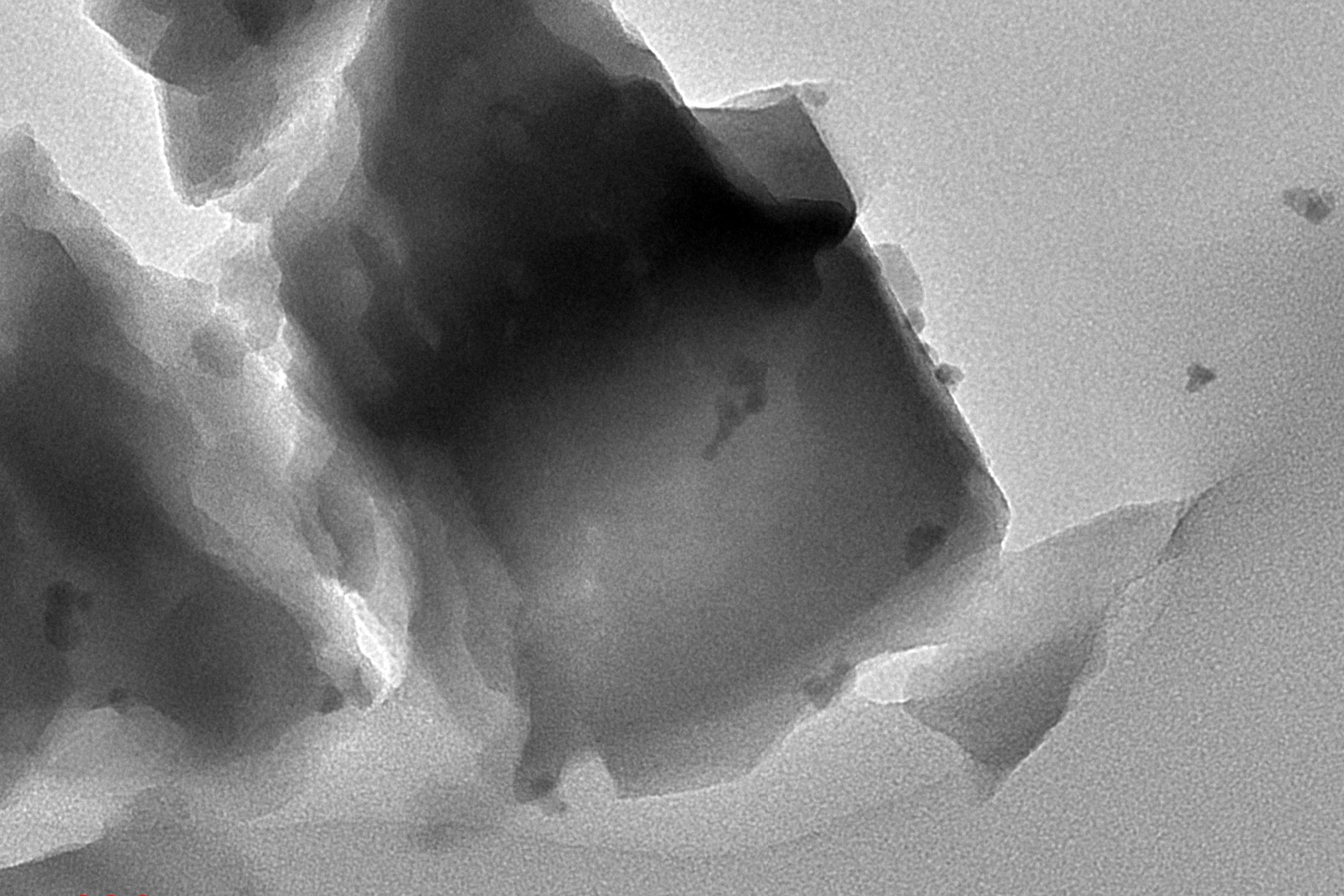
To achieve methane conversion without that input of energy, the MIT team designed a hybrid catalyst with two components: a zeolite and a naturally occurring enzyme. Zeolites are abundant, inexpensive clay-like minerals, and previous work has found that they can be used to catalyze the conversion of methane to carbon dioxide.
In this study, the researchers used a zeolite called iron-modified aluminum silicate, paired with an enzyme called alcohol oxidase. Bacteria, fungi, and plants use this enzyme to oxidize alcohols.
This hybrid catalyst performs a two-step reaction in which zeolite converts methane to methanol, and then the enzyme converts methanol to formaldehyde. That reaction also generates hydrogen peroxide, which is fed back into the zeolite to provide a source of oxygen for the conversion of methane to methanol.
Room Temperature Conversion Process
This series of reactions can occur at room temperature and doesn’t require high pressure. The catalyst particles are suspended in water, which can absorb methane from the surrounding air. For future applications, the researchers envision that it could be painted onto surfaces.
“Other systems operate at high temperature and high pressure, and they use hydrogen peroxide, which is an expensive chemical, to drive the methane oxidation. But our enzyme produces hydrogen peroxide from oxygen, so I think our system could be very cost-effective and scalable,” Kim says.
Creating a system that incorporates both enzymes and artificial catalysts is a “smart strategy,” says Damien Debecker, a professor at the Institute of Condensed Matter and Nanosciences at the University of Louvain, Belgium.
“Combining these two families of catalysts is challenging, as they tend to operate in rather distinct operation conditions. By unlocking this constraint and mastering the art of chemo-enzymatic cooperation, hybrid catalysis becomes key-enabling: It opens new perspectives to run complex reaction systems in an intensified way,” says Debecker, who was not involved in the research.
Generating Polymers
Once formaldehyde is produced, the researchers showed they could use that molecule to generate polymers by adding urea, a nitrogen-containing molecule found in urine. This resin-like polymer, known as urea-formaldehyde, is now used in particle board, textiles and other products.
The researchers envision that this catalyst could be incorporated into pipes used to transport natural gas. Within those pipes, the catalyst could generate a polymer that could act as a sealant to heal cracks in the pipes, which are a common source of methane leakage. The catalyst could also be applied as a film to coat surfaces that are exposed to methane gas, producing polymers that could be collected for use in manufacturing, the researchers say.
Future Directions for Catalyst Development
Strano’s lab is now working on catalysts that could be used to remove carbon dioxide from the atmosphere and combine it with nitrate to produce urea. That urea could then be mixed with the formaldehyde produced by the zeolite-enzyme catalyst to produce urea-formaldehyde.
Reference: “Concerted methane fixation at ambient temperature and pressure mediated by an alcohol oxidase and Fe-ZSM-5 catalytic couple” by Daniel J. Lundberg, Jimin Kim, Yu-Ming Tu, Cody L. Ritt and Michael S. Strano, 4 December 2024, Nature Catalysis.
DOI: 10.1038/s41929-024-01251-z
The research was funded by the U.S. Department of Energy and carried out, in part, through the use of MIT.nano’s characterization facilities.
Never miss a breakthrough: Join the SciTechDaily newsletter.
Follow us on Google and Google News.
1 Comment
“Methane menace?” I’m reminded of a skit in the BBC’s TV version of the Hitchhikers Guide to the Galaxy where it starts out talking about the menace of aliens invading Earth. The scene then zooms out and shows that the invader’s armada of space ships is smaller than the volume of a dogs mouth. Indeed, the dog sees the armada, opens its mouth, and swallows every last ship. A miscalculation of scale on the part of the invaders. Shall we say that menace, like beauty, is in the eye of the beholder?