
Close Menu
    Facebook X (Twitter) Instagram
    SciTechDaily
    • Biology
    • Chemistry
    • Earth
    • Health
    • Physics
    • Science
    • Space
    • Technology
    Facebook X (Twitter) Pinterest YouTube RSS
    SciTechDaily
    Home»Space»Moderate Solar Flare Erupts From Sun – Captured by NASA’s Solar Dynamics Observatory
    Space

    Moderate Solar Flare Erupts From Sun – Captured by NASA’s Solar Dynamics Observatory

    By NASAApril 21, 2022No Comments2 Mins Read
    Facebook Twitter Pinterest Telegram LinkedIn WhatsApp Email Reddit
    Share
    Facebook Twitter LinkedIn Pinterest Telegram Email Reddit
    NASA SDO Solar Flare April 20 2022
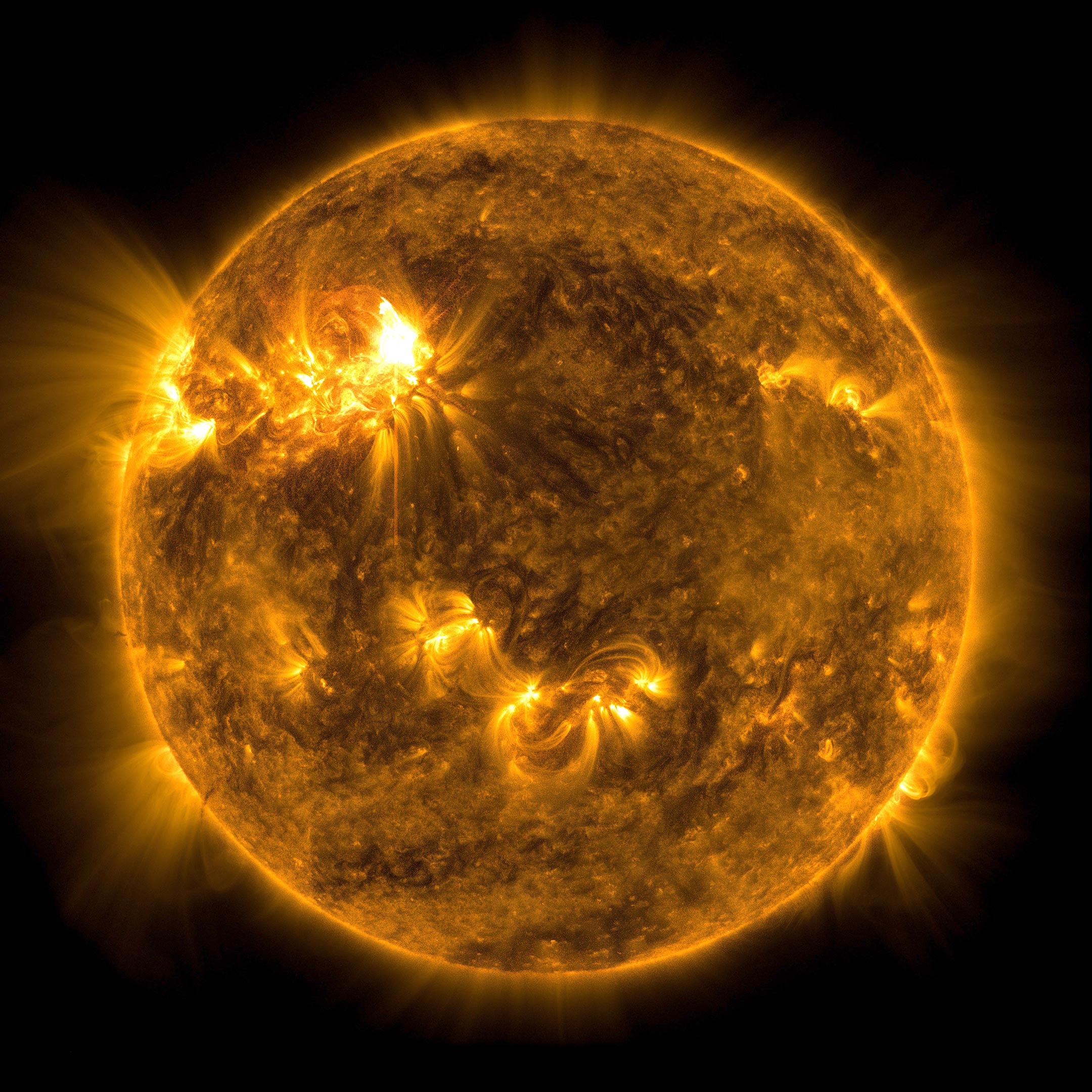
    NASA’s Solar Dynamics Observatory captured this image of a solar flare – as seen in the bright flash in the upper left portion of the image– on April 20, 2022. The image shows a subset of extreme ultraviolet light that highlights the extremely hot material in flares, and which is colorized in yellow. Credit: SDO/NASA

    The Sun emitted a moderate solar flare on April 20, 2022, peaking at 9:59 p.m. ET (6:59 p.m. PT). NASA’s Solar Dynamics Observatory (SDO), which watches the Sun constantly, captured an image of the event.

    NASA’s Solar Dynamics Observatory also captured solar flares (one M-Class and one X-Class) on April 19 and an X-Class solar flare on April 16. SDO is designed to aid in our understanding of the Sun’s influence on Earth and Near-Earth space by investigating the solar atmosphere on small scales of space and time and in many wavelengths simultaneously.
    NASA Solar Dynamics Observatory
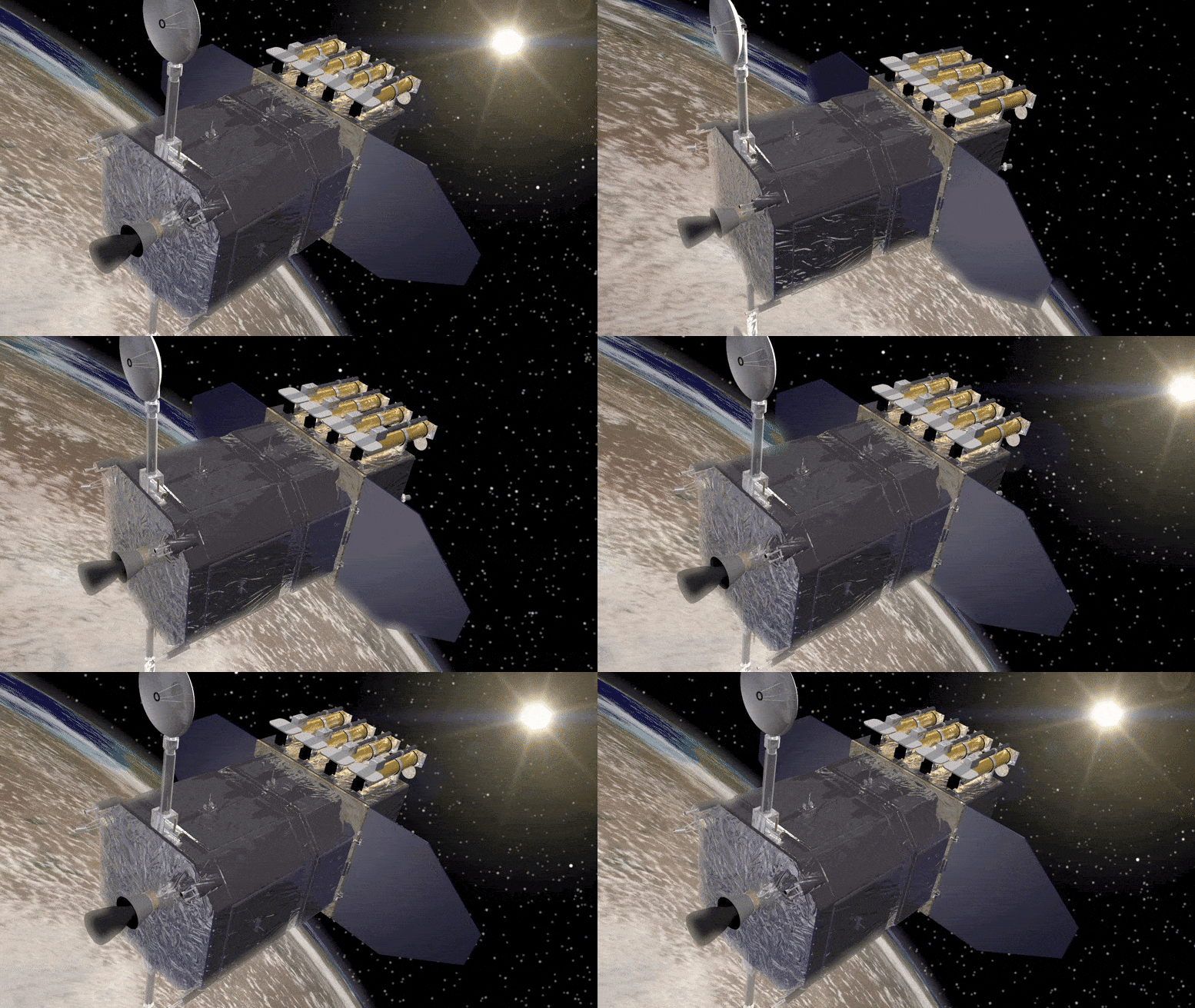
    This animation of the Solar Dynamics Observatory shows it above the earth as it faces toward the Sun. SDO is designed to help us understand the Sun’s influence on Earth and Near-Earth space by studying the solar atmosphere on small scales of space and time and in many wavelengths simultaneously. Credit: NASA/Goddard Space Flight Center Conceptual Image Lab

    Solar flares are powerful bursts of energy. Flares and solar eruptions can impact radio communications, electric power grids, navigation signals, and pose risks to spacecraft and astronauts.

    This flare is classified as an M-Class flare. M-class flares are a tenth the size of the most intense flares, the X-class flares. The number provides more information about its strength. More info on how flares are classified can be found here.

    Please visit NOAA’s Space Weather Prediction Center, the U.S. government’s official source for space weather forecasts, watches, warnings, and alerts, to see how such space weather may affect Earth. NASA serves as the nation’s space weather research arm. NASA constantly monitors the Sun and our space environment with a network of spacecraft that investigate everything from the Sun’s activity to the solar atmosphere, as well as the particles and magnetic fields in the space surrounding Earth.

    Never miss a breakthrough: Join the SciTechDaily newsletter.
    Follow us on Google and Google News.

    Astronomy NASA Solar Dynamics Observatory Solar Flares Sun
    Share. Facebook Twitter Pinterest LinkedIn Email Reddit

    Related Articles

    Solar Fury Erupts: Sun Rings In the New Year With X1.8 Flare

    X1.8 Flare Unleashed: NASA Captures Powerful Solar Eruption

    Sun Unleashes Monumental X9.0 Solar Flare – Most Intense in 7 Years – Captured by NASA Observatory

    Monster X7.1 Solar Flare Unleashed: Intense Blast Captured by NASA’s Solar Dynamics Observatory

    Sun Ignites: Unleashing a Powerful X4.5 Solar Flare

    NASA’s Solar Dynamics Observatory Spots Burst of Light and Energy on the Sun: A B-Class Flare

    NASA’s Solar Dynamics Observatory Views M-Class Solar Flare

    NASA’s SDO Reveals Images of X4.9-Class Solar Flare

    NASA’s Solar Dynamics Observatory Views Two New Solar Flares

    Leave A Reply Cancel Reply

    • Facebook
    • Twitter
    • Pinterest
    • YouTube

    Don't Miss a Discovery

    Subscribe for the Latest in Science & Tech!

    Trending News

    Scientists Discover How Coffee Impacts Memory, Mood, and Gut Health

    Why Did the Neanderthals Disappear? Scientists Reveal Humans Had a Hidden Advantage

    Physicists Propose Strange Experiment Where Time Goes Quantum

    Magnesium Magic: New Drug Melts Fat Even on a High-Fat, High-Sugar Diet

    Weight-Loss Drugs Like Ozempic May Come With an Unexpected Cost

    Mezcal “Worm” in a Bottle Mystery: DNA Testing Reveals a Surprise

    New Research Reveals That Your Morning Coffee Activates an Ancient Longevity Switch

    This Is What Makes You Irresistible to Mosquitoes

    Follow SciTechDaily
    • Facebook
    • Twitter
    • YouTube
    • Pinterest
    • Newsletter
    • RSS
    SciTech News
    • Biology News
    • Chemistry News
    • Earth News
    • Health News
    • Physics News
    • Science News
    • Space News
    • Technology News
    Recent Posts
    • Harvard Scientists Reveal Secret Structure Behind How You Smell
    • Scientists Just Discovered the Hidden Trick That Keeps Your Cells Alive
    • This Simple Movement Could Be Secretly Cleaning Your Brain
    • Male Birth Control Breakthrough: Scientists Find Way To Turn Sperm Production Off and Back On
    • A Common Vitamin Could Hold the Key to Treating Fatty Liver Disease
    Copyright © 1998 - 2026 SciTechDaily. All Rights Reserved.
    • Science News
    • About
    • Contact
    • Editorial Board
    • Privacy Policy
    • Terms of Use

    Type above and press Enter to search. Press Esc to cancel.