
Close Menu
    Facebook X (Twitter) Instagram
    SciTechDaily
    • Biology
    • Chemistry
    • Earth
    • Health
    • Physics
    • Science
    • Space
    • Technology
    Facebook X (Twitter) Pinterest YouTube RSS
    SciTechDaily
    Home»Space»Sun Releases Moderate and Strong Solar Flares – Captured by NASA’s Solar Dynamics Observatory
    Space

    Sun Releases Moderate and Strong Solar Flares – Captured by NASA’s Solar Dynamics Observatory

    By NASAApril 21, 2022No Comments2 Mins Read
    Facebook Twitter Pinterest Telegram LinkedIn WhatsApp Email Reddit
    Share
    Facebook Twitter LinkedIn Pinterest Telegram Email Reddit
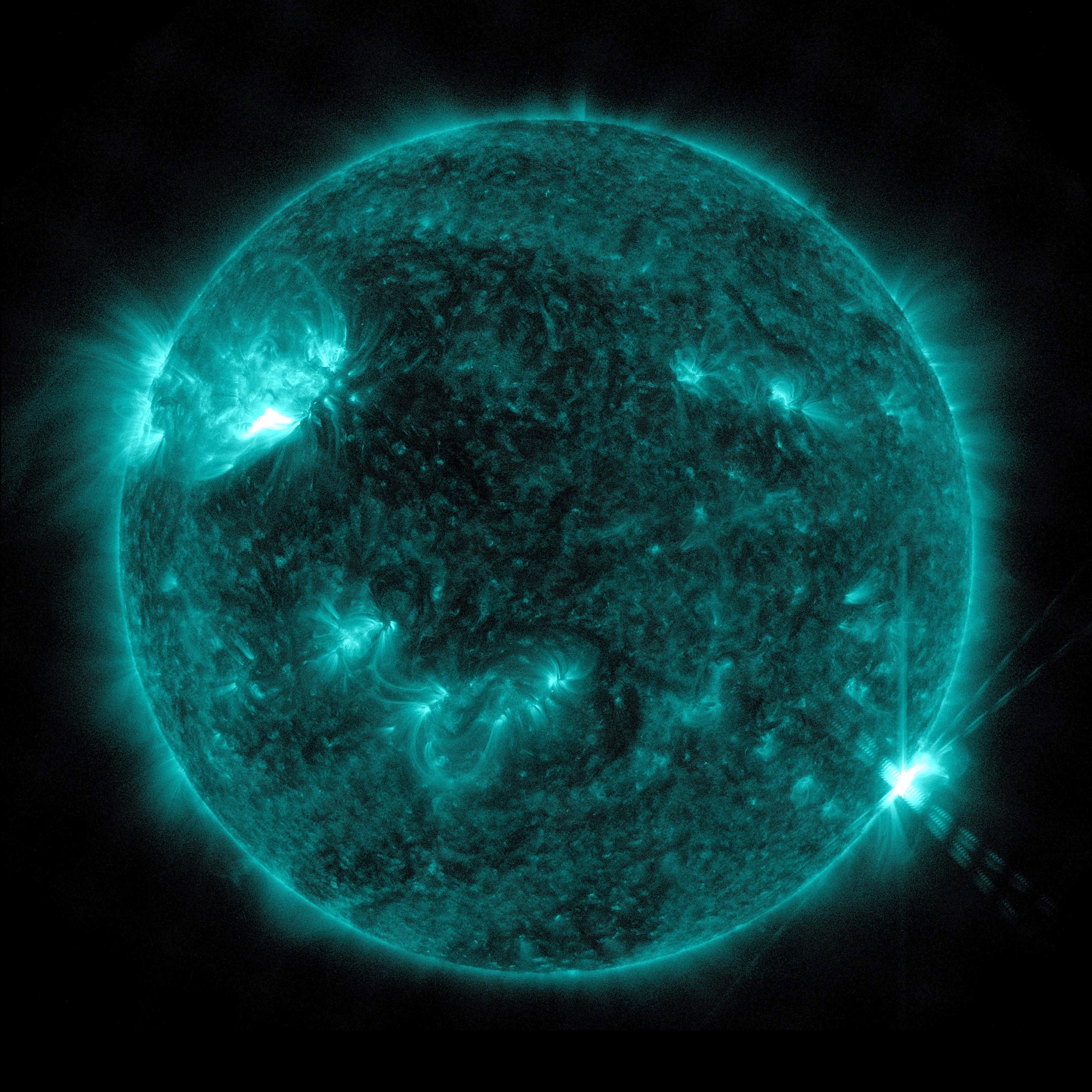
    NASA SDO M-Class Solar Flare April 2022
    NASA’s Solar Dynamics Observatory captured this image of a solar flare – as seen in the bright flash in the lower right portion of the image– at 9:35 p.m. EST on April 19, 2022. The image shows a subset of extreme ultraviolet light that highlights the extremely hot material in flares and is colorized in SDO channel color blue. Credit: NASA/SDO

    The Sun emitted two solar flares on April 19, 2022. One was moderate (M-Class) peaking at 9:35 p.m. EST and one was strong (X-Class) peaking at 11:57 p.m. EST. NASA’s Solar Dynamics Observatory (SDO), which watches the Sun constantly, captured images of both events.

    Solar flares are powerful bursts of energy. Flares and solar eruptions can impact radio communications, electric power grids, and navigation signals, and pose risks to spacecraft and astronauts.

    SDO Artist's Concept
    Artist’s concept of the Solar Dynamics Observatory (SDO). Credit: NASA/Goddard Space Flight Center Conceptual Image Lab

    The flare pictured above is classified as an M-Class flare. M-class flares are a class below the most intense flares, the X-class flares. The number provides more information about its strength. More info on how flares are classified can be found here.
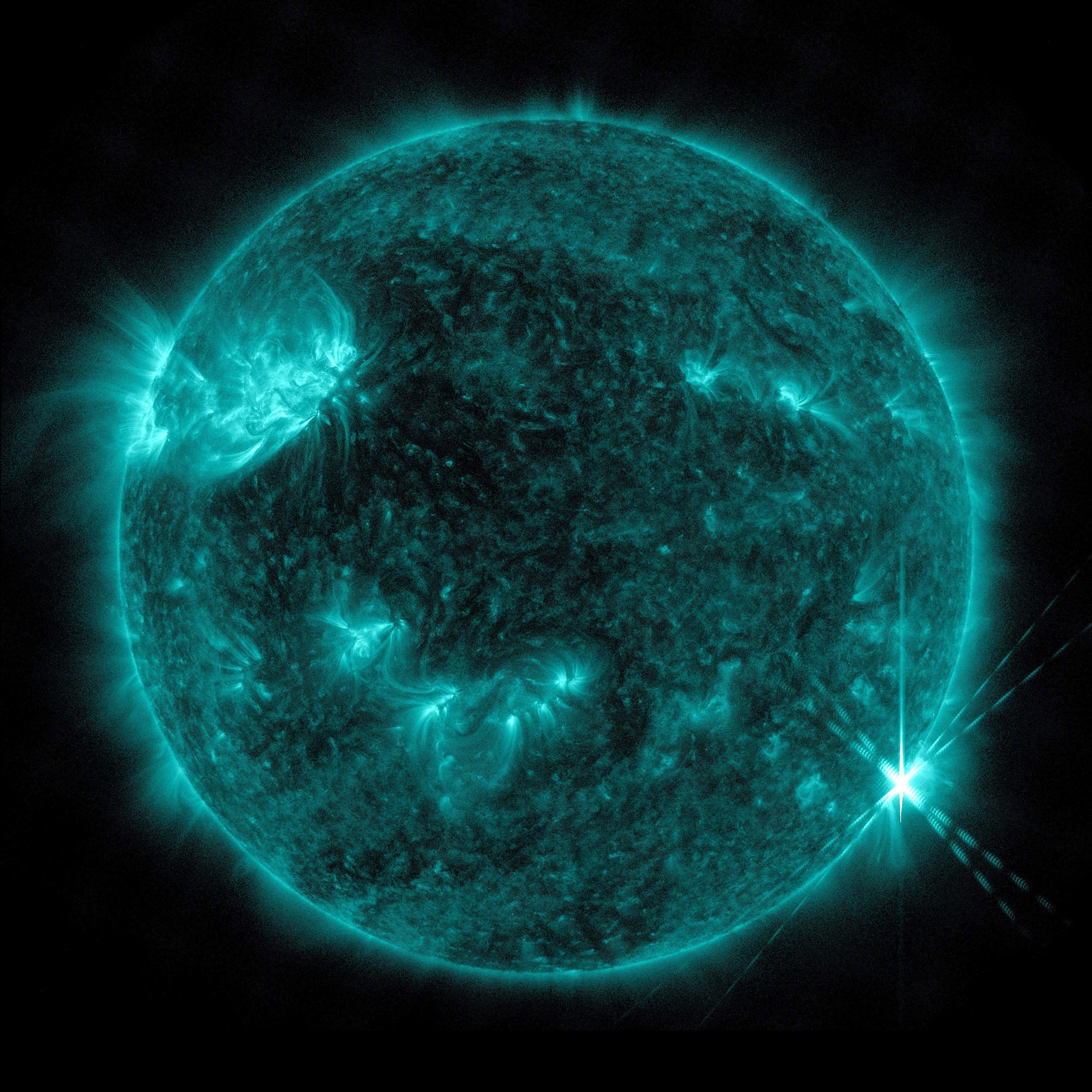
    NASA SDO X-Class Solar Flare April 2022
    NASA’s Solar Dynamics Observatory captured this image of a solar flare – as seen in the bright flash in the lower right portion of the image– at 11:57 p.m. EST on April 19, 2022. The image shows a subset of extreme ultraviolet light that highlights the extremely hot material in flares and is colorized in SDO channel color blue. Credit: NASA/SDO

    The flare pictured above is classified as an X-Class flare. X-class denotes the most intense flares.

    To see how such space weather may affect Earth, please visit NOAA’s Space Weather Prediction Center, the U.S. government’s official source for space weather forecasts, watches, warnings, and alerts. NASA works as a research arm of the nation’s space weather effort. NASA observes the Sun and our space environment constantly with a fleet of spacecraft that study everything from the Sun’s activity to the solar atmosphere, and to the particles and magnetic fields in the space surrounding Earth.

    Never miss a breakthrough: Join the SciTechDaily newsletter.
    Follow us on Google and Google News.

    NASA Solar Dynamics Observatory Solar Flares Sun
    Share. Facebook Twitter Pinterest LinkedIn Email Reddit

    Related Articles

    NASA Just Found the Sun’s Secret Warning Before Massive Solar Flares

    Solar Fury Erupts: Sun Rings In the New Year With X1.8 Flare

    Sun Releases a Powerful Burst of Radiation – An X1-Class Solar Flare

    Powerful X-class Solar Flare Erupts From Sun

    NASA’s Solar Dynamics Observatory Spots Burst of Light and Energy on the Sun: A B-Class Flare

    NASA’s Solar Dynamics Observatory Views M-Class Solar Flare

    NASA’s SDO Reveals Images of X4.9-Class Solar Flare

    NASA’s Solar Dynamics Observatory Views Two New Solar Flares

    New Light Shed on the Origins of Extreme Space Storms

    Leave A Reply Cancel Reply

    • Facebook
    • Twitter
    • Pinterest
    • YouTube

    Don't Miss a Discovery

    Subscribe for the Latest in Science & Tech!

    Trending News

    Millions Take These IBS Drugs, But a New Study Finds Serious Risks

    Scientists Unlock Hidden Secrets of 2,300-Year-Old Mummies Using Cutting-Edge CT Scanner

    Bread Might Be Making You Gain Weight Even Without Eating More Calories

    Scientists Discover Massive Magma Reservoir Beneath Tuscany

    Europe’s Most Active Volcano Just Got Stranger – Here’s Why Scientists Are Rethinking It

    Alzheimer’s Symptoms May Start Outside the Brain, Study Finds

    Millions Take This Popular Supplement – Scientists Discover a Concerning Link to Heart Failure

    The Universe Is Expanding Too Fast and Scientists Can’t Explain Why

    Follow SciTechDaily
    • Facebook
    • Twitter
    • YouTube
    • Pinterest
    • Newsletter
    • RSS
    SciTech News
    • Biology News
    • Chemistry News
    • Earth News
    • Health News
    • Physics News
    • Science News
    • Space News
    • Technology News
    Recent Posts
    • Doctors Surprised by the Power of a Simple Drug Against Colon Cancer
    • Why Popular Diabetes Drugs Like Ozempic Don’t Work for Everyone: The “Genetic Glitch”
    • Scientists Create Improved Insulin Cells That Reverse Diabetes in Mice
    • Scientists Stunned After Finding Plant Thought Extinct for 60 Years
    • A Common Diabetes Drug May Hold the Key to Stopping HIV From Coming Back
    Copyright © 1998 - 2026 SciTechDaily. All Rights Reserved.
    • Science News
    • About
    • Contact
    • Editorial Board
    • Privacy Policy
    • Terms of Use

    Type above and press Enter to search. Press Esc to cancel.