
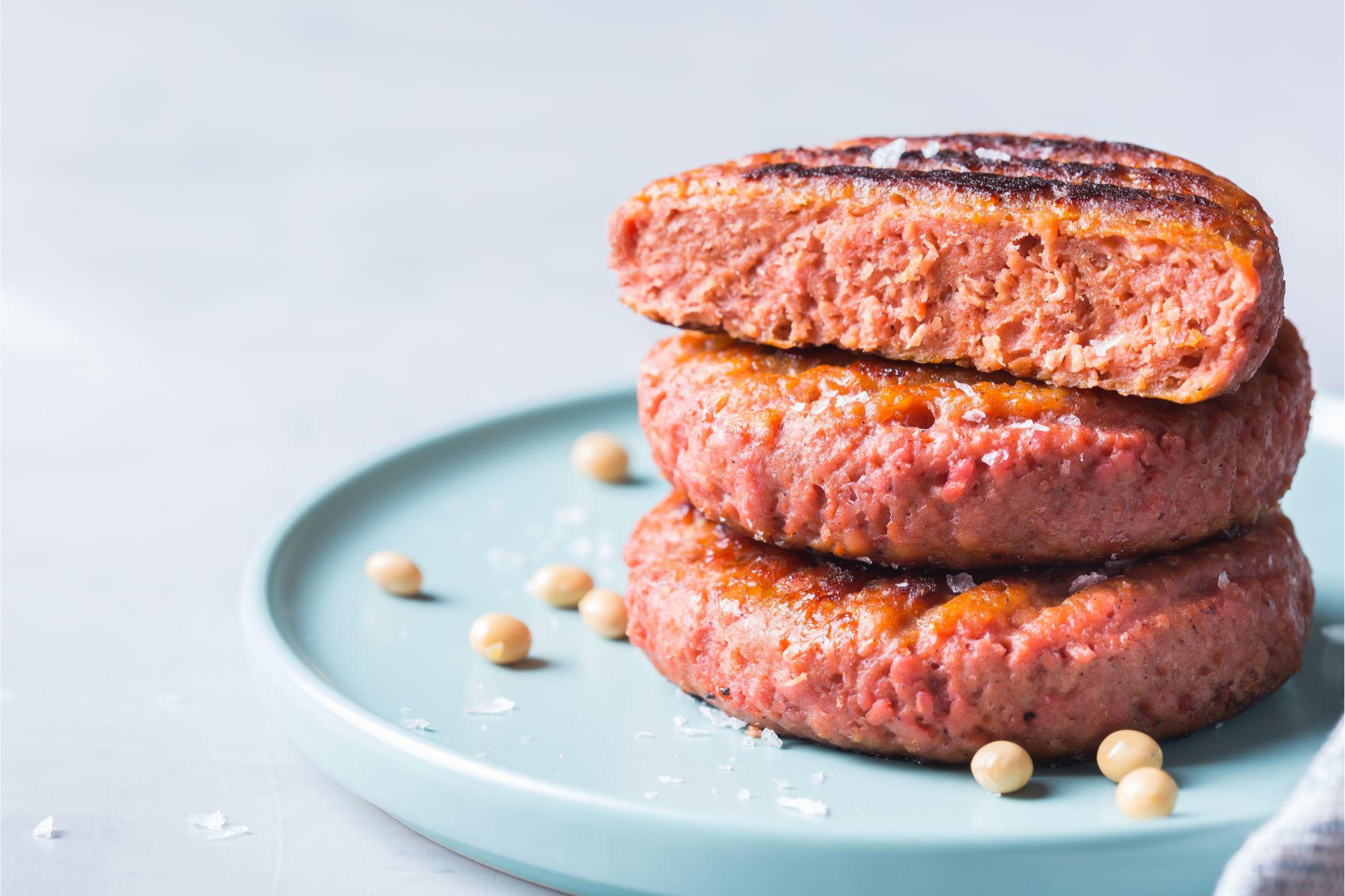
A 30-year study of American adults found that diets with the highest ratio of plant-based to animal-based protein were linked to a 19% lower risk of cardiovascular disease (CVD) and a 27% lower risk of coronary heart disease (CHD). Researchers suggest that a plant-to-animal protein ratio of 1:2 may help prevent CVD, while a higher ratio of 1:1.3 may be needed for CHD protection. While global guidelines encourage plant protein consumption, the ideal ratio for heart health is still uncertain, making this study the first to explore its specific effects.
A new study led by researchers at the Harvard T.H. Chan School of Public Health suggests that consuming a diet richer in plant-based proteins compared to animal-based proteins may lower the risk of cardiovascular disease (CVD) and coronary heart disease (CHD). The study highlights that replacing red and processed meats with plant proteins likely drives these risk reductions. Additionally, the researchers found that the greatest heart health benefits came from a combination of higher overall protein intake and increased consumption of plant-based proteins.
While global dietary guidelines recommend a higher intake of plant protein, the ideal ratio of plant to animal protein has remained unknown. The study is the first to investigate this ratio and how it impacts health, specifically heart health.
“The average American eats a 1:3 plant-to-animal protein ratio. Our findings suggest a ratio of at least 1:2 is much more effective in preventing CVD. For CHD prevention, a ratio of 1:1.3 or higher should come from plants,” said lead author Andrea Glenn, visiting scientist in the Department of Nutrition. Glenn worked on the study as a postdoctoral fellow at Harvard Chan School and is now an assistant professor in the Department of Nutrition and Food Studies at New York University.
The study was published in the American Journal of Clinical Nutrition.
Insights from Long-Term Data
The researchers used 30 years of data on diet, lifestyle, and heart health among nearly 203,000 men and women enrolled in the Nurses’ Health Studies I and II and the Health Professionals’ Follow-up Study. Participants reported their dietary intake every four years. The researchers calculated each participant’s total protein intake, measured in grams per day, as well as their specific intakes of animal and plant proteins. Over the course of the study period, 16,118 CVD cases, including over 10,000 CHD cases and over 6,000 stroke cases, were documented.
After adjusting for participants’ health history and sociodemographic and lifestyle factors, the study found that eating a higher ratio of plant to animal protein was associated with lower risks of CVD and CHD. Compared to participants who consumed the lowest plant-to-animal protein ratio (~1:4.2), participants who consumed the highest (~1:1.3) had a 19% lower risk of CVD and a 27% lower risk of CHD. These risk reductions were even higher among participants who ate more protein overall. Those who consumed the most protein (21% of energy coming from protein) and adhered to a higher plant-to-animal protein ratio saw a 28% lower risk of CVD and a 36% lower risk of CHD, compared to those who consumed the least protein (16% of energy). No significant associations were found for stroke risk and the ratio; however, replacing red and processed meat in the diet with several plant sources, such as nuts, showed a lower risk of stroke.
Plateaus and Further Benefits
The researchers also examined if there’s a point at which eating more plant protein stops having added benefits or could even have negative implications. They found that risk reduction for CVD begins to plateau around a 1:2 ratio, but that CHD risk continues to decrease at higher ratios of plant-to-animal protein.
According to the researchers, these risk reductions are likely driven by the replacement of red and processed meat with several plant protein sources, particularly nuts and legumes. Such replacements have been found to improve cardiometabolic risk factors, including blood lipids and blood pressure as well as inflammatory biomarkers. This is partly because plant proteins are often accompanied by high amounts of fiber, antioxidant vitamins, minerals, and healthy fats.
“Most of us need to begin shifting our diets toward plant-based proteins,” said senior author Frank Hu, Fredrick J. Stare Professor of Nutrition and Epidemiology at Harvard Chan School. “We can do so by cutting down on meat, especially red and processed meats, and eating more legumes and nuts. Such a dietary pattern is beneficial not just for human health but also the health of our planet.”
The researchers pointed out that the ratios they identified are estimates, and that further studies are needed to determine the optimal balance between plant and animal protein. Additionally, further research is needed to determine how stroke risk may be impacted by protein intake.
Reference: “Dietary plant-to-animal protein ratio and risk of cardiovascular disease in 3 prospective cohorts” by Andrea J Glenn, Fenglei Wang, Anne-Julie Tessier, JoAnn E Manson, Eric B Rimm, Kenneth J Mukamal, Qi Sun, Walter C Willett, Kathryn M Rexrode, David JA Jenkins and Frank B Hu, 2 December 2024, The American Journal of Clinical Nutrition.
DOI: 10.1016/j.ajcnut.2024.09.006
The Nurses’ Health Studies and Health Professional Follow-up Studies are supported by National Institutes of Health grants UM1 CA186107, R01 CA49449, R01 HL034594, U01 HL145386, R01 HL088521, U01 CA176726, R01 CA49449, U01 CA167552, R01 HL60712, and R01 HL35464.
Never miss a breakthrough: Join the SciTechDaily newsletter.
Follow us on Google and Google News.
4 Comments
From the actual study:
“Conflict of interest
AJG has received travel support and/or honoraria from the Lawson Centre Nutrition Digitial Series, Vinasoy and the British Nutrition Society. DJAJ has received research grants from Saskatchewan & Alberta Pulse Growers Associations, the Agricultural Bioproducts Innovation Program through the Pulse Re-search Network, the Advanced Foods and Material Network, Loblaw Companies Ltd., Unilever Canada and Netherlands, Barilla, the Almond Board of California, Agriculture and Agri-food Canada, Pulse Canada, Kellogg’s Company, Canada, Quaker Oats, Canada, Procter & Gamble Technical Centre Ltd., Bayer Consumer Care, Springfield, NJ, Pepsi/Quaker, International Nut & Dried Fruit Council (INC), Soy Foods Association of North America, the Coca-Cola Company (investigator initiated, unrestricted grant), Solae, Haine Celestial, the Sanitarium Company, Orafti, the International Tree Nut Council Nutrition Research and Education Foundation, the Peanut Institute, Soy Nutrition Institute (SNI), the Canola and Flax Councils of Canada, the Calorie Control Council, the Canadian Institutes of Health Research (CIHR), the Canada Foundation for Innovation (CFI), and the Ontario Research Fund (ORF). He has received in-kind supplies for trials as research support from the Almond Board of California, Walnut Council of California, the Peanut Institute, Barilla, Unilever, Unico, Primo, Loblaw Companies, Quaker (Pepsico), Pristine Gourmet, Bunge Limited, Kellogg Canada, WhiteWave Foods. He has been on the speaker’s panel, served on the scientific advisory board and/or received travel support and/or honoraria from the Lawson Centre Nutrition Digital Series, Nutritional Fundamentals for Health (NFH)-Nutramedica, Saint Barnabas Medical Center, The University of Chicago, 2020 China Glycemic Index (GI) International Conference, Atlantic Pain Conference, Academy of Life Long Learning, the Almond Board of California, Canadian Agriculture Policy Institute, Loblaw Companies Ltd, the Griffin Hospital (for the development of the NuVal scoring system), the Coca-Cola Company, Epicure, Danone, Diet Quality Photo Navigation (DQPN), Better Therapeutics (FareWell), Verywell, True Health Initiative (THI), Heali AI Corp, Institute of Food Technologists (IFT), Soy Nutrition Institute (SNI), Herbalife Nutrition Institute (HNI), Saskatchewan & Alberta Pulse Growers Associations, Sanitarium Company, Orafti, the International Tree Nut Council Nutrition Research and Education Foundation, the Peanut Institute, Herbalife International, Pacific Health Laboratories, Barilla, Metagenics, Bayer Consumer Care, Unilever Canada and Netherlands, Solae, Kellogg, Quaker Oats, Procter & Gamble, Abbott Laboratories, Dean Foods, the California Strawberry Commission, Haine Celestial, PepsiCo, the Alpro Foundation, Pioneer Hi-Bred International, DuPont Nutrition and Health, Spherix Consulting and WhiteWave Foods, the Advanced Foods and Material Network, the Canola and Flax Councils of Canada, Agri-Culture and Agri-Food Canada, the Canadian Agri-Food Policy Institute, Pulse Canada, the Soy Foods Association of North America, the Nutrition Foundation of Italy (NFI), Nutra-Source Diagnostics, the McDougall Program, the Toronto Knowledge Translation Group (St. Michael’s Hospital), the Canadian College of Naturopathic Medicine, The Hospital for Sick Children, the Canadian Nutrition Society (CNS), the American Society of Nutrition (ASN), Arizona State University, Paolo Sorbini Foundation, and the Institute of Nutrition, Metabolism and Diabetes. He received an honorarium from the United States Department of Agriculture to present the 2013 W.O. Atwater Memorial Lecture. He received the 2013 Award for Excellence in Research from the International Nut and Dried Fruit Council. He received funding and travel support from the Canadian Society of Endocrinology and Metabolism to produce mini cases for the Canadian Diabetes Association (CDA). He is a member of the International Carbo-hydrate Quality Consortium (ICQC). His wife, Alexandra L Jenkins, is a director and partner of INQUIS Clinical Research for the Food Industry, his 2 daughters, Wendy Jenkins and Amy Jenkins, have published a vegetarian book that promotes the use of the foods described here, The Portfolio Diet for Cardiovascular Risk Reduction (Academic Press/Elsevier 2020 ISBN:978-0-12-810510-8) and his sister, Caroline Brydson, received funding through a grant from the St. Michael’s Hospital Foundation to develop a cookbook for one of his studies. He is also a vegan. KJM has received funding from the United States Highbush Blueberry Council. All the other authors report no conflicts of interest.”
Whew! This is a plant-foods industry-sponsored report. Now let’s see the opposite results from meat-based funded researchers.
I didn’t read the article, or the reference study, and technically I just skimmed that long quoted paragraph. I want to spend the time you’ve saved me by thanking you for that comment. That’s hilarious, and should be taught in schools.
Other sites shut down open-comments over a decade ago, but SciTechDaily really benefits from them. If only excellent critically-thinking comments could get as much “support” as these particular researchers.
Remarkable work Sydney; well done. From the perspective of a former primarily diagnostic industrial electrician who was compelled by necessity (institutionalized medical ignorance and incompetence) since early 1981 to gradually, inadvertently and only intermittently learn the root causes of most chronic diseases and premature mortality on my own to survive, the trouble with animal proteins is as easy as 1-2-3: 1) medically unrecognized nearly subclinical non-IgE-mediated animal protein allergy reactions + 2) FDA approved food poisoning (e.g., soy [plant] processed with hexane [petroleum], TBHQ [petroleum] and MSG [plant], minimally) + 3) excessive related/resultant medical errors and toxic prescription drugs = decades of multiple epidemics of chronic and degenerative diseases. One question for the authors of such an institutionally biased, ignorant, incompetent and ridiculous article: how many more deadly dangerous toxic new chemicals is the FDA going to have to approve to make plant based meat palatable and nutritious?
Correction: TBHQ is not petroleum derived but it is synthetic.