
Close Menu
    Facebook X (Twitter) Instagram
    SciTechDaily
    • Biology
    • Chemistry
    • Earth
    • Health
    • Physics
    • Science
    • Space
    • Technology
    Facebook X (Twitter) Pinterest YouTube RSS
    SciTechDaily
    Home»Science»Most Animals Like To Work for Their Food, but Cats Prefer Free Meals
    Science

    Most Animals Like To Work for Their Food, but Cats Prefer Free Meals

    By University of California - DavisAugust 28, 2021No Comments3 Mins Read
    Facebook Twitter Pinterest Telegram LinkedIn WhatsApp Email Reddit
    Share
    Facebook Twitter LinkedIn Pinterest Telegram Email Reddit
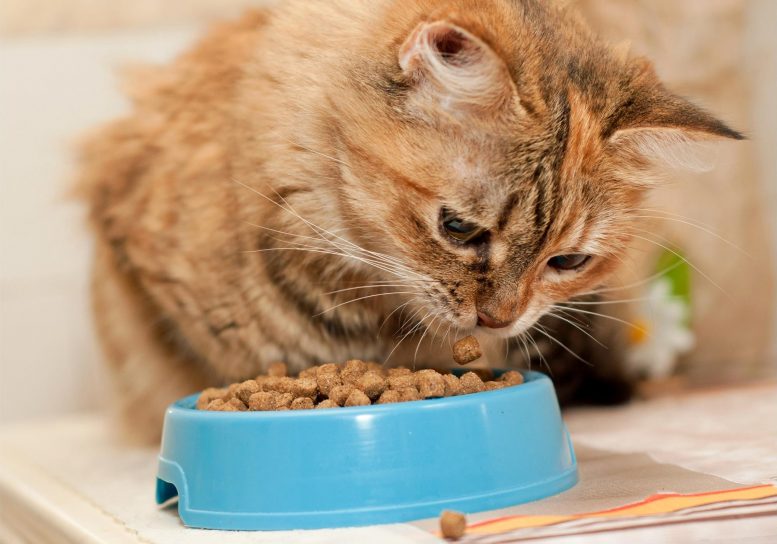
    Cat Eating Food
    Cat Eating Food

    Study finds ‘contrafreeloading’ rare in domestic cats.

    When given the choice between a free meal and performing a task for a meal, cats would prefer the meal that doesn’t require much effort. While that might not come as a surprise to some cat lovers, it does to cat behaviorists. Most animals prefer to work for their food — a behavior called contrafreeloading.

    A new study from researchers at the University of California, Davis, School of Veterinary Medicine showed most domestic cats choose not to contrafreeload. The study found that cats would rather eat from a tray of easily available food rather than work out a simple puzzle to get their food.

    “There is an entire body of research that shows that most species including birds, rodents, wolves, primates — even giraffes — prefer to work for their food,” said lead author Mikel Delgado, a cat behaviorist and research affiliate at UC Davis School of Veterinary Medicine. “What’s surprising is out of all these species cats seem to be the only ones that showed no strong tendency to contrafreeload.”
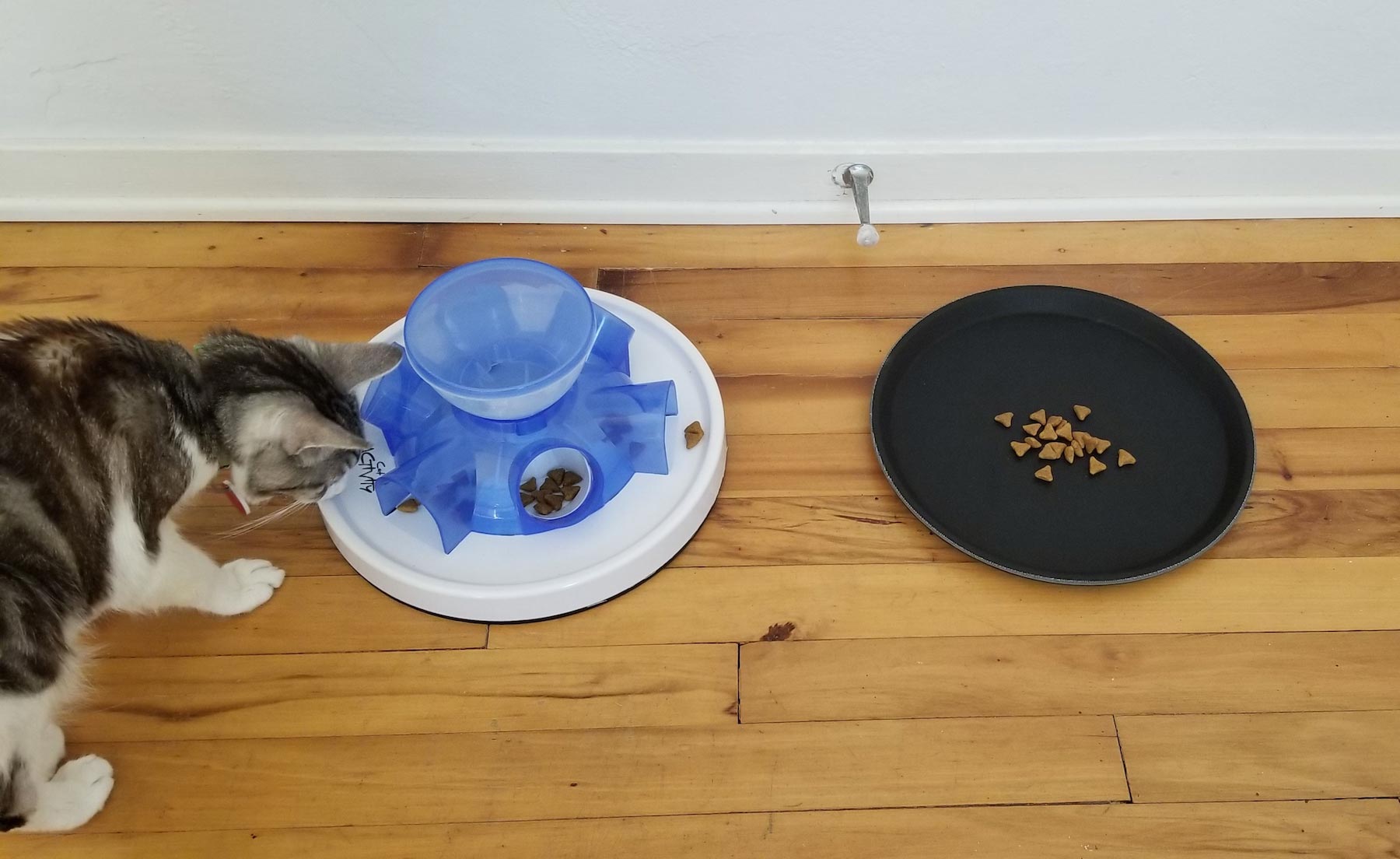
    Cat Eating From a Tray
    When cats were offered the choice of readily available food in a tray or working for it using a simple puzzle, cats most often chose the free food. Credit: Mikel Delgado/UC Davis

    In the study, Delgado, along with co-authors Melissa Bain and Brandon Han of the UC Davis School of Veterinary Medicine, provided 17 cats a food puzzle and a tray of food. The puzzle allowed the cats to easily see the food but required some manipulation to extract it. Some of the cats even had food puzzle experience.

    “It wasn’t that cats never used the food puzzle, but cats ate more food from the tray, spent more time at the tray and made more first choices to approach and eat from the tray rather than the puzzle,” said Delgado.

    Cats Aren’t Just Lazy

    Cats that were part of the study wore activity monitors. The study found that even cats that were more active still chose the freely available food. Delgado said the study should not be taken as a dismissal of food puzzles. She said just because they don’t prefer it, doesn’t mean they don’t like it. Delgado’s previous research shows puzzles can be an important enrichment activity for cats.

    Why cats prefer to freeload is also unclear. Delgado said the food puzzles used in the study may not have stimulated their natural hunting behavior, which usually involves ambushing their prey.

    Reference: “Domestic cats (Felis catus) prefer freely available food over food that requires effort” by Mikel M. Delgado, Brandon Sang Gyu Han and Melissa J. Bain, 26 July 2021, Animal Cognition.
    DOI: 10.1007/s10071-021-01530-3

    The study was published in the journal Animal Cognition. The research was supported by Maddie’s Fund and the National Center for Advancing Translational Sciences.

    Never miss a breakthrough: Join the SciTechDaily newsletter.
    Follow us on Google and Google News.

    Cats UC Davis
    Share. Facebook Twitter Pinterest LinkedIn Email Reddit

    Related Articles

    Quantifying the Fallout: Particulate Matter and Public Health at the Salton Sea

    Ancient Rocks Tell a Billion-Year-Old Tale: The Evolution of Animal Diets

    What Happens When Cats Get Fat? Scientists Weigh In

    Unraveling the Mystery: Why Red Wine Causes Headaches in Some People

    Cats vs. Dogs – Who Reigns Supreme in Human Hearts?

    Vegan vs. Meat-Eating Cats: New Study Yields Surprising Results

    Climate Change’s Deadly Legacy: How Rising Temperatures Fueled Ancient Aggression

    Big Paws, Bigger Problems: Why You Shouldn’t Declaw Tigers or Other Big Cats

    Revolution in Pet Sterilization: Gene Therapy Offers Long-Term Contraception for Cats

    Leave A Reply Cancel Reply

    • Facebook
    • Twitter
    • Pinterest
    • YouTube

    Don't Miss a Discovery

    Subscribe for the Latest in Science & Tech!

    Trending News

    The Strange “Spacetime Crystal” That Can Suddenly Turn Into a Black Hole

    The Surprising Way Asteroids May Have Helped Life Begin on Earth

    Vast Hidden Structure Discovered Under Miles of Ice in East Antarctica

    A Surprising Discovery Suggests Autism Is Not One Condition

    New Alzheimer’s Discovery Could Change How Scientists Fight the Disease

    Yale Discovery Overturns Long-Held “Evolutionary Dead End” Theory

    UCLA Scientists Uncover a “Hidden Weakness” in Some of the World’s Deadliest Cancers

    Humpback Whale Stuns Scientists With 15,000 Kilometer Journey Across Oceans

    Follow SciTechDaily
    • Facebook
    • Twitter
    • YouTube
    • Pinterest
    • Newsletter
    • RSS
    SciTech News
    • Biology News
    • Chemistry News
    • Earth News
    • Health News
    • Physics News
    • Science News
    • Space News
    • Technology News
    Recent Posts
    • Is Planet Nine Real? New Discovery at the Edge of the Solar System Adds a Twist
    • AI Learned the Rules of the Universe and That Became a Problem
    • Scientists Mapped Every Neuron in a Fruit Fly and the Brain Wasn’t Running the Show
    • Stanford Scientists Discover Explosive New Type of Immune Cell
    • Scientists Found a Hidden Brain Signal That Predicts Social Behavior
    Copyright © 1998 - 2026 SciTechDaily. All Rights Reserved.
    • Science News
    • About
    • Contact
    • Editorial Board
    • Privacy Policy
    • Terms of Use

    Type above and press Enter to search. Press Esc to cancel.