
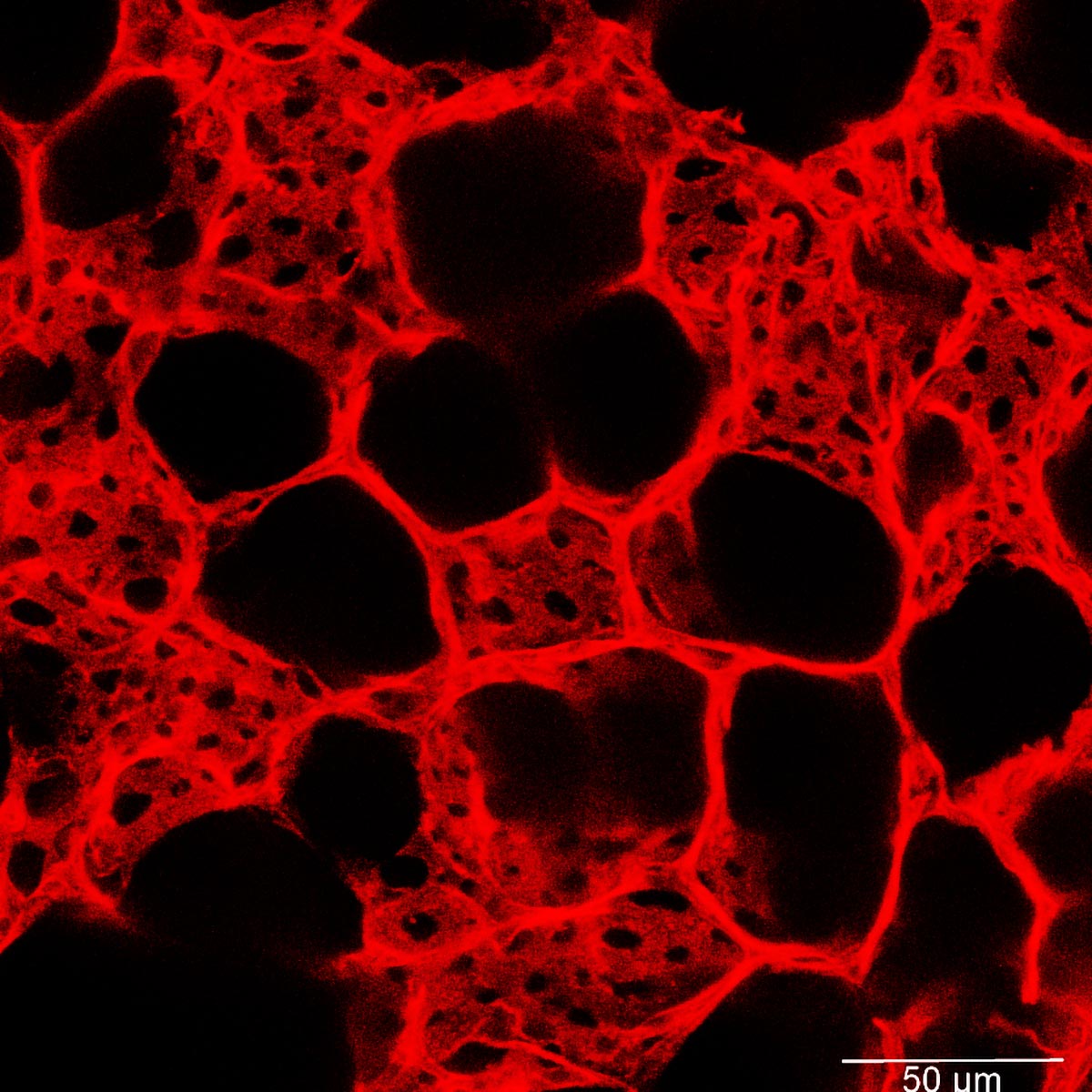
Recent research reveals a breakthrough in lung repair, showing how delivering VEGFA via lipid nanoparticles can significantly repair damaged blood vessels, akin to plumbing repairs. This method, validated in animal models, offers promising insights into treating respiratory virus damages, enhancing oxygen delivery, and reducing lung inflammation and scarring.
In the human body, the lungs and their vasculature can be likened to a building with an intricate plumbing system. The lungs’ blood vessels are the pipes essential for transporting blood and nutrients for oxygen delivery and carbon dioxide removal. Much like how pipes can get rusty or clogged, disrupting normal water flow, damage from respiratory viruses, like SARS-CoV-2 or influenza, can interfere with this “plumbing system.”
In a recent study, researchers looked at the critical role of vascular endothelial cells in lung repair. Their work, published in Science Translational Medicine, was led by Andrew Vaughan of the University of Pennsylvania’s School of Veterinary Medicine and shows that, by using techniques that deliver vascular endothelial growth factor alpha (VEGFA) via lipid nanoparticles (LNPs), that they were able to greatly enhance modes of repair for these damaged blood vessels, much like how plumbers patch sections of broken pipes and add new ones.
Advanced Research Findings
“While our lab and others have previously shown that endothelial cells are among the unsung heroes in repairing the lungs after viral infections like the flu, this tells us more about the story and sheds light on the molecular mechanisms at play,” says Vaughan, assistant professor of biomedical sciences at Penn Vet. “Here we’ve identified and isolated pathways involved in repairing this tissue, delivered mRNA to endothelial cells, and consequently observed enhanced recovery of the damaged tissue. These findings hint at a more efficient way to promote lung recovery after diseases like COVID-19.”
They found VEGFA’s involvement in this recovery, while building on work in which they used single cell RNA sequencing to identify transforming growth factor beta receptor 2 (TGFBR2) as a major signaling pathway. The researchers saw that when TGFBR2 was missing it stopped the activation of VEGFA. This lack of signal made the blood vessel cells less able to multiply and renew themselves, which is vital for the exchange of oxygen and carbon dioxide in the tiny air sacs of the lungs.
“We’d known there was a link between these two pathways, but this motivated us to see if delivering VEGFA mRNA into endothelial cells could improve lung recovery after disease-related injury,” says first author Gan Zhao, a postdoctoral researcher in the Vaughan Lab.
Innovative Delivery Methods
The Vaughan Lab then reached out to Michael Mitchell of the School of Engineering and Applied Science, whose lab specializes in LNPs, to see if delivery of this mRNA cargo would be feasible.
“LNPs have been great for vaccine delivery and have proven incredibly effective delivery vehicles for genetic information. But the challenge here was to get the LNPs into the bloodstream without them heading to the liver, which is where they tend to congregate as its porous structure lends favor to substances passing from the blood into hepatic cells for filtration,” says Mitchell, an associate professor of bioengineering at Penn Engineering and a coauthor of the paper. “So, we had to devise a way to specifically target the endothelial cells in the lungs.”
Lulu Xue, a postdoctoral researcher in the Mitchell Lab and a co-first author of the paper, explains that they engineered the LNP to have an affinity for lung endothelial cells, this is known as extra hepatic delivery, going beyond the liver.
“We’ve seen evidence in the literature suggesting it’s doable, but the systems we’d seen are made up of positively charged lipids which were too toxic,” Xue says. “This led me to developing an ionizable lipid that’s not positively charged when it enters the bloodstream but gets charged when it gets to the endothelial cells, thereby releasing the mRNA.”
Their LNPs proved effective in delivering VEGFA into endothelial cells and as a result, the researchers saw a marked improvement in vascular recovery in their animal models. Within the animal models, the researchers saw improved oxygen levels, and in some, the treatment helped them recover their weight better than the control group. These treated mice also had less lung inflammation, shown by lower levels of certain markers in their lung fluid, and their lungs showed less damage and scarring, with more healthy blood vessels.
“Although we went in hoping for this outcome, it was a real thrill to see how effective, safe, and efficiently this all panned out, so we’re looking forward to testing this delivery platform for other cell types in the lung, and it will be important to evaluate whether TGFB signaling is important in other injury contexts including chronic conditions like emphysema and COPD,” Vaughan says. “With this proof-of-concept being well validated, we’re sure that we’ll pave the way for new mRNA-based strategies for treating lung injury.”
Reference: “TGF-βR2 signaling coordinates pulmonary vascular repair after viral injury in mice and human tissue” by Gan Zhao, Lulu Xue, Aaron I. Weiner, Ningqiang Gong, Stephanie Adams-Tzivelekidis, Joanna Wong, Maria E. Gentile, Ana N. Nottingham, Maria C. Basil, Susan M. Lin, Terren K. Niethamer, Joshua M. Diamond, Christian A. Bermudez, Edward Cantu, Xuexiang Han, Yaqi Cao, Mohamad-Gabriel Alameh, Drew Weissman, Edward E. Morrisey, Michael J. Mitchell and Andrew E. Vaughan, 31 January 2024, Science Translational Medicine.
DOI: 10.1126/scitranslmed.adg6229
Andrew Vaughan is an assistant professor in the Department of Biomedical Sciences at the University of Pennsylvania School of Veterinary Medicine.
Michael Mitchell is an associate professor in the Department of Bioengineering in the School of Engineering and Applied Science and the director of the Lipid Nanoparticle Synthesis Core at the Penn Institute for RNA Innovation at the University of Pennsylvania.
Gan Zhao is a postdoctoral researcher in the Vaughn Lab at Penn Vet.
Lulu Xue is a postdoctoral researcher in the Mitchell Lab at Penn Engineering.
Other authors include Stephanie Adams-Tzivelekidis, Maria E. Gentile, Aaron I. Weiner, and Joanna Wong from Penn Vet; Ningqiang Gong and Xuexiang Han from Penn Engineering; and Mohamad-Gabriel Alameh, Maria C. Basil, Christian A. Bermudez, Edward Cantu, Yaqi Cao, Joshua M. Diamond, Susan M. Lin, Edward E. Morrisey, Terren K. Niethamer, Ana N. Nottingham, and Drew Weissman in the Perelman School of Medicine at Penn.
This work was supported by the National Institutes of Health (grants R01HL153539 and R01HL164350 and award DP2 TR002776, the Margaret Q. Landenberger Foundation, a Burroughs Wellcome Fund Career Award at the Scientific Interface; and the National Science Foundation (Award CBET-2145491).
Never miss a breakthrough: Join the SciTechDaily newsletter.
Follow us on Google and Google News.
1 Comment
Excellent news! But how long to move form mice experiments to humans? 10 years? They should have human trials inplace in one year!
It seems that medical advances like this take an inordinately long time for each little step forward. There are plenty of people with breathing issues that would be willing to jump into human trials sooner rather than later.