
Close Menu
    Facebook X (Twitter) Instagram
    SciTechDaily
    • Biology
    • Chemistry
    • Earth
    • Health
    • Physics
    • Science
    • Space
    • Technology
    Facebook X (Twitter) Pinterest YouTube RSS
    SciTechDaily
    Home»Space»NASA Assesses Launch Pad for Damage After Launch of the World’s Most Powerful Rocket
    Space

    NASA Assesses Launch Pad for Damage After Launch of the World’s Most Powerful Rocket

    By NASANovember 29, 20222 Comments4 Mins Read
    Facebook Twitter Pinterest Telegram LinkedIn WhatsApp Email Reddit
    Share
    Facebook Twitter LinkedIn Pinterest Telegram Email Reddit
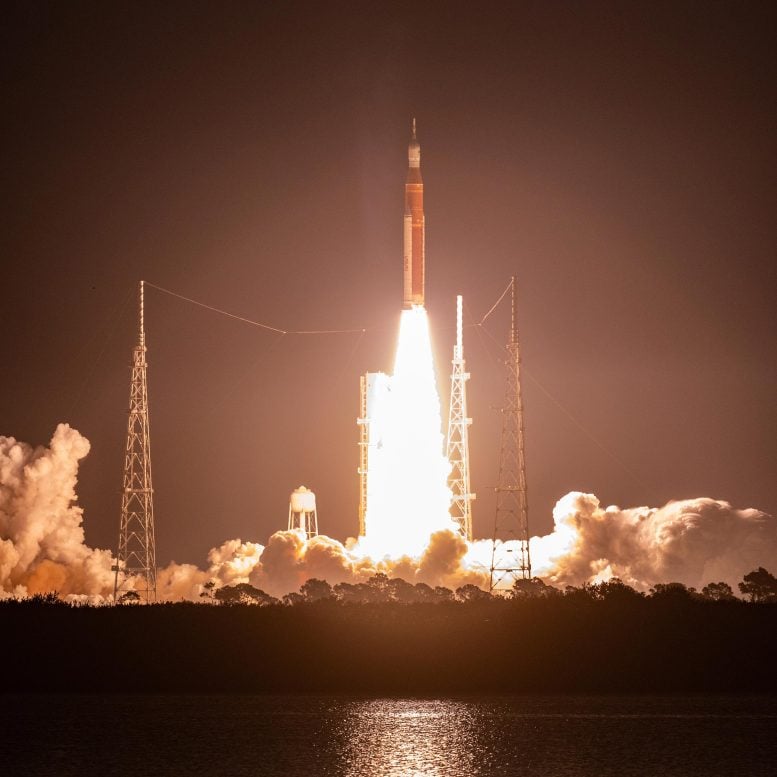
    NASA Artemis I Flight Test Liftoff
    NASA’s Space Launch System rocket carrying the Orion spacecraft launches on the Artemis I flight test, Wednesday, November 16, 2022, from Launch Complex 39B at NASA’s Kennedy Space Center in Florida. NASA’s Artemis I mission is the first integrated flight test of the agency’s deep space exploration systems: the Orion spacecraft, Space Launch System (SLS) rocket, and ground systems. SLS and Orion launched at 1:47 a.m. EST, from Launch Pad 39B at the Kennedy Space Center. Credit: NASA/Keegan Barber

    Artemis I launch systems met expectations, with minor damage requiring repairs. Preparations for Artemis II are underway.

    Following the successful Artemis I liftoff of the world’s most powerful rocket from NASA’s Kennedy Space Center in Florida, teams carefully assessed the mobile launcher and infrastructure at Launch Pad 39B. Engineers have determined that the overall mobile launcher and pad systems all performed as designed during launch and remain structurally sound.

    The ground systems, umbilical retracts on the mobile launcher, software, and ignition overpressure and sound suppression system from the water deluge system, which sprays water to dampen the acoustic shock and protect the deck of the mobile launcher from the flames of the engines, all supported the launch as expected throughout the countdown and as the Space Launch System (SLS) rocket imparted 8.8 million pounds of thrust onto the structure while leaving Earth.
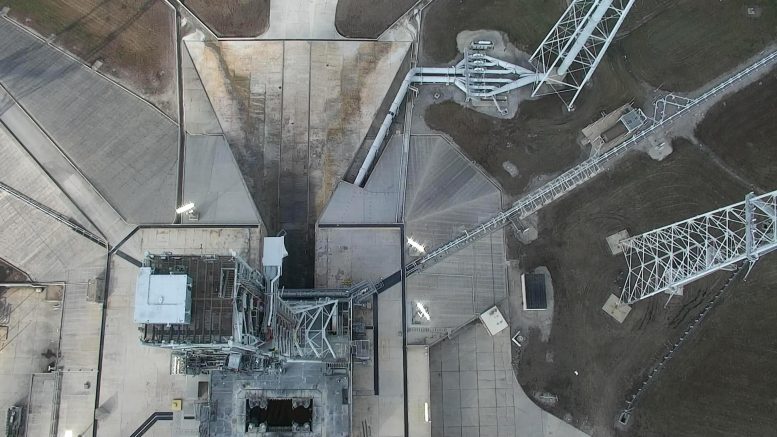
    Launch Pad After Artemis SLS Launch
    Teams at NASA’s Kennedy Space Center in Florida carefully assessed the mobile launcher and infrastructure at Launch Pad 39B following the Artemis I launch. It was determined the overall mobile launcher and pad systems performed as designed during launch and are structurally sound. Credit: NASA

    “The exploration ground systems exceeded our expectation for its overall performance,” Artemis mission manager, Mike Sarafin said during a November 21 news briefing following Orion’s closest lunar flyby. “We did have a little bit of damage on the mobile launcher, but it will be ready to support Artemis II and we had accounted for that previously in our pre-plan and our budget for the time between Artemis I and II.”


    Drone footage of launch pad 39B and the mobile launcher after the successful launch of the Artemis I mission on November 16, 2022. Engineers determined the overall mobile launcher and pad systems all performed as designed during launch and are structurally sound. Credit: NASA’s Kennedy Space Center

    Beginning the day of launch, Wednesday, November 16, and concluding Friday, November 18, the assessment enabled teams to inspect areas on the mobile launcher and identify specific damage and debris around the pad. Engineers identified minor damage to umbilicals and the crew access arm on the mobile launcher. Damage to the pneumatic lines associated with gaseous nitrogen and gaseous helium caused the oxygen sensors on the pad to show there were low oxygen readings due to leaks, which teams have since isolated.

    Damage to the elevators is the most significant issue. This required the team to use the stairs for inspections on the 355-foot-tall tower structure, which has 662 steps, and extended the time required for the inspection. The elevators will remain out of service for several months to complete repairs.
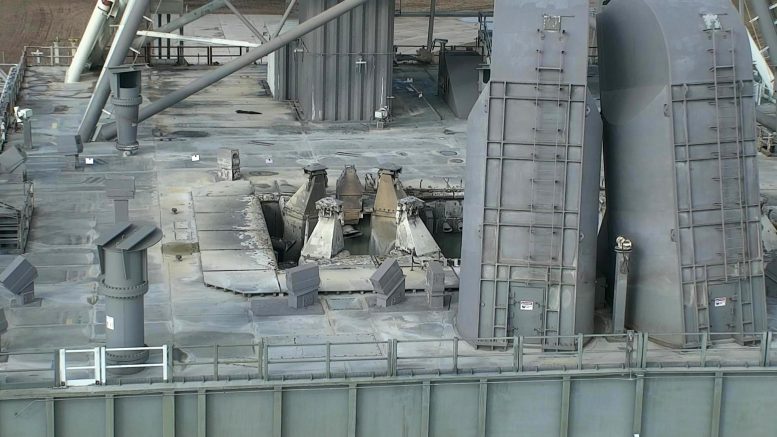
    Ground Systems After Artemis SLS Launch
    The ground systems, umbilical retracts on the mobile launcher, software, and ignition over pressure and sound suppression system from the water deluge system at Kennedy’s Pad 39B all supported the launch as expected throughout countdown and launch of Artemis I. Credit: NASA

    The solid rocket booster’s throat plug material was located during debris assessments around the pad. This is purposefully expelled at liftoff and commonly found at the pad post-launch. Other debris found at the pad included pieces of the caulk-like material from Orion. However, teams are unsure whether that was detached during the launch or during Hurricane Nicole. Overall, the mobile launcher and pad post-launch inspections have yielded findings that are consistent with expectations and similar to those of space shuttle launches.

    Teams are in the process of coordinating and scheduling repairs to be completed before the mobile launcher returns to the Vehicle Assembly Building in several weeks and later is taken to a parking location at Kennedy where it will undergo emergency egress modifications and testing to prepare for the Artemis II crewed mission.

    Never miss a breakthrough: Join the SciTechDaily newsletter.
    Follow us on Google and Google News.

    ARTEMIS Mission Kennedy Space Center NASA Rocket Space Launch System
    Share. Facebook Twitter Pinterest LinkedIn Email Reddit

    Related Articles

    NASA Artemis I Wet Dress Rehearsal Update: Go for Proceed for Tanking

    NASA Artemis I Wet Dress Rehearsal Countdown Progressing, ICPS Powered Up

    NASA Teams Proceeding With Overnight Operations for Artemis I Wet Dress Rehearsal

    NASA Teams Continue To Monitor Severe Weather Ahead of Artemis I Wet Dress Rehearsal

    NASA Artemis I Launch Countdown 101

    NASA Go for Artemis I Wet Dress Rehearsal of SLS Rocket, Orion Spacecraft, and Exploration Ground Systems

    We Are Going! Massive Artemis I Moon Rocket Arrives at Launch Pad [Gallery]

    First Platforms Are Retracted Ahead of NASA Artemis I First Rollout To Launch Pad

    Artemis I Progress Continues in NASA’s Vehicle Assembly Building

    2 Comments

    1. bonnie mcgee on November 29, 2022 1:05 pm

      very cool

      Reply
    2. benis on December 1, 2022 4:53 pm

      benis

      Reply
    Leave A Reply Cancel Reply

    • Facebook
    • Twitter
    • Pinterest
    • YouTube

    Don't Miss a Discovery

    Subscribe for the Latest in Science & Tech!

    Trending News

    The Universe Is Expanding Too Fast and Scientists Can’t Explain Why

    “Like Liquid Metal”: Scientists Create Strange Shape-Shifting Material

    Early Warning Signals of Esophageal Cancer May Be Hiding in Plain Sight

    Common Blood Pressure Drug Shows Surprising Power Against Deadly Antibiotic-Resistant Superbug

    Scientists Uncover Dangerous Connection Between Serotonin and Heart Valve Disease

    Scientists Discover a “Protector” Protein That Could Help Reverse Hair Loss

    Bone-Strengthening Discovery Could Reverse Osteoporosis

    Scientists Uncover Hidden Trigger Behind Stem Cell Aging

    Follow SciTechDaily
    • Facebook
    • Twitter
    • YouTube
    • Pinterest
    • Newsletter
    • RSS
    SciTech News
    • Biology News
    • Chemistry News
    • Earth News
    • Health News
    • Physics News
    • Science News
    • Space News
    • Technology News
    Recent Posts
    • Scientists Overcome Major Quantum Bottleneck, Potentially Transforming Teleportation and Computing
    • Quantum Physics’ Strangest Problem May Hold the Key to Time Itself
    • Scientists Create “Liquid Gears” That Spin Without Touching
    • The Simple Habit That Could Help Prevent Cancer
    • Forgotten Medicinal Plant Shows Promise in Fighting Dangerous Superbugs
    Copyright © 1998 - 2026 SciTechDaily. All Rights Reserved.
    • Science News
    • About
    • Contact
    • Editorial Board
    • Privacy Policy
    • Terms of Use

    Type above and press Enter to search. Press Esc to cancel.