
Close Menu
    Facebook X (Twitter) Instagram
    SciTechDaily
    • Biology
    • Chemistry
    • Earth
    • Health
    • Physics
    • Science
    • Space
    • Technology
    Facebook X (Twitter) Pinterest YouTube RSS
    SciTechDaily
    Home»Space»NASA Astronaut Chris Cassidy, Space Station Crewmates Land Safely Back on Earth
    Space

    NASA Astronaut Chris Cassidy, Space Station Crewmates Land Safely Back on Earth

    By NASAOctober 22, 2020No Comments3 Mins Read
    Facebook Twitter Pinterest Telegram LinkedIn WhatsApp Email Reddit
    Share
    Facebook Twitter LinkedIn Pinterest Telegram Email Reddit
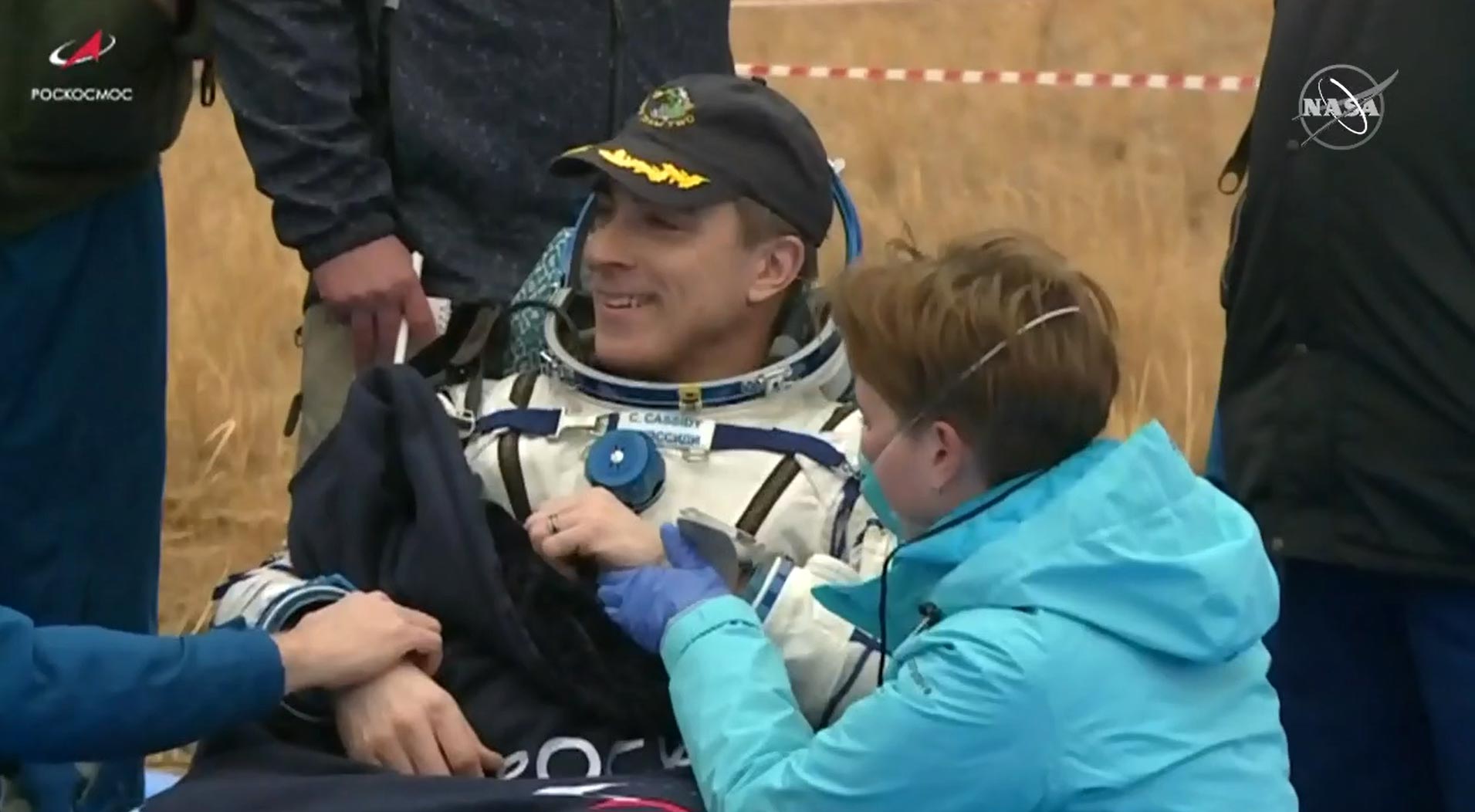
    NASA Astronaut Chris Cassidy Back on Earth
    NASA astronaut Chris Cassidy is all smiles after returning from his third space mission October 21, 2020, landing in Dzhezkazgan, Kazakhstan, at 10:54 p.m. EDT with his International Space Station crewmates Ivan Vagner and Anatoly Ivanishin of the Russian space agency Roscosmos. Credit: NASA Television

    After 196 days living and working in Earth’s orbit aboard the International Space Station, NASA astronaut Chris Cassidy returned from his third space mission Wednesday, October 21, with cosmonauts Ivan Vagner and Anatoly Ivanishin of the Russian space agency Roscosmos.

    The crew departed the station at 7:32 p.m. EDT Wednesday and landed just south of the town of Dzhezkazgan, Kazakhstan, at 10:54 p.m. (8:54 a.m. Kazakhstan time). They will undergo preliminary medical checks at the landing site, and then split up to return home. Cassidy will board a NASA plane back to Houston, while Vagner and Ivanishin will fly home to Star City, Russia.

    During this latest mission, Cassidy served as commander of Expedition 63 and welcomed SpaceX Demo-2 crew members  Robert Behnken and Douglas Hurley of NASA – the first astronauts to launch to the space station on an American spacecraft from American soil since the retirement of the space shuttle in 2011.
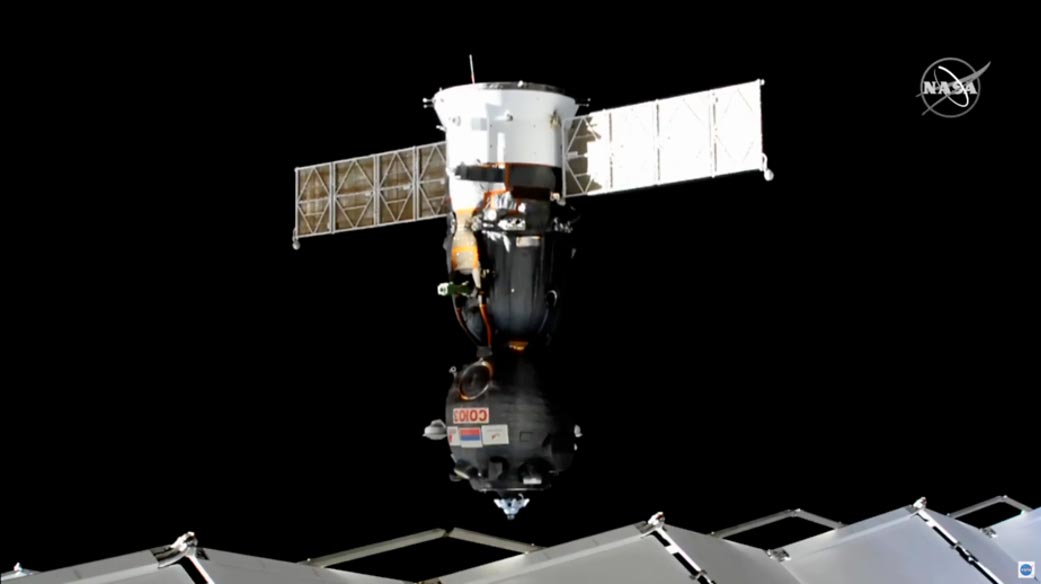
    Soyuz Spacecraft Expedition 63 Crew
    The Soyuz spacecraft carrying NASA astronaut Chris Cassidy and Expedition 63 crewmates Anatoly Ivanishin and Ivan Vagner, of the Russian space agency Roscosmos, leaves the International Space Station at 7:32 p.m. EDT October 21, 2020, to return to Earth after the crew’s 196-day mission. Credit: NASA Television

    Cassidy and Behnken completed four spacewalks, totaling 23 hours and 37 minutes, to upgrade station batteries. The final spacewalk was the 10th for both astronauts, making them two of only four only U.S. astronauts to complete 10 spacewalks. Cassidy now has spent a total of 378 days in space, the fifth highest among U.S. astronauts.

    While on station, he contributed to hundreds of experiments, including a study of the influence of gravity on electrolytic gas evolution, which looks at bubbles created using electrolysis. Gravity is a key factor in creating buoyancy for bubbles, so microgravity makes it possible to single out bubble growth and study its effect in processes. Using this method to better understand how bubbles grow could improve devices like medicine delivery through small, bandage-like skin patches.

    Cassidy also worked with Astrobee, cube-shaped, free-flying robots that may one day assist astronauts with routine duties, and conducted research for the Onco-Selectors experiment, which leverages microgravity to identify targeted cancer therapies.

    When Cassidy, Ivanishin, and Vagner departed the space station, Expedition 64 officially began on station, with Roscosmos cosmonaut Sergey Ryzhikov serving as station commander and NASA’s Kate Rubins and Roscosmos’ Sergey Kud-Sverchkov serving as flight engineers.

    In November, the Expedition 64 crew is scheduled to welcome NASA’s SpaceX Crew-1 – NASA astronauts Michael Hopkins, Victor Glover, and Shannon Walker, and Japanese Aerospace Exploration Agency astronaut Soichi Noguchi. Crew-1 will be the first long-duration mission to fly as part of NASA’s Commercial Crew Program and mark the return of America’s capability to regularly launch astronauts from U.S. soil.

    For nearly 20 years, the International Space Station has been inhabited continuously by astronauts testing technologies, conducting research, and developing the skills needed to explore farther from Earth, including to the Moon and Mars. As a global endeavor, 241 people from 19 countries have visited the unique microgravity destination that has hosted more than 3,000 scientific and educational investigations from researchers in 108 countries and areas.

    Never miss a breakthrough: Join the SciTechDaily newsletter.
    Follow us on Google and Google News.

    Astronaut International Space Station NASA
    Share. Facebook Twitter Pinterest LinkedIn Email Reddit

    Related Articles

    NASA’s Crew-9 Returns After 286-Day Mission With a Spectacular Splashdown in the Gulf of America

    NASA’s SpaceX Crew-9 Splashes Down Off Coast of Florida

    SpaceX Dragon Undocks With NASA Crew-9 Members for Return to Earth

    Liftoff! NASA’s SpaceX Crew-10 Blasts Off From Kennedy Space Center [Video]

    Rocket Ready: NASA’s SpaceX Crew-10 Set for Liftoff

    NASA’s SpaceX Crew-10 Was Moments From Liftoff – Then a Last-Minute Malfunction Shut It Down

    NASA’s SpaceX Crew-10: Four Astronauts, a 17,500 MPH Rocket, and 200+ Experiments

    No Treadmill, No Problem – NASA’s Space Workout Experiment Could Change Fitness Forever

    NASA and SpaceX’s Unexpected Spacecraft Swap Sends Crew-10 to Space Sooner

    Leave A Reply Cancel Reply

    • Facebook
    • Twitter
    • Pinterest
    • YouTube

    Don't Miss a Discovery

    Subscribe for the Latest in Science & Tech!

    Trending News

    Could Low Vitamin D Be Making Your Pain Worse?

    Scientists Discover Once-Weekly Workout That Melts Belly Fat Surprisingly Effectively

    Scientists Just Tested a Thruster Powerful Enough for Human Missions to Mars

    Doctors Say Your Ice Pack Might Be Making Injuries Worse

    Scientists Discover 43-Foot Sea Reptile Twice the Size of a Great White Shark

    Bees and Birds Are Drinking Alcohol From Flowers

    Scientists Discover How Obesity May Trigger Alzheimer’s Disease

    Scientists Confirm Alcohol Causes Widespread Health Damage

    Follow SciTechDaily
    • Facebook
    • Twitter
    • YouTube
    • Pinterest
    • Newsletter
    • RSS
    SciTech News
    • Biology News
    • Chemistry News
    • Earth News
    • Health News
    • Physics News
    • Science News
    • Space News
    • Technology News
    Recent Posts
    • Just Minutes of Intense Exercise Could Slash Disease Risk by 50%
    • People Who Stop Ozempic Often Don’t Gain the Weight Back
    • Why More People in Their 30s Are Suddenly Getting Colon Cancer
    • Scientists Discover Sperm Seem To Bypass a Fundamental Law of Physics
    • The Secret Behind Indigenous Andeans’ “Digestive Superpower” May Be Potatoes
    Copyright © 1998 - 2026 SciTechDaily. All Rights Reserved.
    • Science News
    • About
    • Contact
    • Editorial Board
    • Privacy Policy
    • Terms of Use

    Type above and press Enter to search. Press Esc to cancel.