
Close Menu
    Facebook X (Twitter) Instagram
    SciTechDaily
    • Biology
    • Chemistry
    • Earth
    • Health
    • Physics
    • Science
    • Space
    • Technology
    Facebook X (Twitter) Pinterest YouTube RSS
    SciTechDaily
    Home»Space»NASA Images of the Week: Monsters in the Sky, Asteroids, Molten Ring & Mars Sample Return
    Space

    NASA Images of the Week: Monsters in the Sky, Asteroids, Molten Ring & Mars Sample Return

    By NASAOctober 24, 20211 Comment5 Mins Read
    Facebook Twitter Pinterest Telegram LinkedIn WhatsApp Email Reddit
    Share
    Facebook Twitter LinkedIn Pinterest Telegram Email Reddit
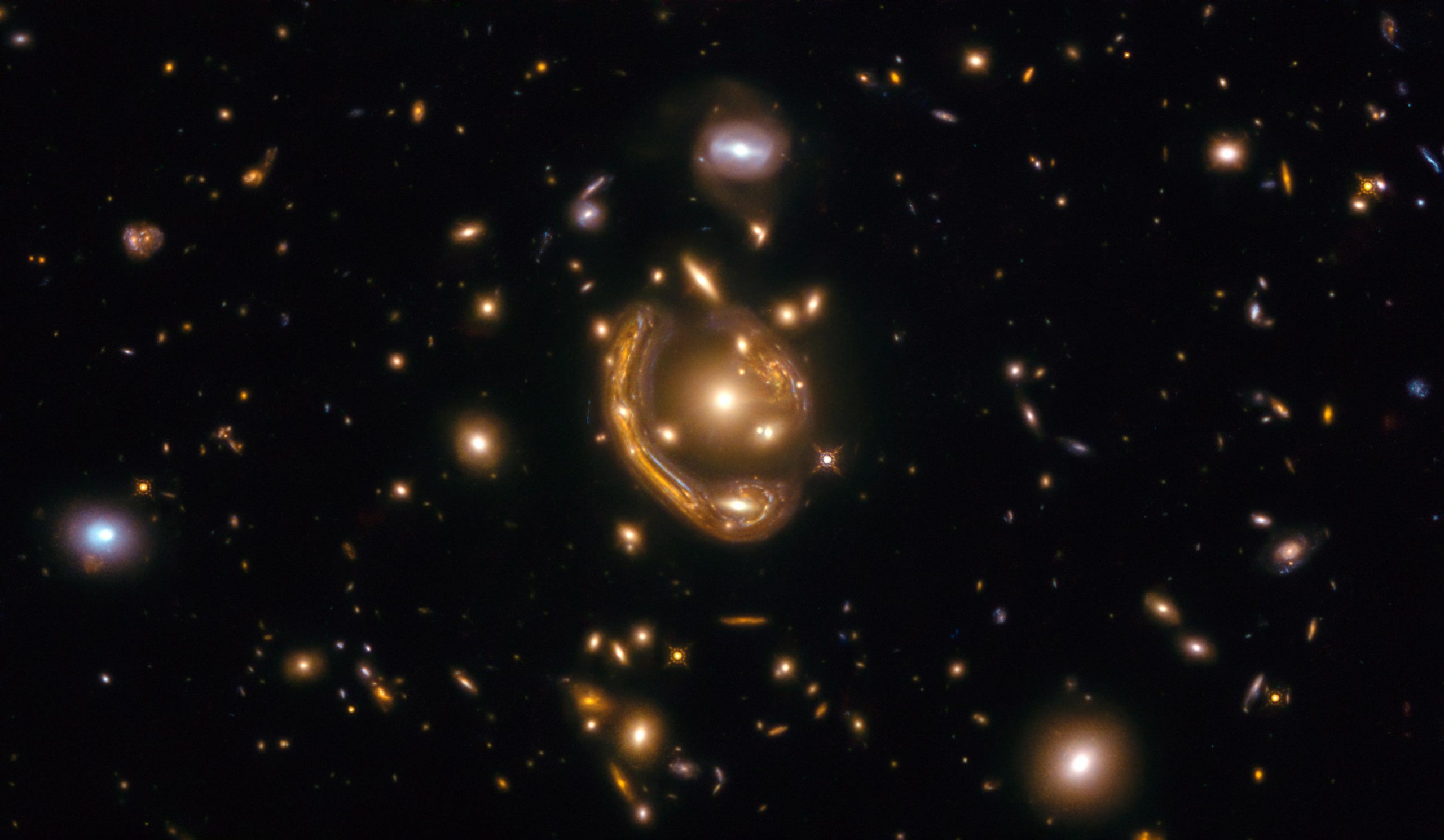
    GAL-CLUS-022058s
    With the charming name of SDSS J0146-0929, this is a galaxy cluster — a monstrous collection of hundreds of galaxies all shackled together in the unyielding grip of gravity. The mass of this galaxy cluster is large enough to severely distort the space-time around it, creating the odd, looping curves that almost encircle the center of the cluster. Credit: ESA/Hubble & NASA, S. Jha, Acknowledgment: L. Shatz

    Hubble Snapshot of ‘Molten Ring’ Galaxy Prompts New Research

    The Hubble Space Telescope’s glamour shots of the universe nearly always have a discovery behind them.

    In this image, a remote galaxy is greatly magnified and distorted by the effects of gravitationally warped space. After its public release, astronomers used the picture to measure the galaxy’s distance of 9.4 billion light-years. This places the galaxy at the peak epoch of star formation in cosmic evolution.

    In this particular snapshot, a science discovery followed the release of a Hubble observation of a striking example of a deep-space optical phenomenon dubbed an “Einstein ring.” The photo was released in December 2020 as an example of one of the largest, nearly complete Einstein rings ever seen.

    Aurora Over the Southern Skies
    ?A vivid aurora streams over the Earth as the International Space Station orbited 274 miles above the southern Indian Ocean. Credit: NASA

    Behold an Aurora Over the Southern Skies

    A vivid aurora streams over the Earth as the International Space Station orbits 274 miles above the southern Indian Ocean in between Australia and Antarctica.

    The station orbits the Earth in about 90 minutes. In 24 hours, the space station makes 16 orbits of Earth, traveling through 16 sunrises and sunsets.
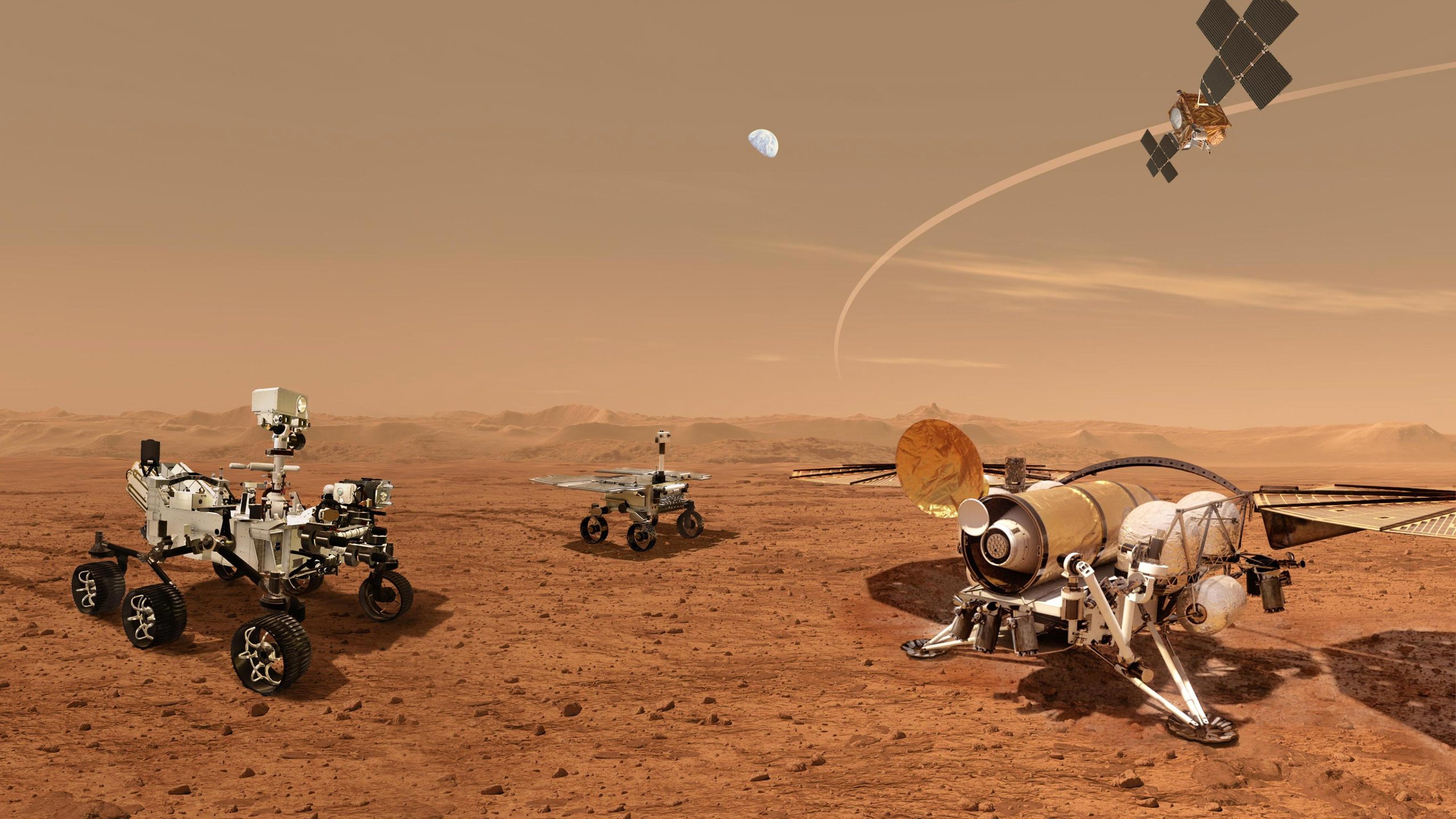
    Mars Sample Return Campaign Artist's Concept
    Concept for a set of future robots working together to ferry back samples from the surface of Mars collected by the Mars Perseverance rover. Credit: NASA/ESA/JPL-Caltech

    Mars Sample Return Artist’s Concept

    This illustration shows a concept for a set of future robots working together to ferry back samples from the surface of Mars collected by NASA’s Mars Perseverance rover.

    NASA and the European Space Agency (ESA) are solidifying concepts for a Mars sample return mission that would seek to take the samples of Martian rocks and other materials being collected and stored in sealed tubes by NASA’s Mars Perseverance rover and return the sealed tubes to Earth.

    According to the current concept, NASA would deliver a Mars lander in the vicinity of Jezero Crater, where Perseverance (left) will have collected and cached samples. The Sample Retrieval Lander (right) would carry a NASA rocket (the Mars Ascent Vehicle), along with ESA’s Sample Fetch Rover (center) that is roughly the size of the Opportunity Mars rover. The fetch rover would gather the cached samples and carry them back to the lander for transfer to the ascent vehicle; additional samples could also be delivered directly by Perseverance. The ascent vehicle would then launch a special container holding the samples into Mars orbit. ESA would put a spacecraft in orbit around Mars before the ascent vehicle launches. This spacecraft would rendezvous with and capture the orbiting samples before returning them to Earth. NASA would provide the capture and containment payload module for the orbiter.
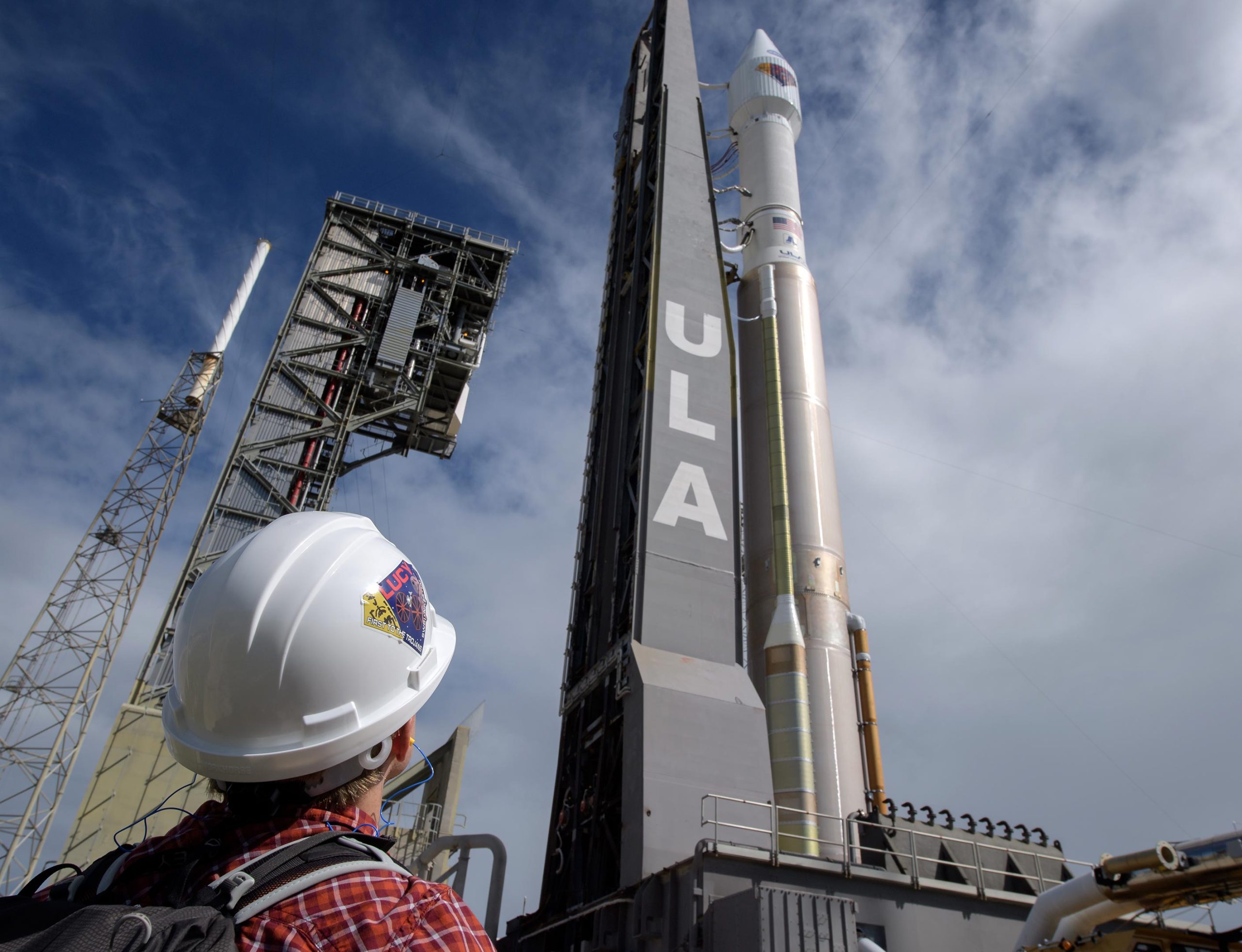
    United Launch Alliance Atlas V Rocket Lucy
    With the Lucy spacecraft aboard, a United Launch Alliance Atlas V rocket is seen as it is rolled out of the Vertical Integration Facility. Credit: NASA/Bill Ingalls

    Lucy Mission Set to Launch to Study Trojan Asteroids

    With the Lucy spacecraft aboard, a United Launch Alliance Atlas V rocket is seen as it is rolled out of the Vertical Integration Facility to the launch pad at Space Launch Complex 41, Thursday, October 14, 2021, at Cape Canaveral Space Force Station in Florida. Lucy will be the first spacecraft to study Jupiter’s Trojan asteroids. Like the mission’s namesake – the fossilized human ancestor, “Lucy,” whose skeleton provided unique insight into humanity’s evolution – Lucy will revolutionize our knowledge of planetary origins and the formation of the solar system.

    The Lucy mission launched at 5:34 a.m. EDT on October 16, 2021, on a United Launch Alliance (ULA) Atlas V rocket from Space Launch Complex 41 at Cape Canaveral Space Force Station in Florida.
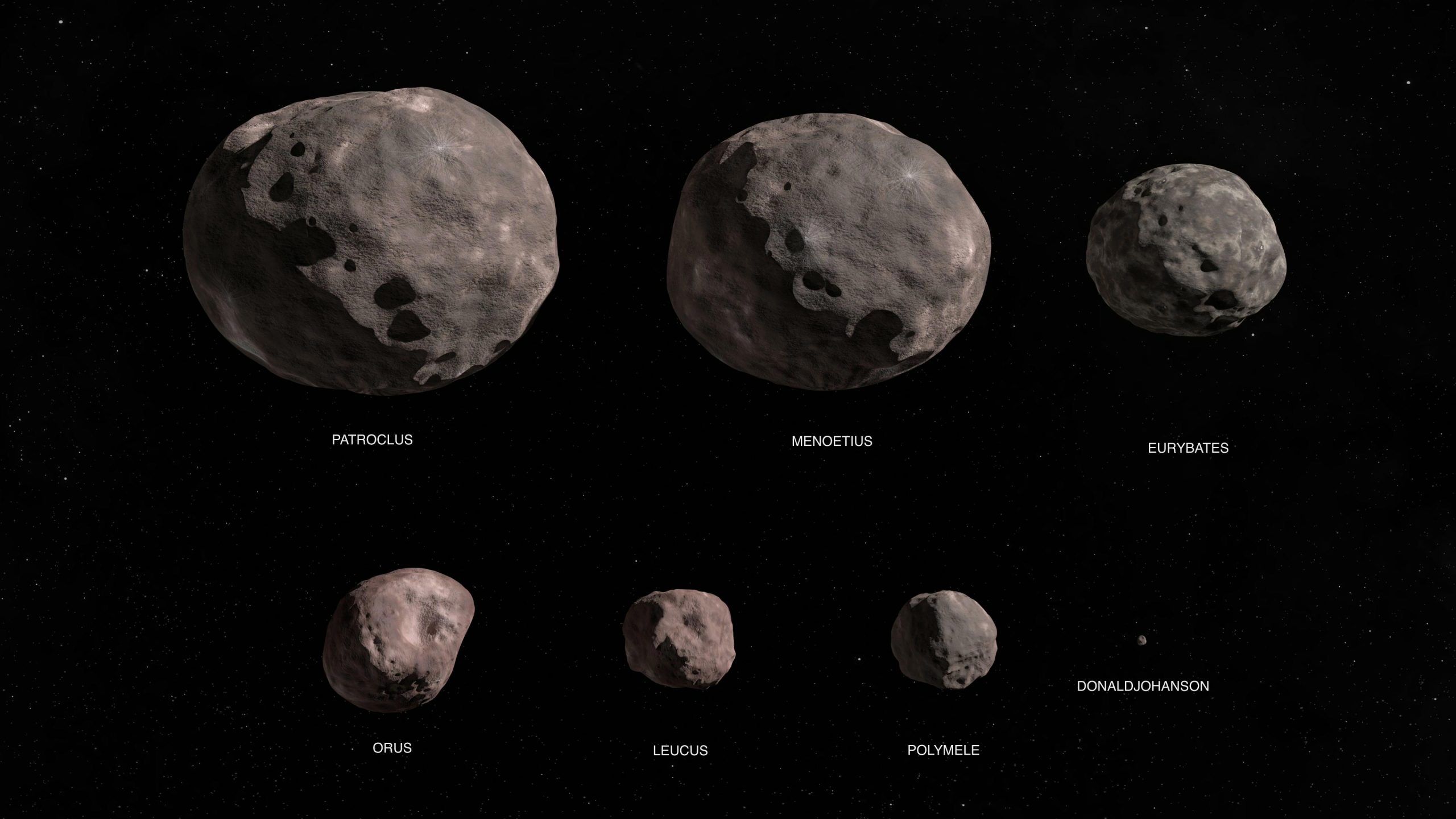
    Lucy Mission Asteroid Targets
    Illustration of the Lucy mission’s seven targets: the binary asteroid Patroclus/Menoetius, Eurybates, Orus, Leucus, Polymele, and the main belt asteroid DonaldJohanson. Credit: NASA’s Goddard Space Flight Center Conceptual Image Lab

    Lucy: Inspiration and Asteroids

    NASA’s Lucy mission will explore a record-breaking number of asteroids, flying by one asteroid in the solar system’s main asteroid belt, and by seven Trojan asteroids.

    This illustration is of the Lucy mission’s seven targets: the binary asteroid Patroclus/Menoetius, Eurybates, Orus, Leucus, Polymele, and the main belt asteroid Donaldjohanson.

    Supernova Remnant LMC N63A
    A nearby supernova remnant, LMC N63A. Credit: NASA

    Like Monsters in the Sky

    A violent and chaotic-looking mass of gas and dust is seen in this Hubble Space Telescope image of a nearby supernova remnant. Denoted N 63A, the object is the remains of a massive star that exploded, spewing its gaseous layers out into an already turbulent region.

    The supernova remnant is part of a star-forming region in the Large Magellanic Cloud (LMC), an irregular galaxy 160,000 light-years from our own Milky Way.

    Supernova remnants have long been thought to set off episodes of star formation when their expanding shock encounters nearby gas. N 63A is still young, and its ruthless shocks are destroying the ambient gas clouds, rather than coercing them to collapse and form stars.

    Never miss a breakthrough: Join the SciTechDaily newsletter.
    Follow us on Google and Google News.

    Astronomy NASA
    Share. Facebook Twitter Pinterest LinkedIn Email Reddit

    Related Articles

    Chunk of Moon Rock? NASA Tracks Asteroid 2024 PT5 During Close Earth Flyby

    Webb’s “Weird” Discovery: Meet the Galaxy Where Gas Outshines the Stars

    Don’t Miss the Comet: Witness Tsuchinshan-ATLAS Before It Disappears for 80,000 Years

    Webb Telescope’s Encounter With a Time-Bending Supernova: Rewriting Cosmic Rules

    Sun Unleashes Monumental X9.0 Solar Flare – Most Intense in 7 Years – Captured by NASA Observatory

    Skywatching Magic: October’s Spectacular Comet Lights Up the Night Sky

    Monster X7.1 Solar Flare Unleashed: Intense Blast Captured by NASA’s Solar Dynamics Observatory

    Astronomers Baffled by Black Hole Jets Igniting Star Explosions

    Webb’s Unprecedented Discovery: Potential Missing Link to First Stars in the Universe

    1 Comment

    1. Georges on October 27, 2021 5:16 am

      Wow how did NASA found it?

      Reply
    Leave A Reply Cancel Reply

    • Facebook
    • Twitter
    • Pinterest
    • YouTube

    Don't Miss a Discovery

    Subscribe for the Latest in Science & Tech!

    Trending News

    The Universe Is Expanding Too Fast and Scientists Can’t Explain Why

    “Like Liquid Metal”: Scientists Create Strange Shape-Shifting Material

    Early Warning Signals of Esophageal Cancer May Be Hiding in Plain Sight

    Common Blood Pressure Drug Shows Surprising Power Against Deadly Antibiotic-Resistant Superbug

    Scientists Uncover Dangerous Connection Between Serotonin and Heart Valve Disease

    Scientists Discover a “Protector” Protein That Could Help Reverse Hair Loss

    Bone-Strengthening Discovery Could Reverse Osteoporosis

    Scientists Uncover Hidden Trigger Behind Stem Cell Aging

    Follow SciTechDaily
    • Facebook
    • Twitter
    • YouTube
    • Pinterest
    • Newsletter
    • RSS
    SciTech News
    • Biology News
    • Chemistry News
    • Earth News
    • Health News
    • Physics News
    • Science News
    • Space News
    • Technology News
    Recent Posts
    • Scientists Overcome Major Quantum Bottleneck, Potentially Transforming Teleportation and Computing
    • Quantum Physics’ Strangest Problem May Hold the Key to Time Itself
    • Scientists Create “Liquid Gears” That Spin Without Touching
    • The Simple Habit That Could Help Prevent Cancer
    • Forgotten Medicinal Plant Shows Promise in Fighting Dangerous Superbugs
    Copyright © 1998 - 2026 SciTechDaily. All Rights Reserved.
    • Science News
    • About
    • Contact
    • Editorial Board
    • Privacy Policy
    • Terms of Use

    Type above and press Enter to search. Press Esc to cancel.