
Close Menu
    Facebook X (Twitter) Instagram
    SciTechDaily
    • Biology
    • Chemistry
    • Earth
    • Health
    • Physics
    • Science
    • Space
    • Technology
    Facebook X (Twitter) Pinterest YouTube RSS
    SciTechDaily
    Home»Space»NASA’s Psyche Spacecraft Arrives at Kennedy Space Center
    Space

    NASA’s Psyche Spacecraft Arrives at Kennedy Space Center

    By NASAMay 3, 2022No Comments3 Mins Read
    Facebook Twitter Pinterest Telegram LinkedIn WhatsApp Email Reddit
    Share
    Facebook Twitter LinkedIn Pinterest Telegram Email Reddit
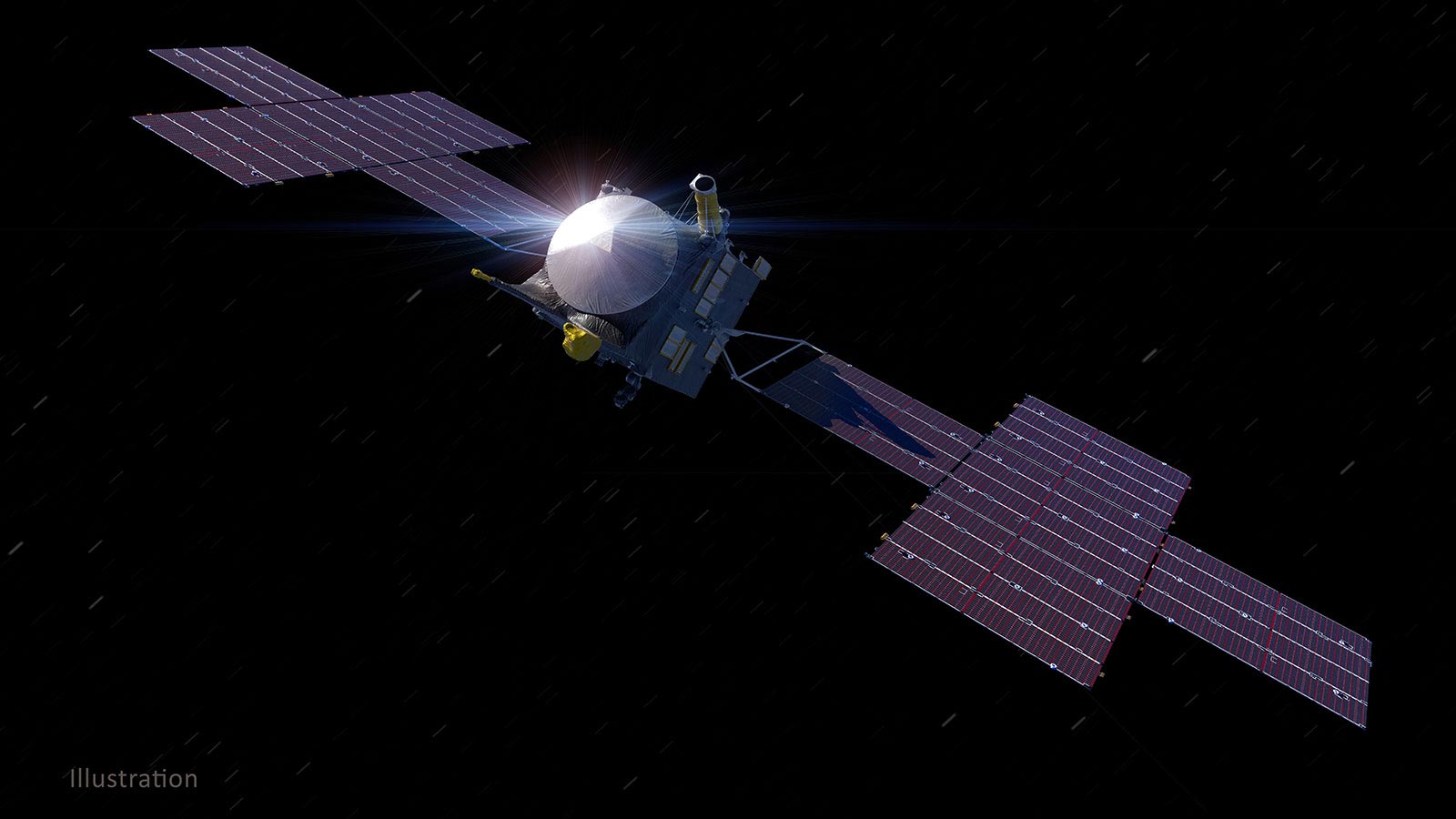
    NASA Psyche Spacecraft Illustration
    An illustration, created in March 2021, of NASA’s Psyche spacecraft, which is targeted to launch to the main asteroid belt in August 2022 to investigate the metal-rich asteroid Psyche. Credit: NASA/JPL-Caltech/ASU

    The Psyche spacecraft completed its journey from NASA’s Jet Propulsion Laboratory (JPL) in Southern California to NASA’s Kennedy Space Center in Florida. First, it traveled to March Air Reserve Base, about 55 miles (89 kilometers) southeast of JPL in Riverside County, California, before flying cross-country aboard a C-17 Globemaster III aircraft to the Launch and Landing Facility (formerly the Shuttle Landing Facility) where crews offloaded the spacecraft. Over the next three months, the spacecraft will undergo additional preparations before launching aboard a SpaceX Falcon Heavy rocket on August 1, 2022.

    NASA Psyche Spacecraft C-17 Aircraft
    Preparations are underway to offload NASA’s Psyche spacecraft from the C-17 aircraft it arrived aboard at Kennedy Space Center’s Launch and Landing Facility in Florida on April 29, 2022. Credit: NASA/Kim Shiflett

    The Psyche spacecraft will use solar-electric propulsion to travel approximately 1.5 billion miles (2.4 billion kilometers) to rendezvous with its namesake asteroid in 2026. This will make it the first spacecraft to use Hall-effect thrusters beyond the orbit of the Moon. This thruster technology traps electrons in a magnetic field and uses them to ionize onboard propellant, expending much less propellant than equivalent chemical rockets. Psyche also carries three scientific instruments: an imager, magnetometer, and a gamma ray and neutron spectrometer.

    The unique, metal-rich Psyche asteroid may be part of the core of a planetesimal, a building block of rocky planets in our solar system. Learning more about the asteroid could tell us more about how our own planet formed and help answer fundamental questions about Earth’s own metal core and the formation of our solar system.

    The launch of Psyche will include two secondary payloads, NASA’s Deep Space Optical Communications (DSOC) technical demonstration, which is attached to the spacecraft as a separate experiment, and the Janus spacecraft. DSOC will perform the agency’s first demonstration of optical communications beyond the Earth-Moon system, and will use lasers to send data at a higher rate than typical spacecraft radio communications. Janus is two small spacecraft that will study two different binary asteroids (two asteroids that orbit each other) to understand the formation and evolution of these objects.
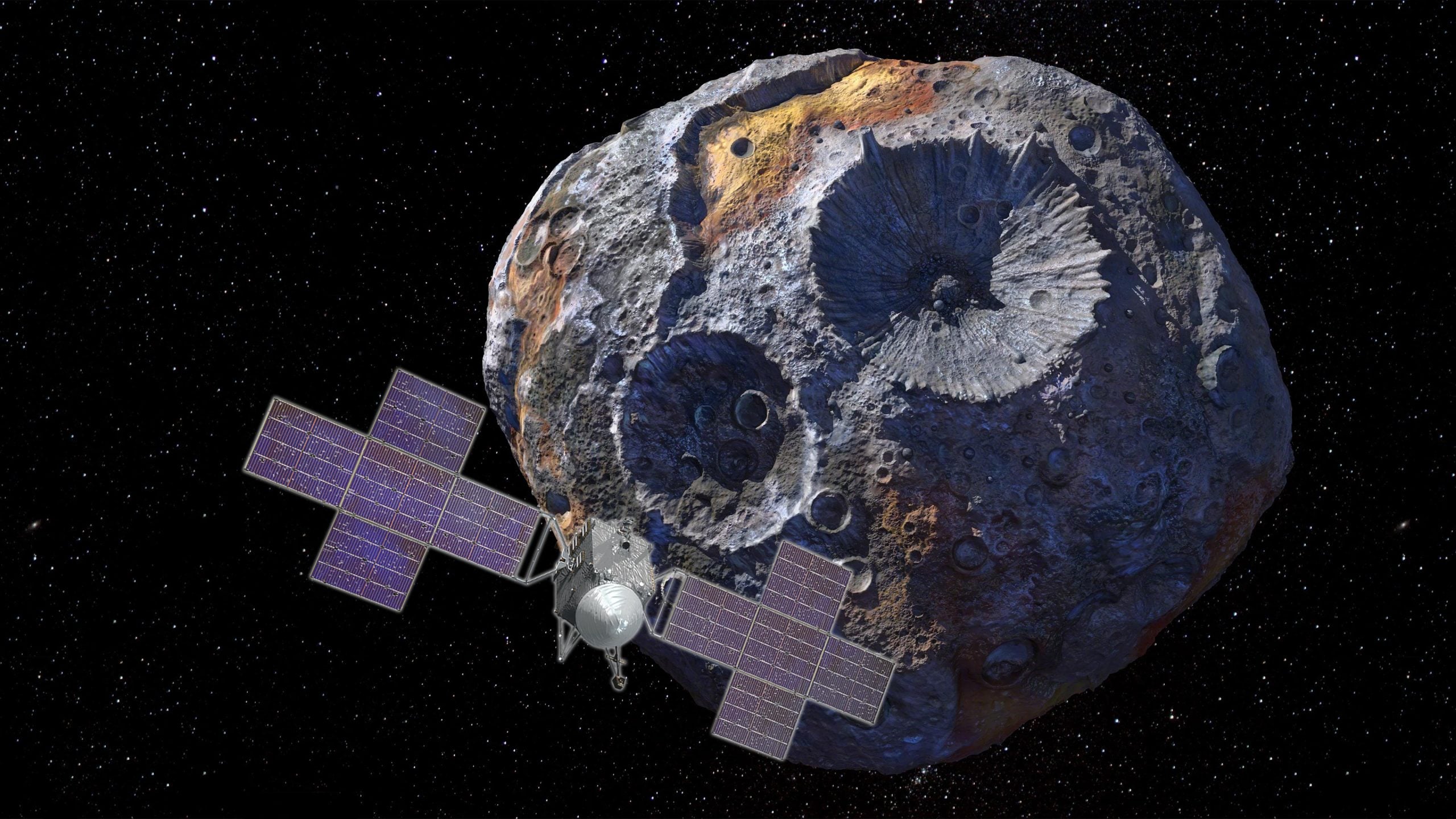
    Psyche Spacecraft Asteroid Composite
    NASA’s Psyche mission to a distant metal asteroid will carry a revolutionary Deep Space Optical Communications (DSOC) package. Credit: NASA/JPL-Caltech/ASU

    The Psyche mission is led by Arizona State University. JPL, which is managed for NASA by Caltech in Pasadena, California, is responsible for mission’s overall management, system engineering, integration and testing, and mission operations. Maxar Technologies in Palo Alto, California, provided the high-power solar electric propulsion spacecraft chassis. NASA’s Launch Services Program (LSP), based at Kennedy, is managing the launch. Psyche will be the 14th mission in the agency’s Discovery program and LSP’s 100th primary mission. Numerous international, university, and commercial partners are part of the Psyche team.

    Never miss a breakthrough: Join the SciTechDaily newsletter.
    Follow us on Google and Google News.

    JPL Kennedy Space Center NASA NASA Psyche
    Share. Facebook Twitter Pinterest LinkedIn Email Reddit

    Related Articles

    NASA’s Psyche Spacecraft Starts Processing at Kennedy Space Center

    How NASA’s Psyche Mission Will Explore an Unknown World We Can Barely Pinpoint From Earth

    NASA’s Psyche Spacecraft To Explore Unique Asteroid for Clues to Early Solar System

    Futuristic Solar Electric Thrusters Makes NASA’s Psyche Spacecraft Go

    NASA’s Psyche Asteroid Mission Moves Closer To Launch – “It’s Incredible To Be at This Point”

    NASA’s Metal Mission: Final Assembly of Psyche Spacecraft Begins – Destined to Explore a Metal-Rich Asteroid

    NASA’s Psyche Mission to Explore a Metal-Rich Asteroid Passes Key Milestone

    Ring of Firepower: Electric Hall Thruster for NASA’s Psyche Spacecraft Propulsion

    Design Complete for NASA’s Psyche – Spacecraft to Explore a Metal-Rich Asteroid

    Leave A Reply Cancel Reply

    • Facebook
    • Twitter
    • Pinterest
    • YouTube

    Don't Miss a Discovery

    Subscribe for the Latest in Science & Tech!

    Trending News

    These Toads Are Surviving a Deadly Fungus – Scientists May Finally Know Why

    These Brain Cells May Explain Why We Eventually Have To Sleep

    Tomatoes Contain an Invisible Ingredient With Surprising Effects on Liver Health

    World’s First Heat-Powered Cooling System Turns Waste Heat Into Cold

    Antarctica Gained a Record 695 Billion Tons of Ice in Just Two Years

    Don’t Miss: A Brilliant Venus and Glowing Harvest Moon Light Up the Sky

    New Twist on the Einstein Problem Reveals Unexpected Physics

    JWST Captures Stunning Evidence of How Supermassive Black Holes Feed

    Follow SciTechDaily
    • Facebook
    • Twitter
    • YouTube
    • Pinterest
    • Newsletter
    • RSS
    SciTech News
    • Biology News
    • Chemistry News
    • Earth News
    • Health News
    • Physics News
    • Science News
    • Space News
    • Technology News
    Recent Posts
    • Scientists Bring a Galápagos Plant Back From the Brink of Extinction
    • Scientists Discover a Bacterial Molecule That “Disarms” a Dangerous Fungus
    • Bats May Hold the Secret to Fighting Aging, Cancer, and Infection
    • Scientists Discover a Hidden Defect That Could Explain Why IBD Keeps Coming Back
    • Millions Take Blood Pressure Drugs, but Many May Be Missing Their Heart-Protective Benefits
    Copyright © 1998 - 2026 SciTechDaily. All Rights Reserved.
    • Science News
    • About
    • Contact
    • Editorial Board
    • Privacy Policy
    • Terms of Use

    Type above and press Enter to search. Press Esc to cancel.