

Close Menu
    Facebook X (Twitter) Instagram
    SciTechDaily
    • Biology
    • Chemistry
    • Earth
    • Health
    • Physics
    • Science
    • Space
    • Technology
    Facebook X (Twitter) Pinterest YouTube RSS
    SciTechDaily
    Home»Space»NASA Uses Ballistic Air Guns and Mock Moon Rocks in Search for Durable Space Fabrics
    Space

    NASA Uses Ballistic Air Guns and Mock Moon Rocks in Search for Durable Space Fabrics

    By Ellen Bausback, NASA Glenn Research CenterSeptember 13, 2021No Comments3 Mins Read
    Facebook Twitter Pinterest Telegram LinkedIn WhatsApp Email Reddit
    Share
    Facebook Twitter LinkedIn Pinterest Telegram Email Reddit
    Astronauts In Outer Space Need Radiation Shielding
    NASA’s Glenn Research Center’s Ballistic Impact Lab tests textiles for protecting humans during Artemis missions to the Moon and beyond.

    NASA is testing fabrics for lunar habitats and spacesuits using high-speed projectiles to simulate micrometeorite impacts.

    The surface of the Moon is a harsh environment with no air, low gravity, dust, and micrometeorites—tiny rocks or metal particles—flying faster than 22,000 mph (35,000 kph). These conditions can pose a hazard to astronauts, their dwellings, and spacecraft.

    Engineers at NASA Glenn Research Center’s Ballistic Impact Lab are working to help the agency select materials for future Artemis missions and predict how they will perform while on the lunar surface.

    The innovative lab, which features a 40-foot-long (12-meter-long) air gun capable of firing at velocities of 3,000 feet (900 meters) per second, has become a go-to destination for NASA as it examines situations ranging from the effects of bird collisions with aircraft to ballistic impacts on spacecraft.
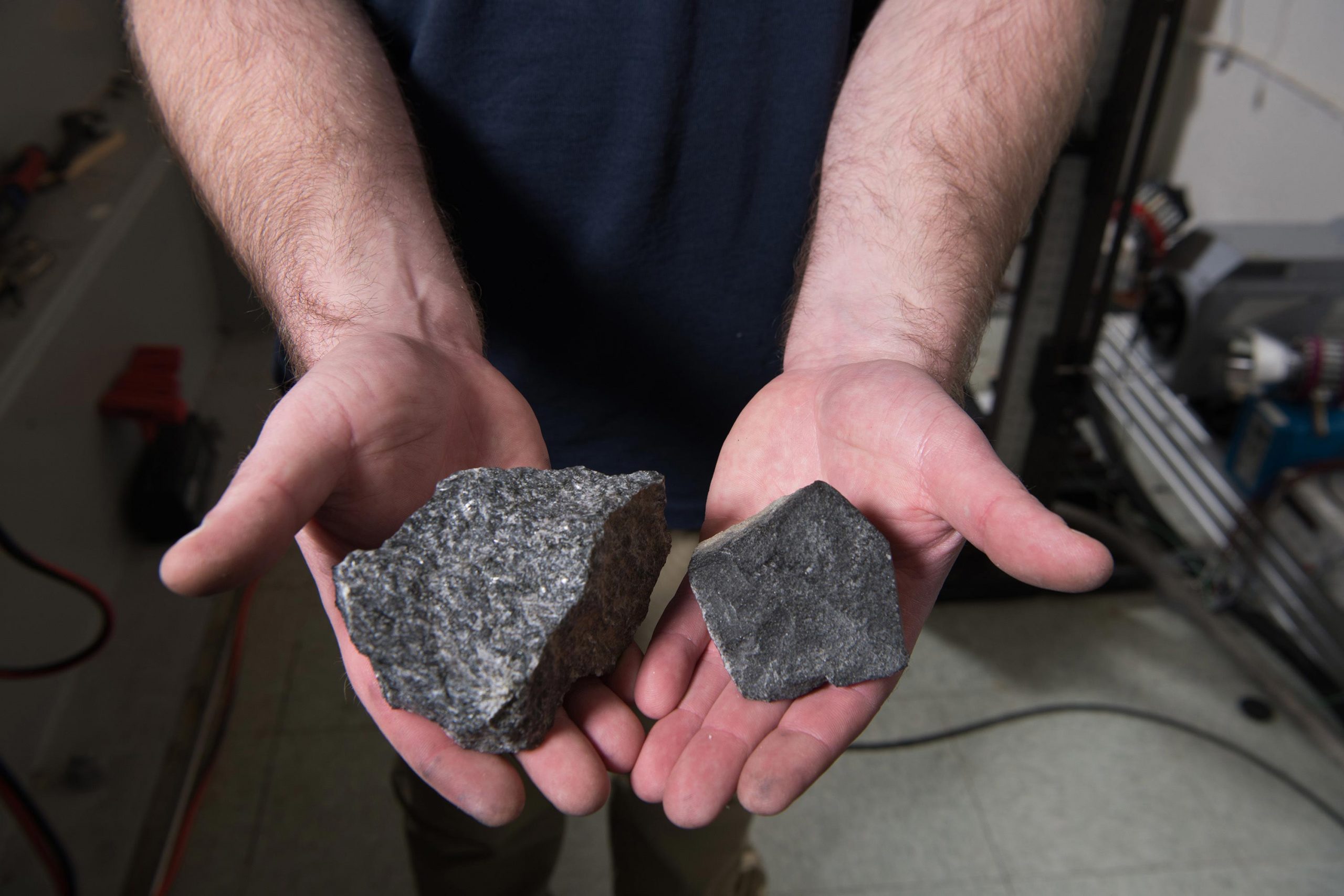
    Mock Moon Rocks
    Engineers pummeled potential spacesuit materials with mock moon rocks made of basalt like these to see how the fabrics would hold up on the lunar surface. Credit: NASA

    Now, the team has been called to test several different textiles that will protect humans during Artemis missions to the Moon and beyond.

    “If the object is pressurized, a leak can be catastrophic depending on how big and fast the leak is,” said Mike Pereira, the Ballistic Impact Lab’s technical lead. “Running this type of ballistic impact test is essential to a variety of NASA aeronautics and space exploration missions to ensure equipment and materials reliability.”
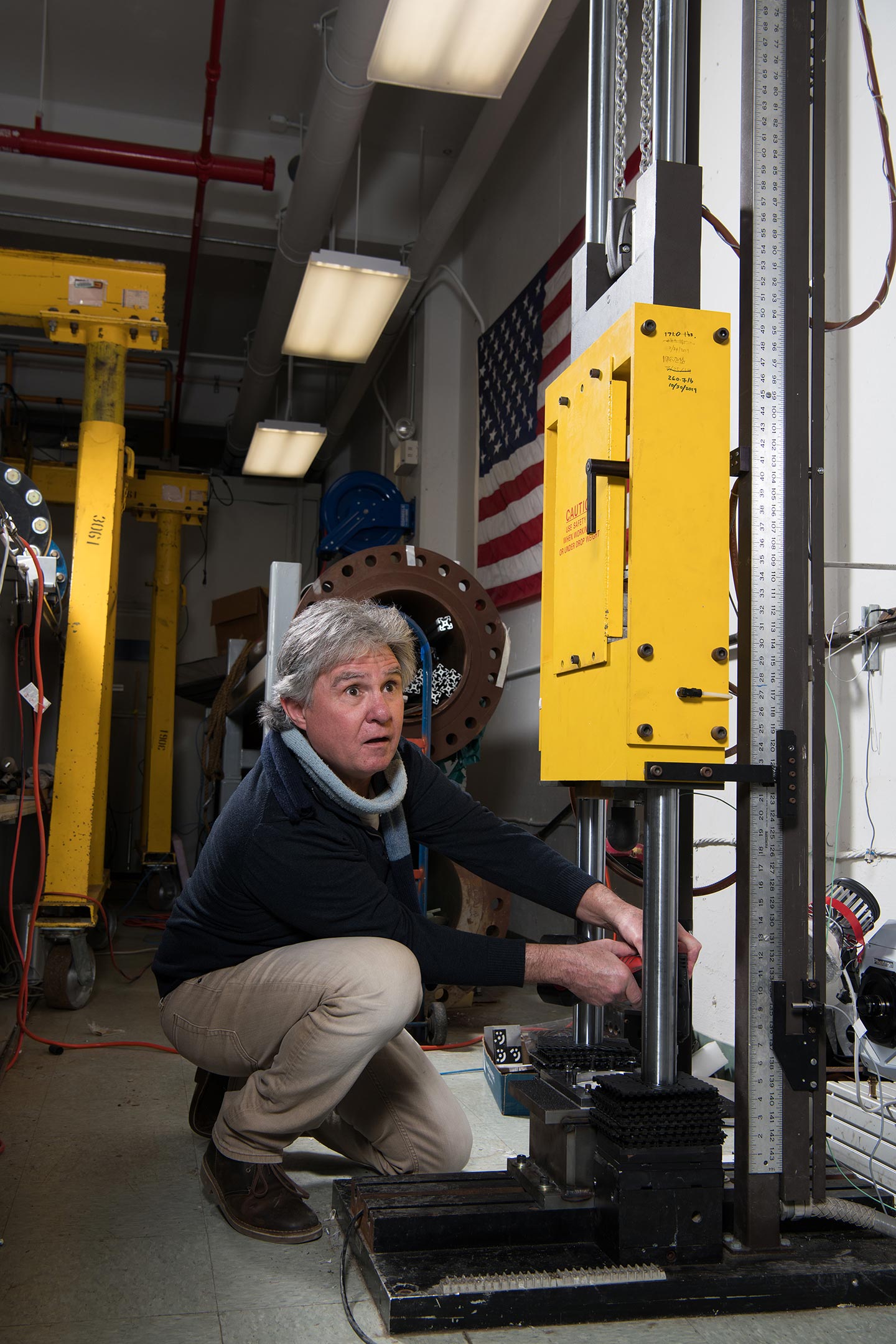
    Mike Pereira, Ballistic Impact Lab
    Mike Pereira, the Ballistic Impact Lab’s technical lead, prepares an impact-drop tester before a spacesuit materials test. Credit: NASA

    In the first series of tests, the team evaluated materials NASA is considering for habitats, which are designed to be relatively soft and flexible, but very stiff if struck.

    Vacuum-Powered Velocity and High-Tech Measurement

    To assess the potential fabrics and gauge how many layers would be needed to stop micrometeorite penetration, engineers used the facility’s air gun to fire steel ball bearings at various fabrics. The team connected the air gun to a vacuum chamber to remove air resistance, allowing it to shoot faster, while a suite of sensors and high-speed cameras measured how each material absorbed or deflected energy.

    The resulting impacts take each fabric to the brink of failure to better understand the upper limits of durability and to ensure each can handle the harsh, punishing environment of space exploration.

    Other materials tested included spacesuits that could be used for extravehicular activities on the lunar surface and in orbit. Understanding how materials respond to impacts is important for astronaut safety, according to Pereira.

    The composite materials were a combination of substances that included fibers for strength and bonding resins to allow transfer of stress and energy. To evaluate these potential materials, engineers used the lab’s vertical-impact-drop tester to hurl mock simulated Moon rocks made of basalt onto potential spacesuit materials.

    Engineers at NASA’s Johnson Space Center are analyzing the ballistics testing data to determine which materials will be best for a variety of lunar exploration items.

    The next challenge for the Glenn team is testing materials that could capture space debris. New types of aerogels that are lighter and stronger might be the key to developing and deploying in-space devices given ease of use and reduced mass for launch.

    Never miss a breakthrough: Join the SciTechDaily newsletter.
    Follow us on Google and Google News.

    Astronaut NASA
    Share. Facebook Twitter Pinterest LinkedIn Email Reddit

    Related Articles

    Meet NASA’s 10 New Astronaut Candidates Training for the Moon and Mars

    93 Million Miles, 3,520 Orbits, and a 70th Birthday: NASA’s Don Pettit Returns to Earth

    Orbited Earth 3,520 Times – And Home for Cake: NASA Astronaut’s Epic Return

    Watch Live: NASA Astronaut Don Pettit Returns to Earth on His 70th Birthday After 220 Days in Space

    Space Station Commander Swap, SpaceX Dragon Launch, and Birthday Earth Return All in One Weekend

    Dolphins, Starliners, and Record-Breaking Spacewalks: Inside Crew-9’s Historic Journey

    Dawn Docking, New Discoveries: NASA and Russian Crew Begin Space Station Mission

    How Mars Is Shredding Spacesuits: NASA’s Perseverance Tests the Future of Astronaut Gear

    Meet NASA’s SpaceX Crew-11: The Astronauts Launching to Shape Humanity’s Future in Space

    Leave A Reply Cancel Reply

    • Facebook
    • Twitter
    • Pinterest
    • YouTube

    Don't Miss a Discovery

    Subscribe for the Latest in Science & Tech!

    Trending News

    Millions Take These IBS Drugs, But a New Study Finds Serious Risks

    Scientists Unlock Hidden Secrets of 2,300-Year-Old Mummies Using Cutting-Edge CT Scanner

    Bread Might Be Making You Gain Weight Even Without Eating More Calories

    Scientists Discover Massive Magma Reservoir Beneath Tuscany

    Europe’s Most Active Volcano Just Got Stranger – Here’s Why Scientists Are Rethinking It

    Alzheimer’s Symptoms May Start Outside the Brain, Study Finds

    Millions Take This Popular Supplement – Scientists Discover a Concerning Link to Heart Failure

    The Universe Is Expanding Too Fast and Scientists Can’t Explain Why

    Follow SciTechDaily
    • Facebook
    • Twitter
    • YouTube
    • Pinterest
    • Newsletter
    • RSS
    SciTech News
    • Biology News
    • Chemistry News
    • Earth News
    • Health News
    • Physics News
    • Science News
    • Space News
    • Technology News
    Recent Posts
    • Simple Blood Test May Predict Alzheimer’s Years Before Brain Scans Show Signs
    • Scientists Say Adding This Unusual Seafood to Your Diet Could Reverse Signs of Aging
    • U.S. Waste Holds $5.7 Billion Worth of Crop Nutrients
    • Scientists Say a Hidden Structure May Exist Inside Earth’s Core
    • Doctors Surprised by the Power of a Simple Drug Against Colon Cancer
    Copyright © 1998 - 2026 SciTechDaily. All Rights Reserved.
    • Science News
    • About
    • Contact
    • Editorial Board
    • Privacy Policy
    • Terms of Use

    Type above and press Enter to search. Press Esc to cancel.