
Close Menu
    Facebook X (Twitter) Instagram
    SciTechDaily
    • Biology
    • Chemistry
    • Earth
    • Health
    • Physics
    • Science
    • Space
    • Technology
    Facebook X (Twitter) Pinterest YouTube RSS
    SciTechDaily
    Home»Space»NASA Will Host Live Discussion about Europa Findings, Potential for Life
    Space

    NASA Will Host Live Discussion about Europa Findings, Potential for Life

    By Dwayne Brown / JoAnna Wendel, NASAMay 12, 20181 Comment2 Mins Read
    Facebook Twitter Pinterest Telegram LinkedIn WhatsApp Email Reddit
    Share
    Facebook Twitter LinkedIn Pinterest Telegram Email Reddit
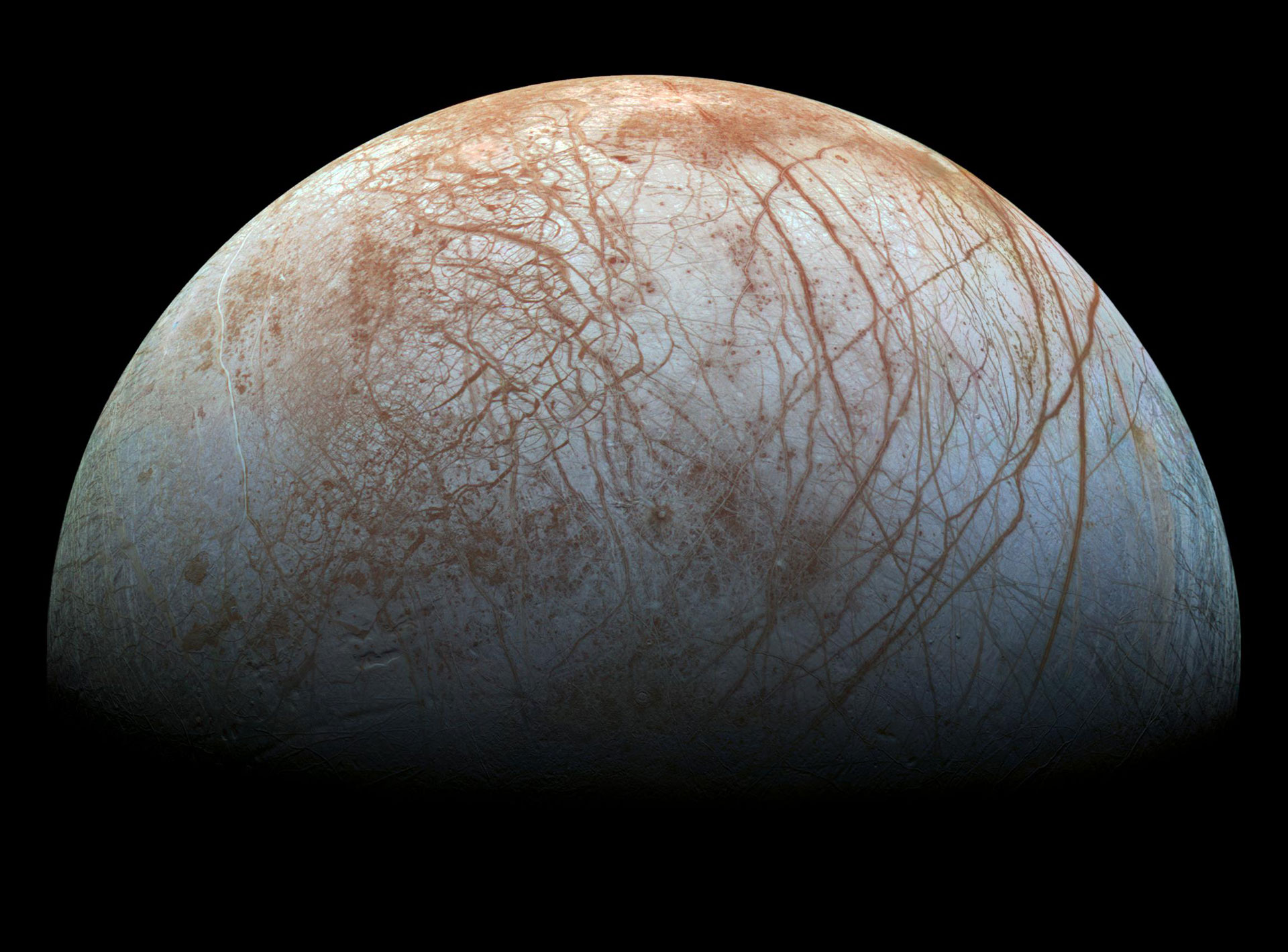
    NASA Hosts Live Discussion about Europa Findings
    A view of Europa created from images taken by NASA’s Galileo spacecraft in the late 1990s. Credit: NASA/JPL-Caltech/SETI Institute

    NASA will host a Science Chat at 1 p.m. EDT Monday, May 14, to discuss the latest analysis of Jupiter’s moon Europa and its status as one of the most promising places in the solar system to search for life. The event will air live on NASA Television, Facebook Live, Twitch TV, Ustream, YouTube, Twitter/Periscope and the agency’s website.

    Europa has long been a high priority for exploration because beneath its icy crust lies a salty, liquid water ocean. NASA’s Europa Clipper, targeted to launch in 2022, will be equipped with the instruments necessary to determine whether Europa possesses the ingredients necessary to support life as we know it.

    Lori Glaze, acting director of NASA’s Planetary Science Division (PSD), and JoAnna Wendel, PSD communications lead, will host the chat. Guests include: 

    • Xianzhe Jia, associate professor in the Department of Climate and Space Sciences and Engineering at the University of Michigan, Ann Arbor
    • Elizabeth Turtle, research scientist at Johns Hopkins Applied Physics Laboratory in Laurel, Maryland
    • Margaret Kivelson, professor emerita of Space Physics in the Department of Earth and Space Sciences at the University of California, Los Angeles 

    Media who would like to ask questions during the event must email their name, media affiliation and phone number to Felicia Chou at [email protected] by 12:30 p.m. Monday, May 14.

    The public can send questions on social media by using #askNASA at any time during the event.

    For more information about Europa Clipper, visit: https://www.nasa.gov/europa

    Never miss a breakthrough: Join the SciTechDaily newsletter.
    Follow us on Google and Google News.

    Astronomy Europa Planetary Science
    Share. Facebook Twitter Pinterest LinkedIn Email Reddit

    Related Articles

    Europa Plumes Remain Elusive

    Evidence of Tectonic Plate-Like System on Europa

    Radio Signals from Jupiter Could Aid in the Search for Extraterrestrial Life on Its Moons

    Hubble Detects Water Vapor Over Jupiter’s Moon Europa

    NASA’s Galileo Mission Discovers Clay-Like Minerals on Europa

    NASA Scientists Determine Europa Likely Spun on a Tilted Axis

    Researchers Assess the Surface of Europa for Materials Representing Ocean Composition

    Study Maps the Chemistry Needed for Life on Jupiter’s Moon Europa

    New Data Suggests a Chemical Exchange Between Europa’s Ocean and Surface

    1 Comment

    1. Christopher Boodoo on May 12, 2018 3:16 pm

      Great!!!
      Sound like we are getting somewhere in finding a second earth.

      Reply
    Leave A Reply Cancel Reply

    • Facebook
    • Twitter
    • Pinterest
    • YouTube

    Don't Miss a Discovery

    Subscribe for the Latest in Science & Tech!

    Trending News

    Artificial Sweeteners May Harm Future Generations, Study Suggests

    Splashdown! NASA Artemis II Returns From Record-Breaking Moon Mission

    What If Consciousness Exists Beyond Your Brain

    Scientists Finally Crack the 100-Million-Year Evolutionary Mystery of Squid and Cuttlefish

    Beyond “Safe Levels”: Study Challenges What We Know About Pesticides and Cancer

    Researchers Have Found a Dietary Compound That Increases Longevity

    Scientists Baffled by Bizarre “Living Fossil” From 275 Million Years Ago

    Your IQ at 23 Could Predict Your Wealth at 27, Study Finds

    Follow SciTechDaily
    • Facebook
    • Twitter
    • YouTube
    • Pinterest
    • Newsletter
    • RSS
    SciTech News
    • Biology News
    • Chemistry News
    • Earth News
    • Health News
    • Physics News
    • Science News
    • Space News
    • Technology News
    Recent Posts
    • What if Dark Matter Has Two Forms? Bold New Hypothesis Could Explain a Cosmic Mystery
    • Researchers Expose Hidden Chemistry of “Ore-Forming” Elements in Biology
    • Geologists Reveal the Americas Collided Earlier Than We Thought
    • 20x Difference: Study Reveals True Source of Airborne Microplastics
    • Scientists Uncover Hidden Force Powering Yellowstone’s Supervolcano
    Copyright © 1998 - 2026 SciTechDaily. All Rights Reserved.
    • Science News
    • About
    • Contact
    • Editorial Board
    • Privacy Policy
    • Terms of Use

    Type above and press Enter to search. Press Esc to cancel.