
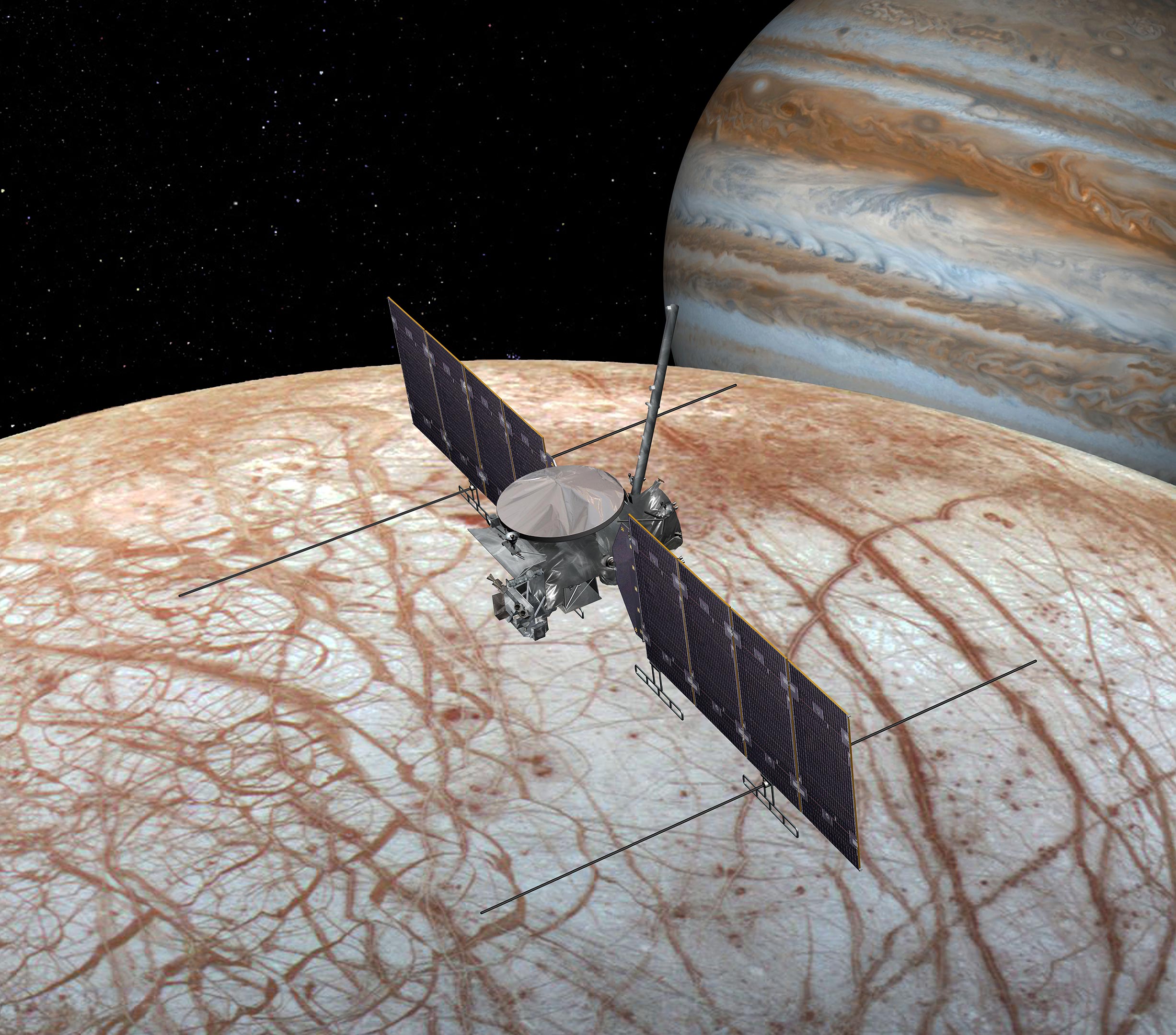
The Europa Clipper spacecraft will occupy the main production facility of NASA’s Jet Propulsion Laboratory (JPL) as it prepares for its 2024 launch to Jupiter’s icy moon Europa.
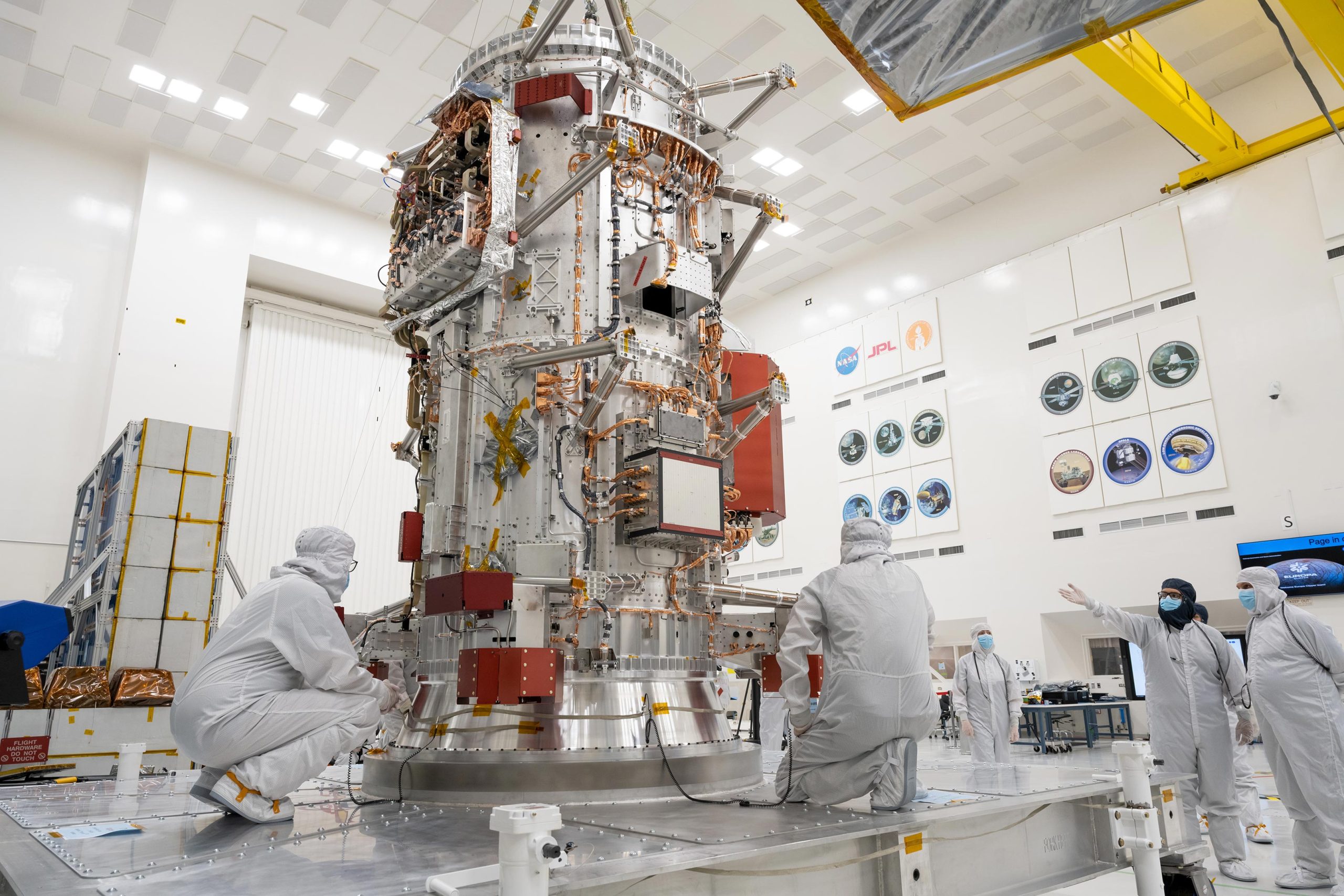
The core of NASA’s Europa Clipper spacecraft has taken center stage in the Spacecraft Assembly Facility at JPL in Southern California. Standing 10 feet (3 meters) high and 5 feet (1.5 meters) wide, the craft’s main body will be the focus of attention in the facility’s ultra-hygienic High Bay 1 for the next two years as engineers and technicians assemble the spacecraft. It’s scheduled for launch to Jupiter’s moon Europa in October 2024.
Scientists believe the ice-enveloped moon harbors a vast internal ocean that may harbor conditions suitable for supporting life. During nearly 50 flybys of Europa, the spacecraft’s suite of science instruments will gather data on the moon’s atmosphere, surface, and interior. Scientists will use that information to gauge the depth and salinity of the ocean, the thickness of the ice crust, and potential plumes that may be venting subsurface water into space.
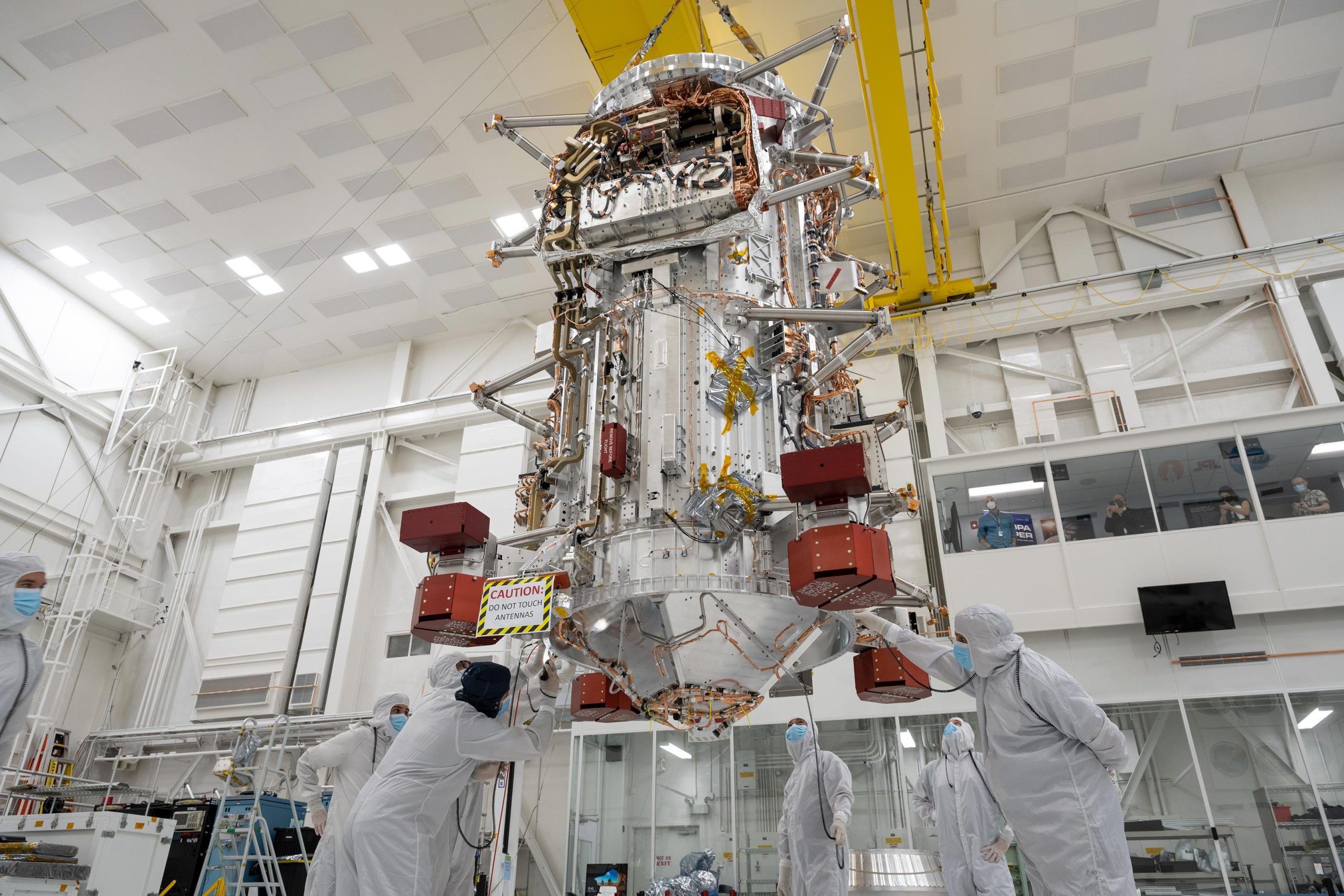
Several of Europa Clipper’s science instruments have already been completed and will be installed on the spacecraft at JPL. Most recently, the plasma-detection instrument called the Plasma Instrument for Magnetic Sounding, and the Europa Imaging System wide-angle camera arrived from the Johns Hopkins Applied Physics Laboratory (APL), in Laurel, Maryland. Additionally, the thermal-emission imaging instrument, called E-THEMIS, and the ultraviolet spectrograph, Europa-UVS, have already been installed on the spacecraft’s nadir deck, which will support many of the instrument sensors by stabilizing them to ensure they are oriented correctly.
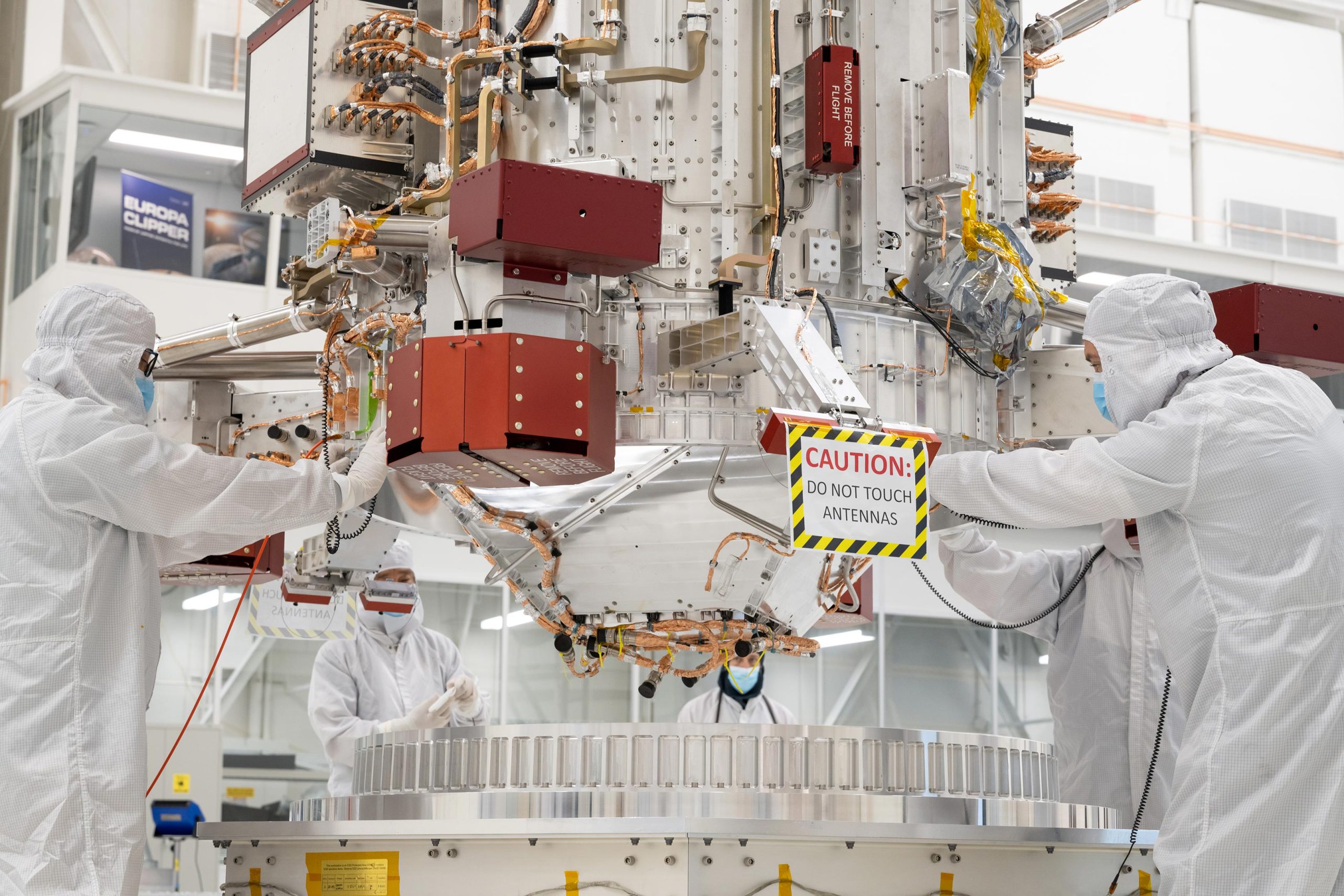
Fabricated at JPL, this key piece of hardware will soon move into the Spacecraft Assembly Facility’s High Bay 1. This is the same clean room where historic missions such as Galileo, Cassini, and all of NASA’s Mars rovers were built.
Also moving soon to High Bay 1 will be the aluminum electronics vault, which will be bolted to the main body of the spacecraft. It will protect the electronics inside from Jupiter’s intense radiation. The electronics enable Europa Clipper’s computer to communicate with the spacecraft’s antennae, science instruments, and the subsystems that will keep them alive.
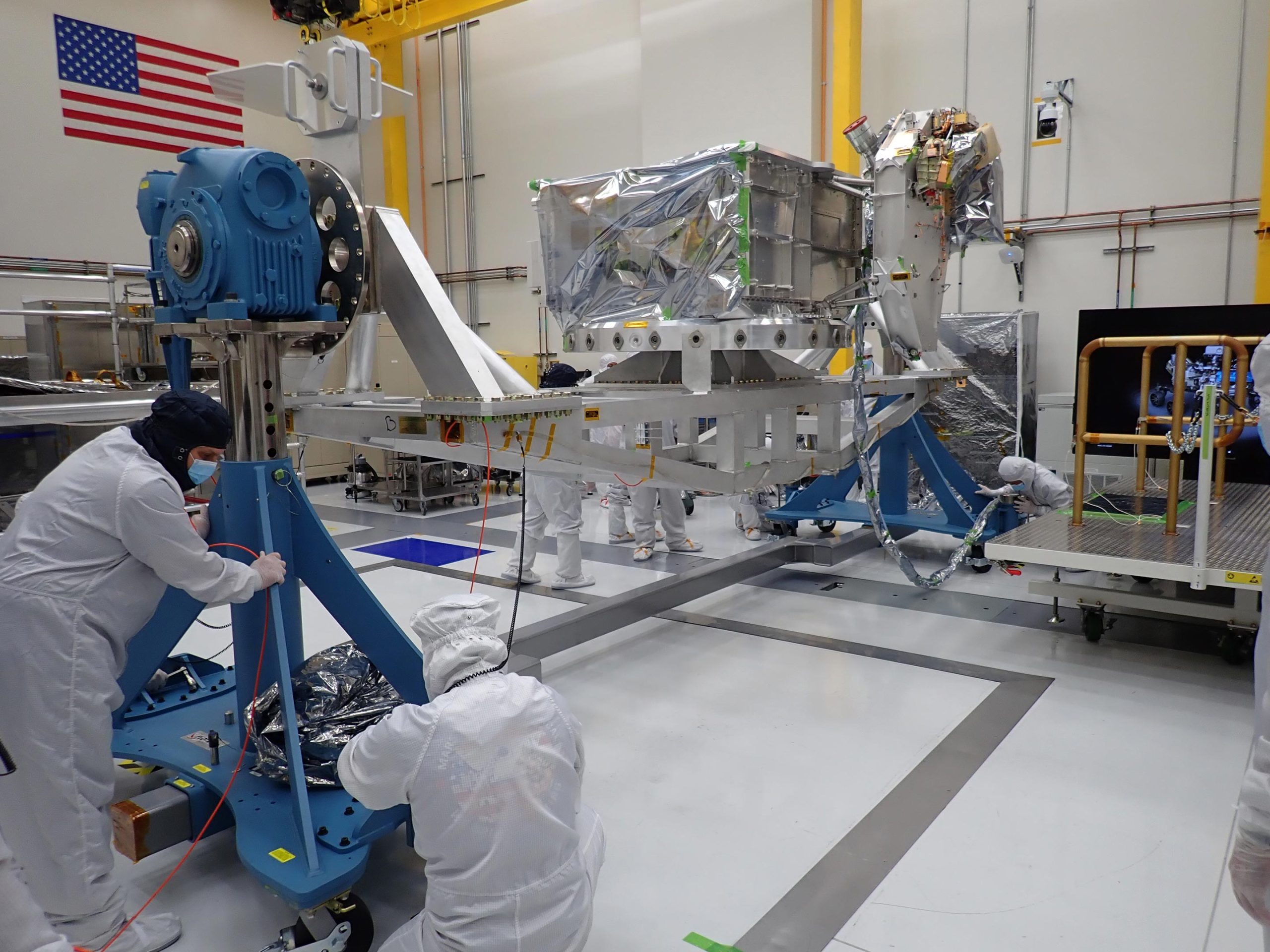
Bright copper cabling snakes around the orbiter’s aluminum core. It contains thousands of wires and connectors handcrafted at APL. If placed end to end, the cabling would stretch almost 2,100 feet (640 meters) – enough to wrap around a U.S. football field twice.
Inside the core are Europa Clipper’s two propulsion tanks. The fuel and oxidizer they’ll hold will flow to an array of 24 engines, where they will create a controlled chemical reaction to produce thrust in deep space.
This time-lapse video follows NASA’s Europa Clipper spacecraft during its carefully choreographed move into the High Bay 1 clean room the Spacecraft Assembly Facility at JPL. Credit: NASA/JPL-Caltech
By the end of 2022, most of the flight hardware and the remainder of the science instruments are expected to be complete. Then, the next steps will be a wide variety of tests as the spacecraft moves toward its 2024 launch period. After traveling for nearly six years and over 1.8 billion miles (2.9 billion kilometers), it will achieve orbit around Jupiter in 2030.
More About the Mission
Missions such as Europa Clipper contribute to the field of astrobiology. This interdisciplinary research field studies the conditions of distant worlds that could harbor life as we know it. While Europa Clipper is not a life-detection mission, it will conduct a detailed exploration of Europa and investigate whether the icy moon, with its subsurface ocean, has the capability of supporting life. Understanding Europa’s habitability will help enable researchers to better understand how life developed on Earth and the potential for finding life beyond our planet.
Managed by the California Institute of Technology (Caltech) in Pasadena, California, JPL leads the development of the Europa Clipper mission in partnership with APL for NASA’s Science Mission Directorate in Washington. APL designed the main spacecraft body in collaboration with JPL and NASA’s Goddard Space Flight Center in Greenbelt, Maryland. The Planetary Missions Program Office at NASA’s Marshall Space Flight Center in Huntsville, Alabama, executes program management of the Europa Clipper mission.
Never miss a breakthrough: Join the SciTechDaily newsletter.
Follow us on Google and Google News.