

During a close Mars flyby, NASA’s Europa Clipper spacecraft tested its radar system, REASON, for the first time in space.
The radar’s flawless performance thrilled scientists, as it successfully bounced signals off the Martian surface—proving it’s ready to scan Europa’s ice shell for signs of a hidden ocean. The 60GB of data gathered not only confirmed the hardware’s reliability but also gave researchers an early opportunity to fine-tune their analytical tools before Clipper reaches Jupiter’s icy moon in 2030.
Mars Flyby Radar Test Success
In March, as NASA’s Europa Clipper spacecraft flew past Mars, it carried out a crucial radar test that couldn’t be performed on Earth. After reviewing the complete set of data, mission scientists confirmed that the test was a success. The radar system operated exactly as planned, successfully transmitting and receiving signals from the area near Mars’ equator without any issues.
The radar, known as REASON (Radar for Europa Assessment and Sounding: Ocean to Near-surface), is designed to peer beneath the surface of Europa, Jupiter’s fourth-largest moon. Scientists hope it will detect pockets of water within the moon’s thick ice shell and possibly even identify the vast ocean believed to lie beneath it.

REASON: Probing Europa’s Icy Shell
“We got everything out of the flyby that we dreamed,” said Don Blankenship, principal investigator of the radar instrument at the University of Texas at Austin. “The goal was to determine the radar’s readiness for the Europa mission, and it worked. Every part of the instrument proved itself to do exactly what we intended.”
The radar data will help researchers investigate how material from Europa’s subsurface ocean might rise through the ice and reach the surface. It will also allow scientists to study surface features like ridges and examine how they connect with structures detected below the ice.
Limits of Earth-Based Testing
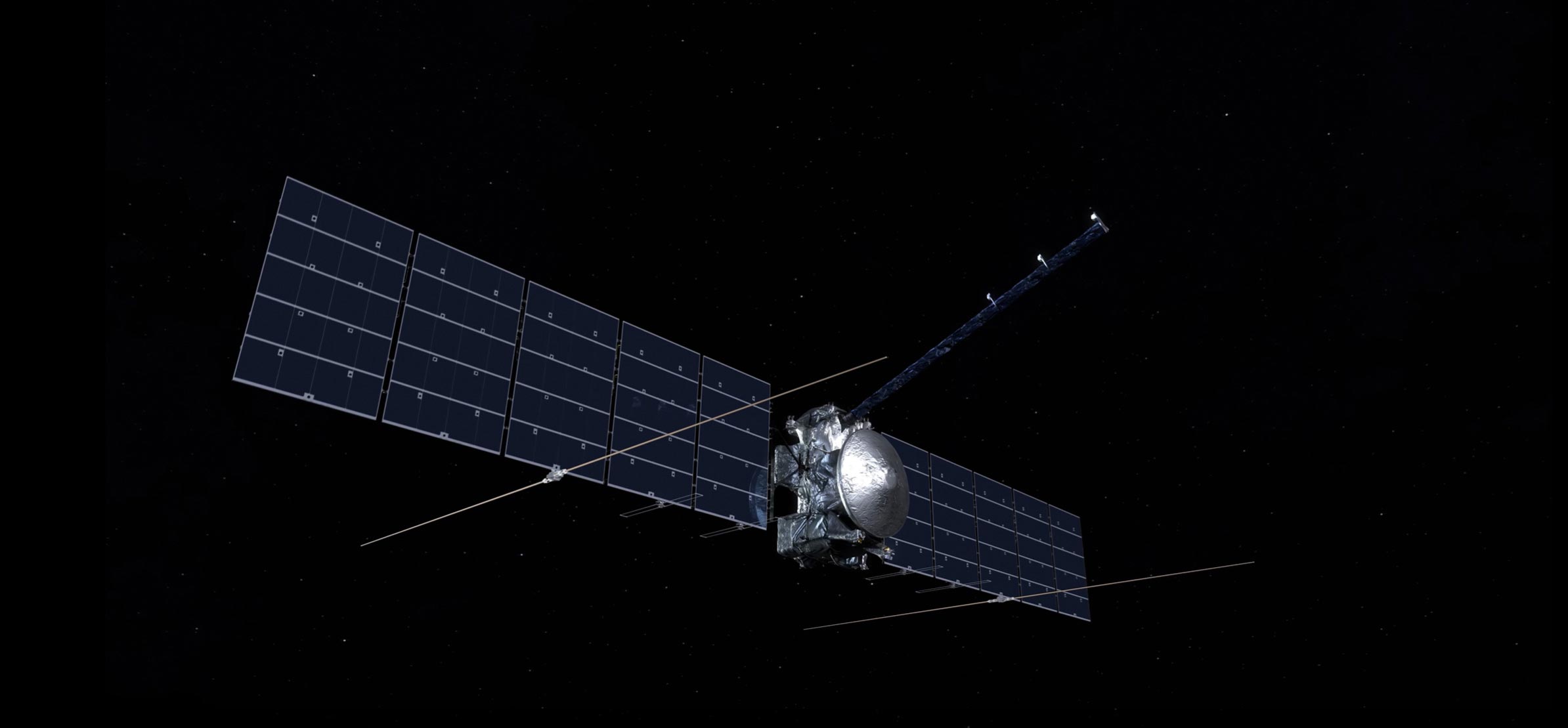
Europa Clipper has an unusual radar setup for an interplanetary spacecraft: REASON uses two pairs of slender antennas that jut out from the solar arrays, spanning a distance of about 58 feet (17.6 meters). Those arrays themselves are huge — from tip to tip, the size of a basketball court — so they can catch as much light as possible at Europa, which gets about 1/25th the sunlight as Earth.
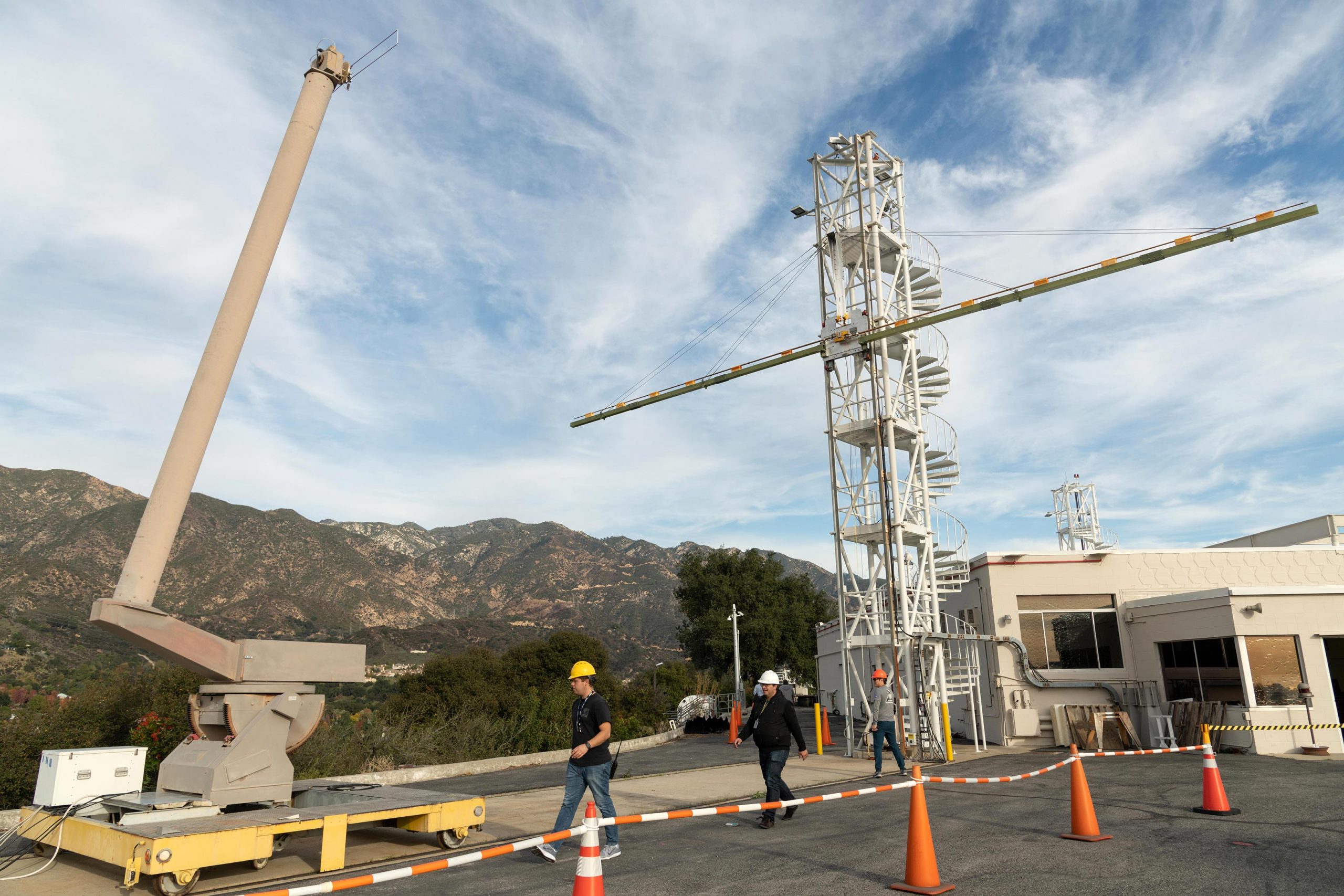
The instrument team conducted all the testing that was possible prior to the spacecraft’s launch from NASA’s Kennedy Space Center in Florida on October 14, 2024. During development, engineers at the agency’s Jet Propulsion Laboratory in Southern California even took the work outdoors, using open-air towers on a plateau above JPL to stretch out and test engineering models of the instrument’s spindly high-frequency and more compact very-high-frequency antennas. (See image below.)
But once the actual flight hardware was built, it needed to be kept sterile and could be tested only in an enclosed area. Engineers used the giant High Bay 1 clean room at JPL, where the spacecraft was assembled, to test the instrument piece by piece. To test the “echo,” or the bounceback of REASON’s signals, however, they’d have needed a chamber about 250 feet (76 meters) long — nearly three-quarters the length of a football field.
Mars Gravity Assist and Data Bonanza
The mission’s primary goal in flying by Mars on March 1, less than five months after launch, was to use the planet’s gravitational pull to reshape the spacecraft’s trajectory. But it also presented opportunities to https://scitechdaily.com/europa-clipper-just-tested-its-life-hunting-tech-on-mars-heres-what-it-found/calibrate the spacecraft’s infrared camera and perform a dry run of the radar instrument over terrain NASA scientists have been studying for decades.
As Europa Clipper zipped by the volcanic plains of the Red Planet — starting at 3,100 miles (5,000 kilometers) down to 550 miles (884 kilometers) above the surface — REASON sent and received radio waves for about 40 minutes. In comparison, at Europa the instrument will operate as close as 16 miles (25 kilometers) from the moon’s surface.
This animation shows a 360° view of NASA’s Europa Clipper spacecraft and points out scientific instruments. Credit: NASA/JPL-Caltech
REASON Delivers 60GB of Gold
All told, engineers were able to collect 60 gigabytes of rich data from the instrument. Almost immediately, they could tell REASON was working well. The flight team scheduled the full dataset to download, starting in mid-May. Scientists relished the opportunity over the next couple of months to examine the information in detail and compare notes.
“The engineers were excited that their test worked so perfectly,” said JPL’s Trina Ray, Europa Clipper deputy science manager. “All of us who had worked so hard to make this test happen — and the scientists seeing the data for the first time — were ecstatic, saying, ‘Oh, look at this! Oh, look at that!’ Now, the science team is getting a head start on learning how to process the data and understand the instrument’s behavior compared to models. They are exercising those muscles just like they will out at Europa.”
Europa Clipper’s total journey to reach the icy moon will be about 1.8 billion miles (2.9 billion kilometers) and includes one more gravity assist — using Earth — in 2026. The spacecraft is currently about 280 million miles (450 million kilometers) from Earth.
More About Europa Clipper
Europa Clipper is NASA’s ambitious mission to explore Jupiter’s icy moon Europa, one of the most promising places in our solar system to search for signs of life. Scheduled to arrive in the early 2030s, the spacecraft will conduct nearly 50 flybys of Europa, using a powerful suite of instruments to investigate the moon’s ice shell, subsurface ocean, composition, and surface geology.
The mission has three core science objectives:
- Measure the thickness of Europa’s ice shell and assess how it interacts with the ocean beneath.
- Analyze the moon’s composition, searching for organic materials, salts, and other key ingredients for life.
- Characterize surface features and geology, helping scientists understand the moon’s dynamic history.
By conducting a detailed survey of Europa, the mission will help determine the habitability of this ocean world and expand our understanding of potentially life-supporting environments beyond Earth.
Europa Clipper is led by NASA’s Jet Propulsion Laboratory (JPL) in Southern California and managed by Caltech for NASA. Key partners include the Johns Hopkins Applied Physics Laboratory (APL), which designed the spacecraft body, along with NASA’s Goddard, Marshall, and Langley Centers. The radar instrument, REASON (Radar for Europa Assessment and Sounding: Ocean to Near-surface), is led by the University of Texas at Austin, and the spacecraft was launched under the direction of NASA’s Launch Services Program at Kennedy Space Center.
Together, this nationwide collaboration is laying the groundwork for one of the most exciting planetary science missions of the decade.
Never miss a breakthrough: Join the SciTechDaily newsletter.
Follow us on Google and Google News.