

NASA’s Europa Clipper, the largest spacecraft ever built for an interplanetary mission, has launched from Kennedy Space Center on a mission to explore Europa, a moon of Jupiter.
Europa Clipper will travel 1.8 billion miles using gravity assists. After arrival at Jupiter in 2030, it will investigate Europa’s potentially habitable subsurface ocean. Equipped with sophisticated instruments, including ice-penetrating radar and thermal imaging, the spacecraft aims to uncover whether Europa could support life, impacting our understanding of habitability in our solar system and beyond.
Launch and Mission Overview
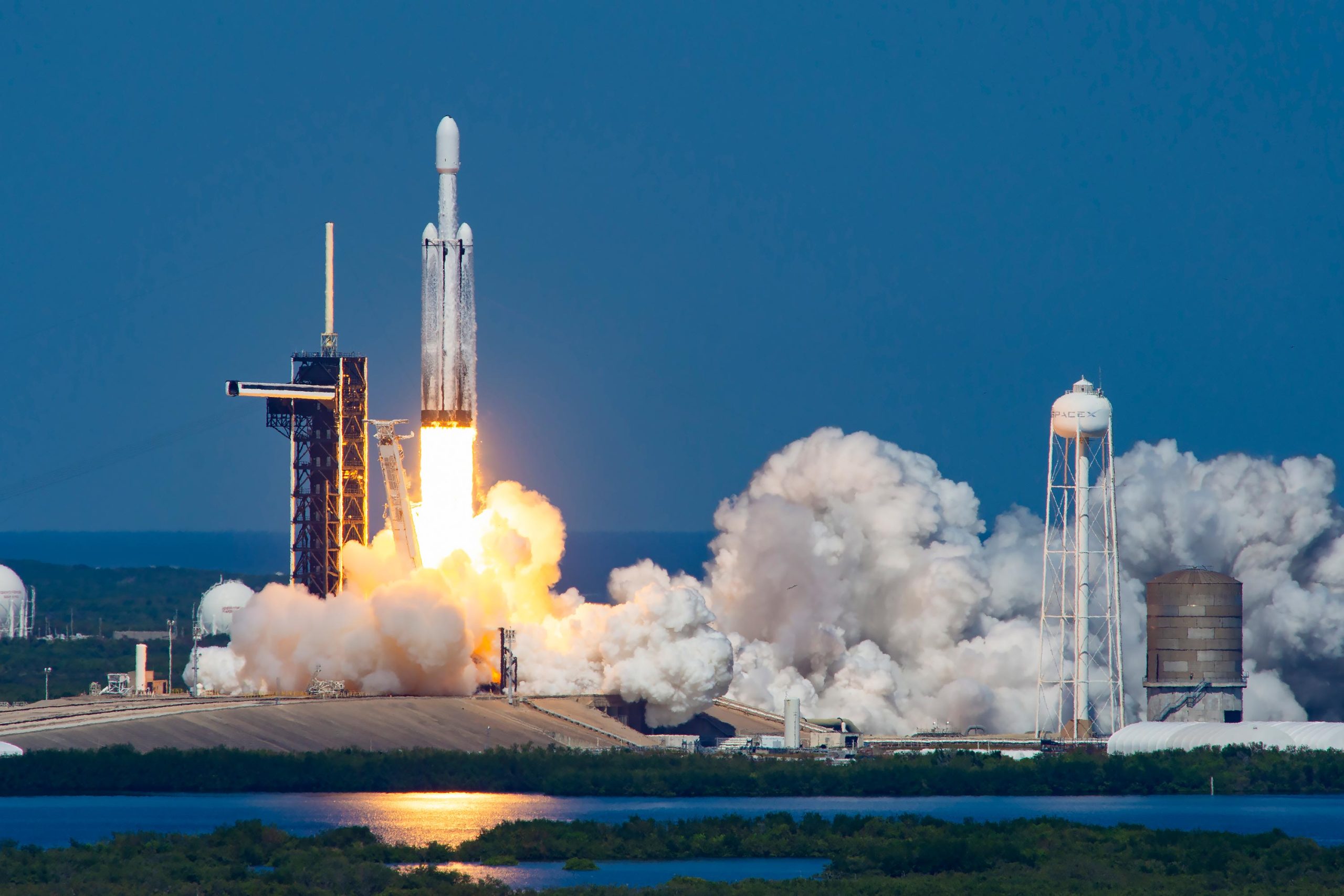
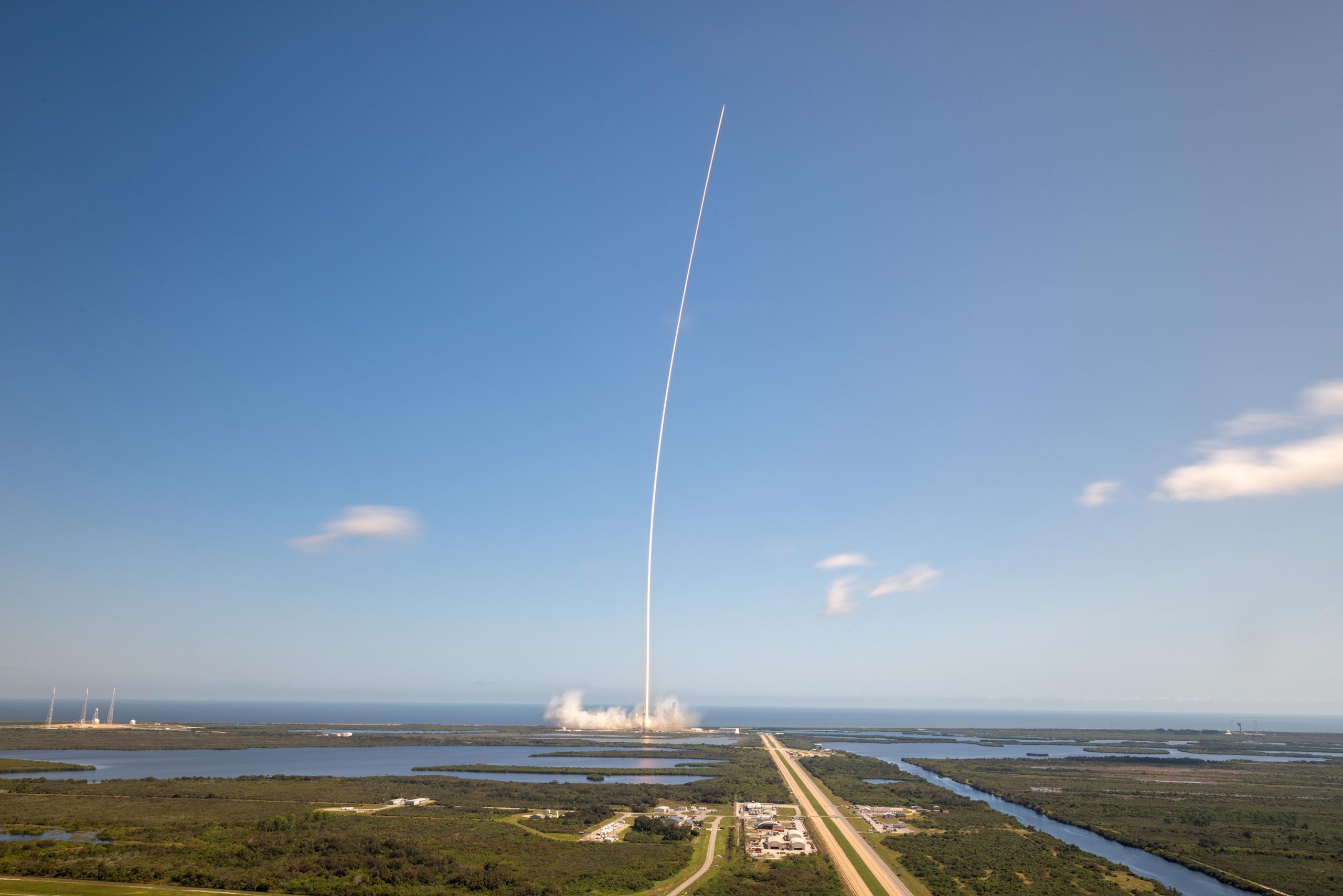
NASA’s Europa Clipper has embarked on its long voyage to Jupiter, where it will explore Europa, a moon with a vast subsurface ocean that could potentially support life. The spacecraft launched at 12:06 p.m. EDT on Monday, October 14 aboard a SpaceX Falcon Heavy rocket from Launch Pad 39A at NASA’s Kennedy Space Center in Florida.
The Europa Clipper is the largest spacecraft NASA has constructed for an interplanetary mission. It is also NASA’s first mission solely focused on investigating an ocean world beyond Earth. The spacecraft is slated to travel approximately 1.8 billion miles (2.9 billion kilometers), utilizing gravity assists to navigate space efficiently. It will first head toward Mars for a gravity assist in four months, then return toward Earth for another gravity assist flyby in 2026. Upon reaching Jupiter in April 2030, the Europa Clipper will undertake 49 close flybys of Europa to gather data and insights.
Liftoff! A SpaceX Falcon Heavy rocket carrying NASA’s Europa Clipper spacecraft launched from Launch Complex 39A at NASA’s Kennedy Space Center in Florida on Monday, October 14, 2024. Europa Clipper is on its way to Jupiter’s icy moon, Europa. Credit: NASA
Celebrations and Milestones
“Congratulations to our Europa Clipper team for beginning the first journey to an ocean world beyond Earth,” said NASA Administrator Bill Nelson. “NASA leads the world in exploration and discovery, and the Europa Clipper mission is no different. By exploring the unknown, Europa Clipper will help us better understand whether there is the potential for life not just within our solar system, but among the billions of moons and planets beyond our Sun.”
Approximately five minutes after liftoff, the rocket’s second stage fired up and the payload fairing, or the rocket’s nose cone, opened to reveal Europa Clipper. About an hour after launch, the spacecraft separated from the rocket. Ground controllers received a signal soon after, and two-way communication was established at 1:13 p.m. with NASA’s Deep Space Network facility in Canberra, Australia. Mission teams celebrated as initial telemetry reports showed Europa Clipper is in good health and operating as expected.

Scientific Goals and Equipment
“We could not be more excited for the incredible and unprecedented science NASA’s Europa Clipper mission will deliver in the generations to come,” said Nicky Fox, associate administrator, Science Mission Directorate at NASA Headquarters in Washington. “Everything in NASA science is interconnected, and Europa Clipper’s scientific discoveries will build upon the legacy that our other missions exploring Jupiter — including Juno, Galileo, and Voyager — created in our search for habitable worlds beyond our home planet.”
The main goal of the mission is to determine whether Europa has conditions that could support life. Europa is about the size of our own Moon, but its interior is different. Information from NASA’s Galileo mission in the 1990s showed strong evidence that under Europa’s ice lies an enormous, salty ocean with more water than all of Earth’s oceans combined. Scientists also have found evidence that Europa may host organic compounds and energy sources under its surface.
If the mission determines Europa is habitable, it may mean there are more habitable worlds in our solar system and beyond than imagined.
Future Prospects and Legacy
“We’re ecstatic to send Europa Clipper on its way to explore a potentially habitable ocean world, thanks to our colleagues and partners who’ve worked so hard to get us to this day,” said Laurie Leshin, director, NASA’s Jet Propulsion Laboratory in Southern California. “Europa Clipper will undoubtedly deliver mind-blowing science. While always bittersweet to send something we’ve labored over for years off on its long journey, we know this remarkable team and spacecraft will expand our knowledge of our solar system and inspire future exploration.”
In 2031, the spacecraft will begin conducting its science-dedicated flybys of Europa. Coming as close as 16 miles (25 kilometers) to the surface, Europa Clipper is equipped with nine science instruments and a gravity experiment, including an ice-penetrating radar, cameras, and a thermal instrument to look for areas of warmer ice and any recent eruptions of water. As the most sophisticated suite of science instruments NASA has ever sent to Jupiter, they will work in concert to learn more about the moon’s icy shell, thin atmosphere, and deep interior.

To power those instruments in the faint sunlight that reaches Jupiter, Europa Clipper also carries the largest solar arrays NASA has ever used for an interplanetary mission. With arrays extended, the spacecraft spans 100 feet (30.5 meters) from end to end. With propellant loaded, it weighs about 13,000 pounds (5,900 kilograms).
In all, more than 4,000 people have contributed to Europa Clipper mission since it was formally approved in 2015.
“As Europa Clipper embarks on its journey, I’ll be thinking about the countless hours of dedication, innovation, and teamwork that made this moment possible,” said Jordan Evans, project manager, NASA JPL. “This launch isn’t just the next chapter in our exploration of the solar system; it’s a leap toward uncovering the mysteries of another ocean world, driven by our shared curiosity and continued search to answer the question, ‘are we alone?’”
More About Europa Clipper
The Europa Clipper mission has three primary scientific goals: to measure the thickness of Europa’s icy shell and understand its interaction with the underlying ocean, to analyze the moon’s composition, and to study its geological features. This in-depth exploration will help scientists assess the moon’s potential to support life, furthering our knowledge of habitable environments beyond Earth.
The mission is managed by NASA’s Jet Propulsion Laboratory (JPL) in Pasadena, California, which is operated by Caltech. It was developed in collaboration with the Johns Hopkins Applied Physics Laboratory (APL) in Laurel, Maryland, under the guidance of NASA’s Science Mission Directorate in Washington. The spacecraft’s main body was designed jointly by APL, JPL, NASA’s Goddard Space Flight Center in Greenbelt, Maryland, NASA’s Marshall Space Flight Center in Huntsville, Alabama, and NASA’s Langley Research Center in Hampton, Virginia. The Planetary Missions Program Office at Marshall is responsible for the program management of the mission.
The launch of the Europa Clipper was overseen by NASA’s Launch Services Program based at Kennedy Space Center.
Never miss a breakthrough: Join the SciTechDaily newsletter.
Follow us on Google and Google News.