
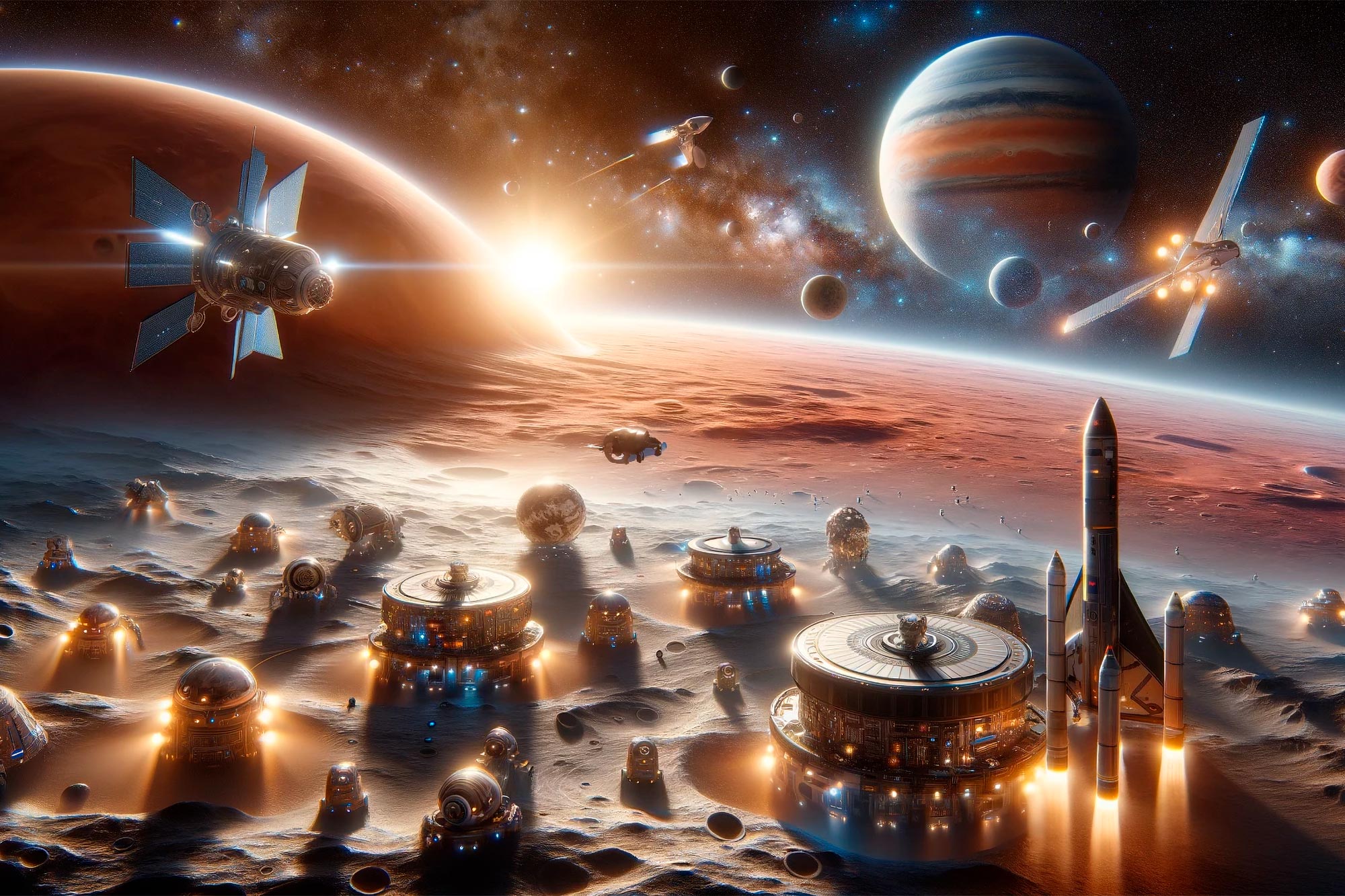
NASA’s NIAC program has selected 13 concepts for its 2024 Phase I awards, funding innovative ideas such as Mars flight and Venus sample return. These selections highlight NASA’s dedication to advancing space technology and exploration.
NASA selected the 2024 Phase I awardees for its program to fund ideas that could innovate for the benefit of all and transform future agency missions. From proposals to explore low Earth orbit to the stars, the 13 concepts chosen stem from companies and institutions across the United States.
The NIAC (NASA Innovative Advanced Concepts) program fosters pioneering ideas by funding early-stage technology concept studies for future consideration and potential commercialization. The combined award is a maximum of $175,000 in grants to evaluate technologies that could enable tomorrow’s space missions.
“The daring missions NASA undertakes for the benefit of humanity all begin as just an idea, and NIAC is responsible for inspiring many of those ideas,” said NASA Associate Administrator Jim Free. “The Ingenuity helicopter flying on Mars and instruments on the MarCO deep space CubeSats can trace their lineage back to NIAC, proving there is a path from creative idea to mission success. And, while not all these concepts will fly, NASA and our partners worldwide can learn from fresh approaches and may eventually use technologies advanced by NIAC.”
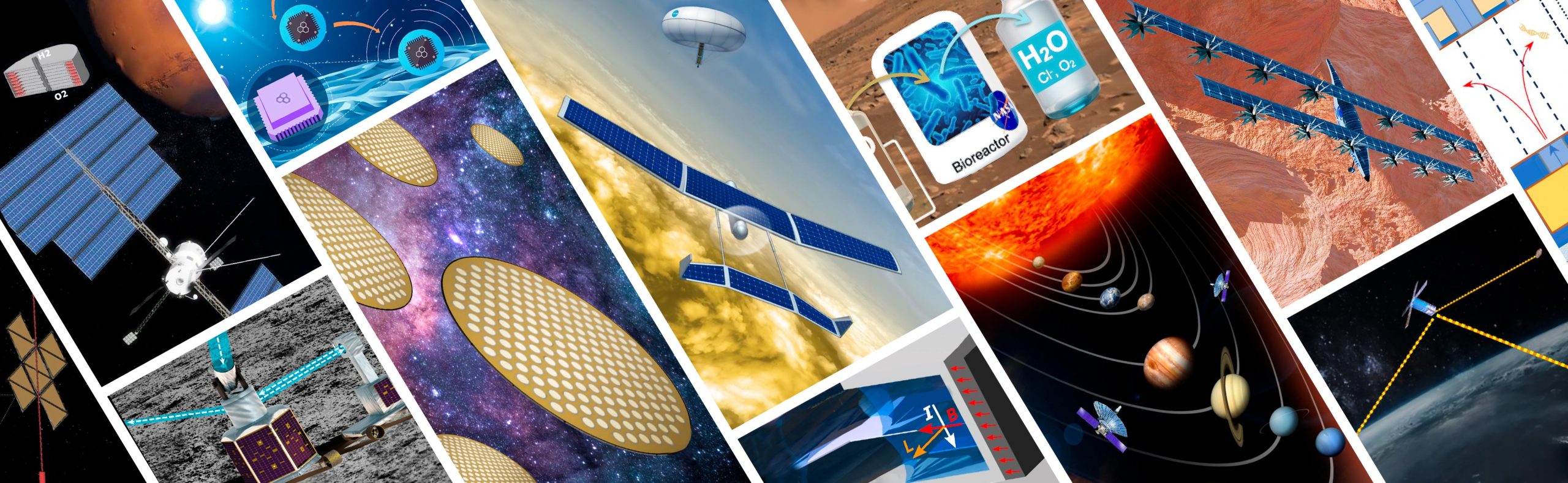
This year’s class will explore sample return from the surface of Venus, fixed-wing flight on Mars, a swarm of probes traveling across interstellar space, and more. All NIAC studies are in the early stages of conceptual development and are not considered official NASA missions.
Ge-Cheng Zha, Coflow Jet LLC in Florida, proposed flying the first fixed-wing, electric vertical takeoff, and landing craft on Mars. The vehicle nicknamed “MAGGIE,” could extend humanity’s ability to explore and conduct science on the Red Planet.
Thomas Eubanks, Space Initiatives Inc. in Florida, believes a swarm of tiny spacecraft could travel to Proxima Centauri this century, sending back data about the Sun’s nearest interstellar neighbor using a novel laser sailcraft and laser communications.
Geoff Landis, NASA’s Glenn Research Center in Cleveland, proposed a spacecraft that can not only survive Venus’ harsh environment but return a sample from the surface using innovations in high-temperature technology and solar aircraft.
“The diversity of this year’s Phase I projects – from quantum sensors observing Earth’s atmosphere to a coordinated swarm of spacecraft communicating from the next star – is a testament to the truly innovative community reached by NIAC,” said Mike LaPointe, NIAC program executive at NASA Headquarters in Washington. “The NIAC awards highlight NASA’s commitment to continue pushing the boundaries of what’s possible.”
Using their NIAC grants, the researchers, known as fellows, will investigate the fundamental premise of their concepts, roadmap necessary technology development, identify potential challenges, and look for opportunities to bring these concepts to life.
In addition to the projects mentioned above, the other selectees to receive 2024 NIAC Phase I grants are:
- Steven Benner, Foundation for Applied Molecular Evolution, Florida: Add-on to Large-scale Water Mining Operations on Mars to Screen for Introduced and Alien Life
- James Bickford, Charles Stark Draper Laboratory, Massachusetts: Thin Film Isotope Nuclear Engine Rocket
- Peter Cabauy, City Labs, Inc., Florida: Autonomous Tritium Micropowered Sensors
- Kenneth Carpenter, NASA’s Goddard Space Flight Center, Greenbelt, Maryland: A Lunar Long-Baseline Optical Imaging Interferometer: Artemis-enabled Stellar Image
- Matthew McQuinn, University of Washington, Seattle: Solar System-Scale VLBI to Dramatically Improve Cosmological Distance Measurements
- Aaswath Pattabhi Raman, University of California, Los Angeles: Electro-Luminescently Cooled Zero-Boil-Off Propellant Depots Enabling Crewed Exploration of Mars
- Alvaro Romeo-Calvo, Georgia Tech Research Corporation, Atlanta: Magnetohydrodynamic Drive for Hydrogen and Oxygen Production in Mars Transfer
- Lynn Rothschild, NASA’s Ames Research Center, California’s Silicon Valley: Detoxifying Mars: The Biocatalytic Elimination of Omnipresent Perchlorates
- Ryan Sprenger, Fauna Bio Inc., California: A revolutionary approach to interplanetary space travel: Studying Torpor in Animals for Space-health in Humans
- Beijia Zhang, MIT’s Lincoln Lab, Massachusetts: LIFA: Lightweight Fiber-based Antenna for Small Sat-Compatible Radiometry
NASA’s Space Technology Mission Directorate funds the NIAC program, as it is responsible for developing the agency’s new cross-cutting technologies and capabilities to achieve its current and future missions.
Never miss a breakthrough: Join the SciTechDaily newsletter.
Follow us on Google and Google News.