
Close Menu
    Facebook X (Twitter) Instagram
    SciTechDaily
    • Biology
    • Chemistry
    • Earth
    • Health
    • Physics
    • Science
    • Space
    • Technology
    Facebook X (Twitter) Pinterest YouTube RSS
    SciTechDaily
    Home»Space»NASA’s Artemis Rocket Core Stage Journeys to Florida
    Space

    NASA’s Artemis Rocket Core Stage Journeys to Florida

    By NASAJuly 25, 2024No Comments4 Mins Read
    Facebook Twitter Pinterest Telegram LinkedIn WhatsApp Email Reddit
    Share
    Facebook Twitter LinkedIn Pinterest Telegram Email Reddit
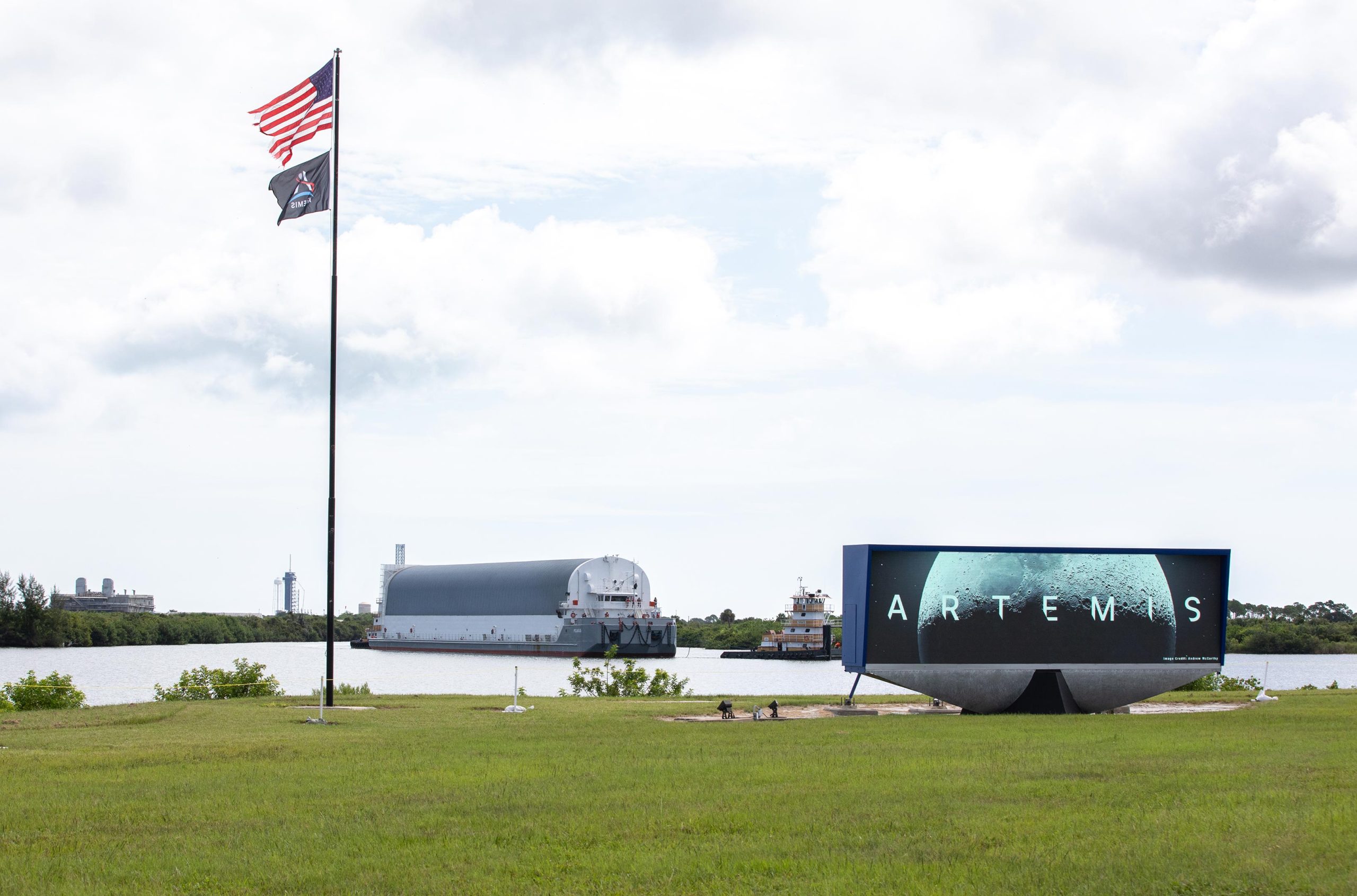
    NASA’s Pegasus Barge Carrying Space Launch System Core Stage
    NASA’s Pegasus barge, carrying the agency’s massive SLS (Space Launch System) core stage, arrives at NASA’s Kennedy Space Center Complex 39 turn basin wharf in Florida on Tuesday, July 23, 2024, after journeying from the agency’s Michoud Assembly Facility in New Orleans. The core stage is the next piece of Artemis hardware to arrive at the spaceport and will be offloaded and moved to NASA Kennedy’s Vehicle Assembly Building, where it will be prepared for integration ahead of the Artemis II launch. Credit: NASA/Kim Shiflett

    ASA’s Space Launch System (SLS) rocket core stage for the Artemis II mission arrived at Kennedy Space Center, having been transported from Michoud Assembly Facility in New Orleans.

    This crucial component, integral for the first crewed flight around the Moon with the Orion spacecraft, spent seven days in transit through the Gulf of Mexico and the Atlantic Ocean.

    NASA’s powerful SLS (Space Launch System) rocket core stage for the Artemis II mission arrived on Tuesday, July 23, at the agency’s Kennedy Space Center in Florida. The core stage will help power SLS when it launches four astronauts around the Moon for the first crewed flight of SLS and the Orion spacecraft during the Artemis II test flight.

    The core stage, aboard NASA’s Pegasus barge, traveled from the agency’s Michoud Assembly Facility in New Orleans and spent seven days coasting through the Gulf of Mexico and then the Atlantic Ocean before arriving at NASA Kennedy’s Complex 39 turn basin wharf.
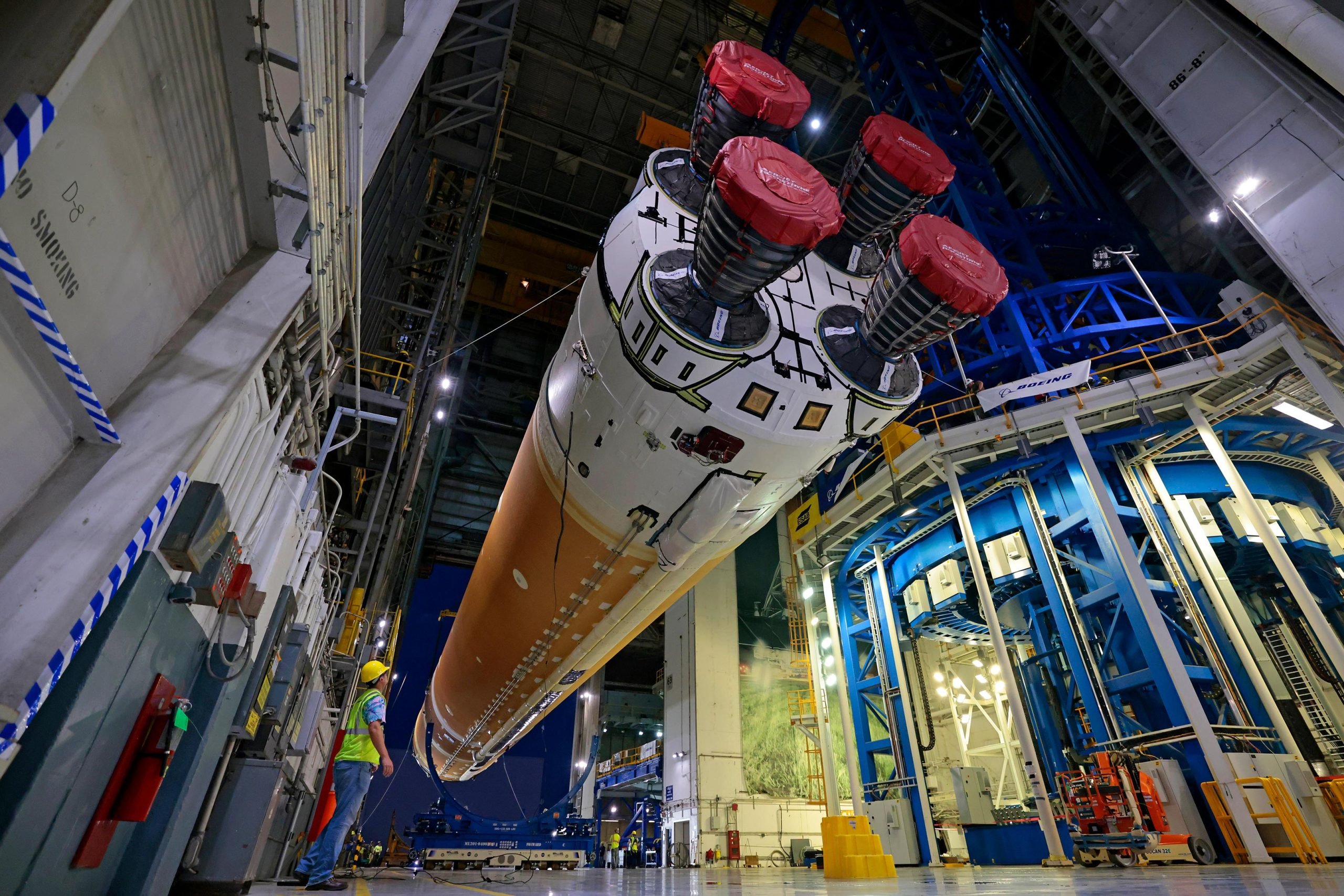
    NASA’s Space Launch System Core Stage Prepares for Move to Pegasus Barge
    Technicians at Michoud Assembly Facility in New Orleans lift the core stage that will help launch the first crewed flight of NASA’s SLS (Space Launch System) rocket for the agency’s Artemis II mission. Teams at Michoud lifted the core stage on Thursday, July 11, 2024, onto NASA’s Multi-Purpose Transportation System, designed to transport SLS vehicle segments by waterway and roadway. It is tasked with transporting the vehicle from where it is manufactured to its intermediate test location and final launch destination. The core stage was lifted in preparation for its move onto the agency’s Pegasus barge, where it will be ferried to NASA’s Kennedy Space Center in Florida. Credit: NASA/Michael DeMocker

    The 212-foot-tall SLS core stage, its propellant tanks, avionics, flight computer systems, and four RS-25 engines, were manufactured and assembled at NASA Michoud. Now, teams with NASA Kennedy’s Exploration Ground Systems Program will prepare the rocket stage for integration ahead of launch.

    The only rocket that can send the Orion spacecraft, astronauts, and supplies to the Moon on a single launch is the Space Launch System. Its core stage provides more than two million pounds of thrust and the whole rocket provides 8.8 million pounds of thrust to launch Artemis II to the Moon.

    Up next, the core stage will roll to NASA Kennedy’s Vehicle Assembly Building, where teams will process it until it is ready for rocket stacking operations.
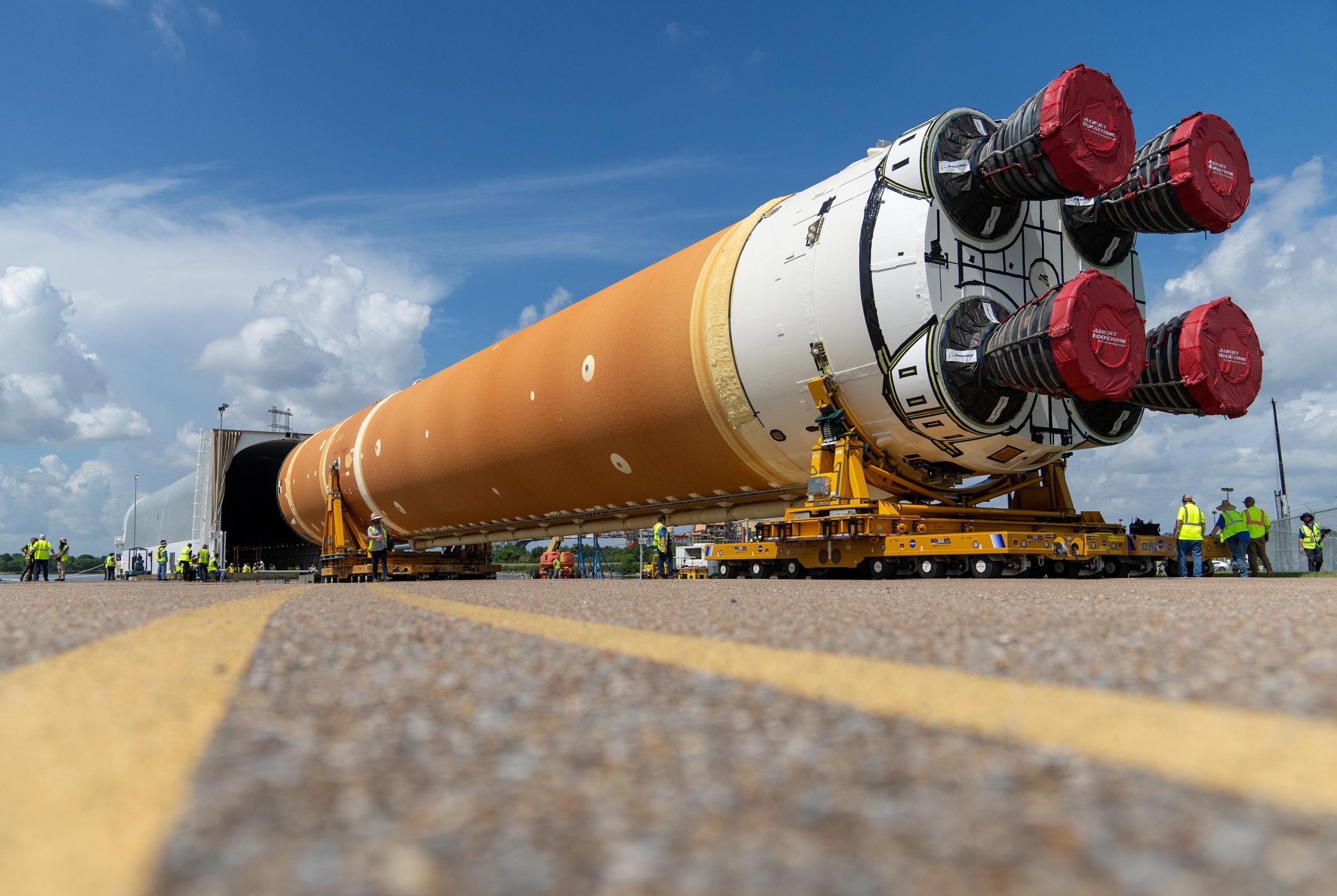
    Moving SLS Core Stage Pegasus Barge
    Move teams with NASA and Boeing, the SLS core stage lead contractor, position the massive rocket stage for NASA’s SLS (Space Launch System) rocket on special transporters to strategically guide the flight hardware the 1.3-mile distance from the factory floor onto the agency’s Pegasus barge on July 16. The core stage will be ferried to NASA’s Kennedy Space Center in Florida, where it will be integrated with other parts of the rocket that will power NASA’s Artemis II mission. Credit: NASA

    NASA’s Space Launch System (SLS) represents a critical component in the United States’ contemporary space exploration framework, designed as the most powerful rocket ever built. This colossal launch vehicle is engineered to enable astronauts and large payloads to undertake deep space missions, including trips to the Moon and potentially Mars. The SLS is a key part of NASA’s Artemis program, which aims to return humans to the lunar surface and establish a sustainable presence there. Its development leverages technology and infrastructure from the Space Shuttle and other exploration programs, thus embodying a blend of proven engineering and cutting-edge advancements.

    The SLS rocket comprises several parts, including a core stage that houses the rocket’s main engines and fuel tanks, solid rocket boosters for additional thrust, and an upper stage that varies depending on the mission’s specific requirements. The core stage of the SLS is equipped with four RS-25 engines, remnants of the Space Shuttle program, which together generate incredible power to lift heavy payloads into space. Capable of producing up to 8.8 million pounds of thrust, the SLS can carry more than 27 metric tons to orbits beyond the Moon, making it a cornerstone in NASA’s strategy for deep space exploration and science missions.

    Never miss a breakthrough: Join the SciTechDaily newsletter.
    Follow us on Google and Google News.

    ARTEMIS Mission NASA Rocket Space Launch System
    Share. Facebook Twitter Pinterest LinkedIn Email Reddit

    Related Articles

    NASA’s Artemis II Is on the Launch Pad and the Moon Is Next

    NASA Fires Up RS-25 at 111% Power for Artemis Moon Launches

    NASA Artemis I Space Launch System (SLS) Rocket and Orion Spacecraft Integrated Testing Update

    NASA Awards Artemis Contract for Future SLS Mega Moon Rocket Boosters

    NASA to Roll Out Artemis Mega Moon Rocket for First Time

    NASA’s Powerful SLS Rocket Fully Stacked for Artemis I Moon Mission – Liftoff for Deep Space in February 2022

    One Step Closer: Orion Spacecraft Stacked on Top SLS Rocket for NASA’s Artemis I Mission

    Final Piece of Rocket Hardware Added to Artemis I Stack

    NASA Readies for Future Artemis Moon Missions With SLS Rocket Engine Test Series

    Leave A Reply Cancel Reply

    • Facebook
    • Twitter
    • Pinterest
    • YouTube

    Don't Miss a Discovery

    Subscribe for the Latest in Science & Tech!

    Trending News

    Why Popular Diabetes Drugs Like Ozempic Don’t Work for Everyone: The “Genetic Glitch”

    Scientists Stunned After Finding Plant Thought Extinct for 60 Years

    Scientists Discover Tiny New Spider That Hunts Prey 6x Its Size

    Natural Component From Licorice Shows Promise for Treating Inflammatory Bowel Disease

    Scientists Warn: Popular Sweetener Linked to Dangerous Metabolic Effects

    Monster Storms on Jupiter Unleash Lightning Beyond Anything on Earth

    Scientists Create “Liquid Gears” That Spin Without Touching

    The Simple Habit That Could Help Prevent Cancer

    Follow SciTechDaily
    • Facebook
    • Twitter
    • YouTube
    • Pinterest
    • Newsletter
    • RSS
    SciTech News
    • Biology News
    • Chemistry News
    • Earth News
    • Health News
    • Physics News
    • Science News
    • Space News
    • Technology News
    Recent Posts
    • 100,000-Year-Old Neanderthal Fossils in Poland Reveal Unexpected Genetic Connections
    • Unexpected Hormone Discovery Could Change How We Treat Arthritis
    • Scientists Supercharge “Natural Killer” Cells To Break Through Cancer’s Defenses
    • Simple “Gut Reset” May Prevent Weight Gain After Ozempic or Wegovy
    • 2.8 Days to Disaster: Scientists Warn Low Earth Orbit Could Suddenly Collapse
    Copyright © 1998 - 2026 SciTechDaily. All Rights Reserved.
    • Science News
    • About
    • Contact
    • Editorial Board
    • Privacy Policy
    • Terms of Use

    Type above and press Enter to search. Press Esc to cancel.