
Close Menu
    Facebook X (Twitter) Instagram
    SciTechDaily
    • Biology
    • Chemistry
    • Earth
    • Health
    • Physics
    • Science
    • Space
    • Technology
    Facebook X (Twitter) Pinterest YouTube RSS
    SciTechDaily
    Home»Space»NASA’s HiRISE Captures a Bear’s Face on Mars – What Is It Really?
    Space

    NASA’s HiRISE Captures a Bear’s Face on Mars – What Is It Really?

    By University of ArizonaFebruary 3, 2023No Comments2 Mins Read
    Facebook Twitter Pinterest Telegram LinkedIn WhatsApp Email Reddit
    Share
    Facebook Twitter LinkedIn Pinterest Telegram Email Reddit
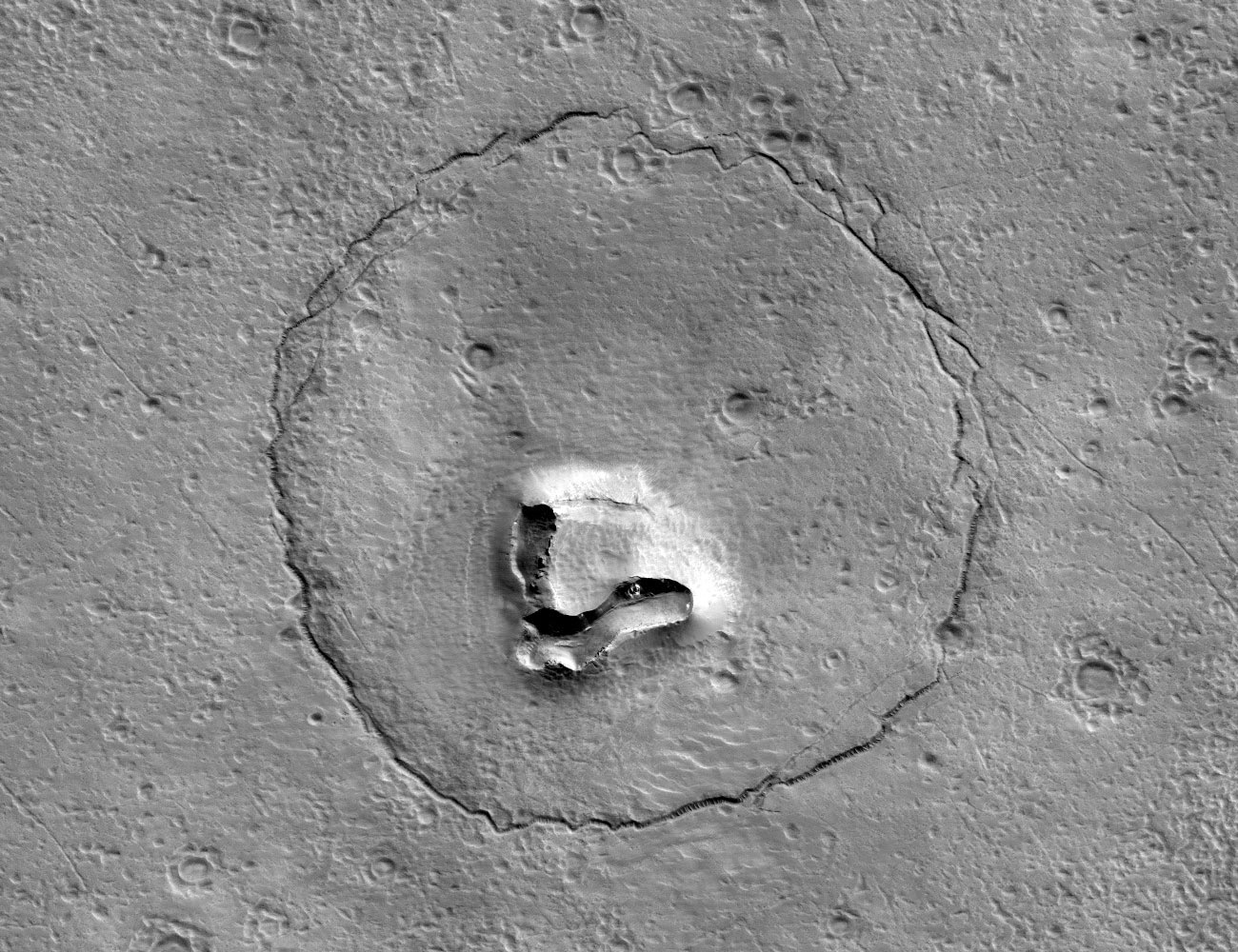
    Bear Face on Mars
    This feature on the surface of Mars, captured, by the HIRISE camera aboard the Mars Reconnaissance Orbiter, resembles a bear’s face. Credit: NASA/JPL/University of Arizona

    This feature on the surface of Mars looks a bit like a bear’s face. What is it really?

    There’s a hill with a V-shaped collapse structure (the nose), two craters (the eyes), and a circular fracture pattern (the head). The circular fracture pattern might be due to the settling of a deposit over a buried impact crater. Maybe the nose is a volcanic or mud vent and the deposit could be lava or mud flows?

    Maybe just grin and bear it.

    The image was captured by the High Resolution Imaging Experiment (HIRISE), a big and powerful camera aboard NASA’s Mars Reconnaissance Orbiter (MRO).
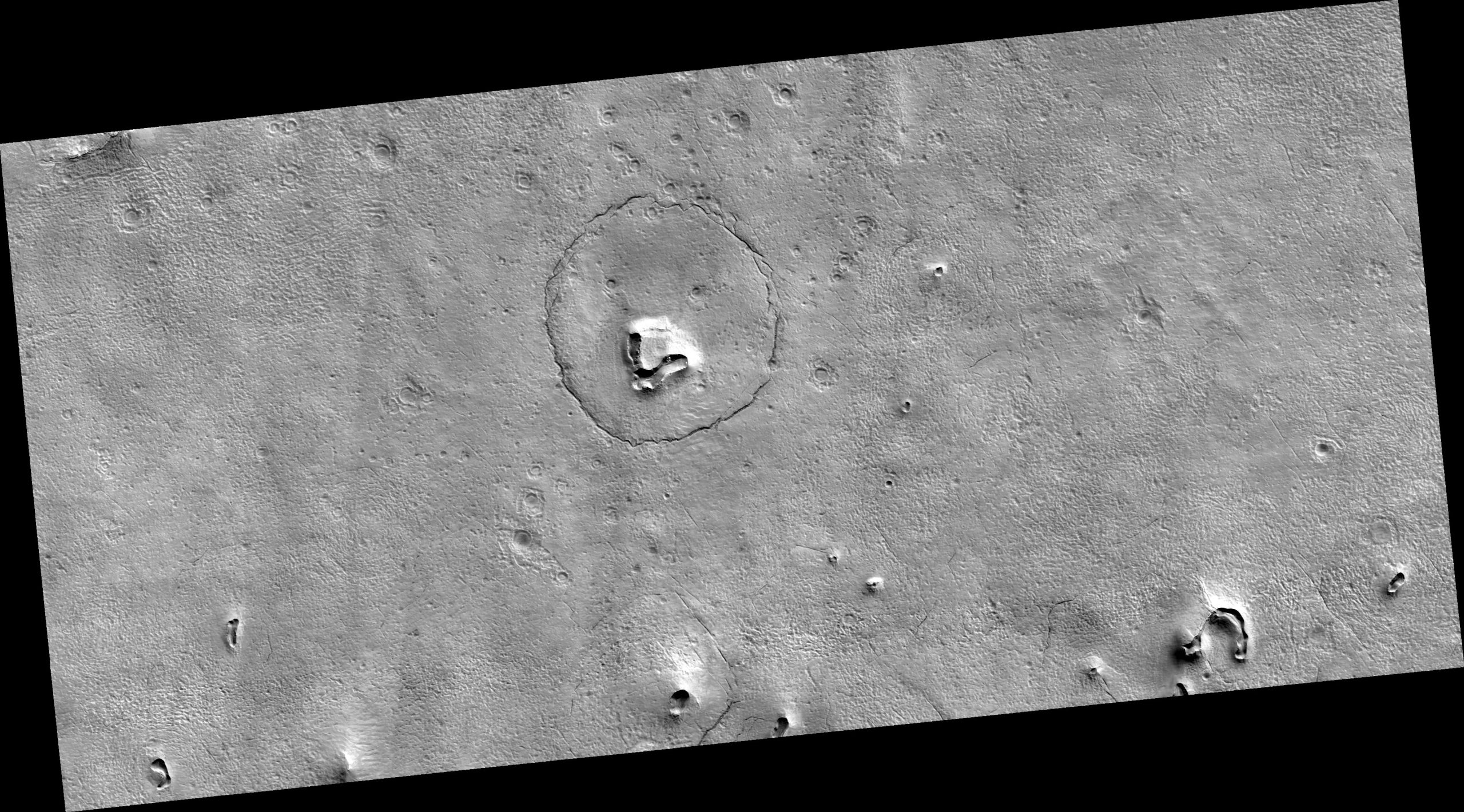
    HiRISE Bear on Mars
    The “bear’s face” is a portion of a larger image captured by the HiRISE camera aboard the Mars Reconnaissance Orbiter spacecraft. Credit: NASA/JPL/University of Arizona

    HiRISE has photographed hundreds of targeted swaths of Mars’ surface in unprecedented detail. Its camera operates in visible wavelengths, the same as human eyes, but with a telescopic lens that produces images at resolutions that are unprecedented in planetary exploration missions. With these high-resolution images, scientists are able to distinguish 1-meter-size (about 3-foot-size) objects on Mars and to study the morphology (surface structure) in a much more comprehensive manner than ever before.
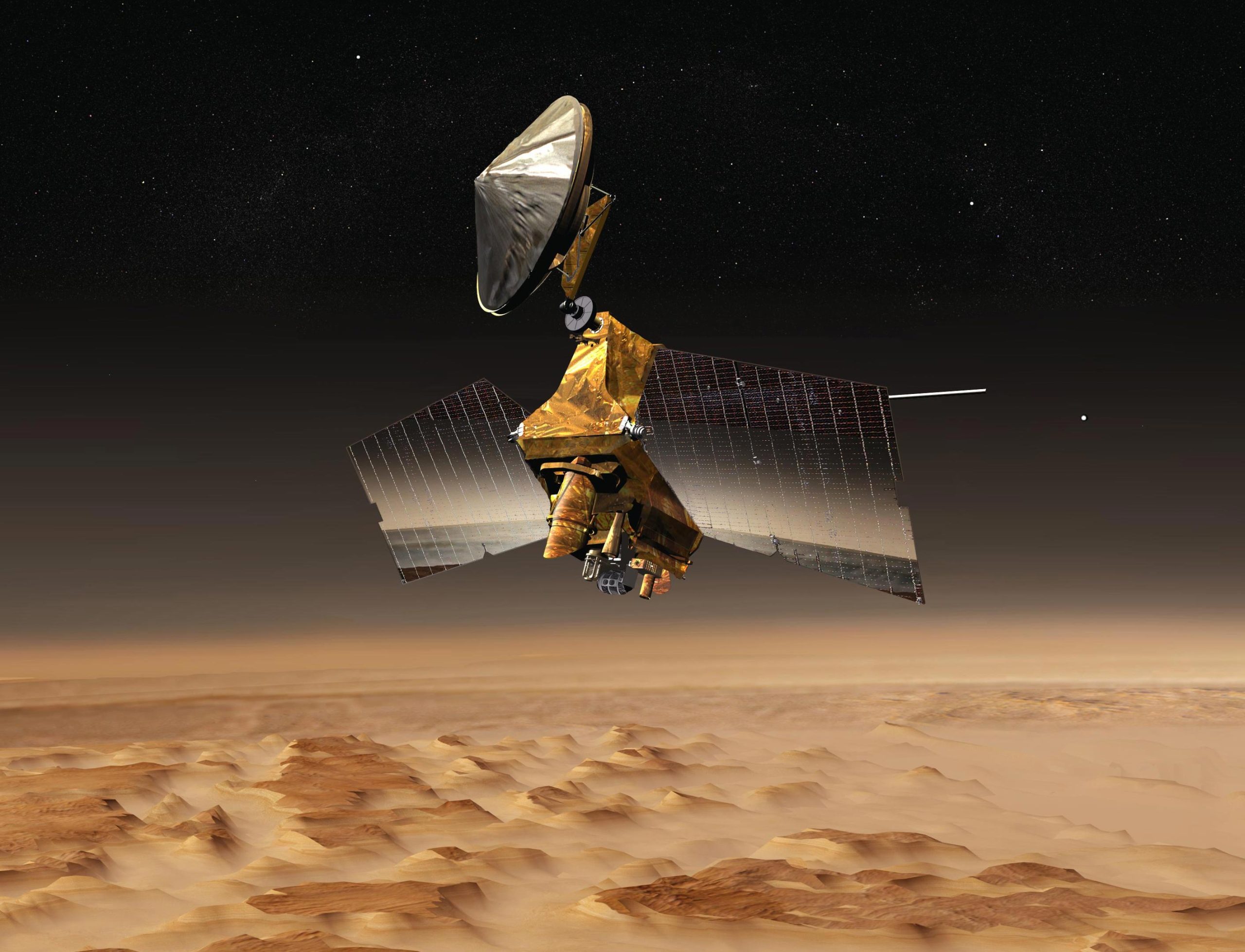
    Mars Reconnaissance Orbiter Over Nilosyrtis
    NASA Mars Reconnaissance Orbiter passes above a portion of the planet called Nilosyrtis Mensae in this artist’s concept illustration. Credit: JPL/NASA

    Mars Reconnaissance Orbiter is a spacecraft sent by NASA to Mars to study the planet’s surface and atmosphere. It was launched in 2005 and has been in orbit around Mars since 2006. MRO has provided high-resolution images of the Martian surface and has made numerous important discoveries about the planet, including finding evidence of liquid water.

    Never miss a breakthrough: Join the SciTechDaily newsletter.
    Follow us on Google and Google News.

    JPL Mars Mars Reconnaissance Orbiter NASA Popular University of Arizona
    Share. Facebook Twitter Pinterest LinkedIn Email Reddit

    Related Articles

    NASA Flips a Mars Orbiter Upside Down – And Discovers a Hidden World

    What Left This Long, Winding Trail Across Mars? NASA’s Orbiter Has the Answer

    Sun’s Curtain Call: Mars Missions Go Rogue During Solar Conjunction

    Welcome to Mars! Caltech’s Jaw-Dropping, 5.7 Terapixel Virtual Expedition Across the Red Planet

    Strange Circular Sand Dunes Discovered on Mars by NASA Spacecraft

    NASA Mars Reconnaissance Orbiter Releasing Spectacular 5.6-Gigapixel Map of the Red Planet

    Help NASA Solve a Fundamental Martian Mystery

    There’s Buried Treasure on Mars – Here’s NASA’s Treasure Map

    NASA’s Mars Reconnaissance Orbiter Confirms Evidence That Liquid Water Flows on Mars

    Leave A Reply Cancel Reply

    • Facebook
    • Twitter
    • Pinterest
    • YouTube

    Don't Miss a Discovery

    Subscribe for the Latest in Science & Tech!

    Trending News

    The Universe Is Expanding Too Fast and Scientists Can’t Explain Why

    “Like Liquid Metal”: Scientists Create Strange Shape-Shifting Material

    Early Warning Signals of Esophageal Cancer May Be Hiding in Plain Sight

    Common Blood Pressure Drug Shows Surprising Power Against Deadly Antibiotic-Resistant Superbug

    Scientists Uncover Dangerous Connection Between Serotonin and Heart Valve Disease

    Scientists Discover a “Protector” Protein That Could Help Reverse Hair Loss

    Bone-Strengthening Discovery Could Reverse Osteoporosis

    Scientists Uncover Hidden Trigger Behind Stem Cell Aging

    Follow SciTechDaily
    • Facebook
    • Twitter
    • YouTube
    • Pinterest
    • Newsletter
    • RSS
    SciTech News
    • Biology News
    • Chemistry News
    • Earth News
    • Health News
    • Physics News
    • Science News
    • Space News
    • Technology News
    Recent Posts
    • Scientists Overcome Major Quantum Bottleneck, Potentially Transforming Teleportation and Computing
    • Quantum Physics’ Strangest Problem May Hold the Key to Time Itself
    • Scientists Create “Liquid Gears” That Spin Without Touching
    • The Simple Habit That Could Help Prevent Cancer
    • Forgotten Medicinal Plant Shows Promise in Fighting Dangerous Superbugs
    Copyright © 1998 - 2026 SciTechDaily. All Rights Reserved.
    • Science News
    • About
    • Contact
    • Editorial Board
    • Privacy Policy
    • Terms of Use

    Type above and press Enter to search. Press Esc to cancel.