
NASA’s LRO overcame a critical sensor failure through the innovative FastMan algorithm, enabling the spacecraft to continue capturing valuable lunar data and supporting future Artemis missions.
NASA’s Lunar Reconnaissance Orbiter (LRO) spacecraft has far exceeded its planned mission duration, revealing that the Moon holds surprises: ice deposits that could be used to support future lunar exploration, the coldest places in the solar system in permanently shadowed regions at the lunar poles, and that it is an active world that is shrinking, generating moonquakes and changing in front of our eyes. LRO has mapped the surface in exquisite detail, returning millions of images of a starkly beautiful lunar landscape and paving the way for future human missions under NASA’s Artemis program.
In the Spring of 2018, LRO’s Miniature Inertial Measurement Unit (MIMU), a critical sensor used to help point the spacecraft’s instruments, was powered off to preserve its remaining life after exhibiting signs of decline due to natural aging in the harsh environment of space. The MIMU is like a speedometer. It measures LRO’s speed of rotation. Without it, LRO was forced to rely only on data from star trackers — video cameras with image processing software that infers orientation based on star maps — to point and reorient the spacecraft. “This limited the ability to reorient (slew) the spacecraft for science purposes,” said Julie Halverson, Lead Systems Engineer in Space Science Mission Operations at NASA’s Goddard Space Flight Center in Greenbelt, Maryland.
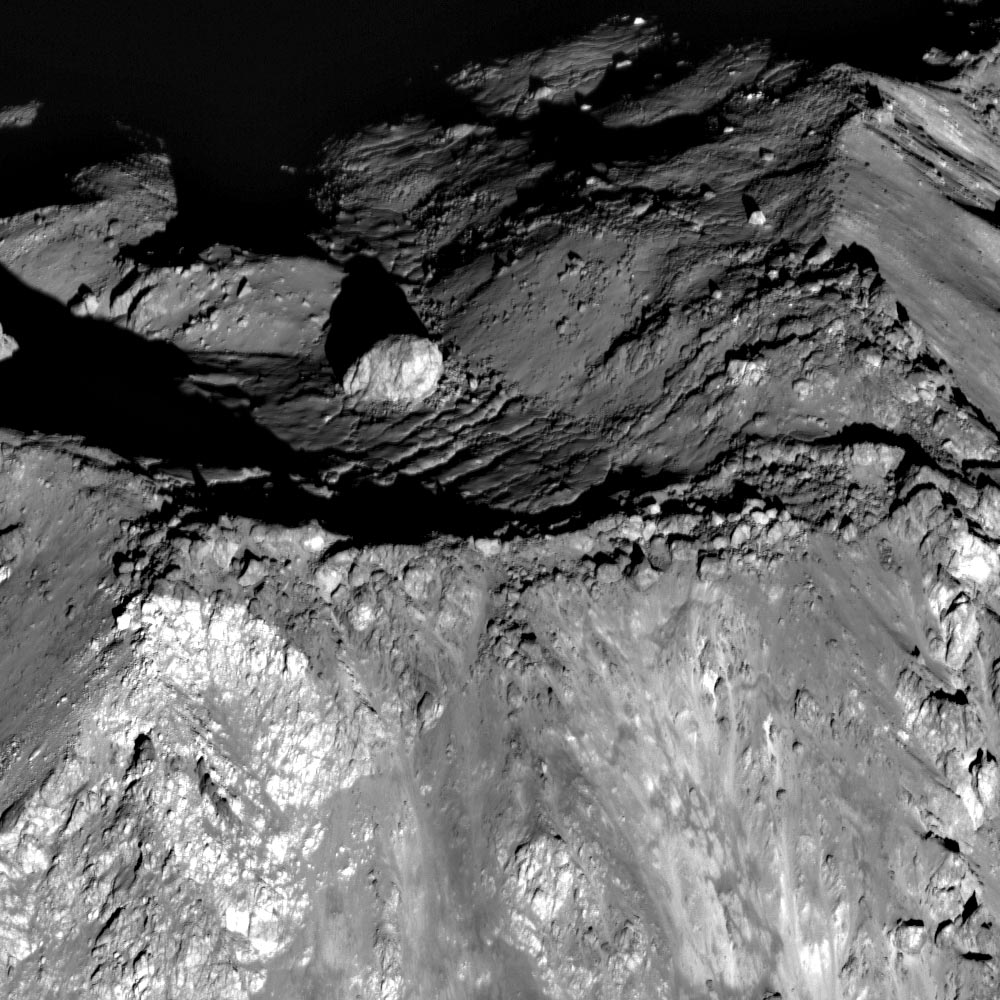
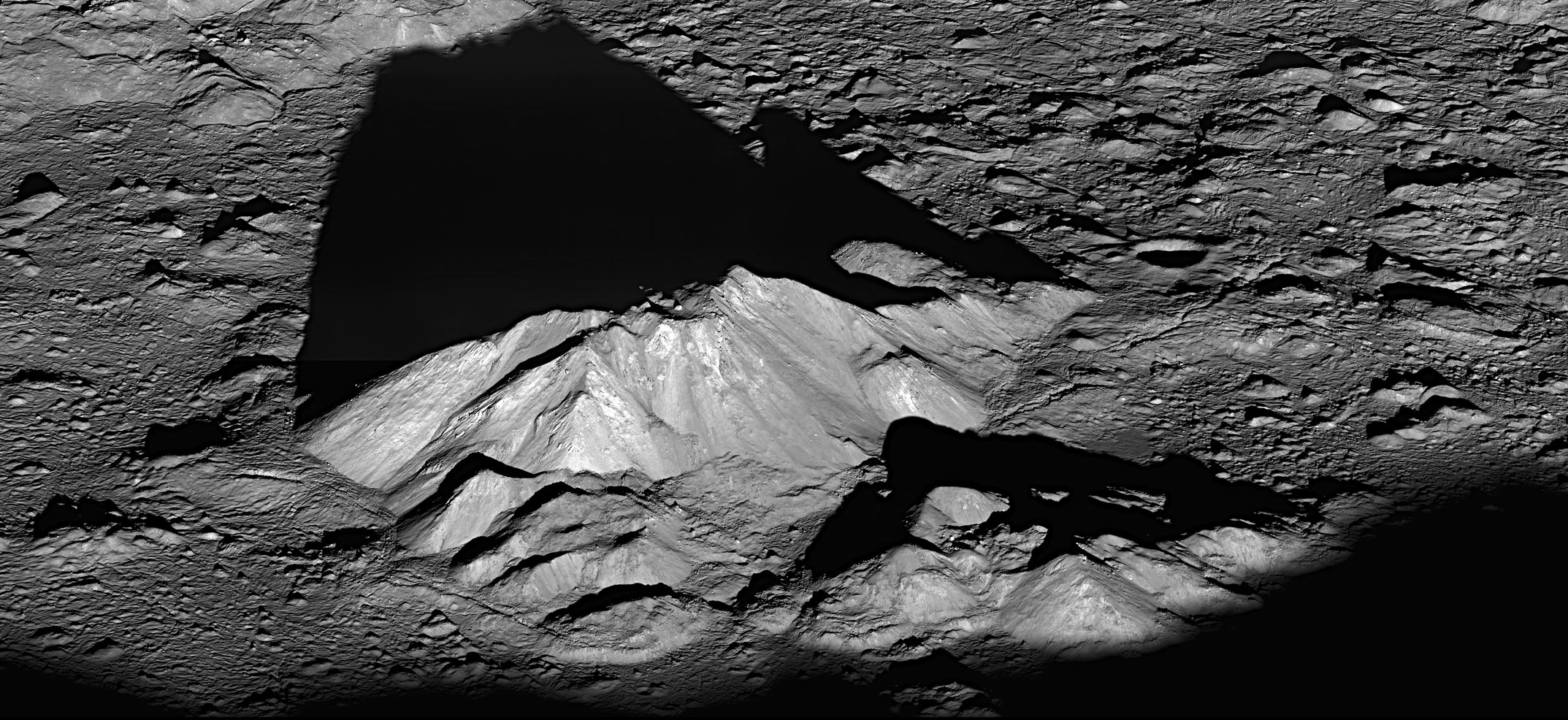
“Reorienting the spacecraft to get side-view data is valuable for scientists as it allows us to measure how light reflects off the Moon differently, depending on the view of the instrument,” said Noah Petro, Project Scientist for LRO at NASA Goddard. “This is called the photometry of the surface. Additionally, the camera takes side-view images to build 3D images of the surface and to collect the perspective views of the Moon that help dis-entangle geologic relationships.” To get LRO slewing again, NASA engineers developed a new algorithm that can estimate LRO’s speed of rotation by fusing star-tracker measurements together with other information available from LRO’s flight computer.
Developing FastMan: A New Navigation Algorithm
For LRO’s new speedometer to operate properly, the star trackers need to maintain an unobstructed view of the stars, which can be blocked by the Earth or Moon, or the glare of the Sun. Otherwise, it is impossible to determine the orientation or estimate the rotational speed of the spacecraft. Ensuring that the star trackers are always unobstructed during science maneuvers made many science observations that could be easily done with the MIMU impossible to perform without it. To reclaim these otherwise lost opportunities, Goddard, NASA’s Engineering Safety Center (NESC) and the Naval Postgraduate School (NPS) in Monterey, California, teamed up once again in their long history of cooperative research to rapidly develop a collection of new, revolutionary methods to enable LRO to keep exploring the Moon to its fullest ability.
“The algorithm we developed for LRO is called Fast Maneuvering or ‘FastMan’ and it works in conjunction with LRO’s star-tracker-based controller,” said Mark Karpenko, a Research Associate Professor at NPS and the FastMan Project Lead. “The maneuvers naturally steer around bright objects just like obstacle avoidance in a self-driving car.” A computer algorithm is a set of instructions to process data. Karpenko was able to construct FastMan by using software tools that are based on the same tools previously used by a NASA-NPS team to reorient the International Space Station by combining forces from the space environment together with its gyroscopes rather than burning fuel by firing its thrusters. This “Zero Propellant Maneuver” is similar to a tacking maneuver used in sailing.
“The Lunar Reconnaissance Orbiter undergoes frequent special slews as it orbits the Moon and our ability to schedule these slews are constrained by the time it takes to perform them,” said John Keller, Deputy Project Scientist for LRO at NASA Goddard. With FastMan, LRO was able to perform nearly 200 additional slews that could not have been performed otherwise.
“Actually, most of the performance improvements we achieved so far were by using the results of FastMan to create what we call a ‘taxicab’ maneuver,” said Karpenko. Because the full FastMan required changes to LRO’s flight software, Karpenko designed the taxicab maneuver to achieve most of the objectives of FastMan while requiring no flight software modifications. “Unfortunately, until we could update the flight software, I had to be in the loop,” said Karpenko. The full FastMan maneuver is fully autonomous.
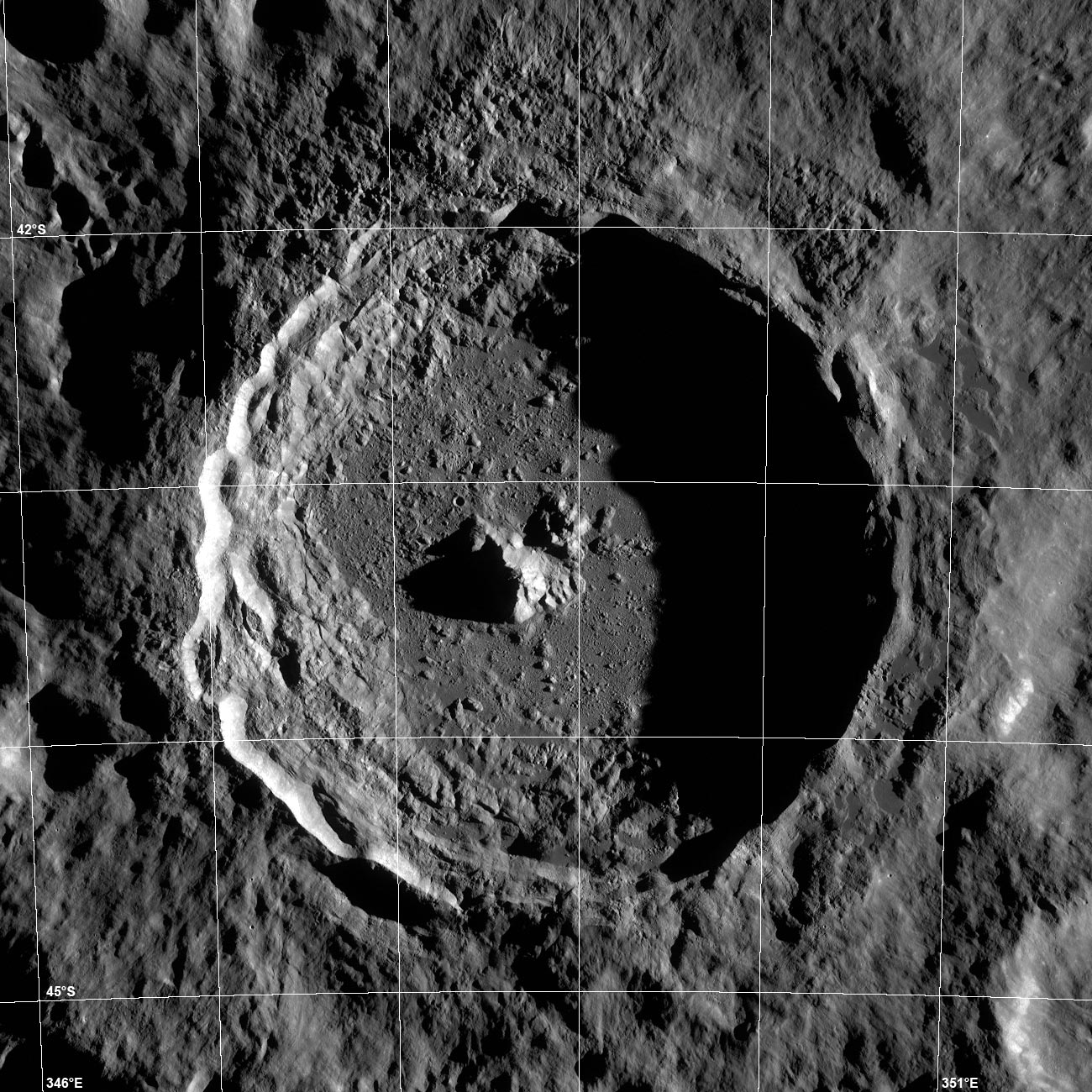
The first FastMan slew was conducted on orbit in late July 2020 and allowed the LRO Camera, one of LRO’s seven scientific instruments, to obtain a side-view image of Triesnecker crater 25 percent faster than a taxicab slew would have allowed. With these new algorithms, LRO is again able to rapidly look to the side, and the spacecraft is in good health, with all instruments still collecting data. “LRO is now in year 11 of what was originally expected to be a two-year mission,” said Petro. “We regularly monitor all LRO systems for signs of degradation or change. Fuel may be our rate-limiting factor, current estimates place us at having at least five more years of fuel onboard, if not more.”
In 2010, NPS, NESC and Goddard partnered to implement the first minimum-time reorientation maneuvers ever performed on orbit. This innovative work was done as an end-of-life flight demonstration on the TRACE spacecraft. Today, the lunar science community is the beneficiary of this pioneering work. “The slewing algorithms developed by NPS have already allowed LRO to collect more science,” explained Neil Dennehy, NASA Technical Fellow for Guidance, Navigation and Control. “I’m expecting that in the future our industry partners will be able to leverage this technology as well.”
LRO is managed by NASA’s Goddard Space Flight Center in Greenbelt, Maryland, for the Science Mission Directorate at NASA Headquarters in Washington. Launched on June 18, 2009, LRO has collected a treasure trove of data with its seven powerful instruments, making an invaluable contribution to our knowledge about the Moon. NASA is leading a sustainable return to the Moon with commercial and international partners to expand human presence in space and bring back new knowledge and opportunities.
Never miss a breakthrough: Join the SciTechDaily newsletter.
Follow us on Google and Google News.