
Close Menu
    Facebook X (Twitter) Instagram
    SciTechDaily
    • Biology
    • Chemistry
    • Earth
    • Health
    • Physics
    • Science
    • Space
    • Technology
    Facebook X (Twitter) Pinterest YouTube RSS
    SciTechDaily
    Home»Space»NASA’s Mars Exploration Rover Opportunity Keeps Finding Surprises
    Space

    NASA’s Mars Exploration Rover Opportunity Keeps Finding Surprises

    By Guy Webster / Andrew Good, Jet Propulsion LaboratoryFebruary 16, 2018No Comments5 Mins Read
    Facebook Twitter Pinterest Telegram LinkedIn WhatsApp Email Reddit
    Share
    Facebook Twitter LinkedIn Pinterest Telegram Email Reddit
    Mars Rover Opportunity Keeps Finding Surprises
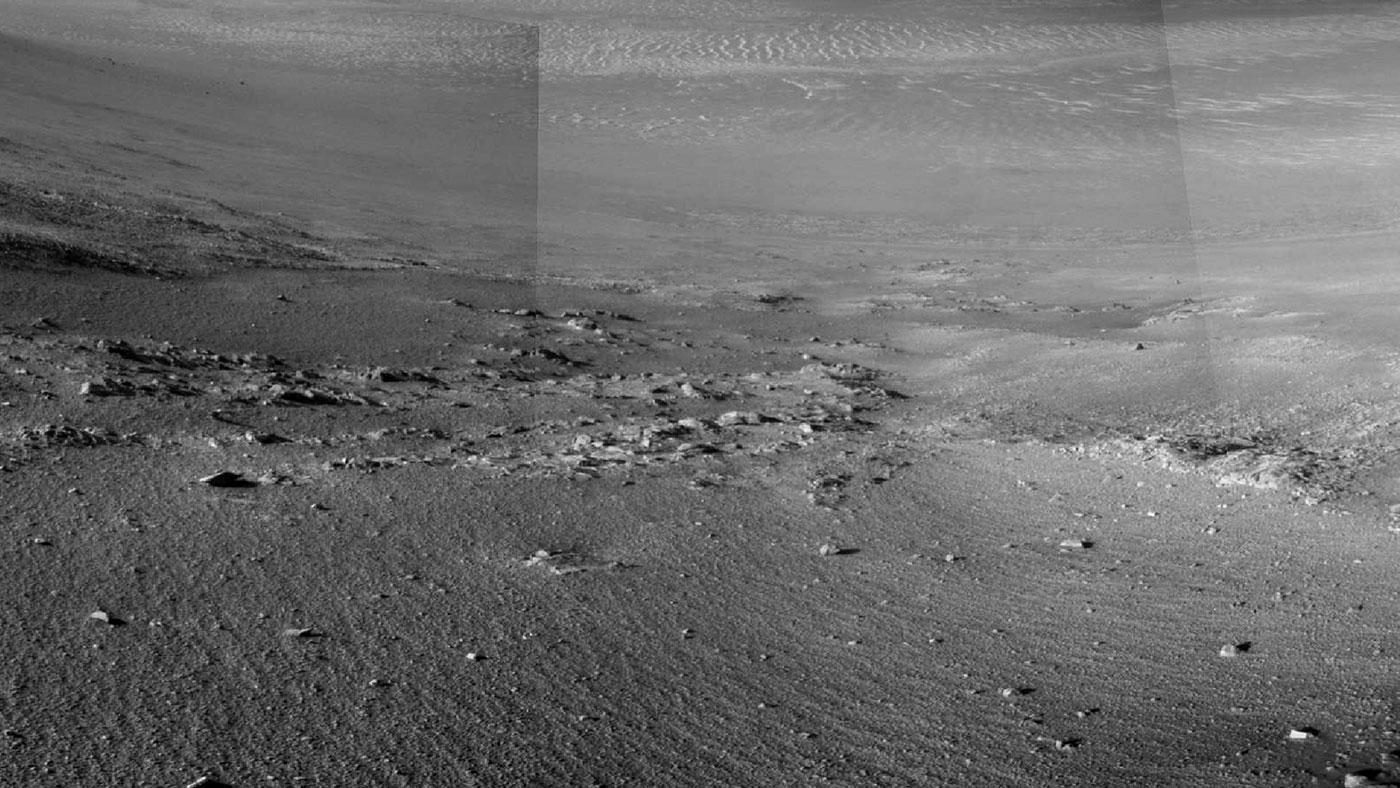
    Textured rows on the ground in this portion of “Perseverance Valley” are under investigation by NASA’s Mars Exploration Rover Opportunity, which used its Navigation Camera to take the component images of this downhill-looking scene. The rover reaches its 5,000th Martian day, or sol, on February 16, 2018. Credit: NASA/JPL-Caltech

    NASA’s Mars Exploration Rover Opportunity keeps providing surprises about the Red Planet, most recently with observations of possible “rock stripes.”

    The ground texture seen in recent images from the rover resembles a smudged version of very distinctive stone stripes on some mountain slopes on Earth that result from repeated cycles of freezing and thawing of wet soil. But it might also be due to wind, downhill transport, other processes or a combination.

    Opportunity landed on Mars in January 2004. As it reaches the 5,000th Martian day, or sol, of what was planned as a 90-sol mission (see related story), it is investigating a channel called “Perseverance Valley,” which descends the inboard slope of the western rim of Endeavour Crater.

    “Perseverance Valley is a special place, like having a new mission again after all these years,” said Opportunity Deputy Principal Investigator Ray Arvidson of Washington University in St. Louis. “We already knew it was unlike any place any Mars rover has seen before, even if we don’t yet know how it formed, and now we’re seeing surfaces that look like stone stripes. It’s mysterious. It’s exciting. I think the set of observations we’ll get will enable us to understand it.”

    Mars Rover Finds New Surprises
    This late-afternoon view from the front Hazard Avoidance Camera on NASA’s Mars Exploration Rover Opportunity shows a pattern of rock stripes on the ground, a surprise to scientists on the rover team. It was taken in January 2018, as the rover neared Sol 5000 of what was planned as a 90-sol mission. Credit: NASA/JPL-Caltech

    On some slopes within the valley, the soil and gravel particles appear to have become organized into narrow rows or corrugations, parallel to the slope, alternating between rows with more gravel and rows with less.

    The origin of the whole valley is uncertain. Rover-team scientists are analyzing various clues that suggest actions of water, wind or ice. They are also considering a range of possible explanations for the stripes, and remain uncertain about whether this texture results from processes of relatively modern Mars or a much older Mars.

    Other lines of evidence have convinced Mars experts that, on a scale of hundreds of thousands of years, Mars goes through cycles when the tilt or obliquity of its axis increases so much that some of the water now frozen at the poles vaporizes into the atmosphere and then becomes snow or frost accumulating nearer the equator.
    Mars Opportunity Rover Keeps Finding Surprises
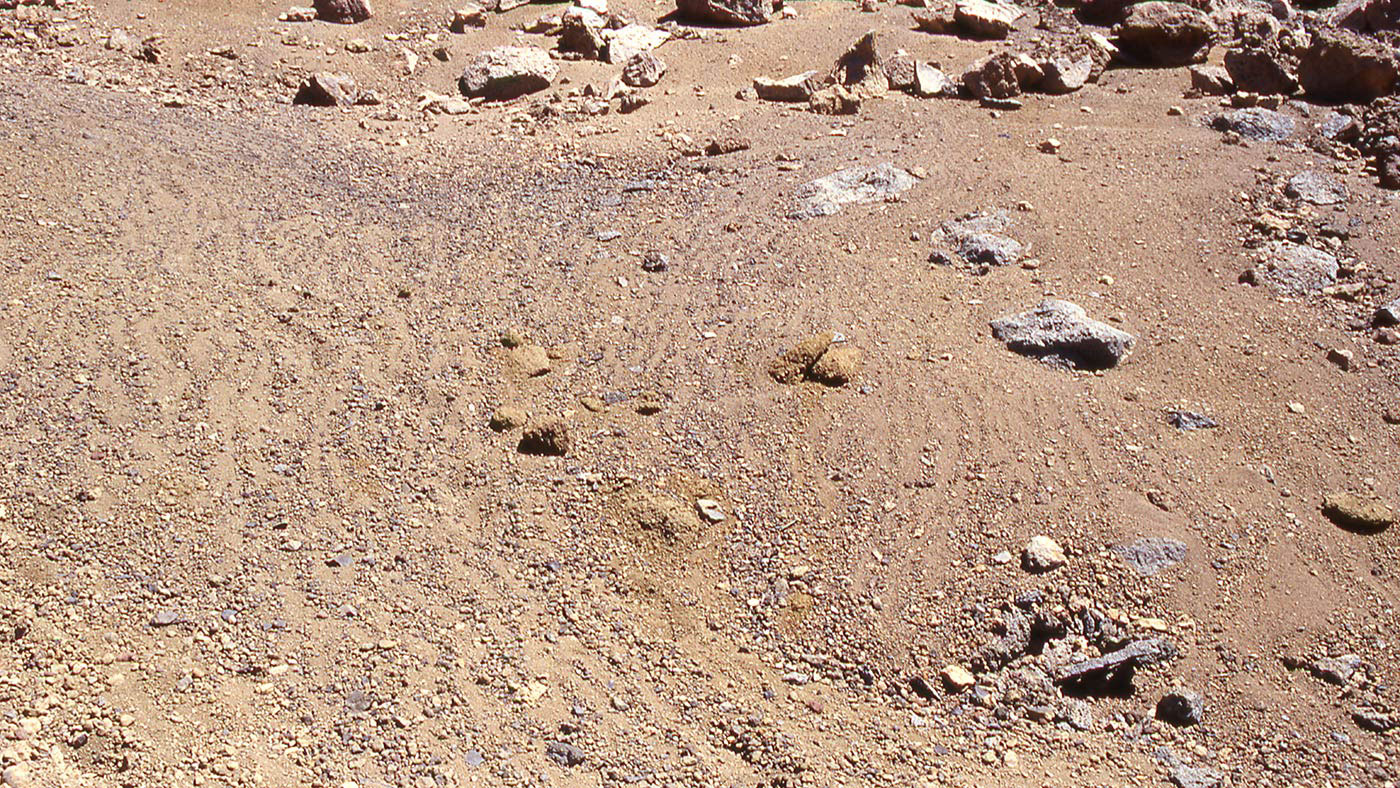
    This image shows stone stripes on the side of a volcanic cone on Mauna Kea, Hawaii. The stripes are made of small rock fragments and they are aligned downhill as freeze-thaw cycles have lifted them up and out of the finer-grained regolith, and moved them to the sides, forming stone stripes. Credit: Washington University in St. Louis/NASA

    “One possible explanation of these stripes is that they are relics from a time of greater obliquity when snow packs on the rim seasonally melted enough to moisten the soil, and then freeze-thaw cycles organized the small rocks into stripes,” Arvidson said. “Gravitational downhill movement may be diffusing them so they don’t look as crisp as when they were fresh.”

    Bernard Hallet of the University of Washington, Seattle, agrees the alignments seen in images of Perseverance Valley are not as distinctive as the stone stripes he has studied on Earth. Field measurements on Earth, near the summit of Hawaii’s Mauna Kea where the soil freezes every night but is often dry, have documented how those form when temperature and ground conditions are right: Soils with a mix of silt, sand and gravel expand more where the finer-grain material is most prevalent and retains more water. Freezing expands the soil, pushing larger particles up. If they move to the side, as well as down the general slope, due to gravity or wind, they tend to move away from the finer-grain concentrations and stretch out downslope. Where larger particles become more concentrated, the ground expands less. The process repeats hundreds or thousands of times, and the pattern self-organizes into alternating stripes.

    Perseverance Valley holds rocks carved by sand blowing uphill from the crater floor, and wind might also be the key in sorting larger particles into rows parallel to the slope.

    “Debris from relatively fresh impact craters is scattered over the surface of the area, complicating assessment of effects of wind,” said Opportunity science-team member Robert Sullivan of Cornell University, Ithaca, New York. “I don’t know what these stripes are, and I don’t think anyone else knows for sure what they are, so we’re entertaining multiple hypotheses and gathering more data to figure it out.”

    Never miss a breakthrough: Join the SciTechDaily newsletter.
    Follow us on Google and Google News.

    Astronomy Mars NASA Opportunity Rover Planetary Science
    Share. Facebook Twitter Pinterest LinkedIn Email Reddit

    Related Articles

    NASA’s Opportunity Reveals That Mars Could Have Supported Life

    Curiosity Finds Ancient Streambed on Mars

    NASA’s Opportunity Discovers Geological Mystery on Mars

    NASA Data Suggests “Dry Ice” Snowfall on Mars

    NASA’s Curiosity Prepares for Use of Its Arm and Tools

    Curiosity Sends Back Radioed Words and New Telephoto View of Mars

    NASA’s Curiosity Readies for First Drive on Mars

    Color HiRISE Image of Curiosity Rover on Mars

    First 360-Degree Color Panorama From NASA’s Curiosity Mars Rover

    Leave A Reply Cancel Reply

    • Facebook
    • Twitter
    • Pinterest
    • YouTube

    Don't Miss a Discovery

    Subscribe for the Latest in Science & Tech!

    Trending News

    Beyond Pain Relief: Scientists Discover a Protein That Could Stop Osteoarthritis in Its Tracks

    Scientists Discover Why Alcohol Prevents the Liver From Healing, Even After You Quit

    Scientists Stunned As Volcano Removes Methane From the Air

    Scientists Discover Signs Africa May Be Splitting Apart Beneath Zambia

    Common Blood Pressure Drug Supercharges Cancer Treatment in Surprising New Study

    540-Million-Year-Old Fossils Reveal a Huge Surprise About Early Life on Earth

    Scientists Reverse Stroke Damage Using Stem Cells in Breakthrough Study

    Eating One Egg a Day Could Cut Alzheimer’s Risk by 27%

    Follow SciTechDaily
    • Facebook
    • Twitter
    • YouTube
    • Pinterest
    • Newsletter
    • RSS
    SciTech News
    • Biology News
    • Chemistry News
    • Earth News
    • Health News
    • Physics News
    • Science News
    • Space News
    • Technology News
    Recent Posts
    • Scientists Uncover Promising New Strategy To Stop Parkinson’s in Its Tracks
    • New Study Reveals How Vitamin D Could Calm Gut Inflammation
    • Experts Reveal the Surprising Cancer Link Behind a Common Vitamin
    • NASA’s Roman Space Telescope Could Finally Find the Milky Way’s Missing Neutron Stars
    • Strange “Worm Towers” Found in the Wild for the First Time May Be Hitchhiking on Beetles
    Copyright © 1998 - 2026 SciTechDaily. All Rights Reserved.
    • Science News
    • About
    • Contact
    • Editorial Board
    • Privacy Policy
    • Terms of Use

    Type above and press Enter to search. Press Esc to cancel.