
NASA’s Carruthers mission will film Earth’s elusive exosphere to understand space weather, atmospheric escape, and planetary habitability.
A NASA mission aims to photograph a feature of Earth that is usually impossible to see: a faint glow surrounding the planet that marks the outermost edge of the atmosphere. This barely visible light comes from the exosphere, a vast and dynamic region that changes shape in response to activity from the Sun.
Learning how this layer behaves is essential for predicting hazardous conditions in near-Earth space, a critical step in safeguarding Artemis astronauts as they travel to the Moon and, eventually, Mars. The Carruthers Geocorona Observatory was launched from NASA’s Kennedy Space Center in Florida on September 24, 2025, aboard a SpaceX Falcon 9 rocket from Cape Canaveral.
Revealing Earth’s invisible edge
In the early 1970s, scientists had little direct evidence showing how far Earth’s atmosphere extended into space. Much of the uncertainty centered on the exosphere, the highest atmospheric layer, which begins roughly 300 miles above the surface. Researchers believed it consisted largely of hydrogen atoms, the lightest element, that had risen high enough to slowly escape Earth’s gravity.
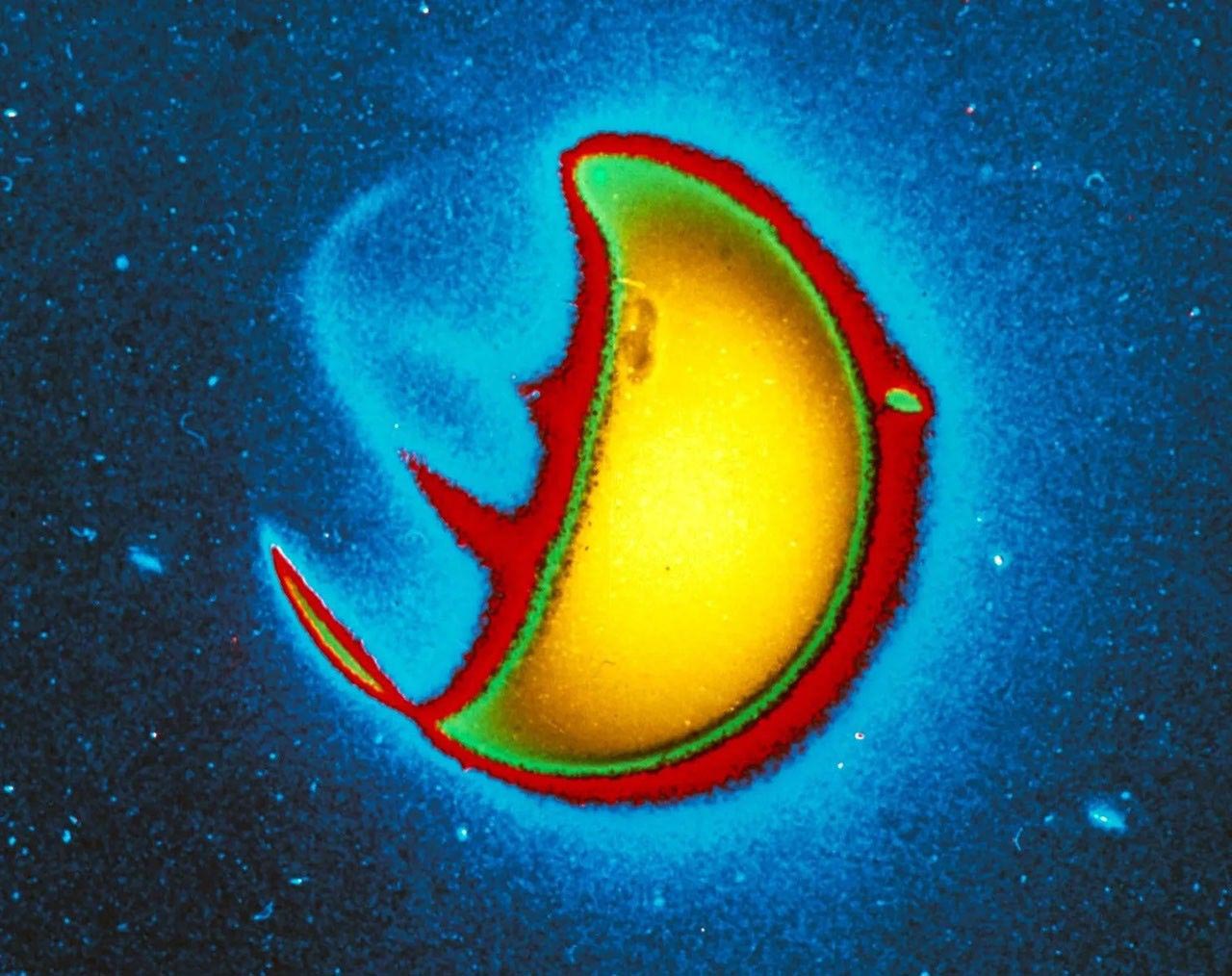
The exosphere can only be detected through a very faint ultraviolet glow known as the geocorona. Determined to observe it directly, pioneering scientist and engineer Dr. George Carruthers began developing specialized ultraviolet cameras. After testing several early versions on sounding rockets, he created an instrument capable of operating in space.
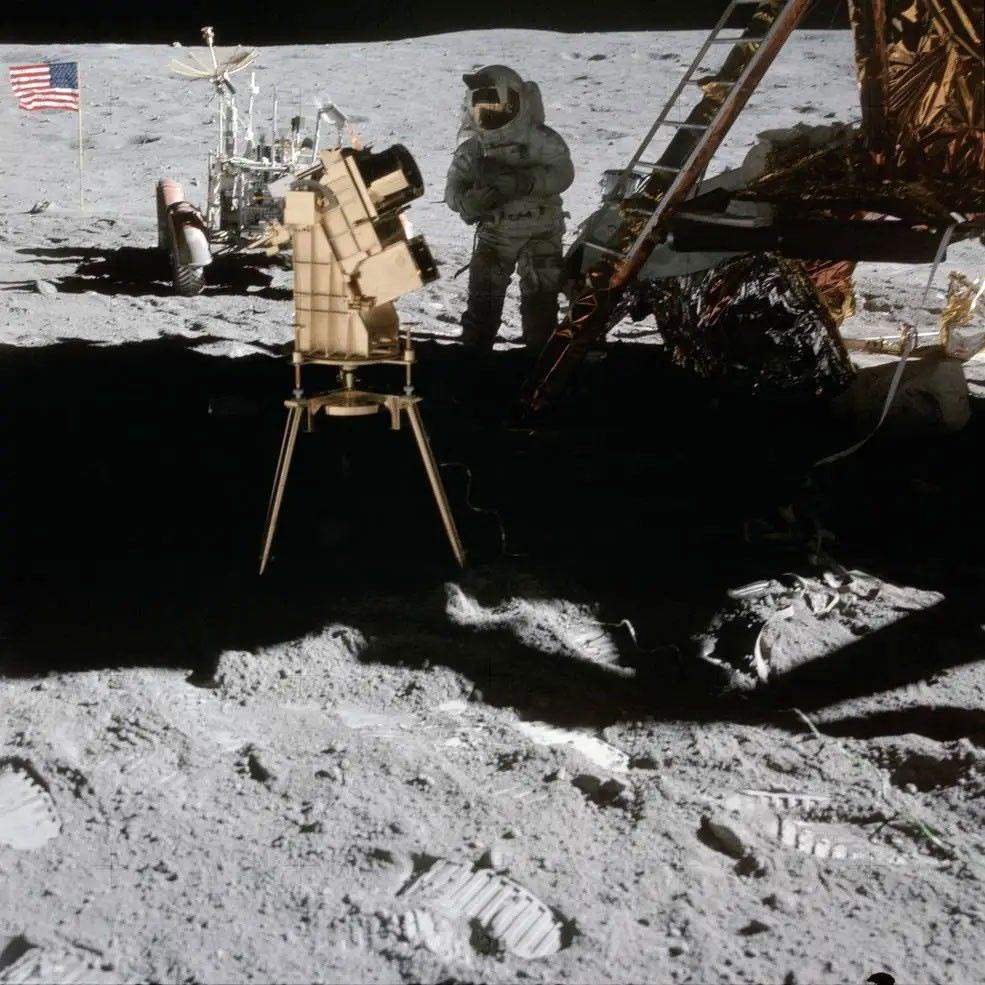
In April 1972, astronauts aboard Apollo 16 placed Carruthers’ camera on the Moon’s Descartes Highlands. From that vantage point, it captured the first images of Earth’s geocorona. The results were striking, not only for what they revealed, but also for what they suggested was missing.
“The camera wasn’t far enough away, being at the Moon, to get the entire field of view,” said Lara Waldrop, principal investigator for the Carruthers Geocorona Observatory. “And that was really shocking — that this light, fluffy cloud of hydrogen around the Earth could extend that far from the surface.” Waldrop leads the mission from the University of Illinois Urbana-Champaign, where George Carruthers was an alumnus.
Our planet, in a new light
Scientists now believe the exosphere extends at least halfway to the Moon. But its importance goes well beyond understanding its size.
When eruptions from the Sun reach Earth, they encounter the exosphere first, triggering a cascade of physical processes that can sometimes escalate into dangerous space weather events. Studying how the exosphere reacts to these solar disturbances is vital for improving forecasts and reducing risks to spacecraft and astronauts.
The region also plays a role in the gradual loss of hydrogen, a key component of water, or H2O. Tracking how hydrogen escapes from Earth may help explain why our planet has managed to hold onto its water while others have not, offering valuable clues in the search for potentially habitable exoplanets, or planets beyond our solar system.
NASA’s Carruthers Geocorona Observatory, named in honor of George Carruthers, is designed to capture the first continuous movies of Earth’s exosphere, revealing its full expanse and internal dynamics.
“We’ve never had a mission before that was dedicated to making exospheric observations,” said Alex Glocer, the Carruthers mission scientist at NASA’s Goddard Space Flight Center in Greenbelt, Maryland. “It’s really exciting that we’re going to get these measurements for the first time.”
Journey to L1
At 531 pounds and roughly the size of a loveseat sofa, the Carruthers spacecraft launched aboard a SpaceX Falcon 9 rocket along with NASA’s IMAP (Interstellar Mapping and Acceleration Probe) spacecraft and the National Oceanic and Atmospheric Administration’s SWFO-L1 (Space Weather Follow On – Lagrange 1) space weather satellite.
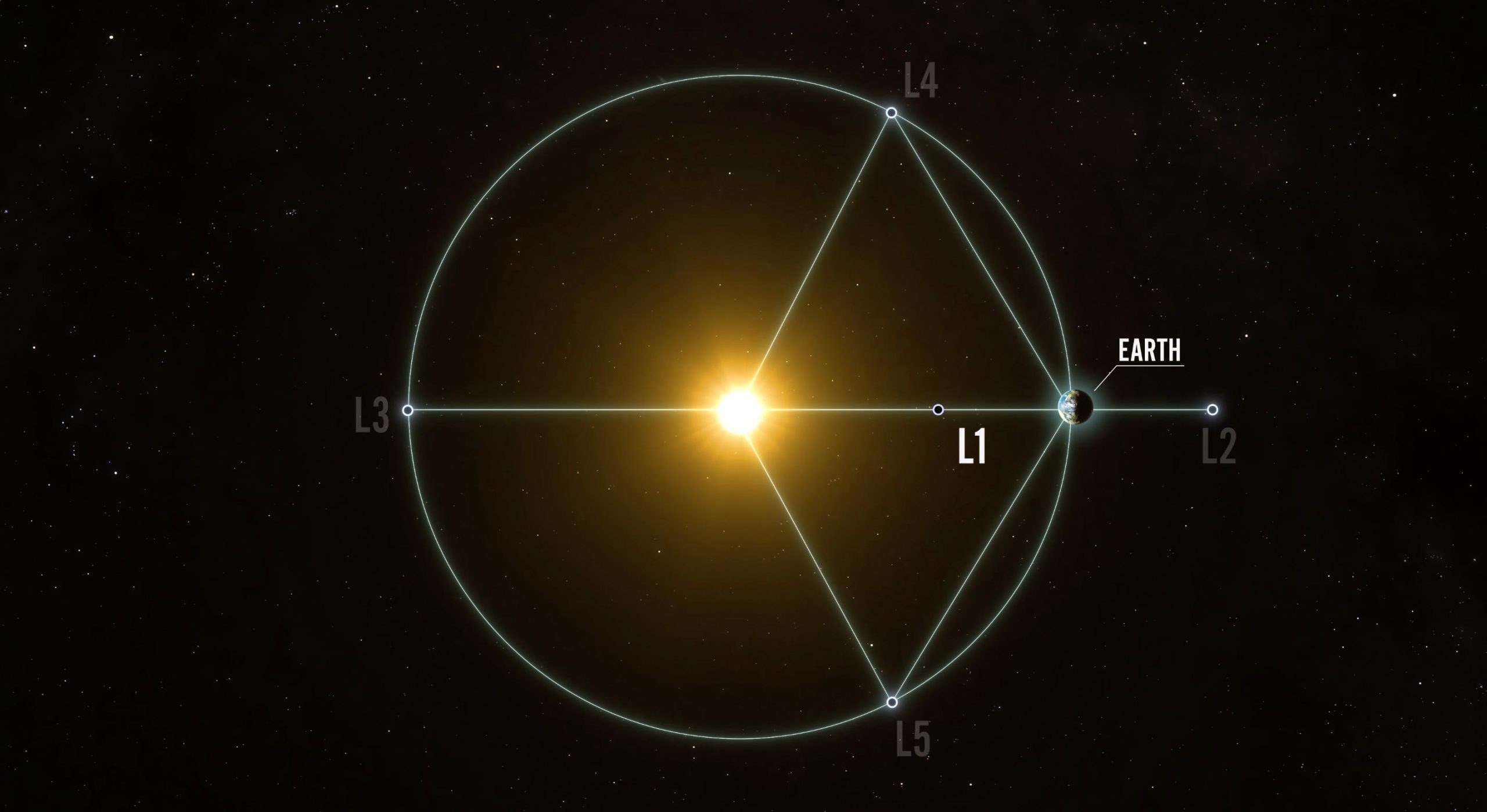
After launch, all three missions will commence a four-month cruise phase to Lagrange point 1 (L1), a location approximately 1 million miles closer to the Sun than Earth is. After a one-month period for science checkouts, Carruthers’ two-year science phase will begin in March 2026.
From L1, roughly four times farther away than the Moon, Carruthers will capture a comprehensive view of the exosphere using two ultraviolet cameras, a near-field imager, and a wide-field imager.
“The near-field imager lets you zoom up really close to see how the exosphere is varying close to the planet,” Glocer said. “The wide-field imager lets you see the full scope and expanse of the exosphere, and how it’s changing far away from the Earth’s surface.”
The two imagers will together map hydrogen atoms as they move through the exosphere and ultimately out to space. But what we learn about atmospheric escape on our home planet applies far beyond it.
“Understanding how that works at Earth will greatly inform our understanding of exoplanets and how quickly their atmospheres can escape,” Waldrop said.
By studying the physics of Earth, the one planet we know that supports life, the Carruthers Geocorona Observatory can help us know what to look for elsewhere in the universe.
The Carruthers spacecraft was designed and built by BAE Systems. NASA’s Explorers and Heliophysics Projects Division at the agency’s Goddard Space Flight Center in Greenbelt, Maryland, manages the mission for the agency’s Heliophysics Division at NASA Headquarters in Washington.
Never miss a breakthrough: Join the SciTechDaily newsletter.
Follow us on Google and Google News.