
Update: Delayed again. Now targeting Friday, March 7 for launch and March 6 for prelaunch news briefing.
Update 2: Delayed yet again. Now targeting Saturday, March 8 for launch.
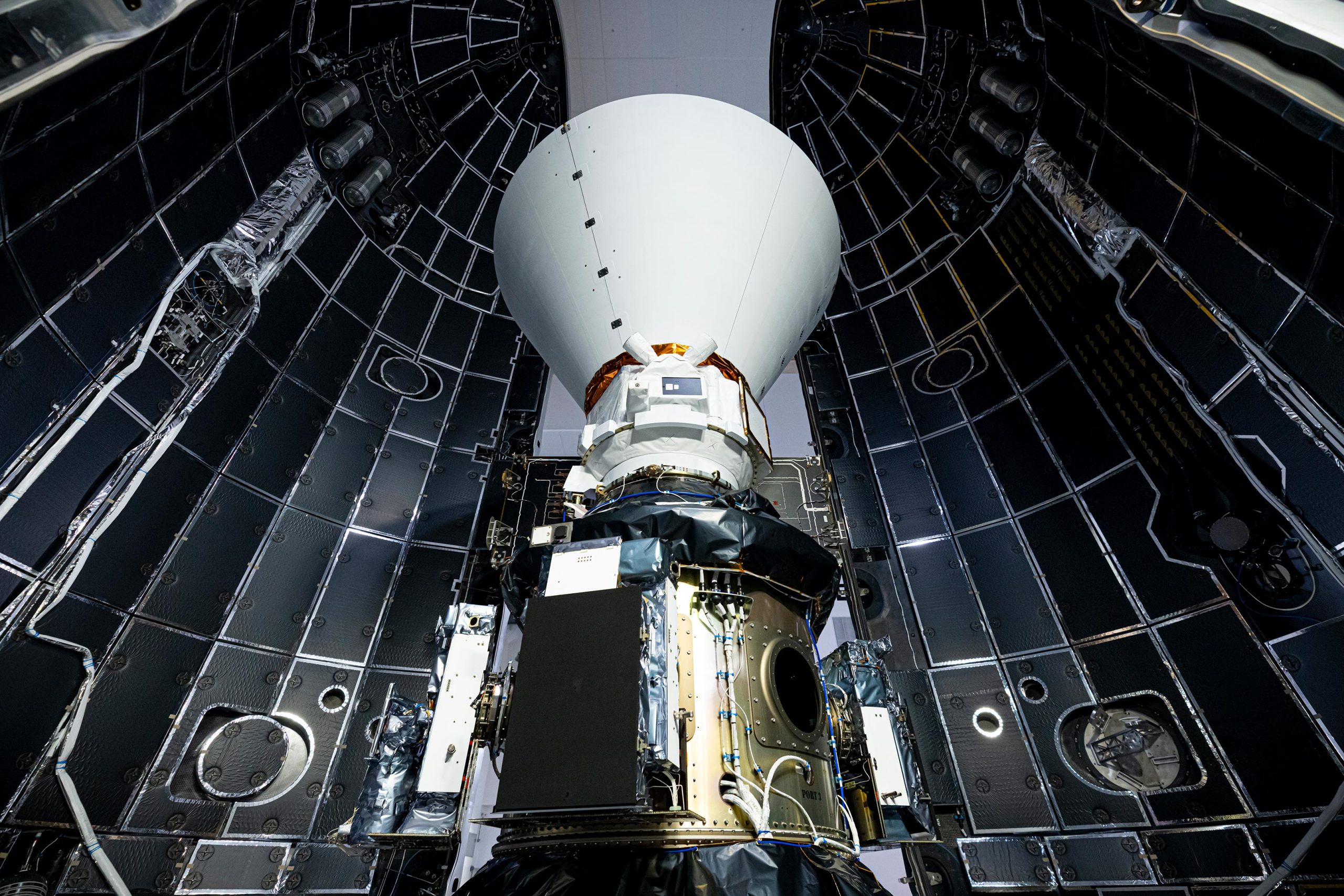
NASA and SpaceX are gearing up for a thrilling double-mission launch on March 6, aiming to unlock cosmic secrets and solar mysteries.
NASA and SpaceX have delayed the launch of the SPHEREx and PUNCH missions again. They are now aiming to launch no earlier than Thursday, March 6. The additional time will allow teams to complete final vehicle preparations and prelaunch checks. (Previously the launch was scheduled for March 4, and before that, March 2 and February 28.)
Liftoff is scheduled for 10:09 p.m. EST (7:09 p.m. PST) from Space Launch Complex 4 East (SLC-4E) at Vandenberg Space Force Base in California.
The prelaunch news briefing now is scheduled for 3:30 p.m. on Wednesday, March 5, with coverage streaming live on NASA+.
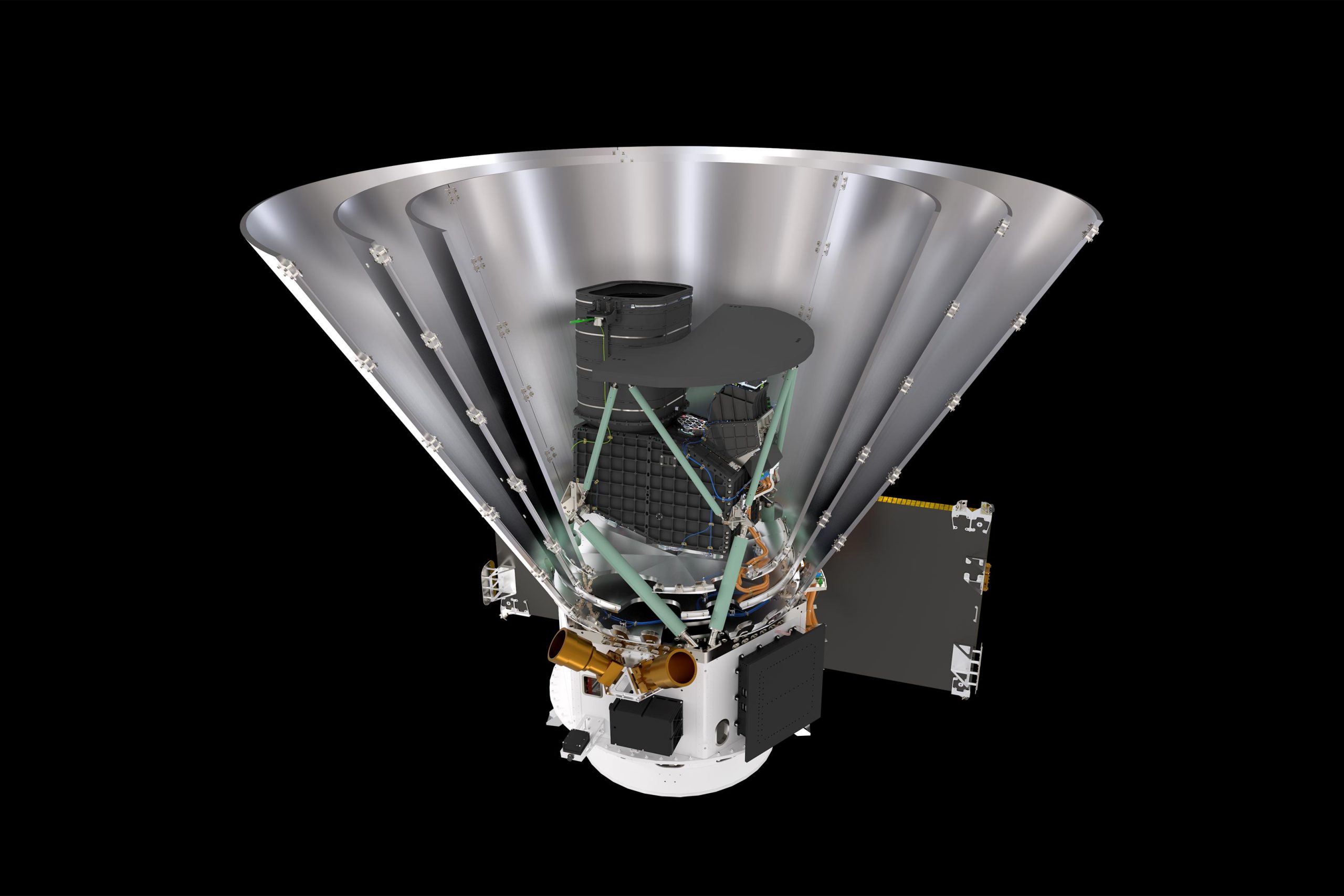
SPHEREx Mission Overview
The SPHEREx (Spectro-Photometer for the History of the Universe, Epoch of Reionization, and Ices Explorer) mission is a groundbreaking NASA space telescope designed to study the origins of the universe, the formation of galaxies, and the potential ingredients for life in our own Milky Way.
Using advanced infrared spectroscopy, SPHEREx will conduct a full-sky survey, mapping the cosmos in unprecedented detail. Scientists hope to gain new insights into what happened during the first second after the Big Bang, a critical period that shaped the universe as we know it. The mission will also analyze the distribution of water and organic molecules in the interstellar medium, the raw material for planetary systems, helping to determine how these key building blocks of life may have spread across the galaxy.
By surveying hundreds of millions of galaxies, SPHEREx will provide crucial data on the large-scale structure of the universe and help refine models of cosmic inflation, the rapid expansion that occurred immediately after the Big Bang. With its ability to detect faint infrared signals, the mission is expected to answer fundamental questions about the evolution of galaxies and the conditions necessary for life beyond Earth.
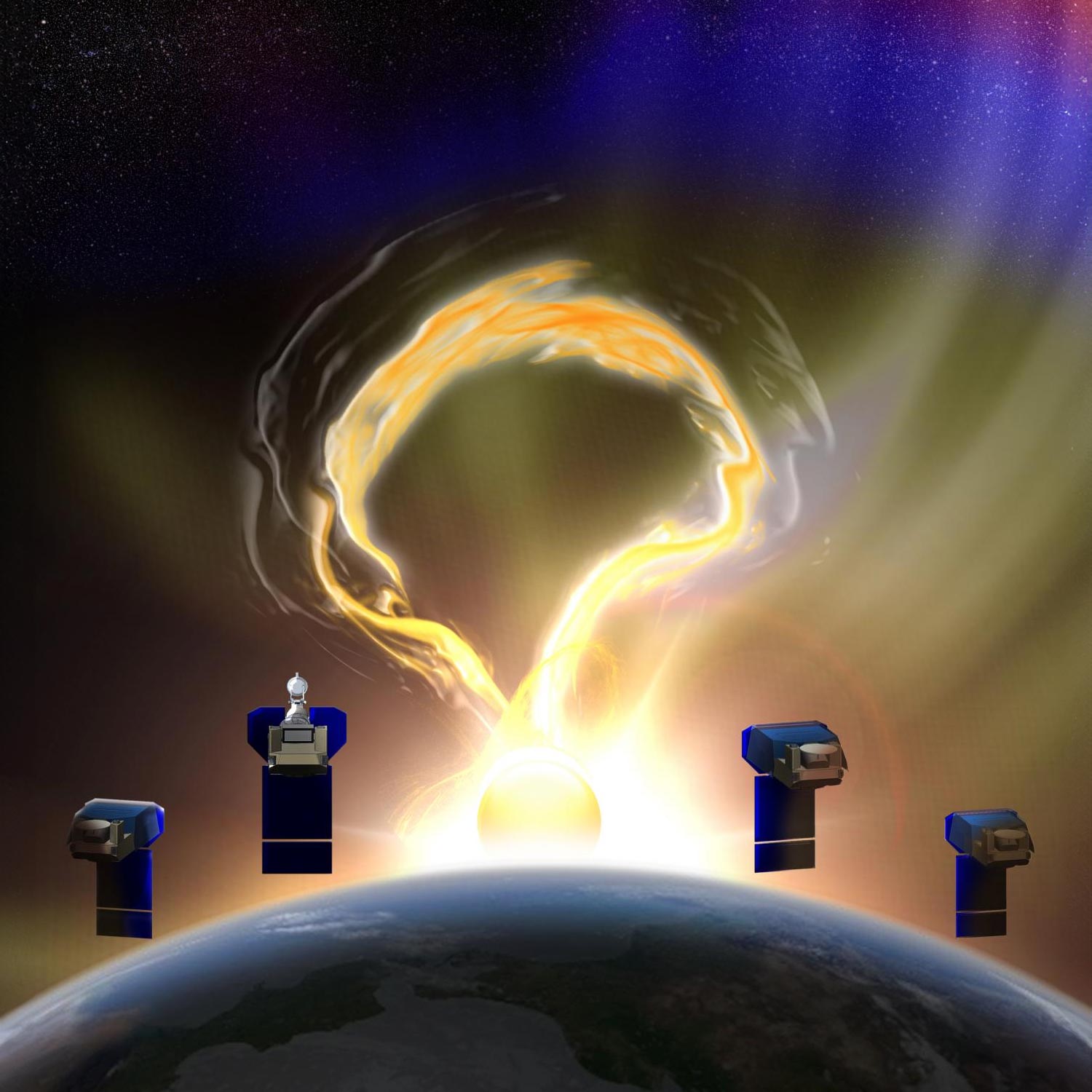
PUNCH Mission Overview
The PUNCH (Polarimeter to Unify the Corona and Heliosphere) mission is designed to study the Sun’s outer atmosphere (corona) and how it extends into space, forming the solar wind—a stream of charged particles that influences the entire solar system.
Comprised of four small satellites working together as a distributed observatory, PUNCH will capture continuous, high-resolution images of the solar corona and its transition into the heliosphere, the vast bubble of charged particles that envelops our solar system. This will allow scientists to better understand how solar material moves through space, particularly during coronal mass ejections (CMEs)—powerful eruptions from the Sun that can affect satellites, power grids, and space travel.
By studying how the corona evolves into the solar wind, PUNCH will help improve space weather forecasting, which is critical for protecting both astronauts and technology from the Sun’s potentially disruptive activity. The mission will also provide new insights into how the Sun’s dynamic outer layers influence planetary atmospheres and space environments throughout the solar system.
With its unique ability to track the solar wind in real time, PUNCH will play a key role in expanding our understanding of how the Sun interacts with the space around it and affects planets—including Earth.
Never miss a breakthrough: Join the SciTechDaily newsletter.
Follow us on Google and Google News.