

SPHEREx, NASA’s latest astrophysics observatory, has launched aboard a Falcon 9 rocket alongside PUNCH, a mission studying solar wind.
SPHEREx will create a 3D map of the universe, helping to uncover cosmic history and the building blocks of life. Its observations will complement those of telescopes like Hubble and Webb, offering insights into how galaxies formed and evolved. Meanwhile, PUNCH will investigate how the Sun’s corona generates solar wind and space weather, which can impact Earth. The successful launch marks the start of groundbreaking discoveries in both cosmic origins and the Sun’s influence on space.
A Dual Mission: SPHEREx and PUNCH
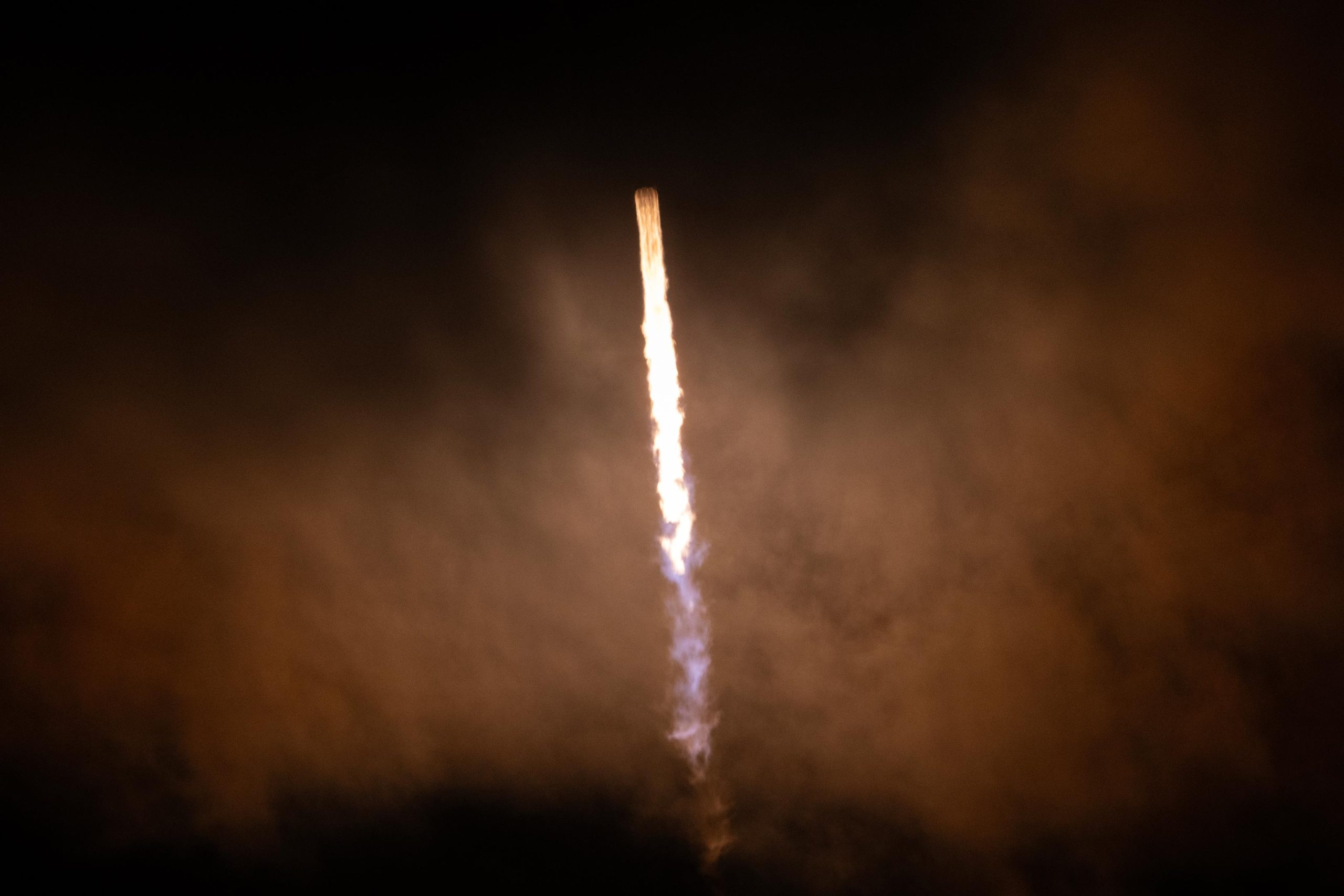
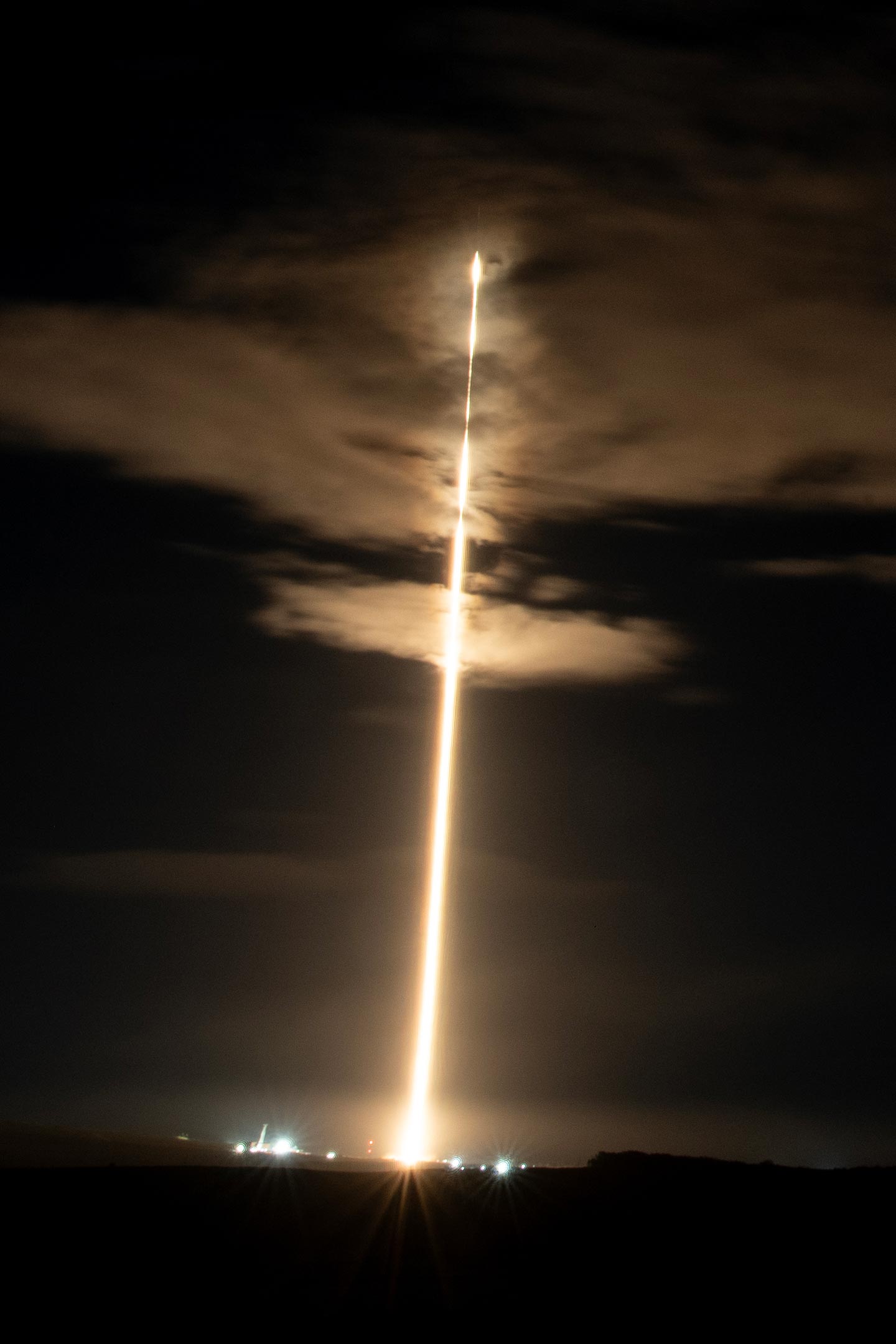
NASA’s latest space observatory, SPHEREx, is now on its way to explore the origins of the universe, the history of galaxies, and the building blocks of life in our galaxy. Short for Spectro-Photometer for the History of the Universe, Epoch of Reionization, and Ices Explorer, SPHEREx launched at 8:10 p.m. PDT on March 11 aboard a SpaceX Falcon 9 rocket from Vandenberg Space Force Base in California.
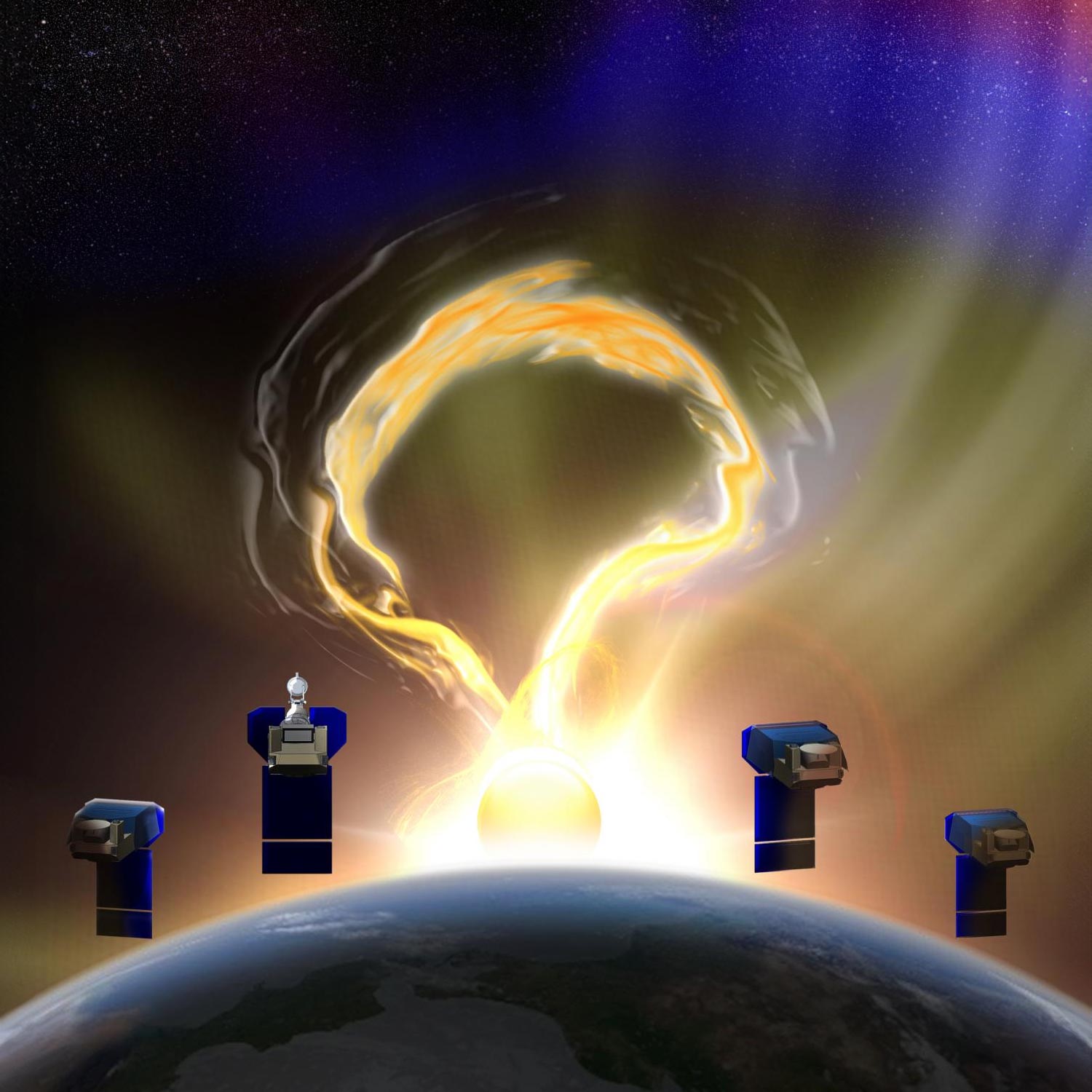
Joining SPHEREx on the Falcon 9 were four small satellites from NASA’s PUNCH (Polarimeter to Unify the Corona and Heliosphere) mission, designed to study how the Sun’s outer atmosphere transforms into the solar wind—the stream of charged particles that flows through the solar system.
“Everything in NASA science is interconnected, and sending both SPHEREx and PUNCH up on a single rocket doubles the opportunities to do incredible science in space,” said Nicky Fox, associate administrator, Science Mission Directorate at NASA Headquarters in Washington. “Congratulations to both mission teams as they explore the cosmos from far-out galaxies to our neighborhood star. I am excited to see the data returned in the years to come.”
SPHEREx Comes to Life in Space
Ground controllers at NASA’s Jet Propulsion Laboratory (JPL) in Southern California, which manages SPHEREx, established communications with the space observatory at 9:31 p.m. PDT. The observatory will begin its two-year prime mission after a roughly one-month checkout period, during which engineers and scientists will make sure the spacecraft is working properly.
“The fact our amazing SPHEREx team kept this mission on track even as the Southern California wildfires swept through our community is a testament to their remarkable commitment to deepening humanity’s understanding of our universe,” said Laurie Leshin, director, NASA JPL. “We now eagerly await the scientific breakthroughs from SPHEREx’s all-sky survey — including insights into how the universe began and where the ingredients of life reside.”
PUNCH Satellites Begin Their Mission
The PUNCH satellites successfully separated about 53 minutes after launch, and ground controllers have established communication with all four PUNCH spacecraft. Now, PUNCH begins a 90-day commissioning period where the four satellites will enter the correct orbital formation, and the instruments will be calibrated as a single “virtual instrument” before the scientists start to analyze images of the solar wind.
The two missions are designed to operate in a low Earth, Sun-synchronous orbit over the day-night line (also known as the terminator) so the Sun always remains in the same position relative to the spacecraft. This is essential for SPHEREx to keep its telescope shielded from the Sun’s light and heat (both would inhibit its observations) and for PUNCH to have a clear view in all directions around the Sun.

Mapping the Universe in 3D
To achieve its wide-ranging science goals, SPHEREx will create a 3D map of the entire celestial sky every six months, providing a wide perspective to complement the work of space telescopes that observe smaller sections of the sky in more detail, such as NASA’s James Webb Space Telescope and Hubble Space Telescope.
The mission will use a technique called spectroscopy to measure the distance to 450 million galaxies in the nearby universe. (See video below.) Their large-scale distribution was subtly influenced by an event that took place almost 14 billion years ago known as inflation, which caused the universe to expand in size a trillion-trillionfold in a fraction of a second after the Big Bang. The mission also will measure the total collective glow of all the galaxies in the universe, providing new insights about how galaxies have formed and evolved over cosmic time.
NASA’s SPHEREx mission will explore the universe in a way that has never been done in astronomy before. The observatory has both a wide field of view and the ability to examine the sky in over 100 colors. This approach will help SPHEREx in its quest to understand the origins of our universe as well as water and other molecules important for life. Credit: NASA
Probing for the Building Blocks of Life
Spectroscopy also can reveal the composition of cosmic objects, and SPHEREx will survey our home galaxy for hidden reservoirs of frozen water ice and other molecules, like carbon dioxide, that are essential to life as we know it.
“Questions like ‘How did we get here?’ and ‘Are we alone?’ have been asked by humans for all of history,” said James Fanson, SPHEREx project manager at JPL. “I think it’s incredible that we are alive at a time when we have the scientific tools to actually start to answer them.”
Understanding Solar Winds and Space Weather
NASA’s PUNCH will make global, 3D observations of the inner solar system and the Sun’s outer atmosphere, the corona, to learn how its mass and energy become the solar wind, a stream of charged particles blowing outward from the Sun in all directions. The mission will explore the formation and evolution of space weather events such as coronal mass ejections, which can create storms of energetic particle radiation that can endanger spacecraft and astronauts.
“The space between planets is not an empty void. It’s full of turbulent solar wind that washes over Earth,” said Craig DeForest, the mission’s principal investigator, at the Southwest Research Institute. “The PUNCH mission is designed to answer basic questions about how stars like our Sun produce stellar winds, and how they give rise to dangerous space weather events right here on Earth.”
More About SPHEREx, PUNCH
NASA’s SPHEREx mission is managed by NASA’s Jet Propulsion Laboratory (JPL) for the agency’s Astrophysics Division within the Science Mission Directorate at NASA Headquarters. The telescope and spacecraft bus were built by BAE Systems (formerly Ball Aerospace).
A team of scientists from 10 institutions in the U.S., two in South Korea, and one in Taiwan will analyze the data collected by SPHEREx. The IPAC center at Caltech, which also manages JPL for NASA, will process and archive the data. The mission’s principal investigator is based at Caltech, with a joint appointment at JPL. Once collected, the SPHEREx dataset will be publicly available through the NASA-IPAC Infrared Science Archive.
The PUNCH mission is led by the Southwest Research Institute (SwRI), which designed and built the four spacecraft and Wide Field Imager instruments at its headquarters in San Antonio, Texas. The Narrow Field Imager instrument was developed by the Naval Research Laboratory in Washington. PUNCH is operated from SwRI’s offices in Boulder, Colorado, and managed by NASA’s Explorers Program Office at Goddard Space Flight Center in Greenbelt, Maryland.
The launch services for both SPHEREx and PUNCH were provided by NASA’s Launch Services Program, based at Kennedy Space Center in Florida.
Never miss a breakthrough: Join the SciTechDaily newsletter.
Follow us on Google and Google News.
1 Comment
SPHEREx is interesting, but won’t accomplish much, they are trying to find out something that can’t be documented or understood based on current models of space. The Universe is infinite in every dimension, has an infinite number of galaxy’s and stars, and has existed forever. You can’t map infinity!