
Close Menu
    Facebook X (Twitter) Instagram
    SciTechDaily
    • Biology
    • Chemistry
    • Earth
    • Health
    • Physics
    • Science
    • Space
    • Technology
    Facebook X (Twitter) Pinterest YouTube RSS
    SciTechDaily
    Home»Space»NASA’s Orion Spacecraft Endures Ultimate Space Simulation
    Space

    NASA’s Orion Spacecraft Endures Ultimate Space Simulation

    By NASAJuly 10, 2024No Comments3 Mins Read
    Facebook Twitter Pinterest Telegram LinkedIn WhatsApp Email Reddit
    Share
    Facebook Twitter LinkedIn Pinterest Telegram Email Reddit
    NASA Orion Spacecraft Final Assembly and System Testing Cell
    On June 28, 2024, technicians extracted NASA’s Orion spacecraft from the Final Assembly and System Testing cell. This spacecraft, slated for the Artemis II moon orbit mission, has recently completed a series of comprehensive tests and assemblies, focusing on verifying the performance of all subsystems and ensuring the integrity of its propulsion systems. Credit: NASA/Radislav Sinyak

    Technicians lifted NASA’s Orion spacecraft out of the Final Assembly and System Testing cell on June 28, 2024. The integrated spacecraft, which will be used for the Artemis II mission to orbit the Moon, has been undergoing final rounds of testing and assembly. This included end-to-end performance verification of its subsystems and checking for leaks in its propulsion systems.

    A 30-ton crane returned Orion into the recently renovated altitude chamber where it underwent electromagnetic testing. The spacecraft now will undergo a series of tests that will subject it to a near-vacuum environment by removing air, thus creating a space where the pressure is extremely low. This results in no atmosphere, similar to the one the spacecraft will experience during future lunar missions. The data recorded during these tests will be used to qualify the spacecraft to safely fly the Artemis II astronauts through the harsh environment of space.
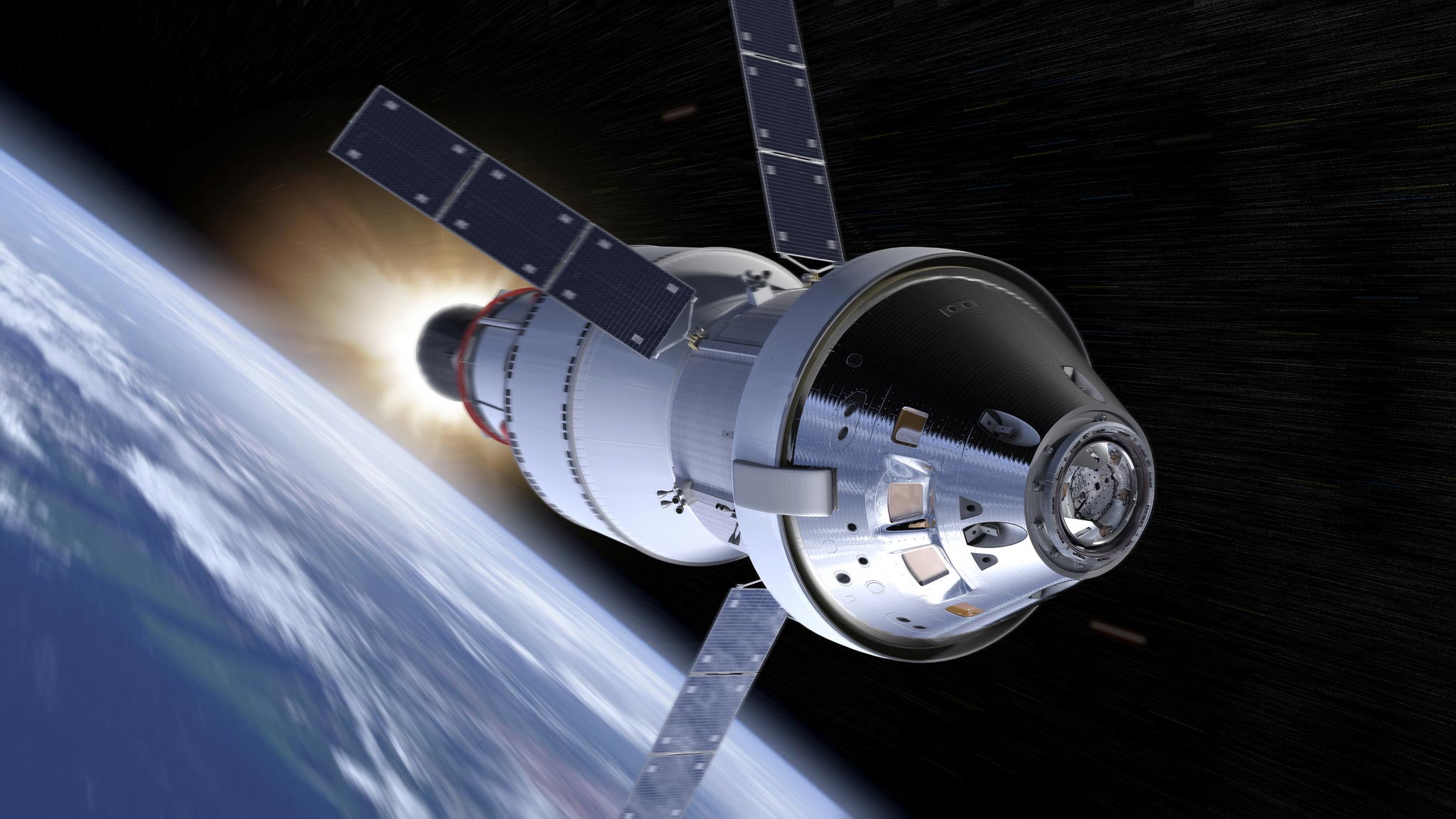
    Orion Spacecraft
    The Orion spacecraft, integral to NASA’s Artemis II mission, will transport astronauts around the Moon, testing human spaceflight capabilities beyond Earth. Artemis II will serve as a proving ground for the complex systems needed to sustain life and support deep space exploration, highlighting Orion’s design for safety and habitability in the harsh environment of space. Credit: NASA

    NASA’s Orion spacecraft is designed as a critical component of the agency’s deep space exploration plans, which include sending humans to the Moon and potentially beyond to Mars. Orion is intended to facilitate human exploration of the solar system, providing a safe habitat for astronauts during long-duration missions. The spacecraft comprises two main parts: the Crew Module (CM), built by Lockheed Martin, which houses the astronauts and supports life during space travel, and the European Service Module (ESM), provided by the European Space Agency (ESA), which supplies power, propulsion, and thermal control.

    Orion is equipped with advanced technologies to ensure high safety standards, including heat shields capable of withstanding the intense heat generated during re-entry into Earth’s atmosphere. The spacecraft is also designed to be reusable for multiple missions. It plays a pivotal role in NASA’s Artemis program, aiming to return humans to the Moon and establish a sustainable presence there to pave the way for future manned missions to Mars. The Orion spacecraft’s first uncrewed test flight took place in 2014, and it continues to undergo rigorous testing and development to meet its future mission objectives.

    Never miss a breakthrough: Join the SciTechDaily newsletter.
    Follow us on Google and Google News.

    ARTEMIS Mission NASA Orion Spacecraft
    Share. Facebook Twitter Pinterest LinkedIn Email Reddit

    Related Articles

    NASA’s Super Guppy Arrives in California With Key Component for Artemis Moon Mission

    One Step Closer: Orion Spacecraft Stacked on Top SLS Rocket for NASA’s Artemis I Mission

    A European Push to the Moon and Beyond

    Artemis I: NASA’s Bold Plans to Travel Beyond the Moon [Video]

    Welding Underway on Orion Crew Module for First Artemis Mission Landing Astronauts on the Moon

    Orion Spacecraft Ready to Fuel Up for NASA’s Artemis I Mission Beyond the Moon

    NASA Selects New Orion Program Manager: Catherine Koerner

    Orion Spacecraft Passes Tests – Ready for Final Artemis I Launch Preparations

    Orion Spacecraft Returns to Kennedy Space Center for Final Preparations Before Artemis I Launch

    Leave A Reply Cancel Reply

    • Facebook
    • Twitter
    • Pinterest
    • YouTube

    Don't Miss a Discovery

    Subscribe for the Latest in Science & Tech!

    Trending News

    Scientists Uncover Potential Brain Risks of Popular Fish Oil Supplements

    Scientists Discover a Surprising Way To Make Bread Healthier and More Nutritious

    After 60 Years, Scientists Uncover Unexpected Brain Effects of Popular Diabetes Drug Metformin

    New Research Uncovers Hidden Side Effects of Popular Weight-Loss Drugs

    Scientists Rethink Extreme Warming After Surprising Ocean Discovery

    Landmark Study Links Never Marrying to Significantly Higher Cancer Risk

    Researchers Discover Unknown Beetle Species Just Steps From Their Lab

    Largest-Ever Study Finds Medicinal Cannabis Ineffective for Anxiety, Depression, PTSD

    Follow SciTechDaily
    • Facebook
    • Twitter
    • YouTube
    • Pinterest
    • Newsletter
    • RSS
    SciTech News
    • Biology News
    • Chemistry News
    • Earth News
    • Health News
    • Physics News
    • Science News
    • Space News
    • Technology News
    Recent Posts
    • Students Build Dark Matter Detector and Set New Experimental Limits
    • Scientists Discover Caffeine Can Repair Key Memory Circuits After Sleep Loss
    • Strange 65-Foot Dinosaur Discovered in Argentina
    • Researchers Uncover Source of Strange Deformation in Earth’s Largest Continental Rift
    • Scientists Solve Mystery of Where the Colorado River Vanished Millions of Years Ago
    Copyright © 1998 - 2026 SciTechDaily. All Rights Reserved.
    • Science News
    • About
    • Contact
    • Editorial Board
    • Privacy Policy
    • Terms of Use

    Type above and press Enter to search. Press Esc to cancel.