
Close Menu
    Facebook X (Twitter) Instagram
    SciTechDaily
    • Biology
    • Chemistry
    • Earth
    • Health
    • Physics
    • Science
    • Space
    • Technology
    Facebook X (Twitter) Pinterest YouTube RSS
    SciTechDaily
    Home»Health»Natural Compound in Rice and Coffee May Protect Against Heart Attacks
    Health

    Natural Compound in Rice and Coffee May Protect Against Heart Attacks

    By Toho UniversityJune 13, 20253 Comments3 Mins Read
    Facebook Twitter Pinterest Telegram LinkedIn WhatsApp Email Reddit
    Share
    Facebook Twitter LinkedIn Pinterest Telegram Email Reddit
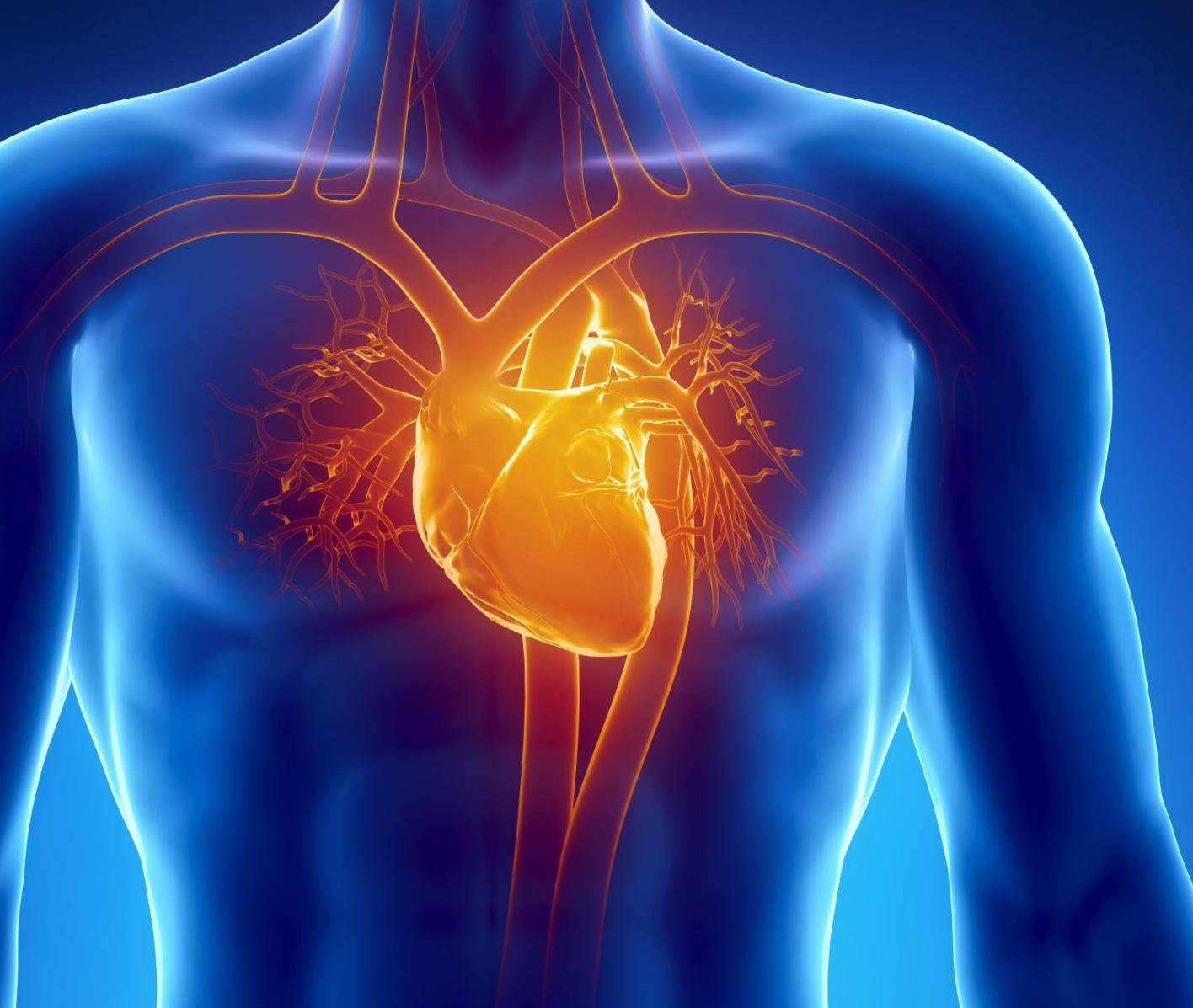
    Human Heart Anatomy
    Researchers have found that ferulic acid, a plant-based compound, can effectively prevent coronary artery spasms by targeting calcium channels and muscle proteins. Credit: Stock

    Ferulic acid prevents artery spasms by working through two distinct mechanisms.

    Sudden narrowing of the coronary arteries, known as coronary artery spasms, can cause chest pain (angina), heart attacks, and other serious cardiovascular issues.

    A research team led by Dr. Kento Yoshioka, Dr. Keisuke Obara, and Professor Yoshio Tanaka from the Department of Chemical Pharmacology at Toho University’s Faculty of Pharmaceutical Sciences has discovered that ferulic acid, a natural compound found in rice, coffee, and certain vegetables, can help prevent these spasms through two separate mechanisms.

    Discovery using pig artery models

    The researchers used porcine (pig) coronary arteries, which closely resemble human heart arteries, and found that ferulic acid significantly reduced artery contractions caused by chemical stimuli.
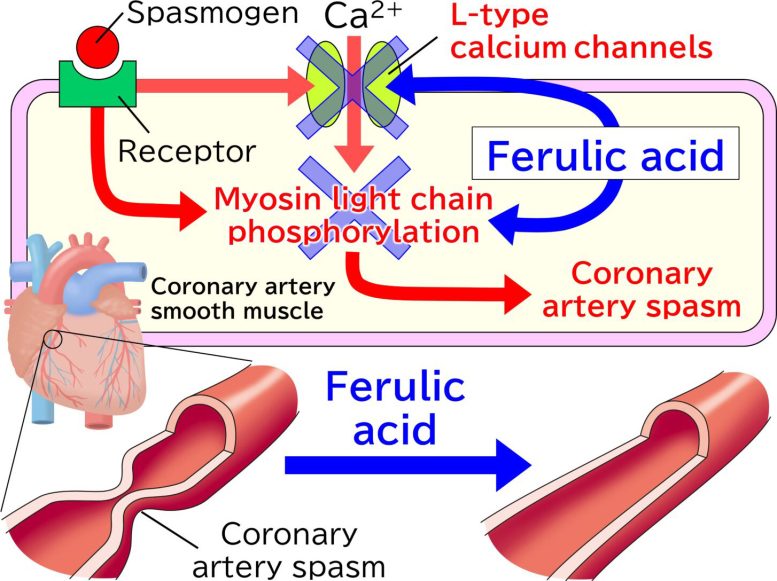
    Diagram Showing How Ferulic Acid Prevents Coronary Artery Spasms
    Ferulic acid blocks calcium from entering muscle cells through L-type calcium channels, which normally cause the arteries to contract. Even when calcium isn’t involved, it still prevents artery tightening by stopping a specific protein (myosin light chain) from being activated, which is essential for muscle contraction. Credit: Kento Yoshioka

    The study revealed two key actions of ferulic acid:

    1. It blocks calcium from entering muscle cells through L-type calcium channels, which are normally responsible for causing the arteries to contract.
    2. Even when calcium is not involved, it still prevents the arteries from tightening by inhibiting the activation of a specific protein called myosin light chain, which is essential for muscle contraction.

    Comparison to existing treatments

    Surprisingly, ferulic acid was sometimes even more effective than diltiazem, a widely used medication for relaxing blood vessels.
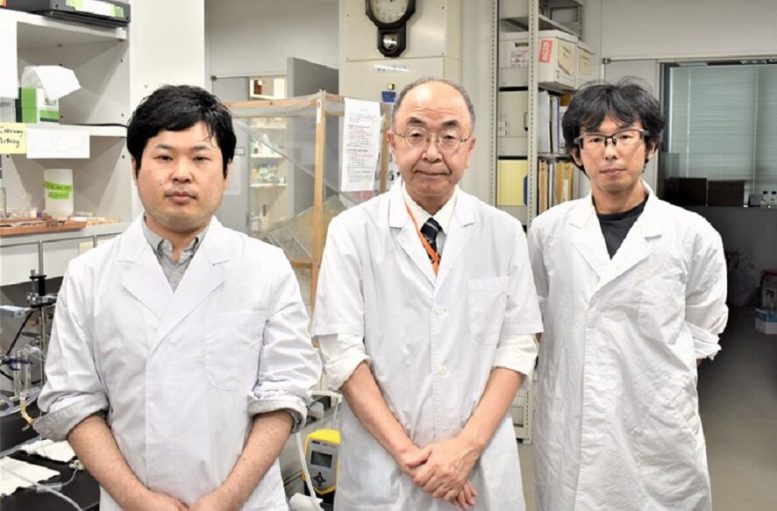
    From Left, Dr. Keisuke Obara, Dr. Yoshio Tanaka, Dr. Kento Yoshioka
    From left: Dr. Keisuke Obara, Dr. Yoshio Tanaka, Dr. Kento Yoshioka. Credit: Dr. Keisuke Obara, Dr. Yoshio Tanaka, Dr. Kento Yoshioka

    “Because ferulic acid is plant-based and considered safe, it may have potential as a health food ingredient or even as a foundation for future heart medications,” said lead researcher Dr. Kento Yoshioka.
    This research opens the door to new, natural ways of supporting heart health—possibly through diet or supplements in the future.

    Reference: “Inhibitory effects of ferulic acid on the contraction responses of porcine coronary arteries: a comparison with diltiazem” by Kento Yoshioka, Keisuke Obara, Yilin Luo, Qianghaodi Hong, Ayaka Fujiwara, Wakaba Kinami, Hideaki Ozawa and Yoshio Tanaka, 18 April 2025, Journal of Pharmacological Sciences.
    DOI: 10.1016/j.jphs.2025.04.006

    Funding: Japan Society for the Promotion of Science

    Never miss a breakthrough: Join the SciTechDaily newsletter.
    Follow us on Google and Google News.

    Blood Heart Nutrition Pharmacology
    Share. Facebook Twitter Pinterest LinkedIn Email Reddit

    Related Articles

    How Eating Eggs Can Protect Against Heart Disease and Improve Heart Health

    Popular Energy Drinks’ Harmful Effects on Heart Revealed in New Research

    Circle Back: New Evidence Linking Eggs, Cholesterol to Poor Cardiovascular Health and Death

    Eating Walnuts May Have Anti-inflammatory Effects That Reduce Risk of Heart Disease

    Authoritative New Analysis Links Omega-3 Supplements to Cardioprotection and Improved Heart Health

    Chocolate Is Good for the Heart – “Chocolate Helps Keep the Heart’s Blood Vessels Healthy”

    Eating Food With Isoflavones – Such as Tofu, Chickpeas and Peanuts – May Lower Heart Disease Risk

    Heart Healthy Benefits From Avocado – Just One a Day Helps Lower ‘Bad’ Cholesterol

    How Dietary Fat Affects Stem Cell Differentiation

    3 Comments

    1. Tanvir Ahmad on June 13, 2025 10:35 pm

      Healthful information !

      Reply
      • Tanvir Ahmad on June 13, 2025 10:37 pm

        Useful information !

        Reply
    2. Sandra weisz on June 17, 2025 2:00 pm

      This is true. You are what you eat. Be careful if you want to stave off degenerative diseases.

      Reply
    Leave A Reply Cancel Reply

    • Facebook
    • Twitter
    • Pinterest
    • YouTube

    Don't Miss a Discovery

    Subscribe for the Latest in Science & Tech!

    Trending News

    Collapsing Plasma May Hold the Key to Cosmic Magnetism

    This Breakthrough Solar Panel Generates Power From Both Sunlight and Raindrops

    Scientists Uncover New Metabolic Effects Beyond Weight Loss of Mounjaro

    Scientists Discover Cancer Tumors Are “Addicted” to This Common Antioxidant

    1,800 Miles Down: Scientists Uncover Mysterious Movements at the Edge of Earth’s Core

    Scientists Discover Hidden “Good Fats” in Green Rice That Could Transform Nutrition

    Your Child’s Clothes Could Contain Toxic Lead, Study Finds

    Researchers Break a 150-Year-Old Math Law With a Surprising Donut Discovery

    Follow SciTechDaily
    • Facebook
    • Twitter
    • YouTube
    • Pinterest
    • Newsletter
    • RSS
    SciTech News
    • Biology News
    • Chemistry News
    • Earth News
    • Health News
    • Physics News
    • Science News
    • Space News
    • Technology News
    Recent Posts
    • The Mystery of the Notes: Why No One Knows How This 120-Year-Old Song Should Sound
    • Scientists Discover 132-Million-Year-Old Dinosaur Tracks on South Africa’s Coast
    • Scientists Uncover the Secret Ingredient Behind the Spark That May Have Started Life on Earth
    • Natural Oils vs. Antibiotics: The Swine Study That Could Change Farming
    • The Biggest Volcanic Event in Earth’s History Transformed an Entire Oceanic Plate
    Copyright © 1998 - 2026 SciTechDaily. All Rights Reserved.
    • Science News
    • About
    • Contact
    • Editorial Board
    • Privacy Policy
    • Terms of Use

    Type above and press Enter to search. Press Esc to cancel.